Evald Flisar - My Father's Dreams
Здесь есть возможность читать онлайн «Evald Flisar - My Father's Dreams» весь текст электронной книги совершенно бесплатно (целиком полную версию без сокращений). В некоторых случаях можно слушать аудио, скачать через торрент в формате fb2 и присутствует краткое содержание. Год выпуска: 2015, Издательство: Istros Books, Жанр: Современная проза, на английском языке. Описание произведения, (предисловие) а так же отзывы посетителей доступны на портале библиотеки ЛибКат.
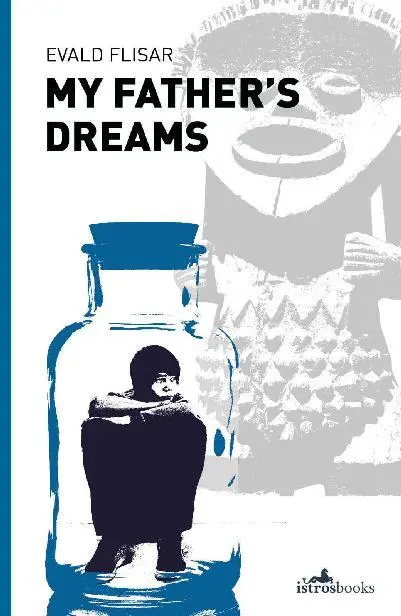
- Название:My Father's Dreams
- Автор:
- Издательство:Istros Books
- Жанр:
- Год:2015
- ISBN:нет данных
- Рейтинг книги:4 / 5. Голосов: 1
-
Избранное:Добавить в избранное
- Отзывы:
-
Ваша оценка:
My Father's Dreams: краткое содержание, описание и аннотация
Предлагаем к чтению аннотацию, описание, краткое содержание или предисловие (зависит от того, что написал сам автор книги «My Father's Dreams»). Если вы не нашли необходимую информацию о книге — напишите в комментариях, мы постараемся отыскать её.
My Father's Dreams — читать онлайн бесплатно полную книгу (весь текст) целиком
Ниже представлен текст книги, разбитый по страницам. Система сохранения места последней прочитанной страницы, позволяет с удобством читать онлайн бесплатно книгу «My Father's Dreams», без необходимости каждый раз заново искать на чём Вы остановились. Поставьте закладку, и сможете в любой момент перейти на страницу, на которой закончили чтение.
Интервал:
Закладка:
“Shut up, Mother,” I said and started to cry. “Don’t talk like that about Father. He is the best father anyone could have.”
“And I’m the worst Mother, I suppose?” she retorted.
“Maybe,” I heard myself saying.
She said nothing, she just started to cry.
As soon as she started I stopped; I didn’t want to cry with her. I realised that in spite of the earlier moment of closeness I really hated my Mother, and would have forgiven Father for leaving her on the island to die. Of course he would never have left me on the island, so Mother’s idea was really an indication of the hatred she felt for Father, because of which my hatred of her seemed all the more justified. As we were swallowed by the black night, damp and cold with sporadic bursts of sea spray, I concluded that it was in fact Mother’s fault we had been left on the island, for she was the one who had insisted on coming. I knew that the boatman was evil the moment I saw him.
When the moon appeared from behind the hill, reminding me of the twisted face of a starving baby, I realised that, without Mother and her interference, and without my constant fear that she might discover my diary, Father, Eve and I could be happy in my dreams for a long time to come. It was Mother who was spoiling the happiness of all three of us. And the only reason she got rid of Abortus before he could be born as a normal baby must have been her decision that I didn’t deserve a brother.
The night was quite chilly, but we didn’t dress. We sat on our towels and stared at the heaving darkness before us. Then we lay on our backs, staring at the sky which resembled a huge star-cobbled vault. Then we lay with our backs against each other, then Mother lay on her stomach while I sat up, then she sat and I lay on my stomach, then she walked off into darkness but soon returned, and then gradually things became vague and misty, and I was enveloped by a curious veil of uncertainty in which again I wasn’t quite sure what was a dream and what reality.
In the middle of the night we became thirsty. The plastic bottle of water which Mother had brought along more by accident than design lay between us like a growing sign of the coming conflict. We both knew we could share the water, and we both knew we should share it. But we made a decision to fight for it. Half the water could mean three additional days of life. It was I who managed to wrestle the bottle from Mother’s hands and keep it. I drank half the water at once. I pressed the bottle with the other half to my chest with both hands, watching Mother’s every move like a hawk.
We both knew we would die on the island. No one would pick us up, and it was much too far to swim to the mainland. While thinking about how to spend the remaining time, our fear and hatred of each other slowly melted away and we became ashamed of our feelings. We crawled toward each other and began to comfort and caress each other like two mortally wounded animals. I could suddenly feel that Mother’s cheeks were soft, that her lips were hot, that her skin smelled like Eve’s.
While she held me tightly and sobbed, “Adam, Adam,” I kept pressing the mouth of the bottle to her lips, begging her to drink. “Drink, Mother, drink.” She did, and I felt happy. She didn’t drink all the water, she left some for me. Again I felt happy. Those bright moments of kindness in the gathering darkness made our fear of the inevitable almost bearable. We did not want to die, but there were no selfish thoughts in our fight for life any more; we just wanted to give, to sacrifice for each other all we had, to turn ourselves into parting presents for one another.
Then, unexpectedly, hatred flooded back like a huge tidal wave. We jumped on each other like two ravenous beasts, with mouths stuck together as if trying to suck the last drops of moisture from the already dry lips, with fingers intertwined and twisted as in a violent wrestling match, with body thrusting at body in a murderous passion, and with teeth and nails sunk deep in the skin everywhere our hands could find support. In spite of the cold we became hot and sweaty, licking drops of perspiration offeach other’s body for thirst. And as we started to die both at once, as we felt the cramp spreading from head to toe, the pain of leaving was not half as horrible as I had expected, it was sweet, sweeter than anything I had ever encountered. When, in a tight embrace and with nails still dug in each other’s skin, we started to sink into darkness, I felt a great surge of relief and forgiveness for the sins and mistakes of life, and a promise of peace, the warm peace of total darkness.
But eventually the darkness dissipated and we were nudged awake by the bright morning sun. Far from any heaven, our immediate surroundings were precisely what we had hoped to escape: a lifeless rocky island, and a turbulent sea crashing against the shore. But the night had brought something new: swaying in the quieter waters of the cove was a small sailing boat. Standing on board was a bearded sea captain in dark-blue uniform, with gold stripes that were clearly visible in the sun. In his left hand he held a cigar, in the right one a half raised telescope.
“Grandpa Dominic!” I shouted.
He heard me and waved. Then, as if satisfied, he slowly stroked his long beard, drew on the cigar and puffed the smoke into the fresh morning air.
On our way back to the mainland he explained what had brought him. After hearing that we had unexpectedly left for a holiday at sea he enquired at the surgery where we had gone. Overcome by a great yearning to smell the sea wind and hear the crashing of waves he had followed us down by train. At the hotel he had managed to unearth what appeared to be a big secret: that Simon the fisherman had taken us to an uninhabited island. He had decided to wait for us, but when my Father and Simon returned alone he wanted to know what had become of Mother and me. Father and Simon had told him that we had decided to spend the night in a little fishing village on an island from where Simon regularly transported bricks. But a little later, after a brief private discussion, they admitted that they had left us on an uninhabited island all day and night because they wanted to frighten us, as a joke, of course, so that I would have something to boast about when I went back to school.
In the end they had even agreed with Grandpa Dominic’s suggestion that the joke was a little thin, and promised to fetch us immediately. But he, an old sailor, had hired a boat and beaten them to it.
“I am used to rescuing castaways,” he laughed.
I embraced him and thanked him profusely.
“You’ll be all right,” he said, running his coarse hand over my hair.
As I looked up at his eyes, kind and soft as always, I could see a hint of evasion in his look: as if he had told us only half of what he knew.
17
Coming home was a shock. Although things looked familiar, they appeared unfriendly and strange, as if belonging in someone else’s life, or in a time from which I had been severed, the way a severed head is divorced from the body. For some days even Abortus appeared strangely distant. No matter how hard I tried to force myself, I could not tell him about all the things that happened. I was unsure what had really happened, and what was merely a dream. I decided not to write anything in my diary until the confusion cleared.
To be fair to myself, I had almost no opportunity to get at my diary. Since returning from holidays, Father took to spending his afternoons and sometimes evenings as well with his bonsai experiments in the basement. At home, where he was now coming only to eat, sleep and infect the house with malevolence, as Mother would occasionally reproach him, things had also become very different. We all kept to ourselves, the house was filled with ominous silence, and we almost deliberately avoided each other. When, more by accident than design, we found ourselves together at the dining table, Father would prop up a book in front of his plate and peer into it like a schoolboy facing an exam the following day. I noticed that often he peered at one page much longer than it would have taken him to read it at a leisurely speed.
Читать дальшеИнтервал:
Закладка:
Похожие книги на «My Father's Dreams»
Представляем Вашему вниманию похожие книги на «My Father's Dreams» списком для выбора. Мы отобрали схожую по названию и смыслу литературу в надежде предоставить читателям больше вариантов отыскать новые, интересные, ещё непрочитанные произведения.






Обсуждение, отзывы о книге «My Father's Dreams» и просто собственные мнения читателей. Оставьте ваши комментарии, напишите, что Вы думаете о произведении, его смысле или главных героях. Укажите что конкретно понравилось, а что нет, и почему Вы так считаете.