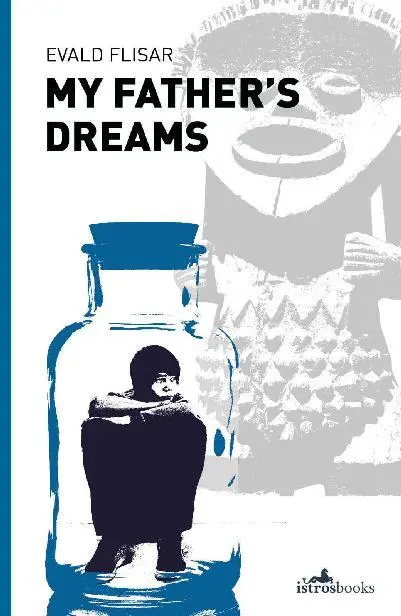
Evald Flisar - My Father's Dreams
Здесь есть возможность читать онлайн «Evald Flisar - My Father's Dreams» весь текст электронной книги совершенно бесплатно (целиком полную версию без сокращений). В некоторых случаях можно слушать аудио, скачать через торрент в формате fb2 и присутствует краткое содержание. Год выпуска: 2015, Издательство: Istros Books, Жанр: Современная проза, на английском языке. Описание произведения, (предисловие) а так же отзывы посетителей доступны на портале библиотеки ЛибКат.
- Название:My Father's Dreams
- Автор:
- Издательство:Istros Books
- Жанр:
- Год:2015
- ISBN:нет данных
- Рейтинг книги:4 / 5. Голосов: 1
-
Избранное:Добавить в избранное
- Отзывы:
-
Ваша оценка:
My Father's Dreams: краткое содержание, описание и аннотация
Предлагаем к чтению аннотацию, описание, краткое содержание или предисловие (зависит от того, что написал сам автор книги «My Father's Dreams»). Если вы не нашли необходимую информацию о книге — напишите в комментариях, мы постараемся отыскать её.
My Father's Dreams — читать онлайн бесплатно полную книгу (весь текст) целиком
Ниже представлен текст книги, разбитый по страницам. Система сохранения места последней прочитанной страницы, позволяет с удобством читать онлайн бесплатно книгу «My Father's Dreams», без необходимости каждый раз заново искать на чём Вы остановились. Поставьте закладку, и сможете в любой момент перейти на страницу, на которой закончили чтение.
Интервал:
Закладка:
I stepped to the edge of the water and leaned forward to decipher the words on the title page. I could just make out My Father’s Dreams , but the author’s name was tucked away in the top corner. The book must have been very interesting, for the creature was so engrossed in it that it remained completely unaware of my presence. I wondered whether to tiptoe past it or try to engage it in conversation; this was after all the first living being I had encountered in this empty world. It seemed unlikely that it would attack me; and if it did, I could easily defend myself with the large bone. Curiosity prevailed; I raised the tibia and brought it down on the water to cause a loud splash.
But there was no splash; the bone hit the ground, as if the water was not real at all, but painted on the stony surface. This was confirmed by the sound of the blow, which forced the creature to raise its eyes above the book and look at me. It did so visibly frightened, but also with a strange, muted joy, as if it had recognized me from some previous meeting. Then its eyes grew dark once again, expressing only deep sadness and detachment. The creature returned to reading the book. I brought the bone down once more, but again there was only a thud instead of a splash; the water was definitely an illusion. I stepped on it; my foot did not sink.
I stepped on it with both feet and started to jump up and down. Nothing. I walked to the middle of the pond and poked with the bone at the creature’s face. The bone scraped against stone. The creature looked at me again, this time from very close and almost from under my feet. The bone was resting on its head without touching it; as though the scene were projected on the ground from above.
I crossed the pond to the other side and turned around. The creature was not turning its back to me, as I had expected, but was facing me as before, still reading the same book and paying no attention to me at all. I circled the pond. No matter where I stopped, the creature remained in the same position, always facing me, always showing me only the cover of the book. All my attempts to get behind it and peek over its shoulder to see what the book was about ended in failure. But if the whole scene was projected from above, why did the creature notice me, follow my moves, and react independently from the projection? There was something here that was beyond my powers to understand.
But the creature suddenly ceased to look strange and unfamiliar; it began to remind me of my little brother Abortus. Not so much the one in the glass jar; more the one I dreamed about while writing a composition at school. I lay down beside the pond and closed my eyes. I began to suspect that all this was a dream. I was hoping that if I managed to fall asleep I might start dreaming about the real world again, or at least about the world which others thought to be real. The world of Father, Mother, and Eve. And of Abortus in the glass jar, not the projected one, but my real brother.
16
The first thing I felt was the sea water as it nibbled coldly at my feet and retreated with the sound of rolling pebbles. Next there was a pause, during which I could hear the distant sound of the sea hurling its waves against the rocks. As I opened my eyes I saw Mother sitting on her towel only two yards away, nervously smoking. She was depositing ashes in a paper container she had made from the remains of a magazine. It was spilling over with cigarette butts; she must have finished an entire packet. But even here, in the middle of nowhere, condemned to a slow death, she remained staunchly loyal to her need for order and tidiness.
The sun had set and the sea had grown sombre and threatening. The rocky surface of the island was fast disappearing in the jaws of the night which was creeping across the swaying waters.
“Were you dreaming?” Mother asked. As she looked at me I thought I saw traces of tears on her face, but they must have been marks caused by the sun.
I shrugged and looked at the heaving darkness beyond the cove.
“I know you were,” she said. “You trembled and mumbled strange words in your sleep.” She drew on the end of her cigarette once more and carefully placed the butt on top of the others.
“Are you hungry?” she asked.
She reached in her carrier bag and pulled out the bun she had refused to leave behind during breakfast. She split it in half and reached out to give me my share. Then we sat chewing our halves of the stale bun without saying a word.
Darkness was slowly thickening. Mother put her right hand on top of her head and slowly smoothed her hair until she reached the nape of the neck, where she let her hand rest for a while. And suddenly something happened. I don’t know if it was her gesture, which was nothing unusual, for it was almost a habit for her to stroke her hair like that, but something made me realise with a shock that Mother existed. That she had a life of her own. That she was more than a mere shape in my thoughts. That she was not my invention, or the annoying shadow she had so often seemed, or the cook and cleaner that could always be disregarded as just being there by the laws of nature. Whichever way I had perceived her, she had never been as real as Father.
Now she had suddenly turned into a person whose presence was not defined by the wishes and needs of Father and me. A person who had her own desires, plans, anxieties, maybe connected with Father and me, but independent of us. Those twists of blond hair I would sometimes find in the toilet bowl were not merely something that I could aim my piss at; they were combed-out bits of hair from the head which at night rested next to Father’s and often, at night as well as in daytime, pondered our common future, Father’s disinterest, my lack of interest in school, my introversion, my dreams which bothered her most, and, perhaps above all, the good name of our family.
I looked at her just as she swallowed the last piece of the bun and clapped her hands to get rid of the crumbs. For the first time in my life I realised that Mother was actually rather beautiful and still young; with smooth skin which was perhaps only around her eyes showing traces of a life-long dependence on tranquilisers and nicotine. Every other part of her body was still firm and taut, even her thighs; a well-preserved body of a tall, slim, forty-year old woman. For the first time in my life I felt something warm in my heart as I looked at her. It occurred to me that now, perhaps, I could ask her why we never mentioned my unborn little brother Abortus. Now, I felt, she would not brush me off by saying that she had no idea what I was talking about.
But she spoke a fraction of a second before I opened my mouth.
“Well,” she said, “they must have drunk each other under the table. We’re unlikely to see them before first light. I know you don’t like it if I say anything bad about Father, but I’ll never forgive him for leaving us here to spend a cold night in the open.”
“It’s not Father’s fault,” I shouted, and the closeness I felt a moment earlier evaporated like passing mist. “It’s the boatman, who pushed Father off the boat and let him drown in the sea! We’re going to die on this island!”
“Don’t be stupid,” she berated me in her usual tone of voice. “We’ve known Simon for years. The only one who might be tempted to get rid of us is your Father. And I wouldn’t put it past him that that’s what he has decided to do.”
She paused for a moment. Then her voice surged as if lifted by an incoming wave.
“You don’t realise what a bother we are to him, Adam. He won’t talk to me because he thinks I’m stupid, a servant to take care of him that he could just as well hire. And as for you, he can’t stand you because of those dreams of yours he can’t cure. Simon is okay, it’s your Father who can’t be trusted.”
Читать дальшеИнтервал:
Закладка:
Похожие книги на «My Father's Dreams»
Представляем Вашему вниманию похожие книги на «My Father's Dreams» списком для выбора. Мы отобрали схожую по названию и смыслу литературу в надежде предоставить читателям больше вариантов отыскать новые, интересные, ещё непрочитанные произведения.








Обсуждение, отзывы о книге «My Father's Dreams» и просто собственные мнения читателей. Оставьте ваши комментарии, напишите, что Вы думаете о произведении, его смысле или главных героях. Укажите что конкретно понравилось, а что нет, и почему Вы так считаете.