Nathan Hill - The Nix
Здесь есть возможность читать онлайн «Nathan Hill - The Nix» весь текст электронной книги совершенно бесплатно (целиком полную версию без сокращений). В некоторых случаях можно слушать аудио, скачать через торрент в формате fb2 и присутствует краткое содержание. Год выпуска: 2016, Издательство: Knopf, Жанр: Современная проза, на английском языке. Описание произведения, (предисловие) а так же отзывы посетителей доступны на портале библиотеки ЛибКат.
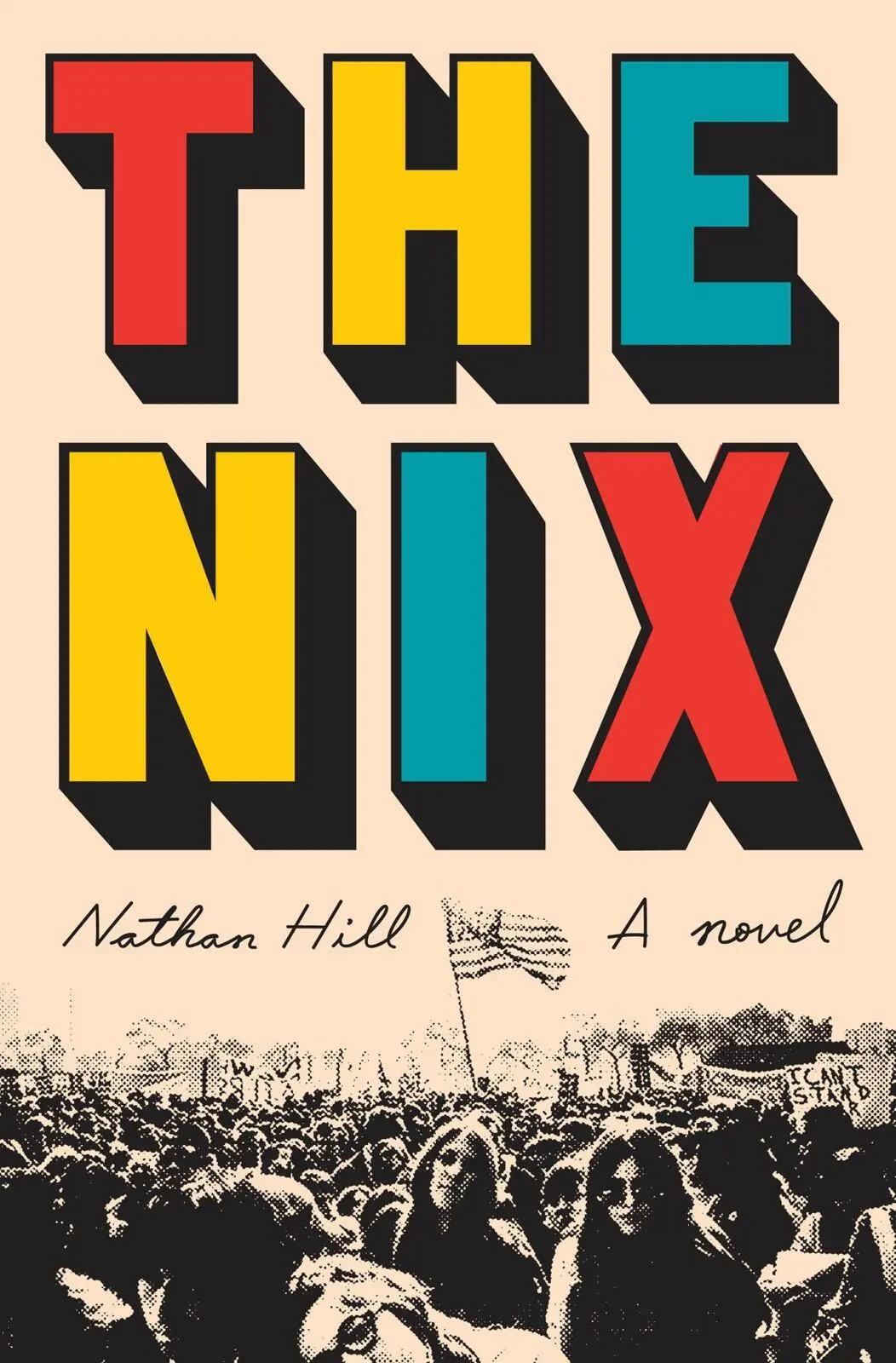
- Название:The Nix
- Автор:
- Издательство:Knopf
- Жанр:
- Год:2016
- ISBN:нет данных
- Рейтинг книги:5 / 5. Голосов: 1
-
Избранное:Добавить в избранное
- Отзывы:
-
Ваша оценка:
The Nix: краткое содержание, описание и аннотация
Предлагаем к чтению аннотацию, описание, краткое содержание или предисловие (зависит от того, что написал сам автор книги «The Nix»). Если вы не нашли необходимую информацию о книге — напишите в комментариях, мы постараемся отыскать её.
As Samuel begins to excavate her history, the story moves from the rural Midwest of the 1960s to New York City during the Great Recession and Occupy Wall Street to the infamous riots at the 1968 Chicago Democratic National Convention, and finally to Norway, home of the mysterious Nix that his mother told him about as a child. And in these places, Samuel will unexpectedly find that he has to rethink everything he ever knew about his mother — a woman with an epic story of her own, a story she kept hidden from the world.
The Nix — читать онлайн бесплатно полную книгу (весь текст) целиком
Ниже представлен текст книги, разбитый по страницам. Система сохранения места последней прочитанной страницы, позволяет с удобством читать онлайн бесплатно книгу «The Nix», без необходимости каждый раз заново искать на чём Вы остановились. Поставьте закладку, и сможете в любой момент перейти на страницу, на которой закончили чтение.
Интервал:
Закладка:
“Do you remember the last time you came to my house?” she says. And of course you do. It was the night you kissed her. The last moment of real joy you felt before your mother left. But you don’t tell Bethany that part. You just say, “Yes.”
“My first kiss,” she says.
“Mine too.”
“The room was dark, like this one,” she says. “I couldn’t really see you. I could only feel you very close to me. Do you remember?”
“I remember,” you say.
Bethany stands — the couch announces it, the popping of the leather, the little suction sound releasing — and she comes over to you and sits next to you and she takes the glass from your hand and sets it on the floor and she’s very close now, one of her knees pressing into yours, and you’re beginning to understand about the lights and the wine.
“Like this?” she says, drawing her face to yours, smiling.
“It was darker than this.”
“We could close our eyes.”
“We could,” you say. But you don’t.
“You were about this far away,” she says, your cheeks almost touching now. You can feel the heat of her, the lavender smell of her hair. “I didn’t know what to do,” she says. “I pressed my lips out and hoped it was right.”
“It was right,” you say.
“Good,” she says, and she lingers there a moment, and you’re afraid to do anything or say anything or move or breathe, feeling like this whole moment is made of air and could scatter at the smallest agitation. Your lips are only a few inches from hers, but you do not lean in. The space between you is something she must resolve herself. Then Bethany says in a whisper, “I don’t want to marry Peter.”
“You don’t have to.”
“Can you help me not marry Peter?”
To help her not marry Peter, go to the next page…
9
And so you finally kiss her, and when you do you feel a great cascade of relief deep inside break through, and all your obsessing and pining and worrying and regret, and all the ways you’ve been haunted by this woman, and all the torture and self-loathing that you had failed to make her love you, they all seem to shatter on the ground. It feels like you’ve been holding up a wall of glass all this time and only now you realize it’s okay to let it fall. And fall it does, and it’s almost percussive the way it tumbles and breaks around you — you try not to flinch as Bethany kisses you, as she pulls at you with her hands and you have this powerful sense memory of kissing her when you were a child, how you were surprised that her lips were dry, that you didn’t know what to do except smash your face into hers, back when kissing was not a signpost along the way but rather the destination itself. But now you are both older and you’ve had all the relevant experiences and each of you knows exactly what to do with another body — which is to say you know that kissing is a kind of communication sometimes, and what you’re telling each other right now is that you both very much want more. And so you press into her and slide your hands around her waist and curl your fingers into the slight fabric of her dress and she tugs you closer by the collar and still you’re kissing — deeply, wildly, devouring each other — and you’re aware of your awareness of this, how you seem able to concentrate on everything and feel everything all at once: Your hands and her skin and your mouth and her mouth and her fingers and her breathing and the way her body responds to yours — these things don’t feel like separate sensations but rather like layers of a single greater sensation, that drift of consciousness that can happen when you’re entwined with another and it’s all going very well and it’s almost as if you know exactly what the other person wants and can feel her emotions as they shudder through her body as if they’re shuddering through your own, like your bodies have momentarily ceased to have edges and have become things without boundaries.
This is how it feels, this expansiveness, which is why it’s such a shock when Bethany jolts up and away from you and grabs your hands to stop their progress and says, “Wait.”
“What?” you say. “What’s wrong?”
“Just…I’m sorry.” And she pulls away from you and fully disengages and curls up on the other side of the couch.
“What is it?” you say.
Bethany shakes her head and looks at you with these sad, terrible eyes.
“I can’t,” she says, and inside you feel something you might call a plummeting.
“We could go slower,” you say. “We can just slow down a little. It’s okay.”
“This isn’t fair to you,” she says.
“I don’t mind,” you say, and you hope you don’t betray all the desperation you’re feeling because you know if you come this close and still fail with this girl it will break you. You will not come back from this one. “We don’t have to have sex,” you say. “We can, I don’t know, take it easy?”
“The sex isn’t the problem,” she says, and laughs. “The sex I can do. I want to do that. But I don’t know if you want to. Or will want to.”
“I want to.”
“But there’s something you don’t know.”
Bethany stands and smoothes her clothes, a gesture meant to signal calm levelheaded dignity, a very serious break from the theatrics on the couch.
“There’s a letter for you,” she says. “On the kitchen counter. It’s from Bishop.”
“He wrote a letter? To me?”
“We got it from the army, a few months after he died. He wrote it in case something happened.”
“Did you get one?”
“No. Yours was the only one he wrote.”
Bethany turns now and walks slowly to her bedroom. She’s moving in that careful way of hers again — perfectly straight, perfectly upright, all movements composed and purposive. When she pulls open her bedroom door, she stops halfway and turns to look at you over her shoulder.
“Listen,” she says, “I looked at the letter. I’m sorry, but I did. I don’t know what it means, and you don’t have to tell me, but I want you to know I read it.”
“Okay.”
“I’m going to be in here,” she says, nodding toward the bedroom. “After you’ve read it, if you want to come in, that’s fine. But if you want to leave”—she pauses a moment, turns around, drops her head, seems to look at the floor—“I’ll understand.”
She withdraws into the dark bedroom, the door closing behind her with a soft click.
To read the letter, go to the next page…
10
Private First Class Bishop Fall sits in the belly of a Bradley Fighting Vehicle, his chin on his chest, asleep. His is the second vehicle in a small convoy — three Bradleys, three Humvees, a supply truck — driving single file to a village they don’t know the name of. All they know is that insurgents have recently kidnapped the mayor of this village and beheaded him on TV. It strikes the soldiers in the convoy as bizarre that the executions are televised, and also that they’re done in this particular manner: beheading. It feels like a kind of death from another era, a viciousness called up from the dark ages.
Three Bradleys and three Humvees can carry approximately forty soldiers. The supply truck carries two more, plus water and gasoline and ammo and many hundreds of boxes of MREs. Each MRE — or Meals Ready to Eat — has a densely syllabic ingredient list that makes many of the soldiers claim that, behind beheaders and IEDs, MREs are the biggest threat to their physical health out here. A popular game is to guess whether a certain chemical is found in an MRE or a bomb. Potassium sorbate? (MRE.) Disodium pyrophosphate? (MRE.) Ammonium nitrate? (Bomb.) Potassium nitrate? (Both.) It’s a game they might play during meals when they’re feeling complexly cynical, but not when they’re traveling via Bradley to a village an hour away. When they’re on the road like this, mostly what they do is sleep. They’ve been pulling twenty-hour shifts lately, so an hour in the armored belly of a Bradley is a little slice of what goes for heaven around here. Because it’s totally dark and it’s the safest place to be when they’re outside the wire and — because a Bradley at top speed sounds like a flimsy wooden roller coaster going Mach 2—they’re wearing earplugs, so it all feels real nice and cocooned. Everyone loves it. Everyone except this one guy Chucky, whose real name no one even remembers because he was nicknamed Chucky a long time ago for his tendency to vomit while riding in the back of a Bradley. It’s due to his motion sickness. So they nicknamed him “Up Chuck,” which was soon shortened to “Chuck,” which inevitably became “Chucky.”
Читать дальшеИнтервал:
Закладка:
Похожие книги на «The Nix»
Представляем Вашему вниманию похожие книги на «The Nix» списком для выбора. Мы отобрали схожую по названию и смыслу литературу в надежде предоставить читателям больше вариантов отыскать новые, интересные, ещё непрочитанные произведения.









Обсуждение, отзывы о книге «The Nix» и просто собственные мнения читателей. Оставьте ваши комментарии, напишите, что Вы думаете о произведении, его смысле или главных героях. Укажите что конкретно понравилось, а что нет, и почему Вы так считаете.