Nathan Hill - The Nix
Здесь есть возможность читать онлайн «Nathan Hill - The Nix» весь текст электронной книги совершенно бесплатно (целиком полную версию без сокращений). В некоторых случаях можно слушать аудио, скачать через торрент в формате fb2 и присутствует краткое содержание. Год выпуска: 2016, Издательство: Knopf, Жанр: Современная проза, на английском языке. Описание произведения, (предисловие) а так же отзывы посетителей доступны на портале библиотеки ЛибКат.
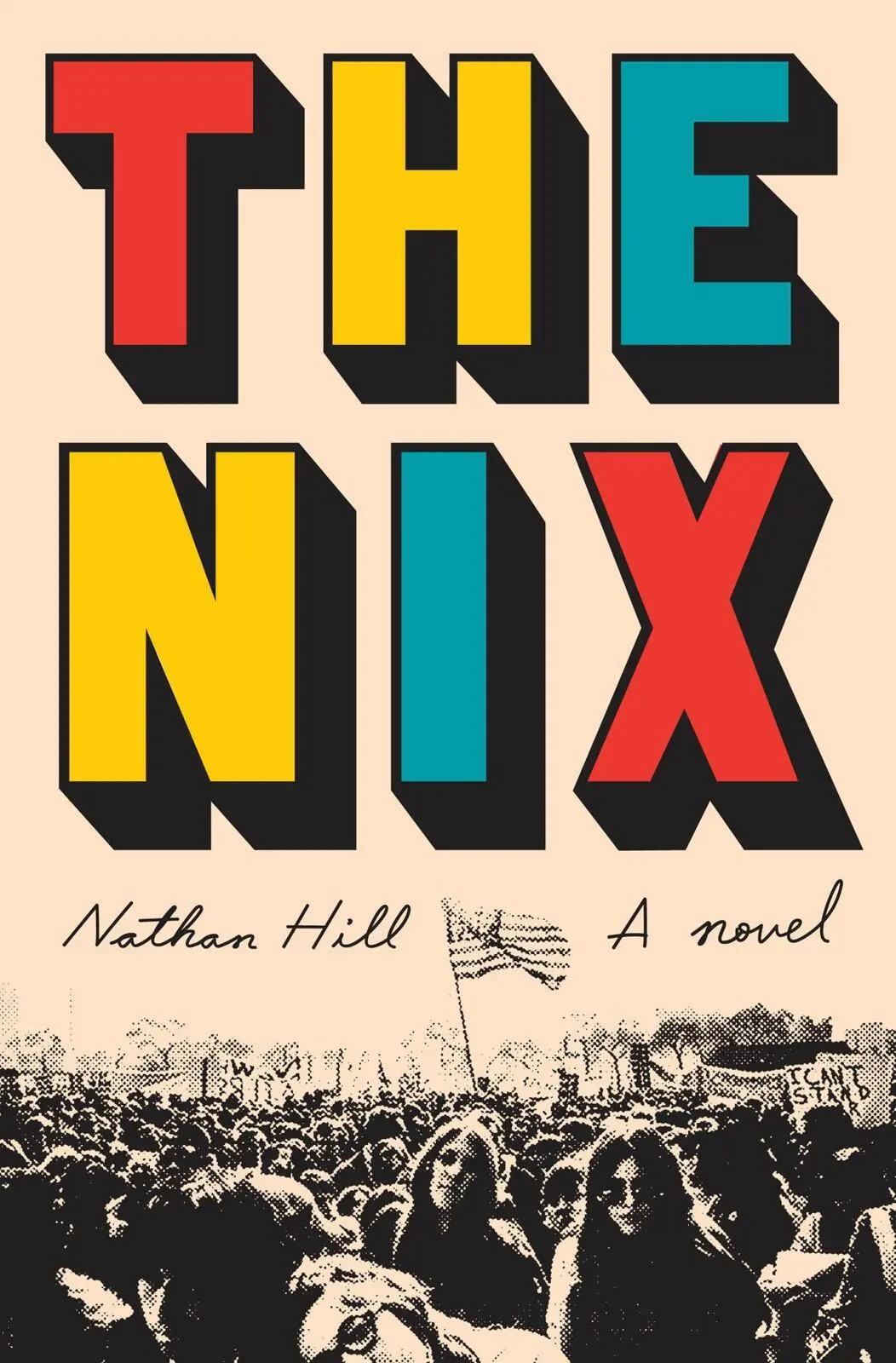
- Название:The Nix
- Автор:
- Издательство:Knopf
- Жанр:
- Год:2016
- ISBN:нет данных
- Рейтинг книги:5 / 5. Голосов: 1
-
Избранное:Добавить в избранное
- Отзывы:
-
Ваша оценка:
The Nix: краткое содержание, описание и аннотация
Предлагаем к чтению аннотацию, описание, краткое содержание или предисловие (зависит от того, что написал сам автор книги «The Nix»). Если вы не нашли необходимую информацию о книге — напишите в комментариях, мы постараемся отыскать её.
As Samuel begins to excavate her history, the story moves from the rural Midwest of the 1960s to New York City during the Great Recession and Occupy Wall Street to the infamous riots at the 1968 Chicago Democratic National Convention, and finally to Norway, home of the mysterious Nix that his mother told him about as a child. And in these places, Samuel will unexpectedly find that he has to rethink everything he ever knew about his mother — a woman with an epic story of her own, a story she kept hidden from the world.
The Nix — читать онлайн бесплатно полную книгу (весь текст) целиком
Ниже представлен текст книги, разбитый по страницам. Система сохранения места последней прочитанной страницы, позволяет с удобством читать онлайн бесплатно книгу «The Nix», без необходимости каждый раз заново искать на чём Вы остановились. Поставьте закладку, и сможете в любой момент перейти на страницу, на которой закончили чтение.
Интервал:
Закладка:
“There’s a body for each of us!” says the woman on the bullhorn, and people are finding their bodies now, lifting coffins. A body for the guy dressed as Castro, and the guy dressed as Che, and the guy with the sign that says LENNON LIVES! A body for the LGBTQ delegation with T-shirts that say “Lick Bush.” For each of a busload of Young Democrats of Greater Philadelphia, a body. A body for every sign-waving member of Jews for Peace. A body for the plumbers of UA Local No. 1. For members of the CUNY Muslim Student Association. For the several women who came today in matching pink prom dresses, questions (“Why?”) and a body. A body for the skater kid. The Rasta man. The priest. The 9/11 widow, especially for her. For the one-armed army vet in camo fatigues: a spot up front, a body. And for you and Bethany, a body in row thirty, according to the bullhorned woman’s spreadsheet, where, sure enough, you find a coffin with a sticker on the side that says “Bishop Fall.” Bethany does not seem to have any reaction to this except to touch it, lightly, as if for luck. She looks at you as she does this and offers a small, sad smile, and this might be the first true moment you’ve shared since you arrived.
And it’s over just that quickly. All of you lifting your bodies now. In teams of two or three or four you raise them up. The sun is luminous and the grass is green and the daisies are abloom and the colossal field is dotted with black coffins. A thousand rectangular black wooden coffins.
They alight onto shoulders. You begin your march. You are all pallbearers.
It’s thirty or so blocks to the Republican National Convention, and in Central Park the coffins are on the move. The chanting begins. The woman on the bullhorn shouts instructions. The marchers surge out like magma, past the baseball fields, onto the avenue, past the skyscraper with its silver world-conquering globe. They are wearing black and they are baking in the sun but they are bright with excitement. They are shouting, cheering. They roll out of Central Park, into Columbus Circle, and they are promptly stopped. The police stand there ready — roadblocks, riot gear, pepper spray, tear gas — a display of force to dampen the protest’s vigor before it begins. The crowd halts, looks down the channel of Eighth Avenue, the perfectly geometric view to downtown, the wall of buildings on both sides like a sea parting. The police have reduced the street’s four lanes to two. The crowd waits. They look up at the obelisk in the middle of the circle, the statue of Columbus on top, dressed in flowing robes like a high-school graduate. The usual northbound traffic on Eighth Avenue is shut down today, and all the signs that face the protestors say DO NOT ENTER and WRONG WAY. To many of them, this seems to epitomize something important.
If the cops attack, do not resist is the message from the protest’s organizers, the bullhorned woman at the front of the crowd. If a cop wants to put you in handcuffs, let him. If he wants to put you in a police car, ambulance, paddy wagon — no resistance whatsoever. If the cops come at us with clubs and stun guns, do not resist or panic or fight or run. This can’t be a riot. The message here is calm, level-headed, always be aware of cameras. This is a protest, not a circus. They have rubber bullets and they hurt like a motherfucker. Think Gandhi, peace, love, Zen-like tranquillity. Please do not get pepper-sprayed. Please do not take off your clothes. Remember, somber. We’re carrying coffins, for god’s sake. This is our message. Stay on message.
You hold the coffin where the feet would be. Bethany is in front of you, holding the symbolic head. You try not to think of it in these terms: feet, head. You are holding a plywood coffin: empty, hollow. Ahead of you, somewhere, the enormous assembly is oozing slowly southward. Where you stand is the doldrums, coffins bobbing above a lake of stiffening arms. You are full of conflict here, full of competing impulses. You’re holding Bishop’s coffin and it feels awful. It ignites all your appalling guilt, the guilt you felt for not saving Bishop when you were young. And the guilt you now feel for trying to woo Bethany at what is essentially her own brother’s funeral. Oh my god you are such an asshole. It’s as if you can feel your desire physically crawl up into you and die. Until, that is, you look at Bethany again, her bare back, the sweat on her shoulders, the strands of hair that cling to her neck, the angles of muscle and bone, the nakedness of her spine. She’s reading the sticker they affixed to the coffin: Pfc Bishop Fall was killed in Iraq on October 22, 2003. He was a graduate of the Virginia Military Institute. He grew up in Streamwood, Illinois.
“Doesn’t really capture him,” she says, but not to you. Not to anyone really. It’s as if a passing thought had been vocalized by accident.
Still, you answer her. “No,” you say, “it doesn’t.”
“No.”
“They should have mentioned how good he was at Missile Command. ”
A small laugh, maybe, from Bethany here? You can’t be sure; her back is still turned. You keep going: “And how all the kids in school loved him and admired him and were terrified of him. And the teachers too. How he always managed to get what he wanted. How he was the center of attention without even trying. You wanted to do anything he asked you to do. You wanted to please him, even though you didn’t know why. It was that personality of his. It was so big.”
Bethany is nodding. She’s looking at the ground.
“Some people,” you say, “go through life like a pebble falling into a pond. They barely make a splash. Bishop tore through life. We were all in his wake.”
Bethany doesn’t look at you, but she says “That’s true,” then stands up straighter. You suspect, but cannot verify, that she is looking away from you because, right now, she is crying, and she doesn’t want you to see.
The procession begins again, the coffins are moving, and the protestors start to chant. The leaders, bullhorned, and the thousands behind them, singing, raising their voices and fists in fiery unison: Hey! Hey! Ho! Ho!
But that’s where the chant breaks down as the throngs are unsure what to say, then all the voices coming back together for the verse’s final line: Has got to go!
What has got to go? It is cacophony. You hear many things. Some people shout Republicans. Others, war. Others, George Bush. Dick Cheney. Halliburton. Racism, sexism, homophobia. Some people seem to have come from entirely different protests, are roaring against Israel (oppressing Palestinians), or China (oppressing Falun Gong), or third world labor, or the World Bank, or NAFTA, or GATT.
Hey! Hey! Ho! Ho!
[incomprehensible gibberish]
Has got to go!
Nobody knows the words to use today. They are committed only to their individual furies.
That is, until they reach a certain spot near Fiftieth Street, where along their route a group of counter-protestors have arranged themselves to protest the protestors, which provides a clarity of purpose for all involved. The counter-protestors howl loudly and wave their homemade signs. The signs run the rhetorical spectrum from transparent simple sincerity (VOTE BUSH) to clever irony (COMMUNISTS FOR KERRY!), from verbal expansiveness (WAR NEVER SOLVED ANYTHING — EXCEPT FOR ENDING SLAVERY, NAZISM, FASCISM, AND THE HOLOCAUST) to verbal concision (image of NYC skyline overlaid with mushroom cloud), from invocations of patriotism (SUPPORT OUR TROOPS) to invocations of religion (GOD IS A REPUBLICAN). This is also the spot, not accidentally, where the news stations have chosen to set up their cameras, and so the entire event — the march from Central Park to Madison Square Garden — will be represented tonight on television by a quick clip where half the frame is taken up by protestors and the other half by counter-protestors, all of them behaving badly. They yell non sequiturs at each other, one side calling the other side “Traitors!” and that side retorting “Who would Jesus bomb?” The whole thing will just look very ugly.
Читать дальшеИнтервал:
Закладка:
Похожие книги на «The Nix»
Представляем Вашему вниманию похожие книги на «The Nix» списком для выбора. Мы отобрали схожую по названию и смыслу литературу в надежде предоставить читателям больше вариантов отыскать новые, интересные, ещё непрочитанные произведения.








Обсуждение, отзывы о книге «The Nix» и просто собственные мнения читателей. Оставьте ваши комментарии, напишите, что Вы думаете о произведении, его смысле или главных героях. Укажите что конкретно понравилось, а что нет, и почему Вы так считаете.