Nathan Hill - The Nix
Здесь есть возможность читать онлайн «Nathan Hill - The Nix» весь текст электронной книги совершенно бесплатно (целиком полную версию без сокращений). В некоторых случаях можно слушать аудио, скачать через торрент в формате fb2 и присутствует краткое содержание. Год выпуска: 2016, Издательство: Knopf, Жанр: Современная проза, на английском языке. Описание произведения, (предисловие) а так же отзывы посетителей доступны на портале библиотеки ЛибКат.
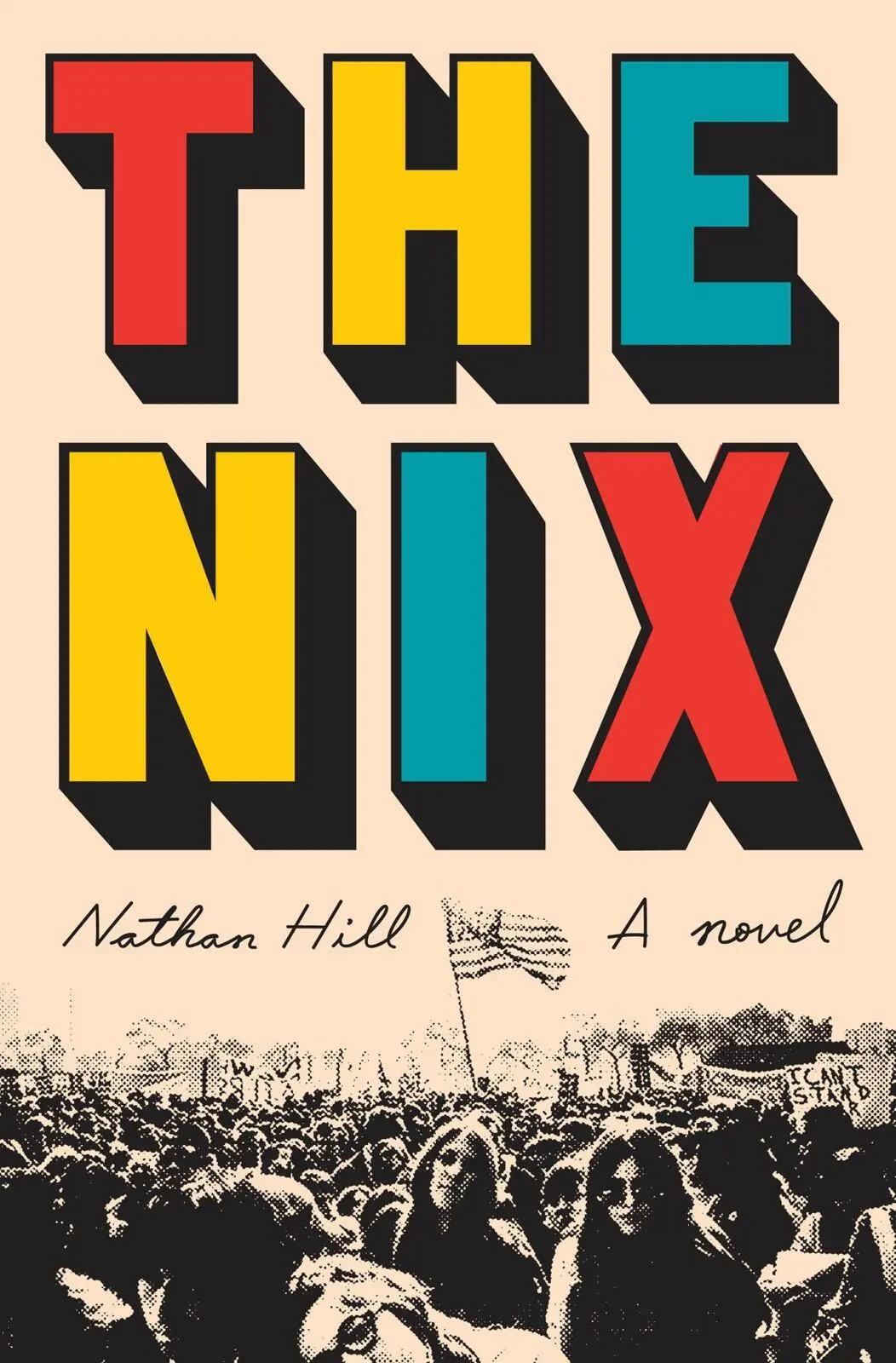
- Название:The Nix
- Автор:
- Издательство:Knopf
- Жанр:
- Год:2016
- ISBN:нет данных
- Рейтинг книги:5 / 5. Голосов: 1
-
Избранное:Добавить в избранное
- Отзывы:
-
Ваша оценка:
The Nix: краткое содержание, описание и аннотация
Предлагаем к чтению аннотацию, описание, краткое содержание или предисловие (зависит от того, что написал сам автор книги «The Nix»). Если вы не нашли необходимую информацию о книге — напишите в комментариях, мы постараемся отыскать её.
As Samuel begins to excavate her history, the story moves from the rural Midwest of the 1960s to New York City during the Great Recession and Occupy Wall Street to the infamous riots at the 1968 Chicago Democratic National Convention, and finally to Norway, home of the mysterious Nix that his mother told him about as a child. And in these places, Samuel will unexpectedly find that he has to rethink everything he ever knew about his mother — a woman with an epic story of her own, a story she kept hidden from the world.
The Nix — читать онлайн бесплатно полную книгу (весь текст) целиком
Ниже представлен текст книги, разбитый по страницам. Система сохранения места последней прочитанной страницы, позволяет с удобством читать онлайн бесплатно книгу «The Nix», без необходимости каждый раз заново искать на чём Вы остановились. Поставьте закладку, и сможете в любой момент перейти на страницу, на которой закончили чтение.
Интервал:
Закладка:
Problem is, you can’t write anything near this level of quality. Not even close. Despite all the training, there is an elusive element missing.
“Truth,” suggests your teacher in the end-of-year meeting, when you are called into the office because you have one more story to write before graduation and so your teacher wants to impress upon you in a last-ditch way that you absolutely have to “write something that’s true.”
“But I write fiction,” you say.
“I don’t care what you call it,” the teacher says. “Just write something true.”
So you write about one of the only true things that ever happened to you. A story about a pair of twins living in the Chicago suburbs. The sister is a violin prodigy. The brother is a troublemaker. They sit tensely at the dinner table under the imperious gaze of their stockbroker father, then are released into the night where they have adventures, among them the slow poisoning of the Jacuzzi belonging to their neighbor, the headmaster of their elite private school. The manner of poisoning is simple: pesticide overdose. But the explanation? Why does the brother want to poison the headmaster? What has the headmaster done to deserve it?
This one is easy to answer, but difficult to write.
It all clicked a few years ago. You finally connected the dots you were unable to connect when you were eleven. Why Bishop seemed to know things beyond his years. Sexual things. Like at the pond that final afternoon together when he pressed himself into you in exactly the correct position for sex — how did he know that? How did he know to do that? How did he know to seduce the principal to avoid a paddling? Where did he get all that pornography, all those creepy Polaroids? Why was he acting out? Becoming a bully? Getting expelled from school? Killing small animals? Poisoning the headmaster?
The moment you grasped this and suddenly understood it you were in high school, walking to school one morning, and you weren’t even thinking about Bishop or the headmaster or any of it when suddenly it came to you all at once, like in a vision, like your mind had been putting it together all this time beneath the surface: Bishop was being abused. Molested. Of course he was. And the headmaster was doing it.
And the guilt washed over you so hard you staggered. You sat down right in someone’s front yard, dizzy, dumbfounded, astonished, and missed the first three periods of school. You felt like you’d broken open right there on the lawn.
Why hadn’t you seen it? You’d been so wrapped up in your little dramas — your crush on Bethany, buying her a gift at the mall, which at the time seemed like the biggest problem in the world — so wrapped up that you didn’t see this tragedy happening right in front of you. It was an immense failure of perception and empathy.
Which is maybe why you decide finally to write about it. In your story about the twins, you describe how the brother is being abused by the headmaster. You don’t tiptoe around it; you don’t evade it. You write it the way you think it happened. You write it true.
Your classmates are, predictably, bored with it. They are by this time weary of you and your subject matter. Yet another child-abuse story, they say. Seen it before. Move on. But your teacher is unusually enthusiastic. He says there is a different quality to this story, a measure of humanity and generosity and warmth and feeling that was missing from your earlier efforts. Then, during another private chat, the teacher mentions that a bigwig New York publishing guy named Periwinkle has been asking around, trying to find new young talent, and could he, the teacher, send him this story?
This is the final step in becoming a famous writer. This is the final step in fulfilling the ambition you’ve had since your mother walked out: impressing her from afar, winning her approval and praise. And this is the last thing you need to do to get Bethany to notice you again, to see the very special qualities that the trombone boys can’t compete with, to get her to love you the way you should be loved.
All you have to do is say yes.
To say yes, go to the next page…
3
You say yes. You don’t even think about the long-term consequences of this. You don’t once consider how Bethany or Bishop might feel about this violation of their privacy. You are so blinded by your desire to impress and dazzle and awe the people who left you that you say yes. Yes, absolutely.
So the teacher sends the story to Periwinkle, and things happen pretty fast after that. Periwinkle phones the next day. He tells you that you’re an important new voice in American letters, and he wants you for a new imprint featuring only the work of young geniuses.
“We don’t have a name for the press yet, but we’re thinking of calling it The Next Voice,” Periwinkle says, “or maybe Next, or maybe even Lime, which many of the consultants seem really fond of, weirdly.”
Periwinkle hires a few ghostwriters to smooth out the story—“Totally normal,” he says, “everyone does it”—then works to get it placed in one of the huge taste-maker magazines, where you are declared one of the five best writers under twenty-five in America. Periwinkle then leverages that publicity to finagle a ridiculous contract for a book that hasn’t even been written yet. This gets into the papers along with all of the other good news of early 2001: the information superhighway, the New Economy, the nation’s engine humming powerfully forward.
Congratulations.
You are now a famous writer.
But two things keep you from enjoying this. The first is that there is no word from your mother. Instead, there is just a wretched silence. There is no evidence she has even seen the story.
The second is that Bethany — who absolutely does see the story — stops writing. No e-mails, no letters, no explanation. You write her wondering if something is wrong. Then you assume there is definitely something wrong and you ask to talk about it. Then you assume that the thing that’s wrong is that you completely stole her brother’s story and profited immensely from it, and so you try to justify this move as a writer’s prerogative while also apologizing for not clearing it with her first. None of these letters are answered, and eventually you understand that the story you hoped would win Bethany back has, perversely, killed any chance you may have had with her.
You don’t hear from Bethany for years, during which time you do no writing whatsoever, despite monthly encouraging phone calls from Periwinkle, who is eager to see a manuscript. But there is no manuscript to see. You wake up every morning intending to write but you don’t, ultimately, write. You can’t really say what exactly you spend your days doing, except that it is not writing. The months fly by, filled with not-writing. You buy a big new house with all your advance money and you do not write in it. You use your bit of fame to snag a teaching job at a local college, where you teach students about literature but make no literature yourself. It’s not that you’re “blocked,” exactly. It’s simply that your reason to write, your primary motivation, has melted away.
Bethany does eventually send another e-mail. On the afternoon of September 11, 2001, an e-mail that she sends to about a hundred people that says, simply, “I’m safe.”
Then in the early spring of 2004, on a day that is otherwise completely insignificant, you see in your in-box a message from Bethany Fall and you read the first paragraph about how she has something very important to tell you and your heart is popping because the thing she needs to confess, you decide, has to be her deep lifelong enduring love for you.
But that’s not it at all. You realize this when you come to the next paragraph, which begins with a sentence that cracks you open all over again: “Bishop,” she writes, “is dead.”
Читать дальшеИнтервал:
Закладка:
Похожие книги на «The Nix»
Представляем Вашему вниманию похожие книги на «The Nix» списком для выбора. Мы отобрали схожую по названию и смыслу литературу в надежде предоставить читателям больше вариантов отыскать новые, интересные, ещё непрочитанные произведения.







Обсуждение, отзывы о книге «The Nix» и просто собственные мнения читателей. Оставьте ваши комментарии, напишите, что Вы думаете о произведении, его смысле или главных героях. Укажите что конкретно понравилось, а что нет, и почему Вы так считаете.