Nathan Hill - The Nix
Здесь есть возможность читать онлайн «Nathan Hill - The Nix» весь текст электронной книги совершенно бесплатно (целиком полную версию без сокращений). В некоторых случаях можно слушать аудио, скачать через торрент в формате fb2 и присутствует краткое содержание. Год выпуска: 2016, Издательство: Knopf, Жанр: Современная проза, на английском языке. Описание произведения, (предисловие) а так же отзывы посетителей доступны на портале библиотеки ЛибКат.
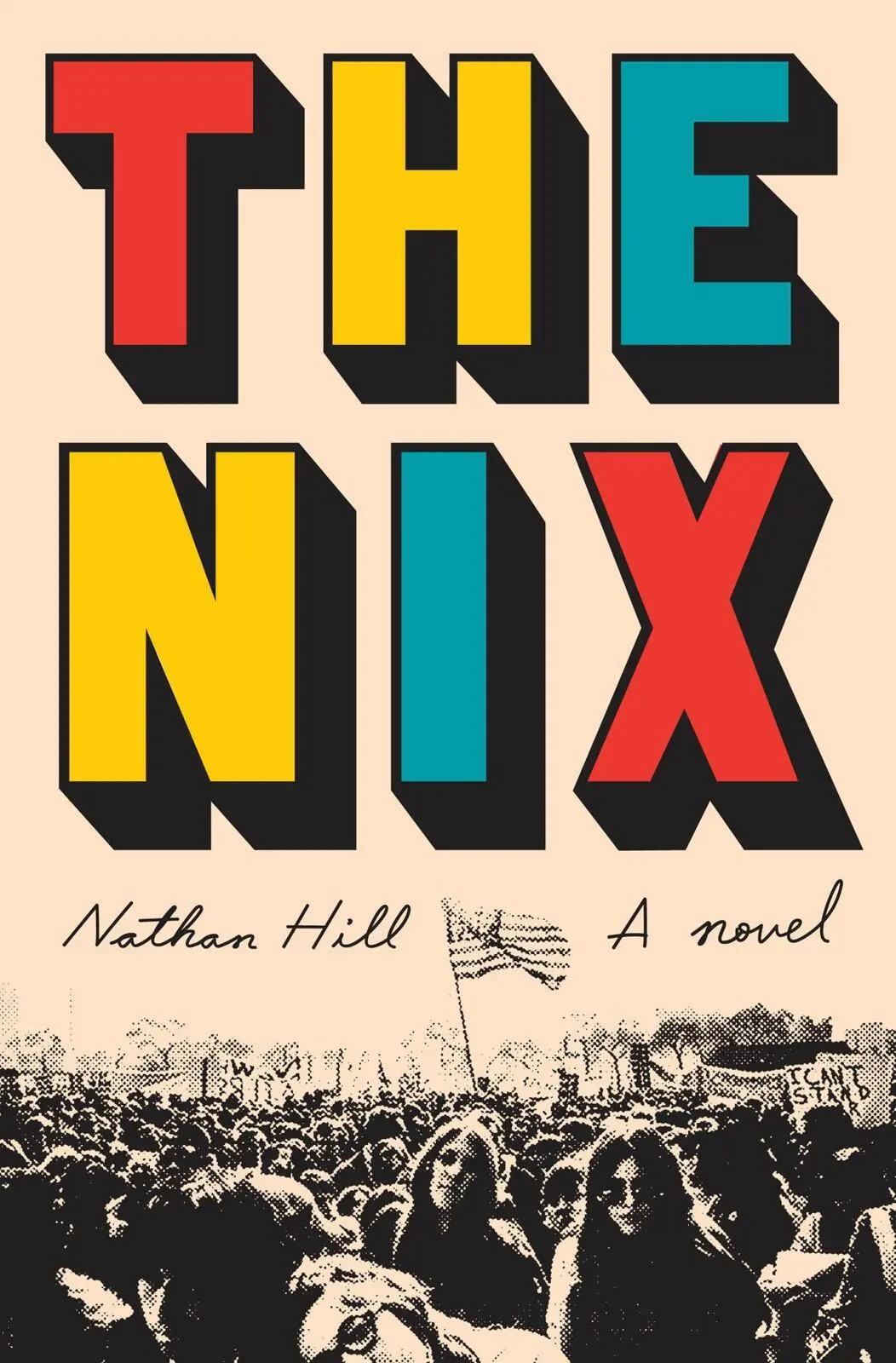
- Название:The Nix
- Автор:
- Издательство:Knopf
- Жанр:
- Год:2016
- ISBN:нет данных
- Рейтинг книги:5 / 5. Голосов: 1
-
Избранное:Добавить в избранное
- Отзывы:
-
Ваша оценка:
The Nix: краткое содержание, описание и аннотация
Предлагаем к чтению аннотацию, описание, краткое содержание или предисловие (зависит от того, что написал сам автор книги «The Nix»). Если вы не нашли необходимую информацию о книге — напишите в комментариях, мы постараемся отыскать её.
As Samuel begins to excavate her history, the story moves from the rural Midwest of the 1960s to New York City during the Great Recession and Occupy Wall Street to the infamous riots at the 1968 Chicago Democratic National Convention, and finally to Norway, home of the mysterious Nix that his mother told him about as a child. And in these places, Samuel will unexpectedly find that he has to rethink everything he ever knew about his mother — a woman with an epic story of her own, a story she kept hidden from the world.
The Nix — читать онлайн бесплатно полную книгу (весь текст) целиком
Ниже представлен текст книги, разбитый по страницам. Система сохранения места последней прочитанной страницы, позволяет с удобством читать онлайн бесплатно книгу «The Nix», без необходимости каждый раз заново искать на чём Вы остановились. Поставьте закладку, и сможете в любой момент перейти на страницу, на которой закончили чтение.
Интервал:
Закладка:
As has the “Love you.”
At college, at Juilliard, the “Love you” at the end of her correspondence switches quickly to “Love ya,” which stings. “Love ya” seems to be what happens to real love when its formality and dignity are amputated.
The other problem is that despite the fact that Bethany is no longer under her parents’ rule, her letters do not substantially change. The best way to describe their tone is informational. Like a guide on a campus tour. Given the chance to finally express her true feelings, Bethany falls back into the familiar patterns, giving updates, sharing news. It is like, after nine years of writing this way, she has written herself into a rut. It is so familiar it becomes the only way she can converse. And no matter how much news you get — that some classes are easy (like Ear Training) and some classes are hard (like Diatonic Harmony), that the cellist in her chamber group is really talented, that dorm food is bad, that her roommate is a percussionist from California who gives herself regular migraines from cymbal practice — there is a quality to this information that seems to lack warmth or humanity. It lacks intimacy. It is romanceless.
And then Bethany starts telling you about boys. Flirty boys. Brash boys at parties who make her laugh so hard she spills her drink. Boys, usually brass players, usually trombonists, who ask her out on dates. Further, she says yes. Further, the dates are fun. And you boil inside your skin that you’ve been pining for this woman for nine years and suddenly these guys, these strangers, have more success with her in one night than you’ve had your whole life. It’s unjust. You deserve better, after what you’ve been through. This is about the time that “Love you” turns to “Love ya,” which then turns to “Love,” which eventually becomes “xoxo,” and by then you realize that something fundamental has shifted in the nature of your relationship. Somewhere along the way, you missed your chance.
This is, incidentally, an essential step in becoming a famous writer. This failure. It gives you a rich inner life, fantasizing about all the ways you might not have screwed it up, and all the ways to win Bethany back. Top of the list: Beat the trombone boys. Method: Writing deep and pseudo-intellectual and artsy and important literary fiction. Because you are not a person who can make Bethany laugh until she spills her drink. You cannot compete with the trombone boys on this front. Because you always become deadly serious and formal when you think about her or write to her. It’s like a religious response, becoming solemn and official in the face of that which could annihilate you. When it comes to Bethany, you are utterly without humor.
And so you write humorless stories about Big Social Issues and you congratulate yourself because the funny trombone boys wouldn’t touch Big Social Issues with a ten-foot pole. (“Ten-foot pole” being a cliché that the trombone boys would use unthinkingly but you, as an artist who does all things originally, would not.) You believe that the point of being a writer is to show Bethany how much more unique and special you are than the same-feeling, same-doing masses. You believe that becoming a writer is the life equivalent of wearing the most creative and interesting Halloween costume at the party. When you decide to become a writer — this is in your early twenties, when you do that really important-seeming thing where you go to grad school to study “Writing, Creative”—you throw yourself into the lifestyle: You go to artsy readings; hang out in coffee shops; wear black; build a whole dark melancholic wardrobe that might best be described as postapocalyptic/postholocaust; drink alcohol, often late into the night; buy journals, leather-bound; pens, heavy and metal, never ballpoint, never clicky; and cigarettes, first the normal kind, the brands that everyone buys at the gas station, then fancy European numbers that come in long flat boxes that you can find only at special tobacco stores and head shops. The cigarettes give you something to do when you are out in public and feel like you’re being examined and appraised and judged. They serve the same function the smartphone will in about fifteen years: a kind of social shield, something to pull out of your pocket and fiddle with when you feel awkward about yourself. Which you feel pretty much all the time, and for which you blame your mother.
You never write about this, of course. You typically avoid all introspection. There are things inside you that you prefer to ignore. There is a molten mass of anguish and self-pity way deep inside you and you keep it pressed down there by never looking at it or acknowledging it. When you write, you don’t write about yourself. Instead, you write dark and heavy and violent stories that get you the reputation that maybe you have secrets. Maybe some really brutal shit went down in your past. You write a story about an abusive alcoholic plastic surgeon who gets drunk every night and rapes his teenage daughter in unimaginably cruel ways, a horror that continues through most of her high-school years until one day the girl comes up with a plan to murder dad by slipping huge amounts of botulinum toxin pilfered from his Botox stores into the maraschino cherry supply, so that after several old-fashioneds the father is reduced to total paralysis, whereby the daughter invites this brutal gay psychopath she met under shadowy circumstances to rape the father repeatedly while the father is totally conscious to experience all of it, and then after getting his proper comeuppance he is killed when the daughter cuts off his genitalia and allows him to bleed to death slowly over a period of seven days down in the basement where no one can hear him scream.
In other words, you write stories that have nothing to do with your life or really anything you know anything about.
And while you write these stories, all you care about is what Bethany will think reading them. The stories are really just a large ongoing performance that has a single goal: To get Bethany to feel certain things about you. To make her believe you are talented, artsy, brilliant, deep. To make her love you again.
The paradox here is that you never show her any of these stories.
Because even though you hang out with the writing crowd and take the writing classes and dress like a writer and smoke like a writer, ultimately you have to recognize that your writing isn’t very good. It earns a lukewarm reception in classes, unenthusiastic feedback from teachers, loads of anonymous form rejections from the editors you query. The worst is when a teacher asks in an unusually intense office-hours visit, “Why do you want to be a writer?”
The subtext here being, of course, maybe you shouldn’t.
“I’ve always wanted to be a writer” is your pat response. An answer that is not altogether true. You didn’t always want to be a writer but rather wanted to be a writer ever since your mother abandoned you, at age eleven, and because life before that feels like an altogether different person’s life, it might as well have been always. You were, essentially, reborn on that day.
This is not something you tell your teacher. This is something you carry on the inside, in a cavity filled with every true thing about you so that there is nothing true left on the outside. The morning your mother disappeared, especially, is stuffed way down deep, your mother asking you what you wanted to be when you grew up. And you said a novelist, and she smiled and kissed your forehead and said she’d be reading whatever you wrote. And so becoming a writer was the only communication you’d have with your mother, a one-way communication, like prayer. And you thought if you wrote something really great that she’d read it and, by some strange calculus, it would prove to her that she should never have left.
Читать дальшеИнтервал:
Закладка:
Похожие книги на «The Nix»
Представляем Вашему вниманию похожие книги на «The Nix» списком для выбора. Мы отобрали схожую по названию и смыслу литературу в надежде предоставить читателям больше вариантов отыскать новые, интересные, ещё непрочитанные произведения.



Обсуждение, отзывы о книге «The Nix» и просто собственные мнения читателей. Оставьте ваши комментарии, напишите, что Вы думаете о произведении, его смысле или главных героях. Укажите что конкретно понравилось, а что нет, и почему Вы так считаете.