Nathan Hill - The Nix
Здесь есть возможность читать онлайн «Nathan Hill - The Nix» весь текст электронной книги совершенно бесплатно (целиком полную версию без сокращений). В некоторых случаях можно слушать аудио, скачать через торрент в формате fb2 и присутствует краткое содержание. Год выпуска: 2016, Издательство: Knopf, Жанр: Современная проза, на английском языке. Описание произведения, (предисловие) а так же отзывы посетителей доступны на портале библиотеки ЛибКат.
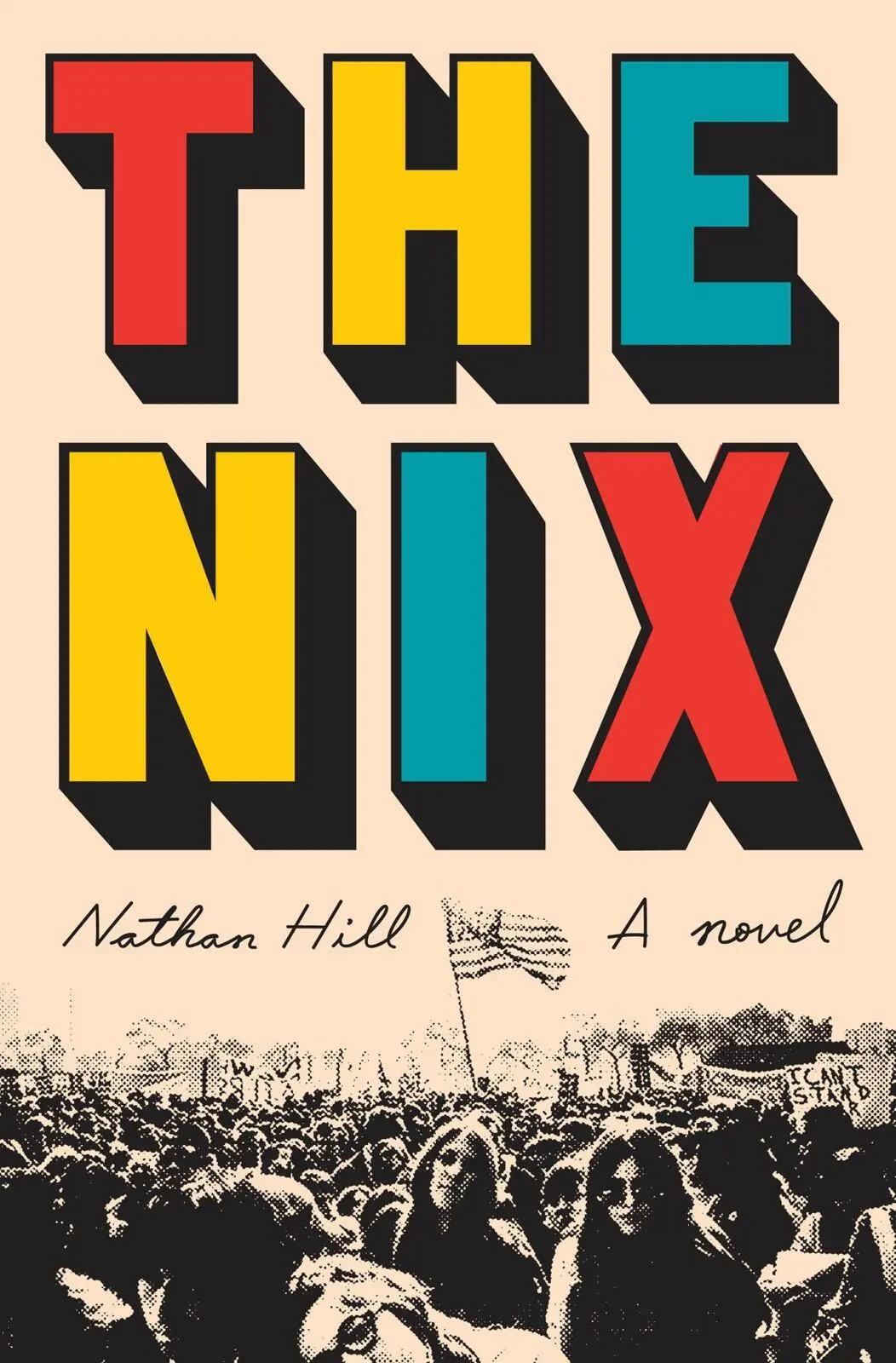
- Название:The Nix
- Автор:
- Издательство:Knopf
- Жанр:
- Год:2016
- ISBN:нет данных
- Рейтинг книги:5 / 5. Голосов: 1
-
Избранное:Добавить в избранное
- Отзывы:
-
Ваша оценка:
The Nix: краткое содержание, описание и аннотация
Предлагаем к чтению аннотацию, описание, краткое содержание или предисловие (зависит от того, что написал сам автор книги «The Nix»). Если вы не нашли необходимую информацию о книге — напишите в комментариях, мы постараемся отыскать её.
As Samuel begins to excavate her history, the story moves from the rural Midwest of the 1960s to New York City during the Great Recession and Occupy Wall Street to the infamous riots at the 1968 Chicago Democratic National Convention, and finally to Norway, home of the mysterious Nix that his mother told him about as a child. And in these places, Samuel will unexpectedly find that he has to rethink everything he ever knew about his mother — a woman with an epic story of her own, a story she kept hidden from the world.
The Nix — читать онлайн бесплатно полную книгу (весь текст) целиком
Ниже представлен текст книги, разбитый по страницам. Система сохранения места последней прочитанной страницы, позволяет с удобством читать онлайн бесплатно книгу «The Nix», без необходимости каждый раз заново искать на чём Вы остановились. Поставьте закладку, и сможете в любой момент перейти на страницу, на которой закончили чтение.
Интервал:
Закладка:
And just at that moment he stops, draws back a few inches, and looks at her. Henry, she sees now, is in agony. His face is screwed up in knots. He’s staring at her with big pleading desperate eyes. He’s waiting for her to protest. Waiting for her to say No. And she’s about to, but she catches herself. And this will be the moment, later on in the night, after everything’s over, after Henry has driven her home, as she stays awake till dawn thinking about it, the thing that will confuse her most is this precise moment: when she had the chance to flee, but she did not.
She does not say No. She does not say anything at all. She simply meets Henry’s gaze. Maybe — though she’s not entirely sure of it — maybe she even nods: Yes.
And so Henry goes back at it, vigor renewed. Kissing her, tonguing her ear, biting her neck. He drives his hand down, between them, and she hears the undoings of various mechanisms — belt and buckle, zipper.
“Close your eyes,” he says.
“Henry.”
“Please. Close your eyes. Pretend you’re asleep.”
She looks at him again, his face inches away, eyes closed. He’s consumed by something, some unutterable need. “Please,” he says, and he takes her hand and guides it down. Faye pulls against him, weakly resisting until he says “Please” again and tugs harder and she lets her hand go limp, lets him do what he wants. He draws himself out of his slacks and guides her hand the rest of the way, between the folds of his pants, under his briefs. When she touches him, he leaps.
“Keep your eyes closed,” he says.
And she does. She feels him move against her, feels him slide across her fingers. It’s an abstract feeling, removed from the world of actual things. He’s pressing his face to her neck and pumping his hips and, she realizes, he’s crying, soft little whimpers, warm tears puddling where he’s bearing into her.
“I’m sorry,” he says.
And Faye feels like she should be mortified but mostly she feels pity. She feels bad for Henry, his despair and his guilt, the crude needs wrecking him, the hopeless way he’s gone about it tonight. And so she pulls him closer and grips him tighter and suddenly, with a great shudder and a splash of warmth, it’s all over.
Henry collapses, groans, falls into her, and cries.
“I’m sorry,” he keeps saying.
His body is curled up against her, and in her hand, he’s quickly shrinking away. “I’m so sorry,” he says. She tells him it’s okay. Strokes his hair slowly, holds him as the sobs ripple through his body.
This cannot be what people mean when they talk about fate and romance and destiny. No, these things are ornaments, Faye decides, decorations hiding this one bleak fact: that Henry’s master tonight was not love but rather catharsis, plain old animal release.
He whimpers into her chest. Her hand is sticky and cold. True love, she thinks. And she almost laughs.
7
THERE ARE TWO CONDITIONS, Margaret says, for dinner at the Schwingles. First, pick up a package at the pharmacy. And second, tell no one.
“What’s in the package?” Faye says.
“Sweets,” Margaret says. “Chocolates and stuff. Bonbons. My dad doesn’t want me to have that kind of food. He says I need to watch my figure.”
“You don’t need to watch your figure.”
“That’s what I said! Don’t you think that’s unfair?”
“That is so unfair.”
“Thank you,” she says. She smoothes her skirt, a gesture that seems inherited from her mother. “So when you pick it up, can you pretend it’s yours?”
“Sure. Of course.”
“Thank you. I already paid for it. I placed the order in your name, so I wouldn’t get yelled at.”
“I understand,” Faye says.
“The dinner is going to be a surprise for my dad. So when you see him at the pharmacy, tell him you’re going on a date that night. With Henry. To throw him off the track.”
“Okay, I will.”
“Better yet, tell everyone you’re going on a date that night.”
“Everyone?”
“Yeah. Don’t tell anyone you’re coming over.”
“All right.”
“If people know you’re coming over, my dad could find out and he’d suspect something. I know you wouldn’t want to ruin the surprise.”
“Of course not.”
“If you tell anyone it will definitely get back to my dad. He’s very well-connected. You haven’t told anyone yet, have you?”
“No.”
“Okay, good. Good. Just remember. Pick up the package at the pharmacy. And say you’re going on a date with Henry.”
The party would be unforgettable. Margaret has promised balloons, streamers, her mother’s famous salmon aspic, a cake with three different layers, homemade vanilla ice cream, maybe afterward they would even take the convertible out for a nighttime joyride along the river. Faye feels so special to be singled out for the occasion.
“Thank you for inviting me,” she tells Margaret, to which Margaret gently touches her shoulder and says, “I wouldn’t have it any other way.”
On the evening of the party, Faye is in her bedroom trying to decide between two versions of the same dress, a smart little summer dress — one green, one yellow. Both were purchased for special occasions that Faye can no longer remember. Probably church-related. She looks into the mirror and holds one up in front of her, then the other.
On her bed, spread out over the blankets and pillows, is paperwork from Chicago Circle. Documents and forms that will, once delivered, officially hold her seat in the freshman class of 1968. She’ll need to put them in the mail within the next week to meet the deadline. She’s already filled them out, in ink, in her neatest handwriting. Each night she’s been spreading out the materials like this, the brochures and pamphlets, hoping something will speak to her, hoping to see something that will finally convince her to go or stay.
Each time she feels near a decision, some worry compels her in the opposite direction. She’ll read another Ginsberg poem and think, I’m going to Chicago. She’ll look at the brochures and read about the space-age campus and imagine being in a place where the students are roundly smart and serious and wouldn’t look at her all funny when she aces another algebra test, and she’ll think, I’m definitely going to Chicago. But then she’ll imagine how everyone in town would react if she went, or, worse, if she came back, which is just about the most mortifying thing in the world, if she can’t cut it at Circle and has to come back, then the whole town would be gossiping about her and rolling their collective eyes. She pictures this and thinks, I’m staying in Iowa.
And so it goes, this awful pendulum.
But she can make one decision, at least: the yellow dress. Yellow feels like the more celebratory color, she thinks, the more birthday-appropriate.
Downstairs she finds her mother watching the news. A story about student protesters, again. Another night, another university overrun. Students pack themselves into hallways and won’t leave. They invade the office of the president and provost. They sleep there, right where people work.
She watches it on television, Faye’s mother, gaping at the weird happenings in the world. On the couch she sits and stares, each night, at Walter Cronkite. The events lately have seemed otherworldly — sit-ins, riots, assassinations.
“The vast majority of college students are not militant,” explains the reporter. He interviews a girl with pretty hair and a soft wool sweater who tells him how much all the other students disagree with the extremists. “We just want to go to class and get good grades and support our boys overseas,” she says, smiling.
Читать дальшеИнтервал:
Закладка:
Похожие книги на «The Nix»
Представляем Вашему вниманию похожие книги на «The Nix» списком для выбора. Мы отобрали схожую по названию и смыслу литературу в надежде предоставить читателям больше вариантов отыскать новые, интересные, ещё непрочитанные произведения.









Обсуждение, отзывы о книге «The Nix» и просто собственные мнения читателей. Оставьте ваши комментарии, напишите, что Вы думаете о произведении, его смысле или главных героях. Укажите что конкретно понравилось, а что нет, и почему Вы так считаете.