Nathan Hill - The Nix
Здесь есть возможность читать онлайн «Nathan Hill - The Nix» весь текст электронной книги совершенно бесплатно (целиком полную версию без сокращений). В некоторых случаях можно слушать аудио, скачать через торрент в формате fb2 и присутствует краткое содержание. Год выпуска: 2016, Издательство: Knopf, Жанр: Современная проза, на английском языке. Описание произведения, (предисловие) а так же отзывы посетителей доступны на портале библиотеки ЛибКат.
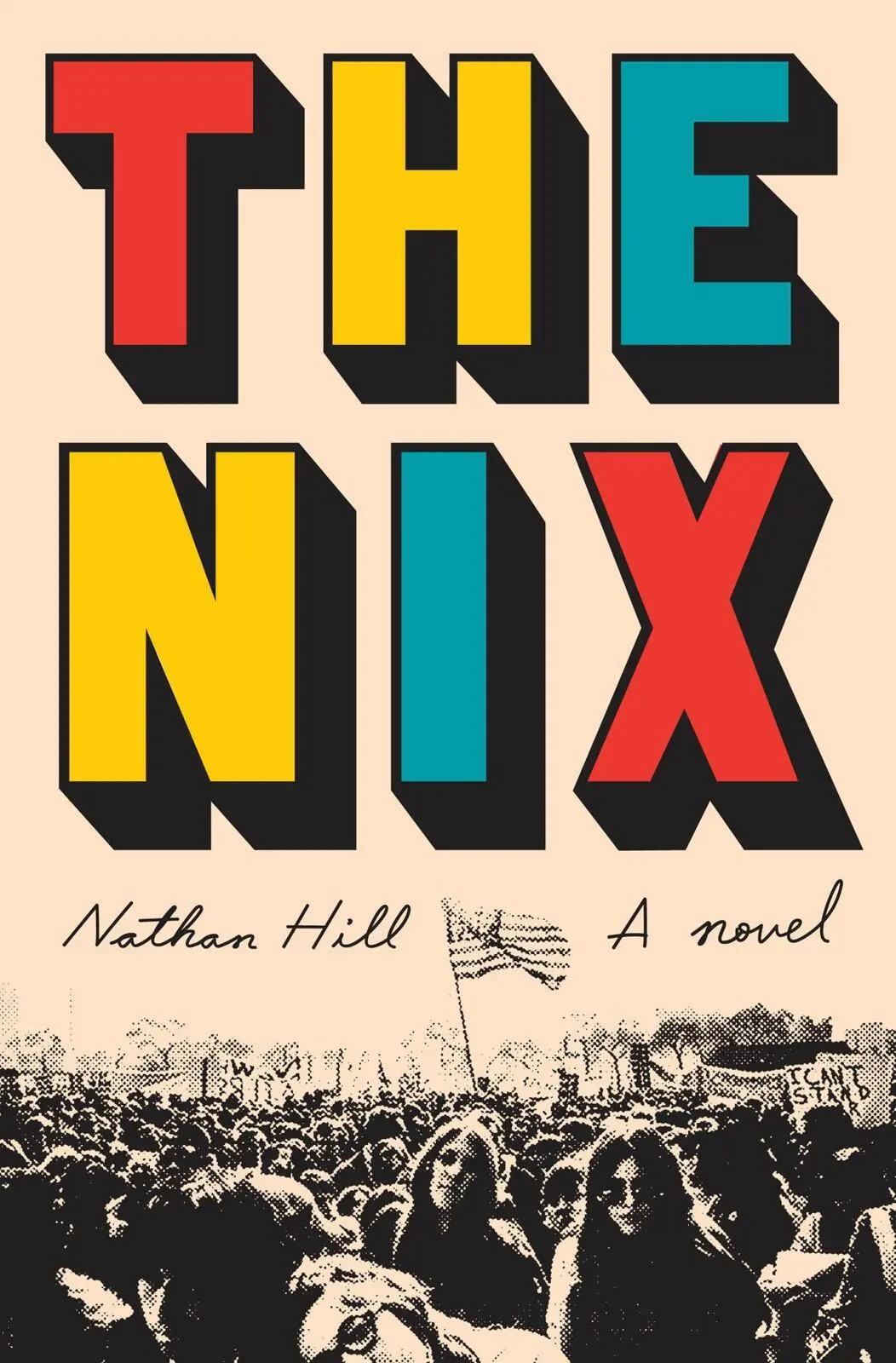
- Название:The Nix
- Автор:
- Издательство:Knopf
- Жанр:
- Год:2016
- ISBN:нет данных
- Рейтинг книги:5 / 5. Голосов: 1
-
Избранное:Добавить в избранное
- Отзывы:
-
Ваша оценка:
The Nix: краткое содержание, описание и аннотация
Предлагаем к чтению аннотацию, описание, краткое содержание или предисловие (зависит от того, что написал сам автор книги «The Nix»). Если вы не нашли необходимую информацию о книге — напишите в комментариях, мы постараемся отыскать её.
As Samuel begins to excavate her history, the story moves from the rural Midwest of the 1960s to New York City during the Great Recession and Occupy Wall Street to the infamous riots at the 1968 Chicago Democratic National Convention, and finally to Norway, home of the mysterious Nix that his mother told him about as a child. And in these places, Samuel will unexpectedly find that he has to rethink everything he ever knew about his mother — a woman with an epic story of her own, a story she kept hidden from the world.
The Nix — читать онлайн бесплатно полную книгу (весь текст) целиком
Ниже представлен текст книги, разбитый по страницам. Система сохранения места последней прочитанной страницы, позволяет с удобством читать онлайн бесплатно книгу «The Nix», без необходимости каждый раз заново искать на чём Вы остановились. Поставьте закладку, и сможете в любой момент перейти на страницу, на которой закончили чтение.
Интервал:
Закладка:
Through the wall she hears someone squawking on a reed, and she smiles at that noise, the memory of that noise. She had been a musician once — one of the woodwinds, one of those who crowed her reeds. It’s one of the things she gave up after the panic attacks began.
That’s what the doctors called them— panic attacks —which didn’t seem accurate to Faye. It didn’t feel like she was panicking; it felt more like she was being forcibly and methodically deactivated all over. Like a wall of televisions being turned off one by one — how the images on each TV shrank to pinholes before disappearing altogether. It felt like that, the narrowing of her vision when an attack began, how she could only really take in and focus on one small thing, a dot in the wider field, usually her shoes.
At first it seemed to happen only when she displeased her father, when she did something — like taking those boys to the bomb shelter — that angered him. But then later the attacks struck in moments when she might displease him, when she had the opportunity to fail in front of him, even if she had not yet failed.
Example: the concert.
She had joined the school orchestra after listening to a compelling recording of Peter and the Wolf. She had wanted to play the violin, maybe the cello, but the school had openings only in the woodwinds. They gave her an oboe — dull black, the color rubbed off in places, the keys once silver but now a flat brown, one long, deep scratch running down its entire length. Learning the oboe was a calamity of honks and squawks, missed notes, her pinkie fingers sliding off the keys because they couldn’t yet move independently of the rest of her hand. Yet she liked it. She liked that the oboe gave the tuning note at the beginning of rehearsal. She liked the constancy of that, the hard solid A she delivered that anchored the whole group. She liked the severe posture needed to play it, sitting up straight, holding it in front of her, elbows at right angles. She even enjoyed the rehearsals. The camaraderie. Everyone working toward a common goal. The general feeling of high artistry. The magnificent sound they could make together.
For their first concert, each musician would have a very small solo. She practiced hers for months, until the notes were inside her, until she could play her solo perfectly without even looking at the music. The night of the performance, she was all dressed up and she looked into the audience and saw her mother, who waved, and her father, who was reading the program. And there was something about his concentration, something about the humorless way he studied the program, the way he scrutinized it, that just terrified Faye.
A thought popped into her head: What if I screw up?
It was something she had never before considered. And suddenly whatever magic she summoned when she practiced could not be summoned now. She could not clear her mind, could not let go as she had let go in rehearsal. Her palms moistened and her fingers grew cold. By intermission she had a headache, a stomachache, dark patches of sweat under her arms. She felt the urgent need to pee, but once in the bathroom she found that she couldn’t. Then during the concert’s second half, she began to feel dizzy, her chest was tight. When the conductor pointed his baton to cue her solo, Faye couldn’t play. The air stopped in her throat. What she squeezed out was a small cry, a short and helpless wheeze. Now all the faces turned. Everyone was looking. She heard music coming from elsewhere, but it sounded far away, like being underwater. The light in the auditorium seemed to dim. She stared at her shoes. She tumbled out of her chair. She blacked out.
The doctors said nothing was wrong.
“Nothing medically,” they quickly added. They made her breathe into a brown paper bag and diagnosed her with a “chronic nervous condition.” Her father looked at her, mortified and stricken. “Why did you do that?” he said. “The whole town was watching!” Which ignited her nerves all over again, his disappointment about her panic attack combined with her anxiety about not having another one in front of him.
Then she began having panic attacks even in situations that had nothing to do with her father, in moments that seemed otherwise innocent and even-keeled and calm. She would be having a normal conversation and suddenly this toxic thought would, for no reason, appear: What if I screw up?
And whatever blithe thing Faye had been saying the moment before was suddenly elevated to catastrophic proportions: Was she being stupid, insensitive, dim-witted, boring? The conversation became a horrible test she could easily fail. She felt a sense of doom combined with those bodily fight-or-flight mechanisms — headaches, chills, blushing, sweating, hyperventilating, hairs standing on end — which made everything worse because the only thing more painful than a panic attack was someone else seeing it.
Moments when she failed in front of other people, or moments when she felt the potential to fail in front of people — these could trigger an attack. Not every time, but sometimes. Frequent enough that she had adopted a certain self-protective behavior: She became a person who never screwed up.
A person who never failed at anything.
It was easy: The more afraid Faye felt on the inside, the more perfect she was on the outside. She blunted any possible criticism by being beyond reproach. She remained in people’s good graces by being exactly who they wanted her to be. She aced every test. She won every academic award the school offered. When the teacher assigned a chapter from a book, Faye went ahead and read the whole book. Then read every book written by that author that was available at the town library. There was not a subject in which she did not excel. She was a model student, a model citizen, went to church, volunteered. Everyone said she had a good head on her shoulders. She was easily likable, a great listener, never demanding or critical. She was always smiling and nodding, always agreeable. It was difficult to dislike her, for there was nothing to dislike — she was accommodating, docile, self-effacing, compliant, easy to get along with. Her outward personality had no hard edges to bump into. Everyone agreed that she was really nice. To her teachers, Faye was the achiever, the quiet genius in the back of the room. They gushed about her at conferences, noting especially her discipline and drive.
It was, Faye knew, all an elaborate mental game. She knew that way down deep she was a phony, just your average normal girl. If it seemed like she had abilities that no one else did, it was only because she worked harder, she thought, and all it would take for the rest of the world to see the real Faye, the true Faye, was one failure. So she never failed. And the distance between the real Faye and the fake Faye, in her mind, kept widening, like a ship leaving the dock and slowly losing sight of home.
This was not without cost.
The flip side of being a person who never fails at anything is that you never do anything you could fail at. You never do anything risky. There’s a certain essential lack of courage among people who seem to be good at everything. Faye, for example, gave up the oboe. It goes without saying that she never played sports. Theater was an obvious no. She declined almost all invitations to parties, socials, mixers, afternoons at the river, nights drinking around a bonfire in somebody’s backyard. She has to admit that now, as a result, she really has no close personal friends at all.
Applying to Circle was the first risky thing she’d done in living memory. And then dancing the way she danced at the prom. And going after Henry the way she did at the playground. Risky. And now she felt punished for it. How the town resented her, and how Henry had shamed her — such was the price for asserting herself.
Читать дальшеИнтервал:
Закладка:
Похожие книги на «The Nix»
Представляем Вашему вниманию похожие книги на «The Nix» списком для выбора. Мы отобрали схожую по названию и смыслу литературу в надежде предоставить читателям больше вариантов отыскать новые, интересные, ещё непрочитанные произведения.






Обсуждение, отзывы о книге «The Nix» и просто собственные мнения читателей. Оставьте ваши комментарии, напишите, что Вы думаете о произведении, его смысле или главных героях. Укажите что конкретно понравилось, а что нет, и почему Вы так считаете.