Nathan Hill - The Nix
Здесь есть возможность читать онлайн «Nathan Hill - The Nix» весь текст электронной книги совершенно бесплатно (целиком полную версию без сокращений). В некоторых случаях можно слушать аудио, скачать через торрент в формате fb2 и присутствует краткое содержание. Год выпуска: 2016, Издательство: Knopf, Жанр: Современная проза, на английском языке. Описание произведения, (предисловие) а так же отзывы посетителей доступны на портале библиотеки ЛибКат.
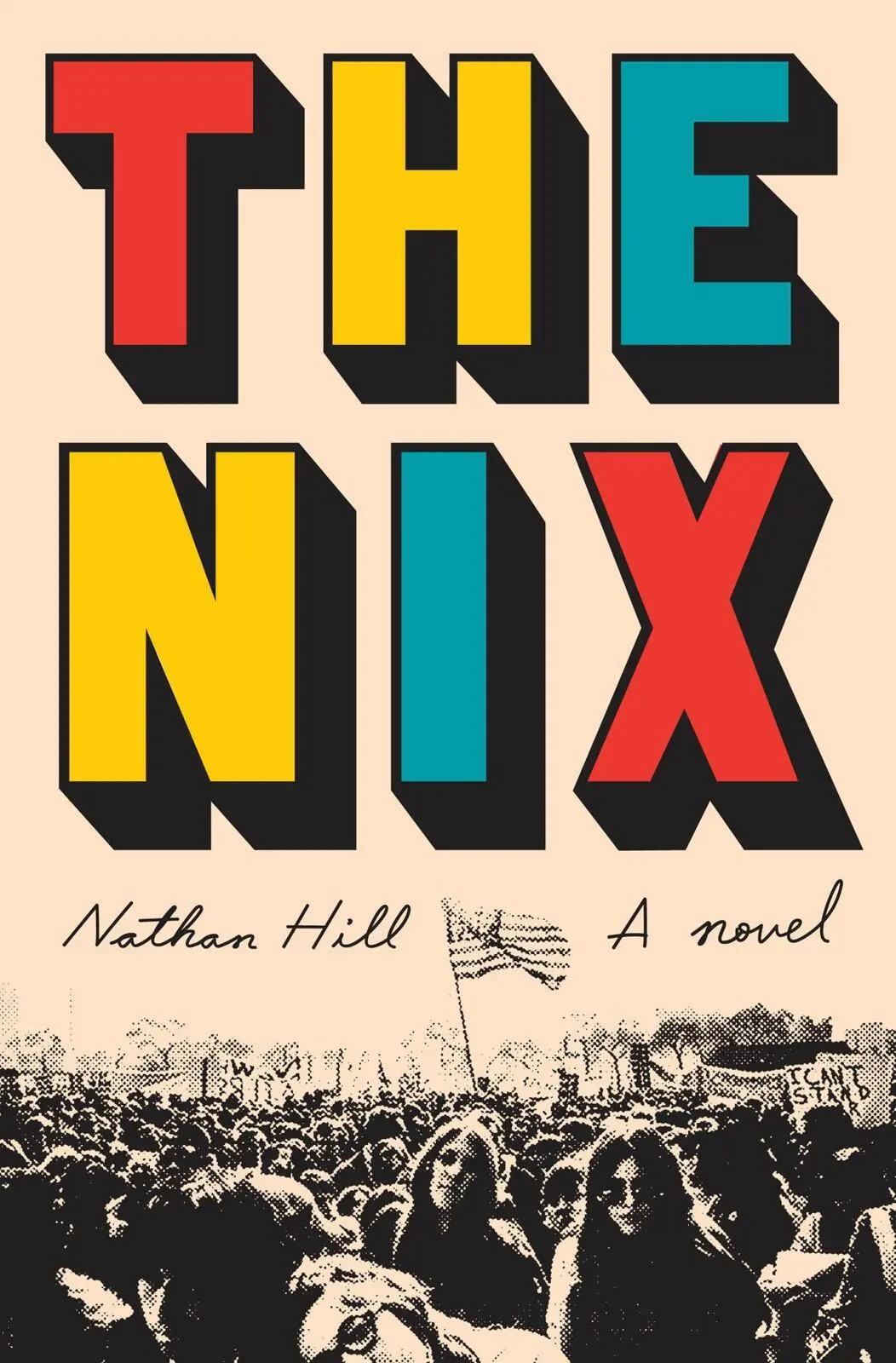
- Название:The Nix
- Автор:
- Издательство:Knopf
- Жанр:
- Год:2016
- ISBN:нет данных
- Рейтинг книги:5 / 5. Голосов: 1
-
Избранное:Добавить в избранное
- Отзывы:
-
Ваша оценка:
The Nix: краткое содержание, описание и аннотация
Предлагаем к чтению аннотацию, описание, краткое содержание или предисловие (зависит от того, что написал сам автор книги «The Nix»). Если вы не нашли необходимую информацию о книге — напишите в комментариях, мы постараемся отыскать её.
As Samuel begins to excavate her history, the story moves from the rural Midwest of the 1960s to New York City during the Great Recession and Occupy Wall Street to the infamous riots at the 1968 Chicago Democratic National Convention, and finally to Norway, home of the mysterious Nix that his mother told him about as a child. And in these places, Samuel will unexpectedly find that he has to rethink everything he ever knew about his mother — a woman with an epic story of her own, a story she kept hidden from the world.
The Nix — читать онлайн бесплатно полную книгу (весь текст) целиком
Ниже представлен текст книги, разбитый по страницам. Система сохранения места последней прочитанной страницы, позволяет с удобством читать онлайн бесплатно книгу «The Nix», без необходимости каждый раз заново искать на чём Вы остановились. Поставьте закладку, и сможете в любой момент перейти на страницу, на которой закончили чтение.
Интервал:
Закладка:
The agents keep popping their heads in: “You okay in there Mr. Vice President sir?”
He understands there’s much to do and little time to do it and taking a ninety-minute shower was not exactly on his campaign manager’s itinerary. Still, he would have been worthless had he not gotten that stink off.
His fingers are beyond pruned and into this supersaturated territory where his skin looks like an afghan draped loosely over his actual skin. The mirror is opaque and slate gray by now in the humid, dense air.
“Yes, I’m fine,” he tells the agent.
Only he’s not fine, he realizes, as he speaks. Because there’s a sudden tickle in his throat, a slight scratchy pain behind his Adam’s apple. He hasn’t spoken in an hour and a half and now that he’s spoken he feels it, that first leading edge of illness. He tests his throat — his precious and golden throat, his vocal cords and lungs, these bits of him that are all he has to give as he addresses the country and accepts the nomination for president in a few days’ time — he verbalizes a few notes, just a little solfège, a little do, re, mi. And sure enough he feels it, that spike of pain, that friction burn, that swelling on the soft palate.
Oh no.
He turns the water off and towels himself dry and robes up and crashes into the suite’s main conference area and announces that he needs vitamin C right now.
When the group looks at him funny, he announces “I may have a sore throat” with the kind of gravity a doctor might use to say The tumor is malignant.
The agents look at each other uncomfortably. A few of them cough. One of them steps forward and says, “Probably not a sore throat, sir.”
“How would you know?” Triple H says. “I need vitamin C, and I need it right this goddamn second.”
“Sir, it’s probably the tear gas, Mr. Vice President sir.”
“What are you talking about?”
“Tear gas, sir. Your typical motivational weapon, sir, used to disperse crowds nonviolently. Irritating to the eyes, nose, mouth, and, yes, certainly sir, the throat and lungs.”
“Tear gas.”
“Yes, sir.”
“In here?”
“Yes, sir.”
“In my hotel suite. ”
“It came from the park, sir. The police are using it on the demonstrators. And today, you see, we’ve got an easterly wind—”
“At about twelve knots,” adds another agent.
“Agreed, yes, thank you, a sturdy wind that pushed the gas back across Michigan Avenue and into the hotel and even, yes, up to the top floor. Our floor. Sir.”
Triple H can now feel his eyes watering and burning, that feeling like when you’re standing over chopped onions. He walks to the suite’s large front windows and looks out at the park, which is a chaos of running, terrified youths and pursuing cops and clouds of orange gas.
“The police did this?” he says.
“Yes, sir.”
“But don’t they know I’m up here?”
And this is almost the breaking point for poor Hubert H. This was supposed to be his convention, his moment. Why did this have to happen? Why does it always have to turn out like this? And suddenly he’s eight years old again back in South Dakota and Tommy Skrumpf is ruining his birthday party by having an epileptic fit right there on the kitchen floor, and the doctors take Tommy away and the parents take their kids home still carrying the unopened presents that were supposed to be Hubert’s, and a small ungenerous part of him broke open that night and he wept not that Tommy might die but wishing that he would. And then he’s nineteen years old and he’s just finished his first year at college, and he got good marks and he likes it, college, he’s good at it, and he’s made friends and found a girl and his life is finally shaping up and that’s when his parents tell him to come home because they’re out of money. So he comes home. And then it’s 1948 and he’s just been elected to the United States Senate for the first time and at that moment his father up and dies. And now here he is about to be nominated for president, and all around him is fighting and tear gas and butchers and shit and death.
Why does this always happen? Why does he have to pay for any triumph with sadness and blood? All his victories end in sorrow. In some ways, he’s still that disappointed eight-year-old thinking bad things about Tommy Skrumpf. He feels the sting of that day all the way to his marrow, still.
Why do the best things in life leave such deep scars?
Which is exactly the kind of self-destructive, negative-type thinking the management consultants were brought in to fix. He repeats his confidence mantras. I’m a winner. He cancels the order for the vitamin C. He gets dressed. Gets back to work. Sic transit gloria mundi.
27
OLD CRONKITE LISTING to his right, leaning on his desk in a manner that plays on TV as serious contemplation and the strong-willed constitution of a man whose job it is to deliver bad news to the country, leaning like this and cocking his head and staring into the camera with a pained look on his face, a kind of father’s this-is-going-to-hurt-me-more-than-it’s-going-to-hurt-you look, and saying, “The Democratic convention is about to begin”—then a long dramatic pause here for this next part to really sink in—“in a police state. ”
Then adding “There just doesn’t seem to be any other way to say it” for the benefit of his producers, who he can imagine are right now shaking their heads in the control van at his blatant editorializing, again.
But something needs to be said for the benefit of the viewers who are at home and plainly not getting it. The CBS switchboard has been going nuts all day. The most calls they’d gotten since King was shot. Well sure, Cronkite said, people are mad, the police are out of control.
Yes, people are mad, his producers told him, but not mad at the police. They’re mad at the kids, they said. They’re blaming the kids. They’re saying the kids are getting what they deserve.
And it’s true that certain protestors are not entirely, let’s say, easy to like. They try to offend your sensibilities. They try to push your buttons. They are unkempt, unclean. But they are only a tiny part of the mass gathered right now outside the Hilton. Most of the kids out there look like normal kids, anybody’s kids. Maybe they’d gotten themselves into something they didn’t understand, swept up in something larger. But they aren’t criminals. They aren’t deviants. They aren’t radicals or hippies. They probably just don’t want to be drafted. They are probably just sincerely against the Vietnam War. And, by the way, who isn’t these days?
But it turns out that for every poor kid shown getting his head drubbed by a nightstick, CBS gets ten phone calls in support of the cop who held the stick. Reporters got gassed in the street and then came back to HQ to find a telegram from a thousand miles away saying the reporters didn’t understand what was really happening in Chicago. As soon as he heard this, old Cronkite knew he’d failed. They’d been covering the radicals and the hippies so much that now his viewers couldn’t see past them. The gray areas had ceased to exist. And old Cronkite had two thoughts about this. First, anyone who thinks television can bring the nation together to have a real dialogue and begin to understand one another with empathy and compassion is suffering a great delusion. And second, Nixon is definitely going to win this thing.
28
IT IS BAD PLANNING on the part of the police to demand that protestors leave the park but give them no obvious way to do so. It is no longer legal to assemble in the park, but it is also illegal to cross a police barricade, and the park is barricaded on all sides. So it’s your classic double bind. Actually, the only place not barricaded is a spot on the eastern edge of the park, by the lake, exactly where the tear gas landed, stupidly. So here they come, the protestors, because they have no other choice; there’s nowhere else to go. The first of them flow onto Michigan Avenue and into the walls of the Conrad Hilton like runaway waves. They splash onto the concrete and brick and they’re pinned there as the police recognize that something has shifted in the rhetoric of the day. The stakes have changed. The protestors — with their numbers and their new desperation — now have the upper hand. And so the police push back, crush them into the walls of the hotel, and swing away.
Читать дальшеИнтервал:
Закладка:
Похожие книги на «The Nix»
Представляем Вашему вниманию похожие книги на «The Nix» списком для выбора. Мы отобрали схожую по названию и смыслу литературу в надежде предоставить читателям больше вариантов отыскать новые, интересные, ещё непрочитанные произведения.






Обсуждение, отзывы о книге «The Nix» и просто собственные мнения читателей. Оставьте ваши комментарии, напишите, что Вы думаете о произведении, его смысле или главных героях. Укажите что конкретно понравилось, а что нет, и почему Вы так считаете.