Nathan Hill - The Nix
Здесь есть возможность читать онлайн «Nathan Hill - The Nix» весь текст электронной книги совершенно бесплатно (целиком полную версию без сокращений). В некоторых случаях можно слушать аудио, скачать через торрент в формате fb2 и присутствует краткое содержание. Год выпуска: 2016, Издательство: Knopf, Жанр: Современная проза, на английском языке. Описание произведения, (предисловие) а так же отзывы посетителей доступны на портале библиотеки ЛибКат.
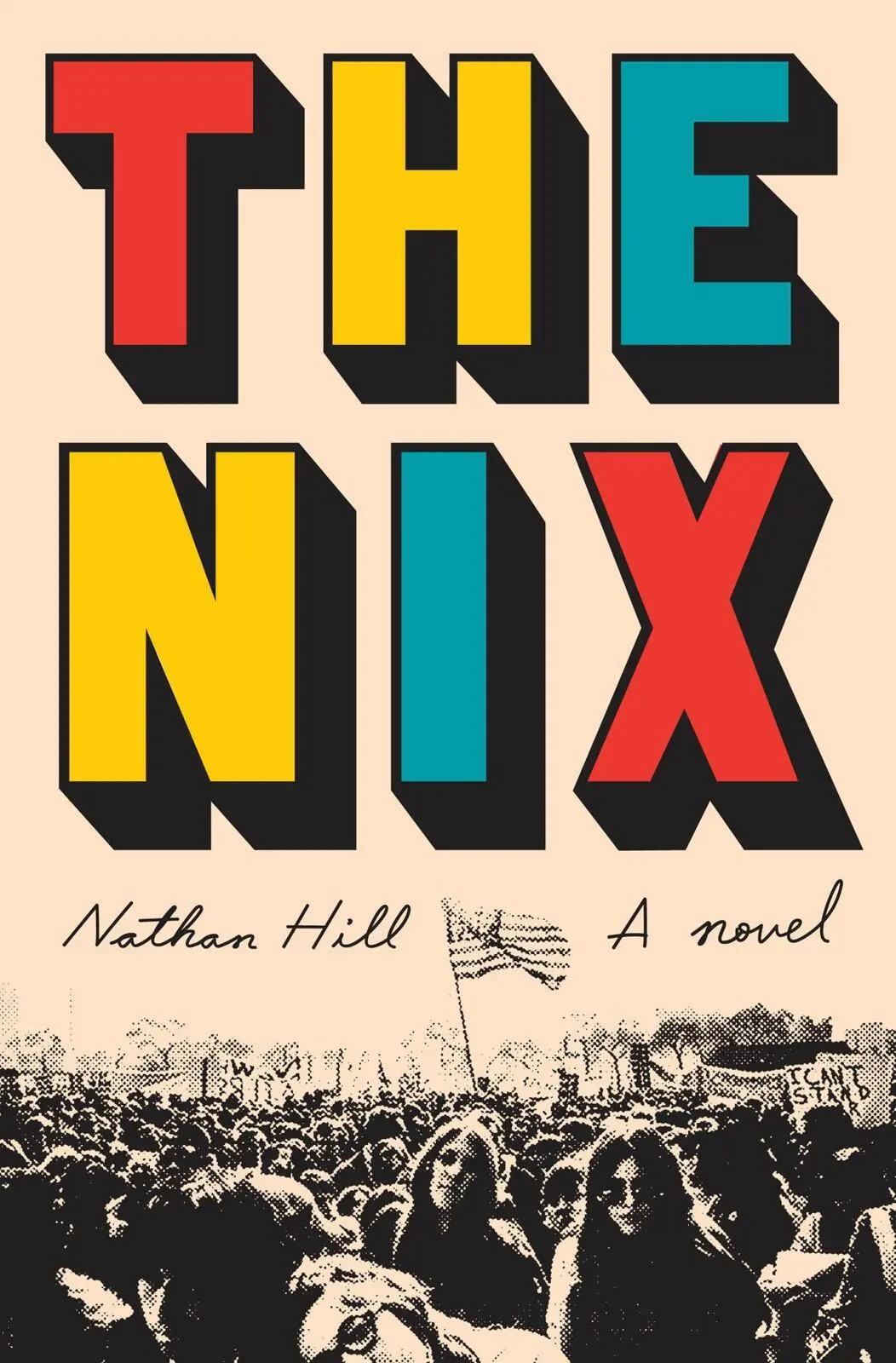
- Название:The Nix
- Автор:
- Издательство:Knopf
- Жанр:
- Год:2016
- ISBN:нет данных
- Рейтинг книги:5 / 5. Голосов: 1
-
Избранное:Добавить в избранное
- Отзывы:
-
Ваша оценка:
The Nix: краткое содержание, описание и аннотация
Предлагаем к чтению аннотацию, описание, краткое содержание или предисловие (зависит от того, что написал сам автор книги «The Nix»). Если вы не нашли необходимую информацию о книге — напишите в комментариях, мы постараемся отыскать её.
As Samuel begins to excavate her history, the story moves from the rural Midwest of the 1960s to New York City during the Great Recession and Occupy Wall Street to the infamous riots at the 1968 Chicago Democratic National Convention, and finally to Norway, home of the mysterious Nix that his mother told him about as a child. And in these places, Samuel will unexpectedly find that he has to rethink everything he ever knew about his mother — a woman with an epic story of her own, a story she kept hidden from the world.
The Nix — читать онлайн бесплатно полную книгу (весь текст) целиком
Ниже представлен текст книги, разбитый по страницам. Система сохранения места последней прочитанной страницы, позволяет с удобством читать онлайн бесплатно книгу «The Nix», без необходимости каждый раз заново искать на чём Вы остановились. Поставьте закладку, и сможете в любой момент перейти на страницу, на которой закончили чтение.
Интервал:
Закладка:
“It’s okay,” says Sebastian. “Come on.”
The cop walks right by, nodding as he goes. They pass through a set of double doors at the end of the hall and into a space decorated lavishly: plush red carpet, wall sconces emitting a golden glow, white walls with ornate trim that suggests French aristocracy. Faye sees a sign on one of the doors and understands that they’re in the basement of the Conrad Hilton Hotel.
“How did you know I was arrested?” she says.
He turns to her and flashes a rascally smile. “Grapevine.”
He takes her through the belly of the hotel, passing police and reporters and hotel staff, all of them hustling to somewhere, all of them looking grim and serious. They reach a set of thick metal exterior doors guarded by two more cops, who nod at Sebastian and allow him to pass. And in this way they are delivered into a loading dock, and then into the alleyway, into the open air. The sound of the protest reaches them here as an indistinct howl that seems to be coming from all directions at once.
“Listen,” Sebastian says, cocking his ear to the sky. “Everybody’s here.”
“How did you do that?” Faye says. “We walked right by those cops. Why didn’t they say something? Why didn’t they stop us?”
“You have to promise me,” he says, grabbing her by the arms, “you’ll never mention this. Not to anyone.”
“Tell me how you did it.”
“Promise, Faye. You cannot breathe a word about it. Tell them I bailed you out. That’s it.”
“But you didn’t bail me out. You had a key. How did you have a key?”
“Not a word. I’m trusting you. I did you a favor, and now your favor back to me is to keep this a secret. Okay?”
Faye considers him for a moment, and understands that he is not the single-entendre student radical she had taken him for — he has mysteries; he has layers. She knows something about him no one else does, has power over him no one else can wield. Her heart swells for him: He’s a kindred spirit, she thinks, someone else whose life is hidden and vast.
She nods.
Sebastian smiles and takes her hand and leads her to the end of the alley and into the sun, and as they round the corner she sees the police and the military and the blockade and beyond the blockade, the great teeming mass in the park. No longer shadows on the wall, she sees them now in detail and color: the soft baby-blue police uniforms; the bayonets of the National Guardsmen; the jeeps whose front bumpers are coils of razor wire; the crowd moving as a surging beast presently surrounding and taking over the statue of Ulysses S. Grant opposite the Conrad Hilton, the ten-foot-tall Grant on his ten-foot-tall horse, the crowd climbing up the horse’s bronze legs and onto its neck and rump and head, one brave youth continuing up, climbing Grant himself, standing atop Grant’s huge broad shoulders, teetering but erect, raising his arms in double peace signs above his head in defiance of the police who are right now noticing this and are ambling over to pull him down. This will not end well for him, but the audience cheers anyway, for he is the bravest among them, the tallest thing in the whole park.
Faye and Sebastian slip by the mayhem and into the anonymity of the crowd.
22
OFFICER BROWN CONTINUES to bust heads and around him the cops have removed their badges and name tags. They have pulled the visors of their riot helmets over their faces. They are anonymous. The news is not happy about this development.
Police are beating people with impunity, the journalists say on CBS News. They demand transparency. Accountability. They say the police have removed their badges and hidden their faces because they know what they’re doing is illegal. Comparisons are made to the Soviets rolling into Prague earlier this year, running down and overwhelming the poor Czechs. The Chicago PD is acting like that, the journalists say. It’s Czechoslovakia west. Czechago is a word it does not take long for someone clever to make up.
“In America, the government is accountable to the people, not the other way around,” says a constitutional law scholar sympathetic to the antiwar movement on the subject of the anonymous police.
Officer Brown is whaling away, the most excited among all the cops to really clunk the hippies in vital and deadly places: the skull, the chest, even the face. He was the first to appear minus a badge or a name tag, and all the officers around him have lowered their visors and removed their name tags too, but not because they want to join him in his frenzy. Rather the opposite. They see he’s going a little nuts now and they can’t really stop him and the cameras are clicking away, attracted as they are to any moment of police brutality, and so all the nearby officers tuck away their badges and lower their visors because this fucker is asking to lose his pension, but they sure as shit won’t lose theirs.
23
CRONKITE KNOWS this is his punishment for editorializing. Doing this interview with the mayor and serving up these cream-puff questions. It’s because Cronkite called the Chicago police “a bunch of thugs,” and he did it live, on the air.
Well, that’s what they are! And that’s what he told his producers, who said he’d made a judgment, which was wrong, since it was up to the viewers to decide whether the police were or were not thugs. He countered that he’d made an observation, which is what they paid him for: to observe and report. They said he’d expressed an opinion. He said sometimes an observation is inseparable from an opinion.
This was not convincing to his producers.
But the police were out there cracking open skulls with nightsticks. They were taking off their badges and name tags and lowering the visors on their riot helmets to become faceless and unaccountable. They were beating kids senseless. They were beating members of the press, photographers and reporters, breaking cameras and taking film. They even punched poor Dan Rather right in the solar plexus. What do you call people like that? You call them thugs.
His producers still were not convinced. Cronkite thought the police were beating innocent people. The mayor’s office told them the police were protecting innocent people. Who was right? It reminded him of that old story: A king once asked a group of blind men to describe an elephant. To one of them, he presented the head of the elephant, to another he presented an ear, a tusk, the trunk, the tail, and so on, saying, This is an elephant.
Afterward, the blind men could not agree on what an elephant really looked like. They argued with each other, saying, An elephant is like this, an elephant is not like that! They fought each other with their fists, and the king watched the whole spectacle, and was delighted.
Probably as delighted as the mayor is right now, old Cronkite imagines as he lobs him another softball question about the well-trained and heroic and completely supported by the public Chicago PD. And the gleam in the mayor’s eye is just about the most insufferable thing old Cronkite has ever seen, that sparkle the mayor gets when he’s beaten a worthy opponent. And Cronkite is a worthy opponent indeed. One imagines there were lengthy phone calls between the mayor’s office and the CBS producers, much debating, many threats, some kind of compromise was reached, and thus old Cronkite stands here extolling the virtues of men he called thugs not three hours ago.
You gotta eat a lot of shit in this job sometimes.
24
NEAR THE END of the day, just before sunset, there’s a lull in the trauma. Police hang back sort of stunned and shamefaced. They have stopped raising their nightsticks and raise their bullhorns instead. They ask the protesters to please leave the park. The protestors watch them and wait. The city has the feeling of an injured child. A toddler will knock its head and, after a slight delay during which all the chaotic sense-signals resolve into pain, it begins to wail. The city is inside that delay now, between injury and lamentation, between cause and effect.
Читать дальшеИнтервал:
Закладка:
Похожие книги на «The Nix»
Представляем Вашему вниманию похожие книги на «The Nix» списком для выбора. Мы отобрали схожую по названию и смыслу литературу в надежде предоставить читателям больше вариантов отыскать новые, интересные, ещё непрочитанные произведения.



Обсуждение, отзывы о книге «The Nix» и просто собственные мнения читателей. Оставьте ваши комментарии, напишите, что Вы думаете о произведении, его смысле или главных героях. Укажите что конкретно понравилось, а что нет, и почему Вы так считаете.