Nathan Hill - The Nix
Здесь есть возможность читать онлайн «Nathan Hill - The Nix» весь текст электронной книги совершенно бесплатно (целиком полную версию без сокращений). В некоторых случаях можно слушать аудио, скачать через торрент в формате fb2 и присутствует краткое содержание. Год выпуска: 2016, Издательство: Knopf, Жанр: Современная проза, на английском языке. Описание произведения, (предисловие) а так же отзывы посетителей доступны на портале библиотеки ЛибКат.
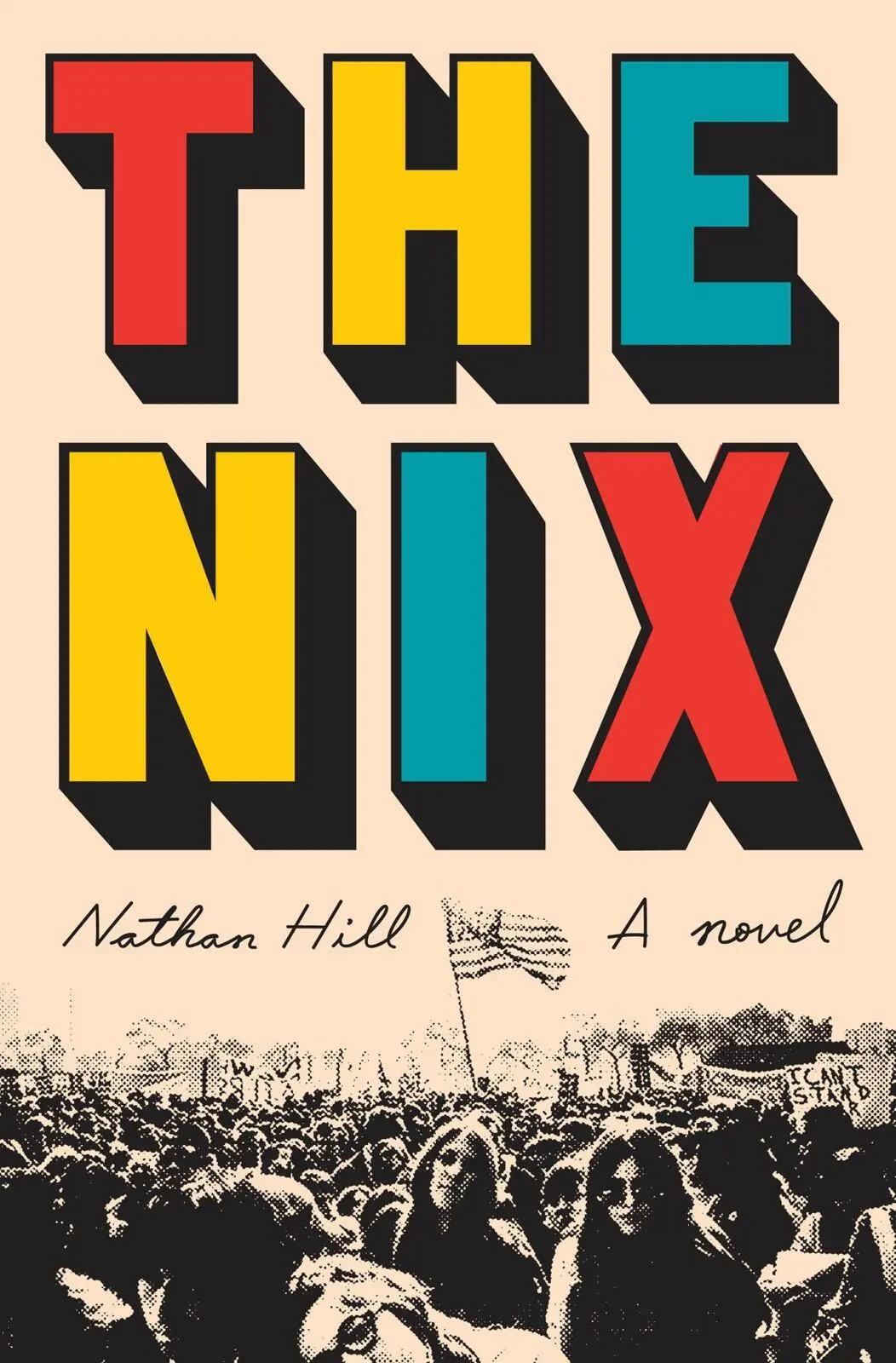
- Название:The Nix
- Автор:
- Издательство:Knopf
- Жанр:
- Год:2016
- ISBN:нет данных
- Рейтинг книги:5 / 5. Голосов: 1
-
Избранное:Добавить в избранное
- Отзывы:
-
Ваша оценка:
The Nix: краткое содержание, описание и аннотация
Предлагаем к чтению аннотацию, описание, краткое содержание или предисловие (зависит от того, что написал сам автор книги «The Nix»). Если вы не нашли необходимую информацию о книге — напишите в комментариях, мы постараемся отыскать её.
As Samuel begins to excavate her history, the story moves from the rural Midwest of the 1960s to New York City during the Great Recession and Occupy Wall Street to the infamous riots at the 1968 Chicago Democratic National Convention, and finally to Norway, home of the mysterious Nix that his mother told him about as a child. And in these places, Samuel will unexpectedly find that he has to rethink everything he ever knew about his mother — a woman with an epic story of her own, a story she kept hidden from the world.
The Nix — читать онлайн бесплатно полную книгу (весь текст) целиком
Ниже представлен текст книги, разбитый по страницам. Система сохранения места последней прочитанной страницы, позволяет с удобством читать онлайн бесплатно книгу «The Nix», без необходимости каждый раз заново искать на чём Вы остановились. Поставьте закладку, и сможете в любой момент перейти на страницу, на которой закончили чтение.
Интервал:
Закладка:
But our man from Sioux Falls could not have known any of this.
Or else he might have thought twice about pulling a gun out of his pocket. When the cop car drove past as he walked this night, this clear clean moment when he could see all the stars hanging over Michigan Avenue, and the car stopped and those two pigs got out in their short-sleeved baby-blue shirts, walking toward him with all manner of gadgetry bouncing on their belts, and they said something vague about curfew violation and did he have any identification, had he known what was happening all over Chicago right at that moment, he might have found it preferable to spend a few nights in jail for possession of an unregistered and concealed handgun. But he’d come all the way to Chicago on that horrific thirty-hour bus ride, and maybe he’d been waiting for this protest all his life, maybe this was some kind of turning point for him, maybe the idea of missing the whole demonstration was too painful, maybe he hated the war that much, and maybe he didn’t want to lose the gun, which might have been his only security, having spent a rough adolescence in the Dakotas, where he was different and alone. In his head, it went like this: He’d pull the gun out and fire a warning shot and while the cops ducked for cover he’d run down the nearest dark alley and get away. It was as easy as that. Maybe he’d even done this before. He was young, he could run, he’d been running all his life.
But as it turned out, the cops didn’t duck for cover. They didn’t give him the chance to get away. At the gun’s first report, they unholstered their own revolvers and shot him. Four times in the chest.
Word got around pretty quickly, from the police to the Secret Service to the National Guard to the FBI: The hippies were armed. They were shooting. This radically changed the stakes. A day before the protest began, this was, they all agreed, a very bad omen.
The students asked around their ranks to see if anyone was expected from Sioux Falls. Who was he? What was he doing here? Spontaneous candlelight vigils popped up for this young man who might have been a brother to them. They sang “We Shall Overcome” and wondered privately about whether they’d die for their cause. His protest, they thought, was greater than all the riots that whole long year — greater in its privacy, its intimacy, its stakes. He broke their hearts, dying in Chicago the way he did, before anyone even knew his name.
And when Sebastian heard the news he was in the office of the Chicago Free Voice giving an interview to CBS and the phone rang and he was told that someone had been shot, a drifter in from South Dakota. And Sebastian’s first impulse, the very first thing that rushed unwillingly into his brain, was how great the timing was. CBS News was right there. This was gold. And so he called up some outrage and announced to the journalists that “the pigs have murdered a protester in cold blood.”
Boy did that get their attention.
He ratcheted up the rhetoric with each new telling. “One of our brothers has been shot for the crime of disagreeing with the president,” he told the Tribune. “The police are killing as indiscriminately as the bombs in Vietnam,” he told The Washington Post. “Chicago is becoming the western outpost of Stalingrad,” he told The New York Times. He organized even more candlelight vigils and told the TV news crews and photographers where the vigils could be found, sending each outlet to a different gathering so that each of them thought they were the one getting the scoop. The only thing journalists liked more than getting a story right was getting it first.
This was his job, to add heat.
In the months before the protest, it was Sebastian who had printed those outrageous stories in the Free Voice about spiking the city’s water supply with LSD, about abducting delegates’ wives, about bombs going off at the amphitheater. That no such plans were ever actually considered was irrelevant. He had learned something important: What was printed became the truth. He vastly inflated the number of demonstrators expected in Chicago, then felt a surge of pride when the mayor mobilized the National Guard. The message was getting out. This is what he cared about: the message, the narrative. When he imagined it, he imagined an egg that he had to hold and protect and warm and coddle and nourish, one that grew to huge fairy-tale proportions if he did it right, glowing and floating above them all, a beacon.
It was only dawning on him now, on the night before the protest, the implications of all his work. Kids were coming to Chicago. They would be battered and beaten by the police. They would be killed. This was more or less inevitable. What had been up to this point all illusion and fantasy and hype, an exercise in the molding of public opinion, would tomorrow become manifest. It was a kind of birth, and he trembled at the thought of it. So here he was, alone, doing the last thing anyone would expect from brash, confident, fearless Sebastian: He was sitting on his bed in tears. Because he understood what was going to happen tomorrow, understood his odd role in it, knew that everything up to this point was done and unchangeable and set solid in the infuriating past.
He was a lighthouse of regret tonight. And so he was weeping. He needed to stop thinking about this. He remembered vaguely that he had a date. He splashed water on his face. He threw on a jacket. He looked at a mirror and said, Pull yourself together.
Which was exactly what a certain police officer was telling himself across town, sitting on the back bumper of his patrol car, parked in the usual dark alley, sitting next to Alice, who appeared to be breaking up with him. Pull yourself together, he thought.
Just like everyone else in the city, Officer Brown was hoping to get laid tonight. But when he met Alice, she did not get in the car and make any funky requests but rather sat heavily down on the trunk and said: “I think we should take a break.”
“Take a break from what?” he said.
“From everything. All of it. You and me. Our affair.”
“Can I ask why?”
“I want to try something new,” Alice said.
Brown thought about this for a moment. “You mean you want to try someone new,” he said.
“Well, yes,” Alice said. “I’ve met someone, maybe. Someone interesting.”
“So you’re breaking up with me for this new person.”
“Technically, to break up we would need something to break, a commitment to each other that, obviously, we do not have.”
“But—”
“But yes.”
Officer Brown nodded. He stared at a dog on the other side of the alley getting into the trash of a local diner. One of the city’s many strays, a bit of the German shepherd in it but muddled and runted by a swirl of other breeds. It pulled out a black garbage bag from the tipped-over bin, yanked it with its teeth.
“So if it weren’t for this new person, you wouldn’t be breaking up with me?” he said.
“That’s irrelevant, since there is a new person.”
“Humor me. Go with it. If this new person didn’t exist, you’d have no reason to end our affair.”
“Okay. Sure. That’s a fair assessment.”
“I want you to know I think this is a mistake,” he said.
She gave him that condescending look he couldn’t stand, that look communicating how she was the interesting and far-out one and he was the one stuck in a bourgeois middle-class hole from which there was no escape.
“What can this new person give you that I can’t?” he said.
“You don’t understand.”
“I can change. You want me to do something different? I can do that. We don’t have to meet so often. We could meet every other week. Or once a month. Or you want me to be rougher? I can be rougher.”
Читать дальшеИнтервал:
Закладка:
Похожие книги на «The Nix»
Представляем Вашему вниманию похожие книги на «The Nix» списком для выбора. Мы отобрали схожую по названию и смыслу литературу в надежде предоставить читателям больше вариантов отыскать новые, интересные, ещё непрочитанные произведения.









Обсуждение, отзывы о книге «The Nix» и просто собственные мнения читателей. Оставьте ваши комментарии, напишите, что Вы думаете о произведении, его смысле или главных героях. Укажите что конкретно понравилось, а что нет, и почему Вы так считаете.