Nathan Hill - The Nix
Здесь есть возможность читать онлайн «Nathan Hill - The Nix» весь текст электронной книги совершенно бесплатно (целиком полную версию без сокращений). В некоторых случаях можно слушать аудио, скачать через торрент в формате fb2 и присутствует краткое содержание. Год выпуска: 2016, Издательство: Knopf, Жанр: Современная проза, на английском языке. Описание произведения, (предисловие) а так же отзывы посетителей доступны на портале библиотеки ЛибКат.
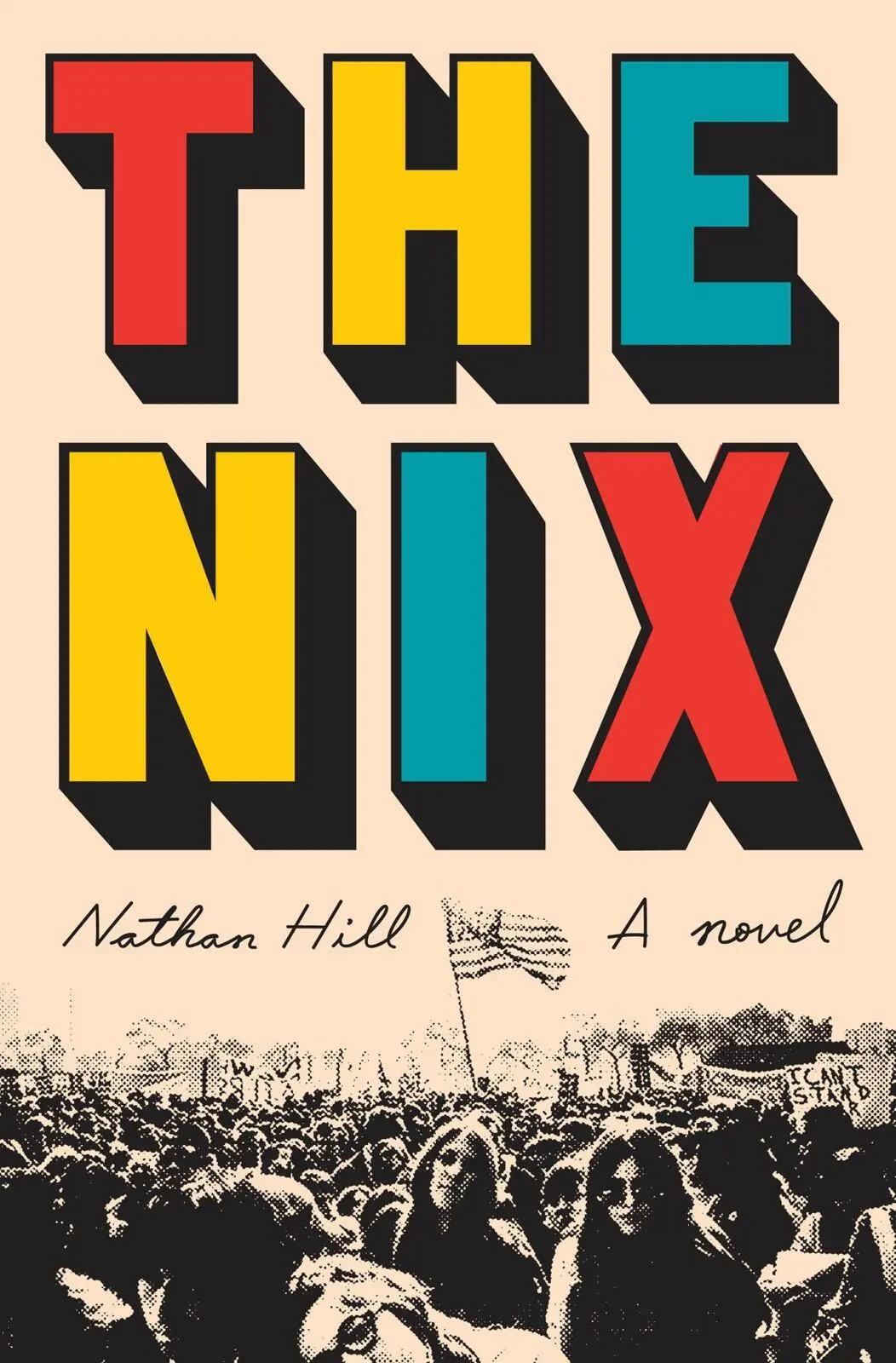
- Название:The Nix
- Автор:
- Издательство:Knopf
- Жанр:
- Год:2016
- ISBN:нет данных
- Рейтинг книги:5 / 5. Голосов: 1
-
Избранное:Добавить в избранное
- Отзывы:
-
Ваша оценка:
The Nix: краткое содержание, описание и аннотация
Предлагаем к чтению аннотацию, описание, краткое содержание или предисловие (зависит от того, что написал сам автор книги «The Nix»). Если вы не нашли необходимую информацию о книге — напишите в комментариях, мы постараемся отыскать её.
As Samuel begins to excavate her history, the story moves from the rural Midwest of the 1960s to New York City during the Great Recession and Occupy Wall Street to the infamous riots at the 1968 Chicago Democratic National Convention, and finally to Norway, home of the mysterious Nix that his mother told him about as a child. And in these places, Samuel will unexpectedly find that he has to rethink everything he ever knew about his mother — a woman with an epic story of her own, a story she kept hidden from the world.
The Nix — читать онлайн бесплатно полную книгу (весь текст) целиком
Ниже представлен текст книги, разбитый по страницам. Система сохранения места последней прочитанной страницы, позволяет с удобством читать онлайн бесплатно книгу «The Nix», без необходимости каждый раз заново искать на чём Вы остановились. Поставьте закладку, и сможете в любой момент перейти на страницу, на которой закончили чтение.
Интервал:
Закладка:
Faye, meanwhile, was scrubbing. She had purchased several teen magazines and something all of them recommended brides do before going all the way was to scrub vigorously and thoroughly and relentlessly with many different scrubbing media: soft cloths, porous sponges, emery boards, rough pumice. She spent most of her week’s food budget on things to make her allover smooth and invitingly fragrant. She’d been thinking about the posters in her high-school home economics classroom, the first time in months. They were no less horrifying even at this distance, now that she was the one going all the way. Sebastian would be here soon, and Faye was still scrubbing, had yet to apply certain strong-smelling unguents she worried would sting, jellies that smelled so powerfully of roses and lilacs that they actually reminded her of a funeral home, the way funeral homes set out flower bouquets to overwhelm that chemical death smell that was always there, underneath. Faye purchased perfumes, deodorants, douches, salts she was supposed to bathe in, soaps she was supposed to scrub with, alcohols minty and prickly she was supposed to gargle with and spit. She was beginning to grasp that she’d underestimated the time it would take to pumice, scrub, clean, shampoo, never mind squirting and applying her new solvents and salves. Her bedroom floor was littered with dainty pink cardboard boxes. She would not have time to do everything before Sebastian arrived. She had yet to polish her nails, spray her hair into place, choose the right bra-and-sweater combo. These things were not negotiable, not at all skippable. She finished work on her left-foot calluses. She decided to triage pumicing the right foot. If Sebastian noticed calluses on one foot and not the other, hopefully he would keep it to himself. She vowed to keep her shoes on until the last possible moment. She hoped he wouldn’t be paying attention to her feet by that time. Her stomach flopped when she thought about this, about actually doing this. She concentrated again on her brand-new beauty products, which helped to keep sex vaguely and safely abstract, a kind of marketing idea and not something her body would really do. On her date. Tonight.
She had three different colors of nail polish, each of them some variation on purple: there was “plum” and “eggplant” and the more conceptual purple called “cosmos,” which was the one she eventually chose. She painted her toenails and did that thing with the cotton balls between each toe and walked around her dorm room on her heels. Hair curler was warming up. Little glass jars of cream-colored powders she dabbed on her face with a sponge. Cleaned out her ears with a Q-tip. Plucked a few eyebrow hairs. Replaced her white underwear with black underwear. Then changed back to white, and then back again. She opened the windows and smelled the city’s cool air and, like everyone else, felt hopeful, optimistic, sensually physical.
All over the city, people were doing this. And there might have been a moment here, an opportunity that, if grasped, could have prevented all that followed. If everyone involved took a deep breath of that fertile springlike air and realized it was a sign. Then the mayor’s office might have given the demonstrators the permits they’d been for months requesting, and the demonstrators could have peacefully assembled and not thrown anything or taunted anyone, and the police could have bemusedly watched them from a great distance, and everyone could have said their piece and gone home with no bruises or concussions or scrapes or nightmares or scars.
There might have been a moment, but then this happened:
He had just arrived in Chicago on a bus from Sioux Falls — twenty-one years old, aimless drifter, probably in town for the protest but we’ll never know. Dressed in the ragtag fashion — old leather coat cracking at the collar, beat-up and duct-taped duffel bag, brown shoes bearing the scuffs of many miles, begrimed denim pants that bloomed outward at the bottom in the manner currently favored by the youth. But it would have been the hair that identified him to police as an enemy. Long and tangled, reaching down past the collar of his leather coat. He brushed it out of his eyes in a gesture that always struck the more militant conservatives as really girly-looking. Really feminine and faggoty. For some reason, this particular gesture caused them so much rage. He batted the hair out of his eyes, pulled at it where it caught like Velcro to his mustache and wiry beard. To the cops, he looked like any other local hippie. To them, his long hair was the end to a kind of conversation.
But he wasn’t local. He didn’t have the local counterculture’s predictability. Say what you want about the Chicago left, at least they let themselves be arrested without too much fuss. They might call the cops some dirty names, but their general reaction to handcuffs was an annoying limpness, sometimes elevated to full-body flaccidity.
But this young man from Sioux Falls was of a different idiom. Something had happened to him along the way, something dark and real. Nobody knew why he was in Chicago. He was alone. Maybe he’d heard about the protest and wanted to be part of a movement that must have seemed very far away in Sioux Falls. One can imagine the loneliness he might have felt, looking the way he did in a place like South Dakota. Maybe he’d been hassled, taunted, bullied, beaten up. Maybe he’d had to defend himself against the police or Hell’s Angels — those self-appointed defenders of love-it-or-leave-it culture — one too many times. Maybe he was exhausted by it.
The truth is that nobody knew what had happened to him that made him hide a six-shot revolver in the pocket of his worn leather jacket. Nobody knew why, when police stopped him, he pulled the gun from his jacket pocket and fired it.
He must not have known what was at that moment happening in Chicago. How the police were taking every idle threat seriously, how they were on edge, pulling double shifts, triple shifts. How the hippies threatened to give all of Chicago an acid trip by dumping LSD into the city’s drinking water, and even though it would take five tons of LSD to pull this off, still there were cops posted at every pumping station of the municipal water supply. How the police were already patrolling the Conrad Hilton with bomb-sniffing dogs because the hippies had threatened to blow up the hotel that housed the vice president and all the delegates. There was word that the hippies were planning to pose as chauffeurs at the airport in order to kidnap delegates’ wives and then get them stoned and have inappropriate relations with them, and so police were giving escorts directly from the runway. There were so many threats it was hard to respond to them all, so many scenarios, so many possibilities. How do you prevent the hippies, for example, from shaving their beards and cutting their hair and dressing straight and faking credentials to get into the International Amphitheater where they’d set off a bomb? How do you stop them from gathering en masse and turning over cars in the street, as they’d done in Oakland? How do you stop them from building barricades and taking over whole city blocks, as they’d done in Paris? How do you stop them from occupying a building, as they’d done in New York, and how do you extract them from the building in front of newsmen who knew that trumped-up claims of police brutality moved papers? It was the sad logic of antiterrorism that had them on edge: The police had to plan for everything, but the hippies only had to be successful once.
So they built a barbed-wire perimeter around the amphitheater and filled the inside with plainclothes cops looking for troublemakers, demanding the credentials of anyone who didn’t seem in favor of the current administration. They sealed manhole covers. Got helicopters into the sky. Put snipers atop tall buildings. Prepped the tear gas. Brought in the National Guard. Requisitioned the heavy armor. They heard about Soviet tanks rolling through the streets of Prague that week, and a small, complicated part of them felt envy and admiration for the Russians. Yes, that’s how you fucking do it, they thought. Overwhelming force.
Читать дальшеИнтервал:
Закладка:
Похожие книги на «The Nix»
Представляем Вашему вниманию похожие книги на «The Nix» списком для выбора. Мы отобрали схожую по названию и смыслу литературу в надежде предоставить читателям больше вариантов отыскать новые, интересные, ещё непрочитанные произведения.











Обсуждение, отзывы о книге «The Nix» и просто собственные мнения читателей. Оставьте ваши комментарии, напишите, что Вы думаете о произведении, его смысле или главных героях. Укажите что конкретно понравилось, а что нет, и почему Вы так считаете.