Stephen Dixon - Late Stories
Здесь есть возможность читать онлайн «Stephen Dixon - Late Stories» весь текст электронной книги совершенно бесплатно (целиком полную версию без сокращений). В некоторых случаях можно слушать аудио, скачать через торрент в формате fb2 и присутствует краткое содержание. Год выпуска: 2016, Издательство: TRNSFR, Жанр: Современная проза, на английском языке. Описание произведения, (предисловие) а так же отзывы посетителей доступны на портале библиотеки ЛибКат.
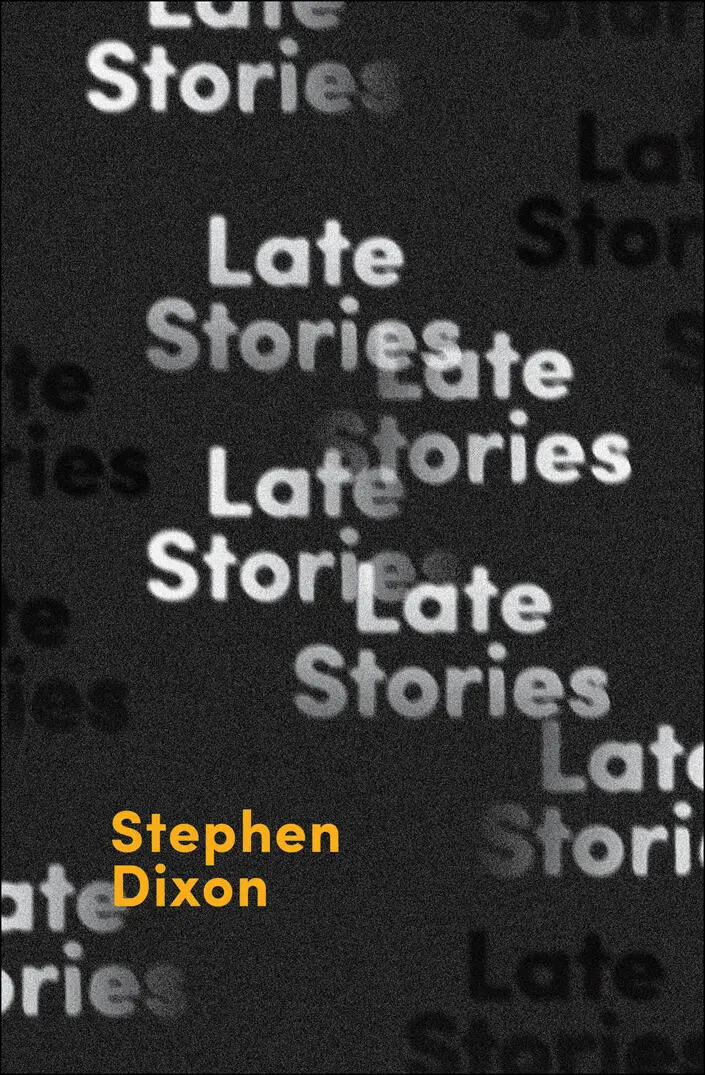
- Название:Late Stories
- Автор:
- Издательство:TRNSFR
- Жанр:
- Год:2016
- ISBN:нет данных
- Рейтинг книги:5 / 5. Голосов: 1
-
Избранное:Добавить в избранное
- Отзывы:
-
Ваша оценка:
Late Stories: краткое содержание, описание и аннотация
Предлагаем к чтению аннотацию, описание, краткое содержание или предисловие (зависит от того, что написал сам автор книги «Late Stories»). Если вы не нашли необходимую информацию о книге — напишите в комментариях, мы постараемся отыскать её.
detail the excursions of an aging narrator navigating the amorphous landscape of grief in a series of tender and often waggishly elliptical digressions.
Described by Jonathan Lethem as "one of the great secret masters" of contemporary American literature, Stephen Dixon is at the height of his form in these uncanny and virtuoso fictions.
With
, master stylist Dixon returns with a collection exploring the elision of memory and reality in the wake of loss.
Late Stories — читать онлайн бесплатно полную книгу (весь текст) целиком
Ниже представлен текст книги, разбитый по страницам. Система сохранения места последней прочитанной страницы, позволяет с удобством читать онлайн бесплатно книгу «Late Stories», без необходимости каждый раз заново искать на чём Вы остановились. Поставьте закладку, и сможете в любой момент перейти на страницу, на которой закончили чтение.
Интервал:
Закладка:
And he has enough dough. Money isn’t one of his problems. He inherited a little when his mother died and his wife inherited even more than that when her parents died, and he also has income from his pension, Social Security and investments. He’s invested wisely, he could say, or chosen the right financial advisor. And he does make, on the whole, a couple of thousand a year off his writing. It’s not as if nothing comes from all the writing he does and has done. So he has enough money to live modestly on for the rest of his life, he thinks it’s safe to say, and also to give to his daughters from time to time to help them out. He even tells them to use his credit card, the one they share but he pays the bills for, to take a cab anytime they want to when the weather’s bad or it’s late at night or just dark out. For things like that, and medicines, doctors, dentists, even yoga. Really, anything they don’t have the money for or that would cut too much into their budgets but they think is important. He thinks he can afford it. If he talked about that to the therapist, which he doesn’t see any reason to — it would just be looking for praise from her, if therapists give praise to their patients — he’d say he’s been generous to his daughters, but it’s the only right and fair thing to be. Not just because he wants them to be healthy and safe, which would be reason enough, but because around half of his money came from their mother, so in a way it’s theirs.
So he has enough things to talk about to the therapist, or to tell her, whatever the way it’s said. More than enough for two or three sessions, he’d think. He’s ready for tomorrow, though he worries that he doesn’t need a therapist. That he can work out all the problems he might have on his own. He also does a lot of it in his writing. But he wants to make his daughters happy by his seeing a therapist. Not a good-enough reason to go to one, he supposes, if it were the only reason — he knows it isn’t, or maybe he’s wrong about that. But he can go to one at least once or twice, can’t he? If it doesn’t work out, if he doesn’t think it’s going anywhere, is useful and so on, after four to five sessions, maybe, because he has to give it some time — he’ll say so to his daughters and the therapist and stop going. He doesn’t want to waste the therapist’s time, he’ll also say. Though they might use that excuse as another reason why he should start therapy, or continue it: that he worries he might be wasting the therapist’s time. Oh, just go. His daughters have already said they’re proud of him for calling one of the three therapists they got from the Psychology Today online listing for his part of Baltimore County. When he told his sister on the phone what his daughters said about his agreeing to go to a therapist, she said “Isn’t that why we do everything — to please our children?” “Not for me, it isn’t,” he said, “or not everything, though part of what you say is true. Yes, I want to make them happy. ‘Proud of me’ I don’t care about.” “You don’t?” and he said “All right, maybe a little. I certainly don’t want them to think bad of me, but by my not going to a therapist, I don’t think they would.” “Can you repeat that in simple language? What you said is too complicated to understand, or the way you said it is. For the therapist, you’ll also have to speak more clearly. Though if you don’t, though I don’t know why you wouldn’t, she’ll see something more in it than I just did.”
So he’s ready, as he said. It won’t be a big bust. Doesn’t work, as he said, then it doesn’t. At least he tried and it made his daughters happy. But something will come of it, or should. His older daughter said “I bet you’ll also get a story out of it.” “Now that, for sure,” he said, “would be the last reason I’d start therapy. That’s not how I operate. If I were to write a therapy story, and I seriously doubt I ever will, I’d use my imagination and what I know from other people who were in therapy or practiced it — group, individual, marathon, if that’s still done; all of it. Your mother and her mother, for instance, and my sister, and that might be enough. If I need more, then former women friends. It seemed every one of them was in some form of therapy when I was seeing them or living with them. I never questioned anybody about their therapy, but I’m sure some stuff filtered in. Though who can say? I hardly ever know what I’m next going to write. But I certainly won’t tell the therapist what you said.” “Why not?” she said. “In therapy, you don’t have to hold anything back.” “I know. We’ve discussed it. Or I did with your sister. But I wouldn’t want the therapist to think she was in any way being used. Her time was. You know what I mean. Anyway, too many therapy stories and novels have been written and none of them, that I read, were any good. And mine wouldn’t say anything new. Like stories and novels about academia, I don’t think one can be written about it. They’re both too weak as subject matter to make good material for fiction. That’s what I think. I’m sorry.” “You’re probably right. Good luck. Call me to tell me how your first session went. I hope you like it, and the therapist.” “I’m sure, because you and your sister chose her and the two other names out of what must have been a long list of possible therapists for me, she’s got to be good. At least for what I might need, because of her work, as you said she said in her brief bio, with artists and writers and academics and bereavement and trauma and such. Or as right as a therapist can be. After all, writer and teacher, that’s me.” “Another thing, while we’re on it, is that you should stop saying things so much just to please us. Or work on that with the therapist, too.” “Right. I’ll bring it up. I didn’t mean to irk or irritate you in any way by it.” “Believe me, I didn’t take it that way. I know you mean well. So you’re definitely going? No pulling out at the last minute? Though that’s all up to you.” “Definitely going. I won’t call it off. At least for two to three sessions. Then we’ll see. I also have to see if Medicare kicks in. And if it doesn’t, then my supplementary medical insurance. If neither does, then I don’t know if I’d continue. Though I’d hate to have money stop me. But let’s go one step at a time.”
Intermezzo
I’ve written about this before. But maybe I missed something. I don’t think I did. Though maybe something small but important. Right now I can’t think what that could be. Anyway, I love remembering the incident. And that’s all it is, an incident, but one of my favorites with her. It was all in about five minutes. Six, seven, but short. I’d gone to her apartment building on Riverside Drive. Walked the forty blocks or so from my apartment on West 75th Street. This of course was New York. We’d been seeing each other almost every day for a few months. I said hello to the doorman in the lobby. The elevator was waiting for me, door open, and I got in and pressed the button for the seventh floor. As I rode up I took my key ring out with the key to her apartment on it, which she gave me a month after we met. I got off on her floor. Right after I got off, or maybe a second or two after the elevator stopped but before the door opened, I heard her playing the piano in her apartment. There were two apartments in the small hallway the elevator and stairway were on, one to the left of the elevator as you got off it and Abby’s to the right, so I immediately knew where the music was coming from. Also, I’d never heard music of any sort from her neighbors’ apartment, neither recorded nor being played by one of them on an instrument, and remember remarking about this to Abby. Arguments from that apartment — sometimes hysterical screaming from both the husband and wife — we’d heard plenty of times, mostly through the walls separating the two apartments but sometimes while we were waiting for the elevator to come. “Let’s walk,” I said once. “It’ll be embarrassing if they open the door and see us standing here.” Once, we even heard the woman say “You despicable filthy bastard. I feel like killing you, and one day I might.” And the man say “You kill me? Not before I kill you first,” which made no sense, but it was said with such venom that it didn’t have to. We had nothing to do with her neighbors except, whenever we saw them alone or together, to say hello. As for Abby, I’d heard her playing or practicing one piece or another before but never this piece and I’d never heard her playing while I was still outside her door. Later, I asked her what it was. “A Brahms’ Intermezzo ,” she said. “So there’s more than one?” And she said “Three, all opus one-nineteen. This one’s in B Minor.” Or she said “This one’s in E Minor.” Those are the first two. The third one’s in major, though I don’t know what letter. I know the one she said I heard was in minor, but I forget if it was the B or E.
Читать дальшеИнтервал:
Закладка:
Похожие книги на «Late Stories»
Представляем Вашему вниманию похожие книги на «Late Stories» списком для выбора. Мы отобрали схожую по названию и смыслу литературу в надежде предоставить читателям больше вариантов отыскать новые, интересные, ещё непрочитанные произведения.









Обсуждение, отзывы о книге «Late Stories» и просто собственные мнения читателей. Оставьте ваши комментарии, напишите, что Вы думаете о произведении, его смысле или главных героях. Укажите что конкретно понравилось, а что нет, и почему Вы так считаете.