Джоха Альхарти - Celestial Bodies
Здесь есть возможность читать онлайн «Джоха Альхарти - Celestial Bodies» весь текст электронной книги совершенно бесплатно (целиком полную версию без сокращений). В некоторых случаях можно слушать аудио, скачать через торрент в формате fb2 и присутствует краткое содержание. Год выпуска: 2018, ISBN: 2018, Издательство: Sandstone Press Ltd, Жанр: Современная проза, на английском языке. Описание произведения, (предисловие) а так же отзывы посетителей доступны на портале библиотеки ЛибКат.
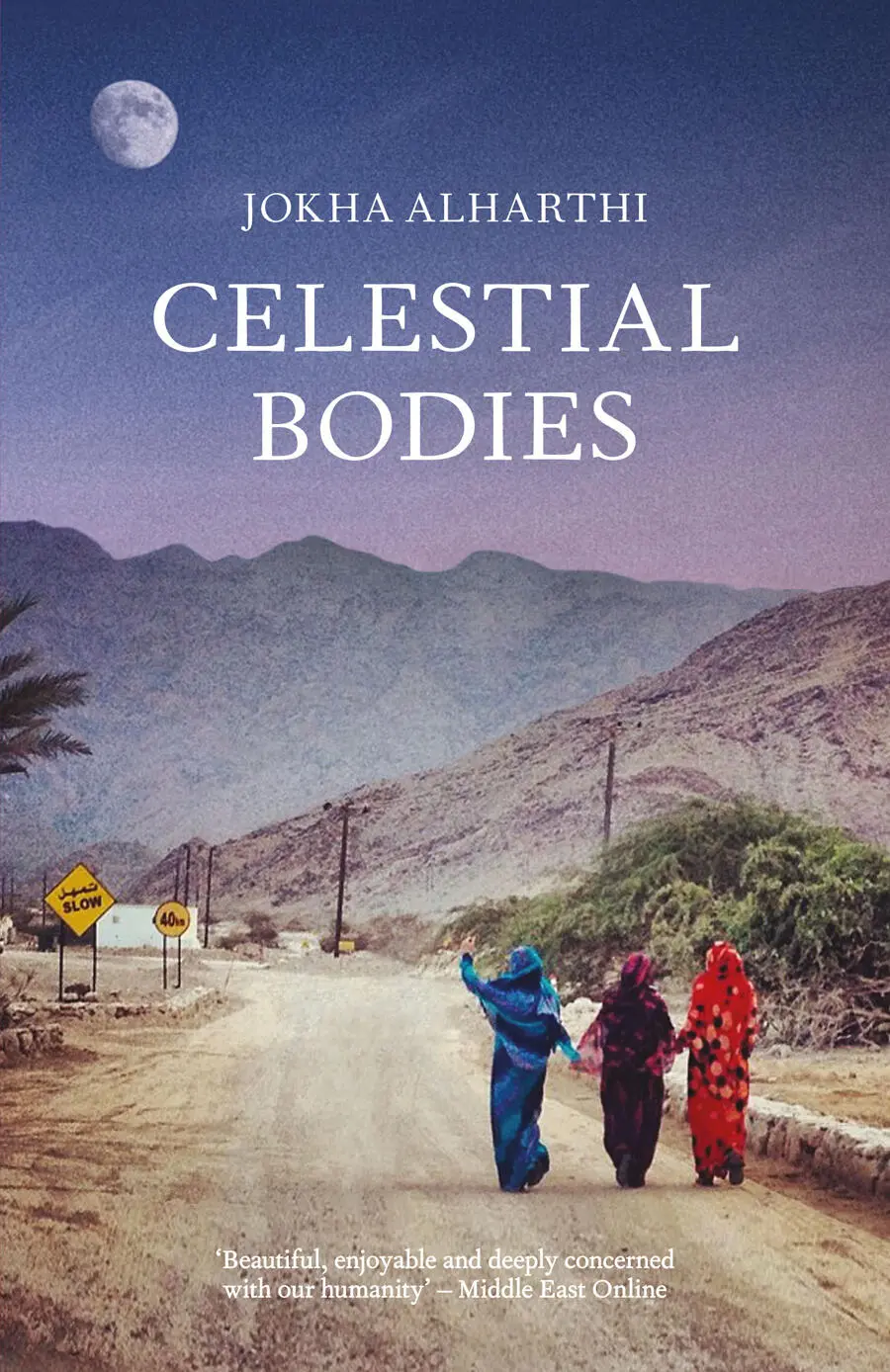
- Название:Celestial Bodies
- Автор:
- Издательство:Sandstone Press Ltd
- Жанр:
- Год:2018
- ISBN:978-1-912240-16-6, 978-1-912240-17-3
- Рейтинг книги:5 / 5. Голосов: 1
-
Избранное:Добавить в избранное
- Отзывы:
-
Ваша оценка:
Celestial Bodies: краткое содержание, описание и аннотация
Предлагаем к чтению аннотацию, описание, краткое содержание или предисловие (зависит от того, что написал сам автор книги «Celestial Bodies»). Если вы не нашли необходимую информацию о книге — напишите в комментариях, мы постараемся отыскать её.
Celestial Bodies — читать онлайн бесплатно полную книгу (весь текст) целиком
Ниже представлен текст книги, разбитый по страницам. Система сохранения места последней прочитанной страницы, позволяет с удобством читать онлайн бесплатно книгу «Celestial Bodies», без необходимости каждый раз заново искать на чём Вы остановились. Поставьте закладку, и сможете в любой момент перейти на страницу, на которой закончили чтение.
Интервал:
Закладка:
Then how could it be, Mayya, that your eyes, fixed on your sewing machine, never could see the vast and tortuous expanse of my love, and my imprisoned self?
Asma
Still drowsy, Asma opened her eyes slowly. Seconds later, she remembered that today was her wedding day. She stretched, pressed her hands against her stomach, and smiled at the thought that a few months from now it might well be rounded and full. Getting up, she folded up her bedding, hung it on the peg and hurried to the kitchen. Her father liked to have his coffee as soon as he’d come from dawn prayers.
Asma found her mother sitting on the worn steps leading into the kitchen. Salima’s distracted air startled her daughter. She never allowed herself to lose composure, even momentarily; Asma had often wondered how she could do it. Wishing her good morning, her mother’s voice came faintly. In the kitchen the coffee was already bubbling on the flame, the cardamom ready next to it.
Something was wrong but Asma couldn’t figure out what it was. Her father drank his usual two cups of coffee and glanced at her as he gnawed on the dates that invariably began his day. Asma didn’t feel uncomfortable or embarrassed, as perhaps was expected of her on such a day, but she did sense some kind of silent rebuke in his eyes. It set off a vague feeling of remorse, or perhaps of guilt, but again, she couldn’t identify what the problem was.
On her mother’s orders she shut herself in her room. No one must see the bride before her wedding. Mayya had been in seclusion for an entire week and not a single woman from the neighbourhood had gotten a glimpse of her before the evening of her wedding. Asma breathed out a long sigh. Praise be to God that her mother hadn’t insisted on isolating her for a whole week! All Salima had done was to forbid Asma to leave the house, but that was more or less in effect all the time, anyway, so it seemed a bit of a joke as a maternal ruling for the week preceding the wedding. Did she want Asma to know the value of the freedom that marriage would give her? She’d be one of the women now, and finally she would have the right to come and go, to mix freely with the older women and listen to their talk, to attend weddings, all of them, near and far, and funerals too. Now she would be one of the women who sat around their coffee in the late mornings and then again at the end of the day. She would be invited to lunch and dinner, and she would issue her own invitations, since she was no longer merely a girl. Marriage was her identity document, her passport to a world wider than home.
When younger, she had always eagerly welcomed the date harvest as an opportunity to go out and enjoy herself with the other girls. Early in the morning they would walk outside al-Awafi to the farms, moving from one to the next, inspecting the ripening dates as they were separated, cleaned and sorted. The girls could play with the unripe red ones and splash around in the moving water that the canal system sent from one field to the next, according to a fixed water distribution schedule which guaranteed strict fairness. But the greatest fun awaited them at the end of the day, in the open space amidst the farms where the faaghuur was made. She had always found it a captivating sight, Asma remembered: the stream of unripe dates pouring into the enormous cauldrons of boiling water. She and her friends competed to guess which one would be ready first. At that point, the men removed the hot mass with palm-fibre ladles, spreading it out in the sun so that it would dry, whereupon it would be packed and shipped to Muscat where government buyers purchased it for export to India. Asma didn’t like its taste, preferring dates that were fresh. People in al-Awafi bit into faaghuur only to test that they’d gotten it right and certainly not for any other reason. Not when they could eat ripe dates. Asma and her friends spent the entire harvest day running around in play, shimmying up the smaller palm trees and swinging from palm-fibre ropes tied between two trunks. They delighted in annoying the women working in the fields, picking through the dates they would carry back at the end of the day in large bundles on their heads, or collecting the rotting dates left behind, filling large sacks that they would drag away to feed to their sheep or to sell to others who owned sheep. Asma could remember how she had ripped a hole in Fattum’s sackcloth without Fattum knowing it. As she walked, the rotten dates falling from her sack traced a long line behind her. For days afterward, Asma’s friends laughed at the image of it. But Asma had grown up. She no longer went to the harvest games. Now she didn’t even go out for the first day of the month of Dhu al-Hijja to sing with her friends.
Muhammad has come down to the wadi
without any water or food
Muhammad has come to paradise now
And the houris’ daughters are after him.
My greetings and prayers I’ve given the Prophet
My greetings and prayers to the Messenger
On this morning it wasn’t long before the house was echoing with the voices of the women who had come to carry her trousseau to the groom’s home. They filled the pickup that Emigrant Issa had rented from a Bedouin. Asma’s two cases and her mandus went in, along with the embroidered pillows and two Persian carpets. The first case carried her new clothes. The second one hardly held anything but the bottle of French perfume, the aloes-wood oil and the varieties of incense her mother had selected. But her mother insisted on the two cases anyway, as a sign to all that her daughter’s trousseau was generous and worthy.
Mayya went along with the women to arrange her sister’s belongings in her new home, which Asma had not yet seen. The bride remained behind her firmly closed door with Khawla and a neighbour woman who was in charge of the crucial matter of henna. Thoughts of motherhood, her new clothes, the women dancing, and what it would be like to leave her childhood home had all wandered through Asma’s mind, but she hadn’t given a thought to Khalid, her long-awaited bridegroom. A few weeks before, when her mother had informed her of the engagement, she had considered the matter calmly and given her consent.
When she and her father quoted poetry at each other, each one trying to outdo the other, Asma sometimes repeated lines of love poetry, or if she didn’t, her father did. She always read to him in the winter evenings, especially from the collection of poetry by the great word artist al-Mutanabbi. They would smile together at the opening lines of his odes, on the lover’s grief at his beloved’s absence, and his longing. But she was not as attached to the Arabic tradition of love poetry, with its flights of coy fancy, as her father was. Nor was she particularly drawn to the love scenes in the few novels she had read. A friend of hers found these at a small bookstore in Muscat but when Asma tried to read them she found them too unrealistic and foreign to interest her. The last novel she had read was something called Secrets of the Palace which took place in eighteenth-century France. It was all about royal passions — pleasure, betrayal, mirth. Asma didn’t find it convincing. She preferred what she considered more realistic books. But the one text she had found truly memorable and compelling was the passage she had memorised without even really understanding what it meant. Something about spirits or souls that were perfectly round once upon a time but had been split apart. For as long as they were separated they would search out their other half until they found it. That is how she imagined love: a meeting of spirit-twins. She certainly never imagined experiencing a love so fierce that her nights would stretch as long as the nights of the lovers in al-Mutanabbi’s poems, or nights filled with worries and cares like Imru’ l-qays’s nights. She wanted to marry someone who stood out from others, a different order of being, but who would also give her a sense of security and ordinariness. She would love him, of course, and she could have the motherhood she wanted so much.
Читать дальшеИнтервал:
Закладка:
Похожие книги на «Celestial Bodies»
Представляем Вашему вниманию похожие книги на «Celestial Bodies» списком для выбора. Мы отобрали схожую по названию и смыслу литературу в надежде предоставить читателям больше вариантов отыскать новые, интересные, ещё непрочитанные произведения.











Обсуждение, отзывы о книге «Celestial Bodies» и просто собственные мнения читателей. Оставьте ваши комментарии, напишите, что Вы думаете о произведении, его смысле или главных героях. Укажите что конкретно понравилось, а что нет, и почему Вы так считаете.