Barbara Vine - The Blood Doctor
Здесь есть возможность читать онлайн «Barbara Vine - The Blood Doctor» весь текст электронной книги совершенно бесплатно (целиком полную версию без сокращений). В некоторых случаях можно слушать аудио, скачать через торрент в формате fb2 и присутствует краткое содержание. Год выпуска: 2003, Издательство: Vintage, Жанр: Современная проза, на английском языке. Описание произведения, (предисловие) а так же отзывы посетителей доступны на портале библиотеки ЛибКат.
- Название:The Blood Doctor
- Автор:
- Издательство:Vintage
- Жанр:
- Год:2003
- ISBN:нет данных
- Рейтинг книги:4 / 5. Голосов: 1
-
Избранное:Добавить в избранное
- Отзывы:
-
Ваша оценка:
The Blood Doctor: краткое содержание, описание и аннотация
Предлагаем к чтению аннотацию, описание, краткое содержание или предисловие (зависит от того, что написал сам автор книги «The Blood Doctor»). Если вы не нашли необходимую информацию о книге — напишите в комментариях, мы постараемся отыскать её.
Barbara Vine (a.k.a. Ruth Rendell) deftly weaves this story of an eminent Victorian with a modern yarn about the embattled biographer, who is watching the House of Lords prepare to annul membership for hereditary peers and thus strip him of his position. Themes of fate and family snake throughout this teasing psychological suspense, a typically chilling tale from a master of the genre.
From Publishers Weekly
This rich, labyrinthine book by Vine (aka Ruth Rendell) concerns a "mystery in history," like her 1998 novel, The Chimney Sweeper's Boy. Martin Nanther-biographer and member of the House of Lords-discovers some blighted roots on his family tree while researching the life of his great-great-grandfather, Henry, an expert on hemophilia and physician to Queen Victoria. Martin contacts long-lost relatives who help him uncover some puzzling events in Henry's life. Was Henry a dour workaholic or something much more sinister? Vine can make century-old tragedy come alive. Still, the decades lapsed between Martin's and Henry's circles create added emotional distance, and, because they are all at least 50 years dead, we never meet Henry or his cohorts except through diaries and letters. Martin's own life-his wife's infertility and troubles with a son from his first marriage-is interesting yet sometimes intrudes on the more intriguing Victorian saga. Vine uses her own experience as a peer to give readers an insider's look into the House of Lords, at the dukes snoozing in the library between votes and eating strawberries on the terrace fronting the Thames. Some minor characters are especially vivid, like Martin's elderly cousin Veronica, who belts back gin while stonewalling about the family skeletons all but dancing through her living room. Readers may guess Henry's game before Vine is ready to reveal it, but this doesn't detract from this novel peopled by characters at once repellant and compelling.
From Library Journal
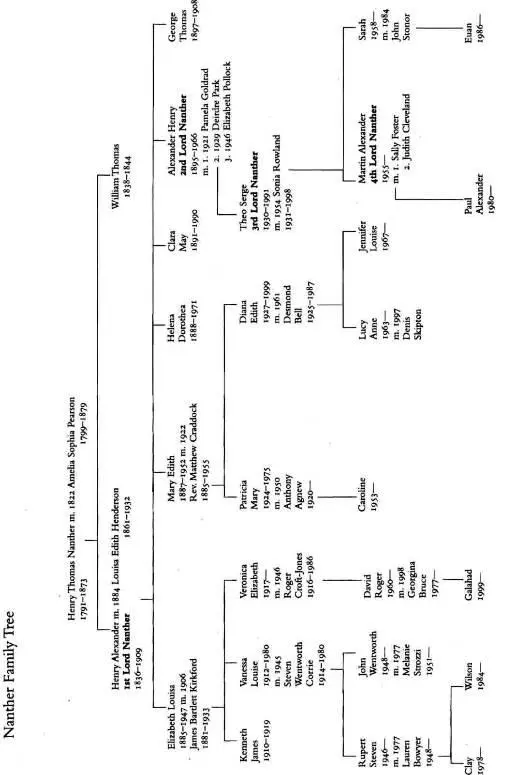
In her tenth novel writing as Barbara Vine, Ruth Rendell offers a novel of suspense based in 19th-century England and centering on deceit, murder, and various other family skeletons. Martin Nanther, the fourth Lord Nanther, has a comfortable life in present-day London as a Hereditary Peer in the House of Lords and as a historical biographer. He chooses as his most recent subject his own great-grandfather, the first Lord Nanther, physician to the royal family (Victoria and Albert) and an early noted researcher into the cause and transmission of hemophilia. The reader is taken through the family history as Martin painstakingly uncovers some not so savory bits of his own family's past. The story is dense with characters, and the author provides family trees of the two principal families, for which any reader will be eternally grateful. The story lacks the usual page-turner suspense of the Rendell/Vine novels but makes up for that with unusually detailed glimpses into Victorian life and the inner workings of the House of Parliament, which American readers will find particularly intriguing. Recommended for all public libraries. Caroline Mann, Univ. of Portland, OR
The Blood Doctor — читать онлайн бесплатно полную книгу (весь текст) целиком
Ниже представлен текст книги, разбитый по страницам. Система сохранения места последней прочитанной страницы, позволяет с удобством читать онлайн бесплатно книгу «The Blood Doctor», без необходимости каждый раз заново искать на чём Вы остановились. Поставьте закладку, и сможете в любой момент перейти на страницу, на которой закончили чтение.
Интервал:
Закладка:
‘Why do they have to stay?’ Laura asks.
‘They have to vote and make sure the Government wins.’
‘Couldn’t they get out some other way?’
‘They often do,’ I say, and Laura and Janet are still wondering if I’m having them on when I take my raincoat off its peg and accompany them out into the street. I’m going home too and as I’m seeing them into Westminster tube station, thanking them and saying goodbye, Laura says, ‘Thank you very much for tea, my Lord,’ which embarrasses me and I think I go red in the face.
On my way home I ask the cab driver to drop me off in Primrose Hill. There’s something magical about the place, especially after dark. The green hill and the green slopes rise up, crossed by sandy paths like a countryside, and you feel you’ve come to the edge of London, there can be nothing beyond but fields and woods. Then, as soon as you’re over the summit, you see the long terrace of big Victorian houses, the shops and restaurants all lit with golden light, and the narrow streets running back into the hinterland. And, almost immediately, you find yourself in a little urban island, the heart of it the prettiest part, for it is here that Chalcot Road runs into Chalcot Square, where on its eastern side Sylvia Plath lived and died. The houses are all irregular, all Victorian or earlier, painted pink and purple and yellow and brown, overhung by big trees, with a little green garden in the centre. There is no more charming square in all London. Alma stands no comparison with it.
The curtains are undrawn, and behind the windows chandeliers glisten and flowers in vases shimmer, their colours bleached by the many and varied lights, their leaves shining. I walk up Chalcot Road, wide and straight. It bisects this area, dividing it almost evenly down the centre. A little way along there’s a pub called the Princess of Wales, but it was named for Alexandra, wife of Edward VII, not Diana. This persuades me that it and these houses would have been put up in the sixties during the nineteenth century, for Edward married Alexandra in 1863, but I shall have to check.
It’s not a beautiful street. It’s too wide and the houses were built in long dull terraces, all much the same. One of them would have been occupied by Jimmy and later by Jimmy and Len Dawson, but I’ve no way of knowing which. The Dawsons seem to have moved away after a couple of years and gone to live in the less salubrious district of King’s Cross. Why? Surely because Henry was unwilling to pay the rent for more than two years.
I retrace my steps, back to Rothwell Street, the main road and the hill. It’s a fine night, mild and clear enough to walk home. I take one of the paths, then St Edmund’s Terrace and I’m in St John’s Wood. While I walk I’m thinking about the illusions people like to keep about a respectable family past, and about pentagrams in a diary, and then, suddenly, I know who Laura Kimball and her daughter remind me of.
My father. Those long rather gaunt faces – they used to call it ‘lantern-jawed’ – are my father’s face, and maybe Alexander’s too if I remember rightly. The looks of the women Nanther men marry don’t seem to affect the offspring – not until my father married my mother, that is. All Nanther children got from their mothers till then was fair hair and sometimes blue eyes. If Laura and Janet resemble my father, they must also look like Henry. Ergo , they are not Len Dawson’s descendants but Henry’s, just as I am?
5
This morning I went to the Family Records Centre in Islington where the records are kept to add to the rather pathetic family tree I’ve made. There I carefully noted that of Henry’s daughters the first, Elizabeth, married James Kirkford in 1906 but the second, Mary, waited another sixteen years before marrying Matthew Craddock. Elizabeth had a son, Kenneth, and two daughters, while Mary had two daughters, Patricia and Diana. Finding out all this takes quite a long time and I still had to track down Jimmy Ashworth and her family. I knew enough about her to make this easy. Her daughter Mary was born in February 1884, four months after her mother’s marriage to Leonard Dawson. A child born in wedlock is presumed to be her mother’s husband’s ( Quern nuptiae demonstrant pater est ), which was no doubt why Henry was anxious to get Jimmy and Len married as soon as possible. But Mary was his daughter, I’m certain.
I wanted to talk to Jude about all this last night. I found a photograph of Henry, taken when he was about the age Janet is now, and the resemblance was even more striking than I’d thought. The shape of the forehead, the rather high-bridged nose, the straight eyebrows, the long upper lip, they were all there. Henry’s, my father’s, Laura’s, Janet’s. Could you see it in me? I scrutinized my face in the mirror. But, no, I look more like my mother. It’s a strange feeling you get when you discover some unexpected offshoot of your family, exciting and slightly distasteful. I told myself I was as bad as Laura, trying to whitewash a forebear I’d never known and probably wouldn’t have liked. But it wasn’t quite that which disturbed me, rather the feeling that I shared my genetic inheritance with strangers, almost alien people. It was a kind of sick joke. I’d disliked what the doorkeeper said when he’d politely implied that any guests of mine must be beyond reproach and suggested that Laura and Janet were my relations. But they were , all the time they were .
For half an hour I’d come closer to liking Henry. For his generosity, his determination to look after the woman he was deserting. Since then my feelings had once more taken an about turn. What had it been like for Jimmy Ashworth, obliged by the man whose child she was carrying to marry a man provided for her, someone she cared nothing for and who was not that child’s father? And for Len Dawson? Could anything be more humiliating? Sally and I had often got on badly, especially towards the end of our marriage, but I can remember the tenderness I felt for her when she was pregnant with Paul, the pride I took in the changes her body underwent and in walking down the street with her holding my arm. My child. None of that for Len Dawson. Could they ever have discussed it? Talked about the coming baby and its paternity? I imagine rather Dawson saying, perhaps on the eve of his wedding, ‘We’re never going to say another word about it,’ and even, ‘Sir Henry’s fixed up things comfortable for us, we’re grateful and we’ve no cause to mention it again.’
I’d like to know more about Jimmy Ashworth, not just her parentage, the date of her marriage and that she was twenty-eight when she married Len Dawson. Both her parents were alive at the time of the marriage, and living in Somers Town, not all that far away. Of their circumstances I know nothing. Did Jimmy on leaving school, at a no doubt very early age, work long ill-paid hours in a sweatshop somewhere? Was she in danger of losing her sight or poisoning herself with white lead? And was this why she went on the streets, after the fashion of many poor Victorian girls? If she did. I don’t know who her first ‘protector’ was or even if it was he who introduced her to Henry. I’d like to know if she loved him. I’m sure he didn’t love her. Then there’s the baby, conceived after nine years. It may be, of course, that others were conceived and Jimmy aborted them. Does that mean she wanted this baby? That she even thought Henry might marry her if she was pregnant with his child? I shall never know. Henry left nothing to go on except a five-pointed star signifying he’d paid a visit to his mistress that day.
I can’t repeat any of this to Jude. I’m not going too far when I say anyone’s baby would do for her. Someone else’s eggs and someone else’s sperm, if you like, other people’s blood, DNA, it wouldn’t matter. She asked me after the second miscarriage if I’d find a surrogate mother to have my child for her. I hated saying no, I always hate saying no to her, but I had to. If I’m indifferent to the possibility of a child, I positively hate the idea of having one with someone else. Len Dawson was involved in a sort of surrogacy and I don’t suppose he liked the idea any more than I did. So instead of telling her about this, I content myself with recounting the story of the Tay Bridge disaster, but first I said a few things about Laura and Janet and our tea party. Instead of mentioning the resemblance between them and my father I said that Jude looks a bit like the Famous Beauty Jimmy Ashworth.
Читать дальшеИнтервал:
Закладка:
Похожие книги на «The Blood Doctor»
Представляем Вашему вниманию похожие книги на «The Blood Doctor» списком для выбора. Мы отобрали схожую по названию и смыслу литературу в надежде предоставить читателям больше вариантов отыскать новые, интересные, ещё непрочитанные произведения.




Обсуждение, отзывы о книге «The Blood Doctor» и просто собственные мнения читателей. Оставьте ваши комментарии, напишите, что Вы думаете о произведении, его смысле или главных героях. Укажите что конкретно понравилось, а что нет, и почему Вы так считаете.