Barbara Vine - The Blood Doctor
Здесь есть возможность читать онлайн «Barbara Vine - The Blood Doctor» весь текст электронной книги совершенно бесплатно (целиком полную версию без сокращений). В некоторых случаях можно слушать аудио, скачать через торрент в формате fb2 и присутствует краткое содержание. Год выпуска: 2003, Издательство: Vintage, Жанр: Современная проза, на английском языке. Описание произведения, (предисловие) а так же отзывы посетителей доступны на портале библиотеки ЛибКат.
- Название:The Blood Doctor
- Автор:
- Издательство:Vintage
- Жанр:
- Год:2003
- ISBN:нет данных
- Рейтинг книги:4 / 5. Голосов: 1
-
Избранное:Добавить в избранное
- Отзывы:
-
Ваша оценка:
The Blood Doctor: краткое содержание, описание и аннотация
Предлагаем к чтению аннотацию, описание, краткое содержание или предисловие (зависит от того, что написал сам автор книги «The Blood Doctor»). Если вы не нашли необходимую информацию о книге — напишите в комментариях, мы постараемся отыскать её.
Barbara Vine (a.k.a. Ruth Rendell) deftly weaves this story of an eminent Victorian with a modern yarn about the embattled biographer, who is watching the House of Lords prepare to annul membership for hereditary peers and thus strip him of his position. Themes of fate and family snake throughout this teasing psychological suspense, a typically chilling tale from a master of the genre.
From Publishers Weekly
This rich, labyrinthine book by Vine (aka Ruth Rendell) concerns a "mystery in history," like her 1998 novel, The Chimney Sweeper's Boy. Martin Nanther-biographer and member of the House of Lords-discovers some blighted roots on his family tree while researching the life of his great-great-grandfather, Henry, an expert on hemophilia and physician to Queen Victoria. Martin contacts long-lost relatives who help him uncover some puzzling events in Henry's life. Was Henry a dour workaholic or something much more sinister? Vine can make century-old tragedy come alive. Still, the decades lapsed between Martin's and Henry's circles create added emotional distance, and, because they are all at least 50 years dead, we never meet Henry or his cohorts except through diaries and letters. Martin's own life-his wife's infertility and troubles with a son from his first marriage-is interesting yet sometimes intrudes on the more intriguing Victorian saga. Vine uses her own experience as a peer to give readers an insider's look into the House of Lords, at the dukes snoozing in the library between votes and eating strawberries on the terrace fronting the Thames. Some minor characters are especially vivid, like Martin's elderly cousin Veronica, who belts back gin while stonewalling about the family skeletons all but dancing through her living room. Readers may guess Henry's game before Vine is ready to reveal it, but this doesn't detract from this novel peopled by characters at once repellant and compelling.
From Library Journal
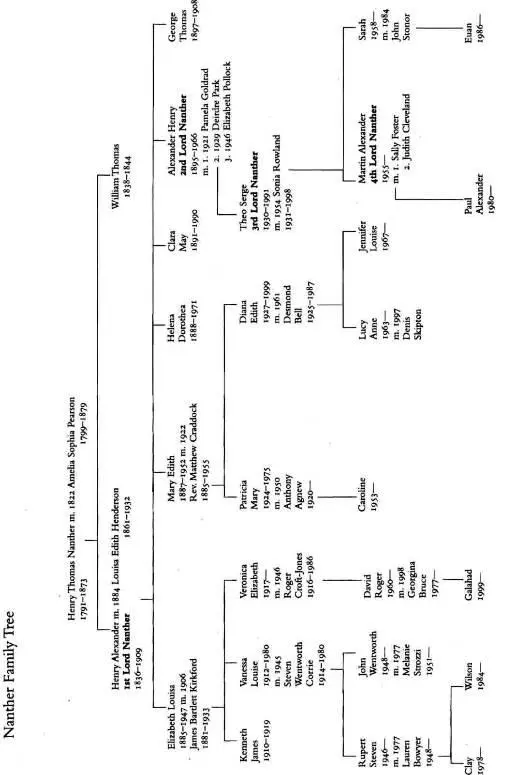
In her tenth novel writing as Barbara Vine, Ruth Rendell offers a novel of suspense based in 19th-century England and centering on deceit, murder, and various other family skeletons. Martin Nanther, the fourth Lord Nanther, has a comfortable life in present-day London as a Hereditary Peer in the House of Lords and as a historical biographer. He chooses as his most recent subject his own great-grandfather, the first Lord Nanther, physician to the royal family (Victoria and Albert) and an early noted researcher into the cause and transmission of hemophilia. The reader is taken through the family history as Martin painstakingly uncovers some not so savory bits of his own family's past. The story is dense with characters, and the author provides family trees of the two principal families, for which any reader will be eternally grateful. The story lacks the usual page-turner suspense of the Rendell/Vine novels but makes up for that with unusually detailed glimpses into Victorian life and the inner workings of the House of Parliament, which American readers will find particularly intriguing. Recommended for all public libraries. Caroline Mann, Univ. of Portland, OR
The Blood Doctor — читать онлайн бесплатно полную книгу (весь текст) целиком
Ниже представлен текст книги, разбитый по страницам. Система сохранения места последней прочитанной страницы, позволяет с удобством читать онлайн бесплатно книгу «The Blood Doctor», без необходимости каждый раз заново искать на чём Вы остановились. Поставьте закладку, и сможете в любой момент перейти на страницу, на которой закончили чтение.
Интервал:
Закладка:
An eye-witness – I don’t know his name but he had a great sense of drama – said, ‘I was seated by my fireside last night, listening to the clamour of the storm without, when a blast of wind more furious than before caught the chimneys of a house opposite and brought them down to the ground with a crash that startled every one of us to our feet. Stepping over to the casement, I gazed out upon the street and just then a blaze of moonlight lighted up the broad expanse of the Tay down below, and the long white sinuous line of the bridge came into view… I instinctively took out my watch. It was exactly seven o’clock. “The Edinburgh train will be due immediately,” I exclaimed to my wife. “Come and let us see if it will attempt to cross on such a night.”
So saying we turned down the gas in the parlour, and with many expressions of thankfulness that no friends of ours, so far as we knew, had to cross the river at that time, prepared to await the appearance of the expected train. The light by this time had become most fitful, masses of cloud were scouring across the expanse of the heavens, at times totally obscuring the light of the full moon. “There she comes,” cried one of my children, and at that moment the slowly moving lights of the Edinburgh train could be seen rounding the curve at Wormit. Then it passed the signal box at the south side, and entered on the long straight line of that portion of the bridge. Once on the bridge it seemed to move with great swiftness along, and when the engine entered the tunnel-like cloisters of the great girders, my little girl exactly described the effect of the lights as seen through lattice work when she exclaimed, “Look, Papa. Isn’t that like lightning?”
‘All this takes some time to write, but to the eye it seemed almost simultaneous with the entrance of the train upon the bridge, a comet like a burst of fiery sparks rang out, as if forcibly ejected into the darkness from the engine. In a long visible trail the streak of fire was seen till quenched in the stormy water below. Then there was absolute darkness on the bridge…’
‘In consequence of this,’ says The Times , ‘loud appeals were made from the Esplanade to the signalman.’ He said that the train was signalled to him from the southern side at nine minutes past seven and at fourteen minutes past it entered the bridge. From his box he had watched for the train but had seen nothing. He tried to telegraph to the signalman on the south side of the bridge but between 7.14 and 7.17 ‘the means of communication had been interrupted’. The news spread, as such news does, and a crowd gathered at Tay Bridge station. Tickets had been sold for the southbound train but it remained at a standstill in the station.
‘That was Henry’s train?’ asks Jude.
‘That was the train he’d have taken.’
It’s clear that no one knew what to do next. The violence of the gale was so great that at first no one dared set foot on the bridge. Then two men attempted it. They were a railway superintendent and the stationmaster at Tay Bridge. They clung on to the rails, cutting their hands, it must have been appalling. Imagine the wind and the wet sleet driving in their faces as they hung on to the slippery ironwork. They got far enough to see that the middle part of the bridge had disappeared and the high girders were gone. But first they saw clouds of spray coming from the pipe that ran along the bridge and carried the water supply for Newport and they knew it had broken when the bridge went down.
The moon was bright but frequently covered by clouds tearing across its face and it was impossible to see the extent of the destruction. They made their way back to Dundee and ‘confirmed the worst fears of the crowds’. Quite a lot of people still believed that though the bridge had gone down the train had not and was waiting unscathed in Fife. They clung to this hope until mail bags from the train were picked up at Broughty Ferry on the other side. The gale was still blowing fiercely. At ten o’clock the ferry steamer The Dundee came in but brought no news from Newport. The Provost of Dundee with railway officials boarded the steamer at Craig Pier and it set off again, making considerable headway as the storm began to die. When the vessel approached the ruins of the bridge they saw that the whole stretch of the high girders, 3,000 feet in length, had been swept away.
One ghastly result of the watchers’ horror and the fluctuating moonlight was that they fancied they saw human beings clinging to the piers, an illusion brought about by the strange shapes the ironwork took when portions of it were torn away. Thirteen huge girders had been wrenched off by the force of the wind, yet no sound had been heard in the town of this enormous mass of iron falling. The roar of the storm had deadened all other noises. They soon saw that it would have been hazardous to approach nearer to the ruined bridge. The harbourmaster took the helm and they pulled away into the darkness, peering down at the water but seeing nothing of the girders nor the train.
First of all they thought there had been three hundred passengers aboard. Estimates of the numbers killed in disasters are always greater than they turn out to be and the total was finally fixed at ninety. Diving operations began next morning. The only body to be recovered, that of an elderly woman was washed ashore at about the same time.
Jude says, ‘So was Henry in the thick of it? Did he go out with one of the boats? Did he see those people or what they thought were people clinging to the wrecked bridge?’
‘I don’t know. Caroline Hamilton didn’t know.’
‘So they never found Richard Hamilton?’
‘Not his body, no. His luggage, a small suitcase with his initials on it, was washed up at Broughty Ferry with a box of table knives and forks, a package of two pounds of tea and a bunch of temperance pledge cards from the Catholic Society for the Suppression of Drunkenness, among a lot of other things. The Times says that two gentlemen – it doesn’t name them – had intended to board the train but changed their minds. Henry must have been one of them.
‘Caroline mentions Henry quite a lot. I don’t know how she knew what his feelings were but the most likely explanation is that he wrote her a condolence letter when he’d found out Richard was dead. Or perhaps wrote to Richard’s parents. Nothing was known of the fate of the train until next day. Henry may not have known the whole of it until he saw a newspaper in Huddersfield.’
‘His first thought would have been,’ Jude says, ‘there but for the grace of God. He’d have been shocked by the narrow squeak he’d had.’
Well, maybe. But he’d been deeply attached to Richard Hamilton and now he’d lost the sister and the brother. Jude wants to know why I believe it was grief he felt rather than relief it wasn’t him and I tell her because his character changed. Losing Richard Hamilton changed him for the worse.
Perhaps Hamilton kept him in check. He must have known about Jimmy Ashworth. An apparently chaste and celibate man himself, a Scots Presbyterian, he may have urged Henry to give up Jimmy and marry. Victorians seemed to think preaching to one’s friends about their conduct perfectly acceptable behaviour, so perhaps Hamilton preached at Henry and up to a point was successful. He could justifiably have said, ‘You’re past forty now and it’s time you became respectable and settled down.’ Henry had already met the Batho family by the end of 1879 and Hamilton may have suggested Olivia as a suitable bride.
I’ve a photograph of Richard Hamilton. He’s wearing a gown and mortar board, sitting in an armchair with one elbow resting on a bamboo table on which stands a potted palm. He might be Olivia Batho’s brother or Jimmy Ashworth’s. A very handsome man, he has their white luminous skin, dark eyes and hair, regular features. His mouth is well-formed and full for a man. Like them, he was Henry’s type. His was the appearance he was most attracted to, both for love and friendship. Yet after the disaster, Hamilton is never again mentioned in the diary. The entries become briefer and colder. His name never occurs in any of Henry’s subsequent letters. Richard Hamilton, dead under the waters of the Tay, passed from his life, superficially as if he had never been. This photograph, in its parchment folder, found in one of the trunks, is the sole memento of him, apart from his letters.
Читать дальшеИнтервал:
Закладка:
Похожие книги на «The Blood Doctor»
Представляем Вашему вниманию похожие книги на «The Blood Doctor» списком для выбора. Мы отобрали схожую по названию и смыслу литературу в надежде предоставить читателям больше вариантов отыскать новые, интересные, ещё непрочитанные произведения.





Обсуждение, отзывы о книге «The Blood Doctor» и просто собственные мнения читателей. Оставьте ваши комментарии, напишите, что Вы думаете о произведении, его смысле или главных героях. Укажите что конкретно понравилось, а что нет, и почему Вы так считаете.