Уолтер Мосли - John Woman
Здесь есть возможность читать онлайн «Уолтер Мосли - John Woman» весь текст электронной книги совершенно бесплатно (целиком полную версию без сокращений). В некоторых случаях можно слушать аудио, скачать через торрент в формате fb2 и присутствует краткое содержание. Город: New York, Год выпуска: 2018, ISBN: 2018, Издательство: Atlantic Monthly Press, Жанр: Современная проза, на английском языке. Описание произведения, (предисловие) а так же отзывы посетителей доступны на портале библиотеки ЛибКат.
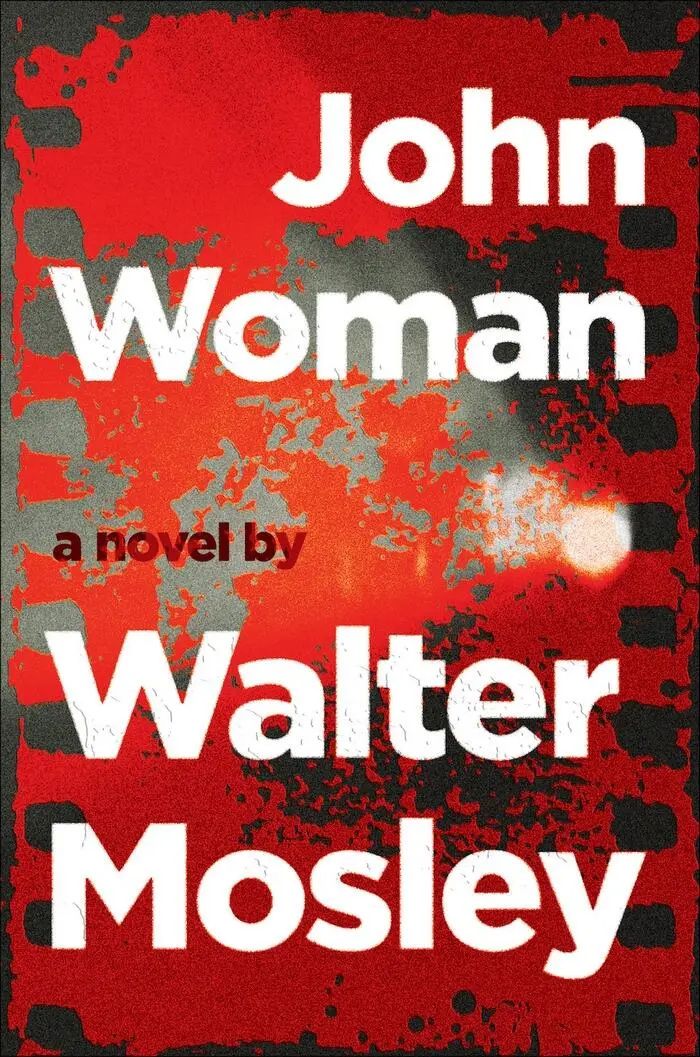
- Название:John Woman
- Автор:
- Издательство:Atlantic Monthly Press
- Жанр:
- Год:2018
- Город:New York
- ISBN:978-0-8021-2841-6
- Рейтинг книги:5 / 5. Голосов: 1
-
Избранное:Добавить в избранное
- Отзывы:
-
Ваша оценка:
John Woman: краткое содержание, описание и аннотация
Предлагаем к чтению аннотацию, описание, краткое содержание или предисловие (зависит от того, что написал сам автор книги «John Woman»). Если вы не нашли необходимую информацию о книге — напишите в комментариях, мы постараемся отыскать её.
At twelve years old, Cornelius, the son of an Italian-American woman and an older black man from Mississippi named Herman, secretly takes over his father’s job at a silent film theater in New York’s East Village. Five years later, as Herman lives out his last days, he shares his wisdom with his son, explaining that the person who controls the narrative of history controls their own fate. After his father dies and his mother disappears, Cornelius sets about reinventing himself — as Professor John Woman, a man who will spread Herman’s teachings into the classrooms of his unorthodox southwestern university and beyond. But there are other individuals who are attempting to influence the narrative of John Woman, and who might know something about the facts of his hidden past.
Engaging with some of the most provocative ideas of recent intellectual history, John Woman is a compulsively readable, deliciously unexpected novel about the way we tell stories, and whether the stories we tell have the power to change the world.
John Woman — читать онлайн бесплатно полную книгу (весь текст) целиком
Ниже представлен текст книги, разбитый по страницам. Система сохранения места последней прочитанной страницы, позволяет с удобством читать онлайн бесплатно книгу «John Woman», без необходимости каждый раз заново искать на чём Вы остановились. Поставьте закладку, и сможете в любой момент перейти на страницу, на которой закончили чтение.
Интервал:
Закладка:
“Why would you have to drop?”
“The personal history assignments.”
“I see,” John said and then paused a moment. “Do you ever stop and wonder about the point in time you’re in right that moment?”
“Yeah.”
“What do you think?”
“That whatever I’m doing will go echoing down the ages and maybe make a serial killer or help find a cure for cancer. Whatever I’m doing has to be important otherwise it just wouldn’t be.”
Hearing these words John stepped back, gesturing for her to enter.
She considered a moment then stepped through.
“Let’s sit at the table,” John offered.
Carlinda went to the table, pulled out a chair and sat with much more grace than she had previously exhibited.
“Would you like something to drink?”
“Water, please. This is a nice place. Are all the faculty apartments the same?”
“If they have a family with more than four members they get the whole building,” he said. “I think that’s right. It might be three but I’m pretty sure it’s four. My upstairs is one big room but they have prefabricated partitions to subdivide.”
He took a twelve-ounce bottle of Nouvelle spring water from his refrigerator, thought of getting his guest a glass then decided against the nicety.
He sat on the chair that abutted Carlinda’s side of the table. Her crystalline eyes opened wide for a moment, then squinted as she studied him.
“What’s your problem?” he asked.
“What do you mean?”
“With the personal history requirement for Decon.” John liked the word the floater had used to describe his course.
“Oh,” she said. “It’s too much... I mean even when I just think about it I get a headache.”
The first assignment in IDHD, Decon, was to take five steps toward creating a preliminary draft of the personal history document. He’d see what assignments arose from the work the students had done at the halfway mark, but the final personal history document (FPHD) would count for at least half of the student’s grade. The FPHD requested that:
... each student create a series of personal histories.
1. The first assignment is to write your personal history as a series of events and so-called facts using no more than a paragraph to describe, explain and/or excuse each. This list will include at least half of the following topics: birthplace, income bracket (class), education, relatives, race, religion, gender, major achievements, sexual experiences, fantasies, enemies, loves, hatreds, likes, dislikes, skills, ineptitudes, and opinions held of you by your friends and those who don’t like you, your teachers, your favorite color if you have one, your pets, taste in clothes. And then you must delve deeper, giving an inventory of your disgusting habits, your unsavory secret desires, the crimes and wrongdoings you have committed. Examples? Smelling your own feces, eating the hardened mucus from your nose, killing the neighbor’s dog, rape, murder or the most serious crime in America, theft.
2. Write a similar document on someone you know without that person being aware of the project.
3. Write another personal history on someone you don’t know well.
4. Blend the histories into someone you like best. Create a new man or woman out of your research. Discover the ideal being and bring that history into class, sharing as much of it as you dare.
5. Throughout this assignment we will study methods, techniques, research systems, and various other arcane approaches to accomplish these ends.
“Maybe your headache is an indication that the work required is work you need to do,” John Woman suggested.
“No,” Carlinda said. “It’s intrusive and disturbing.”
“Certainly.”
“You admit it?”
“Of course,” John said with aplomb. “The study of history is not like going to the movies. It’s not even like a film critic giving her needless opinions. The very study of history is intrusive, invasive and ruthless...”
Carlinda gulped and John smiled.
“Most of my fellow faculty members would have you believe that historical analysis must be an objective exercise, something gleaned from old papers, letters and books. They discuss murder, sex and madness without the slightest idea of what state or states of mind are required. They are virgins giving advice about sex; pampered aristocrats striving to understand the starving poor.
“If you want to be a historian you have to know what it’s like to put as much of the truth as you can bear out in the light of day. You have to shatter your illusions, be willing to suffer revelation.”
John stopped because he felt a full-blown lecture coming on and that was not where he wanted this visit to go.
He noticed that there was a line of sweat across the ridge of the sophomore’s upper lip.
“But, Professor,” she said, “once you tell people the things you asked for they will look at you differently. Suppose I’m the only one to take the assignment seriously?”
“Then you would be the only student in the class who has a prayer of success.”
“Do you have to go through something like that just to write or teach?” she asked.
“Just?” John asked. “Have you ever been raped, Miss Elmsford?”
“No... and that’s the truth.”
“If you were to write a paper on the political use of rape throughout history, from the abduction of the Sabine women down to present-day conflicts in Africa, could you give me an accurate rendition by reading historical and official reports and interviews with the rapists and their victims?”
“I, I... don’t know.”
“If you were one of the women experiencing this crime would you have a deeper understanding of what was happening?”
“Possibly,” she said. “But... maybe that would put me too close to it.”
“Exactly so. Without proper training a victim of any crime or tragedy wouldn’t be able to have... perspective. But a researcher in a university library might not have the visceral experience to fully embrace the subject either. The paper I’m asking for will underscore this dichotomy. It will give you the ability to identify with the historical characters you wish to imbue with life. Without this simple self-exploration the contemporary historian may not have the awareness to understand the immensity of her or his study. Thucydides was a physician who contracted and survived the bubonic plague. Therefore he was able to render the experience with accuracy and acuity.”
“It wouldn’t be worth it to infect myself with the Ebola virus in order to understand it,” she said with abject certainty.
“What are you, Miss Elmsford?”
“I don’t know what you mean. A woman? An American?”
“Let’s start with race.”
“That’s kind of confusing,” she said.
“Confuse me then.”
“My, my mother’s father, Joel Pena, is Mexican, a descendent of the Aztecs he says. Mom’s mom is third-generation American Japanese. My father’s father is a black man from Ghana and my grandmother on that side is Danish.”
“So what are you?”
“A little bit of everything, I guess.”
“Where does the name Elmsford come from?”
“It used to be Prempeh but my father’s father changed it when he migrated with my mother to the U.S.”
“And so your name is a lie of sorts,” John said kindly. “A bit of deconstructionist history, if you will.”
“Okay,” Carlinda agreed. “I could say our real family name. I guess that would be interesting. But what if I robbed a bank and wrote it down? Then somebody might call the FBI and have me arrested.”
“Of course,” John said.
“It’s not worth destroying your whole life for a class paper.”
Читать дальшеИнтервал:
Закладка:
Похожие книги на «John Woman»
Представляем Вашему вниманию похожие книги на «John Woman» списком для выбора. Мы отобрали схожую по названию и смыслу литературу в надежде предоставить читателям больше вариантов отыскать новые, интересные, ещё непрочитанные произведения.


Обсуждение, отзывы о книге «John Woman» и просто собственные мнения читателей. Оставьте ваши комментарии, напишите, что Вы думаете о произведении, его смысле или главных героях. Укажите что конкретно понравилось, а что нет, и почему Вы так считаете.