Уолтер Мосли - John Woman
Здесь есть возможность читать онлайн «Уолтер Мосли - John Woman» весь текст электронной книги совершенно бесплатно (целиком полную версию без сокращений). В некоторых случаях можно слушать аудио, скачать через торрент в формате fb2 и присутствует краткое содержание. Город: New York, Год выпуска: 2018, ISBN: 2018, Издательство: Atlantic Monthly Press, Жанр: Современная проза, на английском языке. Описание произведения, (предисловие) а так же отзывы посетителей доступны на портале библиотеки ЛибКат.
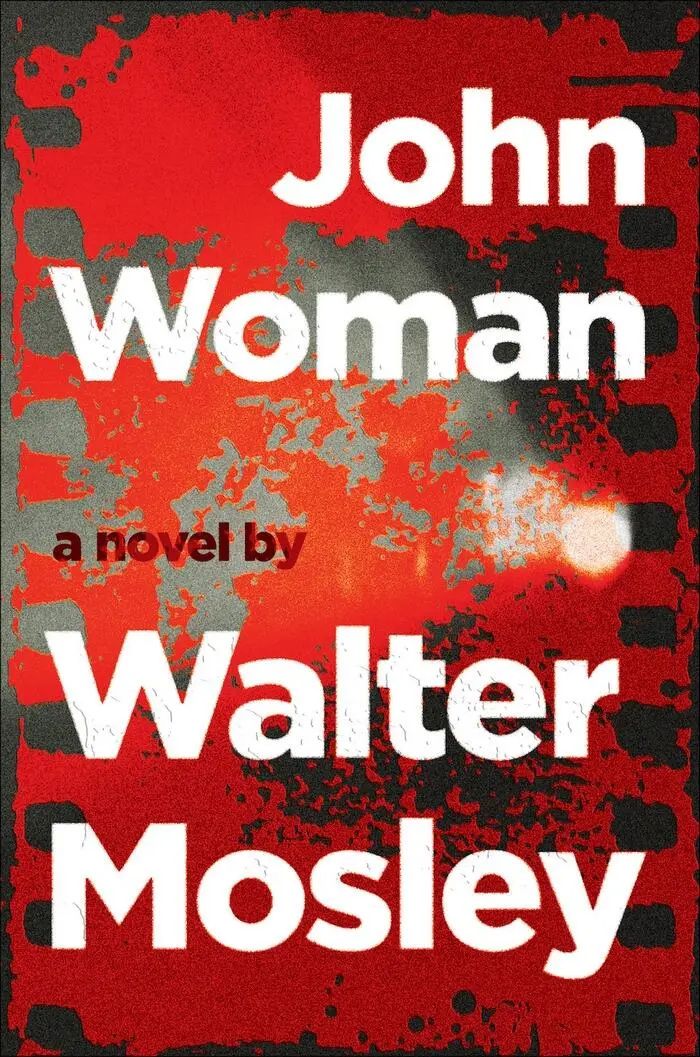
- Название:John Woman
- Автор:
- Издательство:Atlantic Monthly Press
- Жанр:
- Год:2018
- Город:New York
- ISBN:978-0-8021-2841-6
- Рейтинг книги:5 / 5. Голосов: 1
-
Избранное:Добавить в избранное
- Отзывы:
-
Ваша оценка:
John Woman: краткое содержание, описание и аннотация
Предлагаем к чтению аннотацию, описание, краткое содержание или предисловие (зависит от того, что написал сам автор книги «John Woman»). Если вы не нашли необходимую информацию о книге — напишите в комментариях, мы постараемся отыскать её.
At twelve years old, Cornelius, the son of an Italian-American woman and an older black man from Mississippi named Herman, secretly takes over his father’s job at a silent film theater in New York’s East Village. Five years later, as Herman lives out his last days, he shares his wisdom with his son, explaining that the person who controls the narrative of history controls their own fate. After his father dies and his mother disappears, Cornelius sets about reinventing himself — as Professor John Woman, a man who will spread Herman’s teachings into the classrooms of his unorthodox southwestern university and beyond. But there are other individuals who are attempting to influence the narrative of John Woman, and who might know something about the facts of his hidden past.
Engaging with some of the most provocative ideas of recent intellectual history, John Woman is a compulsively readable, deliciously unexpected novel about the way we tell stories, and whether the stories we tell have the power to change the world.
John Woman — читать онлайн бесплатно полную книгу (весь текст) целиком
Ниже представлен текст книги, разбитый по страницам. Система сохранения места последней прочитанной страницы, позволяет с удобством читать онлайн бесплатно книгу «John Woman», без необходимости каждый раз заново искать на чём Вы остановились. Поставьте закладку, и сможете в любой момент перейти на страницу, на которой закончили чтение.
Интервал:
Закладка:
Someone was shaking his shoulder; there was an intense light shining. John’s head hurt so badly that he wanted to tear out his brain.
“Professor!”
“Stop shakin’ me, Jasper,” John complained. “My head feels like it’s gonna bust.”
The big Hopi had a set expression that revealed nothing; not joy or glee, anger or love. He called himself Jasper because he liked the stone. Jasper Hutman was the name the university put on his paycheck but John knew his given name was Hototo.
Hototo believed that his tribesmen were put on earth to bring peace and harmony everywhere they went.
“Does that mean the Hopi people are here to save the world?” John asked Hototo early one Tuesday morning when he’d just returned from Senta’s motel room.
“No,” the big, brick red man replied. “There are too few of us and too many of everyone else. All we do is to carry a little peace here and there casting it on the waters and hoping for the best.”
Jasper shook John’s shoulder again and the history professor sat up straight.
“You shouldn’t sleep out here in your car, Professor, there’s all kinds of bad characters up and down this road. And you know they won’t think twice about people like you and me.”
The memory of a fairy godmother came into John’s mind.
“I was waiting for you and fell asleep,” he said.
“You were smiling,” Hototo remarked.
“I think I had a revelation.”
Jasper “Hototo” Hutman went through an iron doorway to open the larger driveway gate. John drove through but found the uniformed Hopi standing in the middle of the lane holding up a fancy beaded belt. The guard approached, handing the bright strap to John. The yellow, red, and blue beads might have been the scales of a fanciful viper. The silver buckle was quite large.
“For you,” Hototo said firmly.
“It’s very handsome,” John said.
The eight-inch buckle had a turquoise bird set at one side. The bird had a red eye and one greenstone feather.
“If you press the bird’s eye it releases a silver knife and handle,” Hototo informed him. “My father gave it to me but I’ll never use it.”
“What makes you think I would?” John asked.
“You’re a wild man, John Woman. I see it in your eyes late at night when you come from Spark City. A man like you needs a weapon.”
Having no reply John put the belt on the seat next to him then drove on feeling as if some kind of unwanted destiny had been foisted upon him.
I have seen you in a dream, he pecked on the virtual keyboard of his smart phone. This image my father would call a hermeneutic construct... an element of my mind that has become a separate entity. That’s what I would say if a potential employer asked me to explain but really you are Posterity, the goddess who embodies a future that will one day only dimly remember my foggy existence.
John was sitting in the window ledge of the second floor of his apartment, Cottage 16, upper level. Each structure of faculty housing was a four-story faux adobe building encompassing two two-story apartments with one big room per floor. The first level had a stove and refrigerator along the wall. John kept a table and desk on the kitchen level with only a low-riding Japanese platform bed against the north wall of the upper chamber. Through the large window of either room a red rock plateau could be seen in the distance. There was enough room in the recessed window to sit comfortably and write while the desert loomed beyond.
History is the world we live in, he wrote. It’s not a thing of the past, neither, in human terms, is it separate from the person witnessing it. History is not an external object that can be weighed or quantified by any extant measurements. Indeed, the study of history is much like the contradictory study of the human brain: a gooey mass that contains incongruous images which are affected by tides of emotions, instincts, indecipherable reminders and faulty memories, all of these elements being continually changed by time, trauma, interpretation, and, ultimately, by death.
I will always remember, Goddess Posterity, the moment of our meeting but I will most likely forget the day of the week, your face, the guard dog’s warm nose on my fingers. I’ll forget the exact words you spoke, what I replied. If I tell someone else about you they will misremember what I have told them. And when, and if, we ever speak of you at some future date (which will also be forgotten) our conversation will make you over yet again.
So history for human beings, rather than one undeniable unfolding of existence, is instead millions, billions, trillions of warped and faded images that morph into self-contradictions, false promises and unlikely convictions...
John wrote for hours that morning. When the battery icon turned into a red outline he plugged the cell phone charger into a wall socket. The wire being too short to reach the window, he had to sit on the blond bamboo floor with his back against the east wall; there he continued the one-way conversation with his private god.
He was reminded of his long-suffering father sitting in much the same pose in his deathbed. This memory contained the story he would tell Posterity, intended for the history professors’ tribunal to overhear.
The faculty at NUSW, he wrote in a footnote to Posterity, is asking for me to prove myself in concrete terms. This expectation is pandemic in the impossible study of what has gone before. To prove myself is like asking for proof of existence. I think therefore I cannot know. I can discuss with you because I know that you are the embodiment of that which transcends me. This is the only way for me to make certain that I am trying my best to come as close as possible to truth and not making up complex arguments for my faculty-tribesmen to be impressed by.
Just as he had finished this last sentence the doorbell rang.
John bounded down the stairs to his front door. There he stopped and smiled — welcoming the unknown.
“Who’s there?”
6
“It’s Carlinda Elmsford, Professor Woman.”
The door was yellow with a ceramic green knob. John saw the colors quite clearly wondering if would he would have been able to describe them before this moment. His digital thesis, desert accident and dream — all combined with the gangling girl thinker’s voice making his awareness more focused, present.
“Come on up,” he said, pressing the release for the downstairs entrance.
In the outer hall he listened as the double transfer student came up the first flight of stairs, then rounded the corner.
She wore a long blue dress that varied in hues, blending from light to dark. Her straw sandals had been replaced by black fabric dancer’s shoes. Her handsome features were permanent like those of a marble sculpture but her expression was flighty, almost frightened, liable to change at any moment.
“Miss Elmsford,” John said.
“I read the syllabus and course outline on the university website,” she said blinking as if he were a bright light.
“The entire document?”
“Yes.”
“That’s more than half the class will ever do.”
The sophomore tried to smile but only managed a halfhearted frown.
“I wanted to talk to you about it,” she said.
“My office hours are on the top of each section of the outline and syllabus. Tuesdays and Thursdays, four to six.”
He wasn’t sure why he was keeping her at the threshold. Maybe there was something about her and doorways... them and doorways.
“I know,” she said. “I would have waited but I might have to drop the course and the deadline is this Thursday, before the class meets.”
Читать дальшеИнтервал:
Закладка:
Похожие книги на «John Woman»
Представляем Вашему вниманию похожие книги на «John Woman» списком для выбора. Мы отобрали схожую по названию и смыслу литературу в надежде предоставить читателям больше вариантов отыскать новые, интересные, ещё непрочитанные произведения.



Обсуждение, отзывы о книге «John Woman» и просто собственные мнения читателей. Оставьте ваши комментарии, напишите, что Вы думаете о произведении, его смысле или главных героях. Укажите что конкретно понравилось, а что нет, и почему Вы так считаете.