Уолтер Мосли - John Woman
Здесь есть возможность читать онлайн «Уолтер Мосли - John Woman» весь текст электронной книги совершенно бесплатно (целиком полную версию без сокращений). В некоторых случаях можно слушать аудио, скачать через торрент в формате fb2 и присутствует краткое содержание. Город: New York, Год выпуска: 2018, ISBN: 2018, Издательство: Atlantic Monthly Press, Жанр: Современная проза, на английском языке. Описание произведения, (предисловие) а так же отзывы посетителей доступны на портале библиотеки ЛибКат.
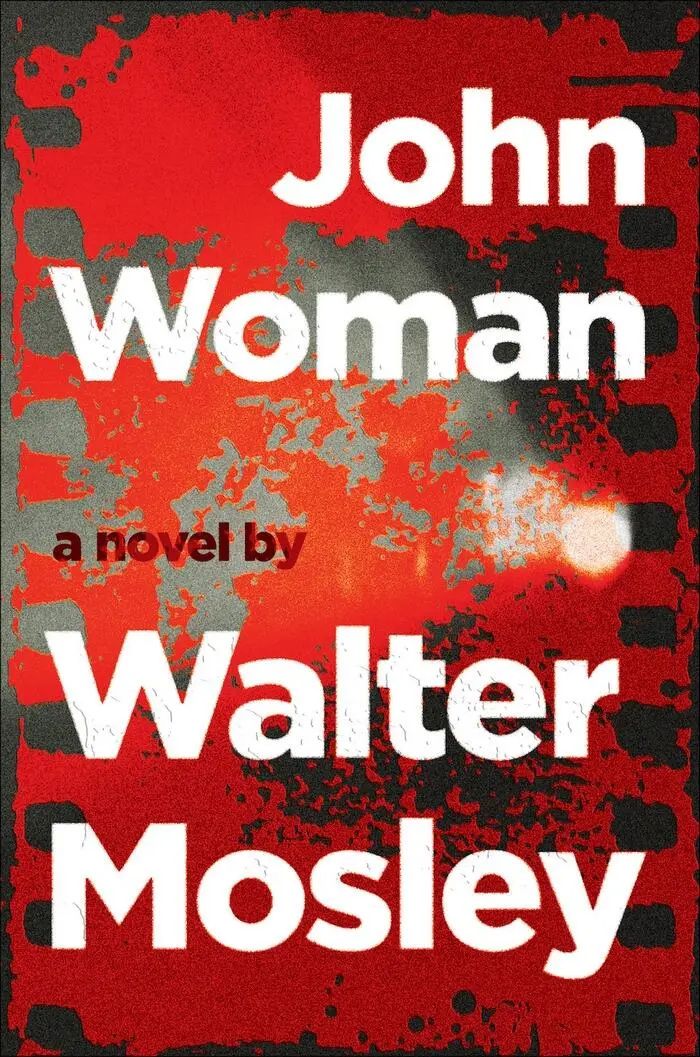
- Название:John Woman
- Автор:
- Издательство:Atlantic Monthly Press
- Жанр:
- Год:2018
- Город:New York
- ISBN:978-0-8021-2841-6
- Рейтинг книги:5 / 5. Голосов: 1
-
Избранное:Добавить в избранное
- Отзывы:
-
Ваша оценка:
John Woman: краткое содержание, описание и аннотация
Предлагаем к чтению аннотацию, описание, краткое содержание или предисловие (зависит от того, что написал сам автор книги «John Woman»). Если вы не нашли необходимую информацию о книге — напишите в комментариях, мы постараемся отыскать её.
At twelve years old, Cornelius, the son of an Italian-American woman and an older black man from Mississippi named Herman, secretly takes over his father’s job at a silent film theater in New York’s East Village. Five years later, as Herman lives out his last days, he shares his wisdom with his son, explaining that the person who controls the narrative of history controls their own fate. After his father dies and his mother disappears, Cornelius sets about reinventing himself — as Professor John Woman, a man who will spread Herman’s teachings into the classrooms of his unorthodox southwestern university and beyond. But there are other individuals who are attempting to influence the narrative of John Woman, and who might know something about the facts of his hidden past.
Engaging with some of the most provocative ideas of recent intellectual history, John Woman is a compulsively readable, deliciously unexpected novel about the way we tell stories, and whether the stories we tell have the power to change the world.
John Woman — читать онлайн бесплатно полную книгу (весь текст) целиком
Ниже представлен текст книги, разбитый по страницам. Система сохранения места последней прочитанной страницы, позволяет с удобством читать онлайн бесплатно книгу «John Woman», без необходимости каждый раз заново искать на чём Вы остановились. Поставьте закладку, и сможете в любой момент перейти на страницу, на которой закончили чтение.
Интервал:
Закладка:
Along the way, John’s thoughts turned unexpectedly to a memory of his mother. She wore a little black dress and her favorite greenstone necklace, and she was sitting in the high-backed wicker chair that looked out on Mott from the big bay window of her tiny apartment. He felt a tingle in the heel of his right palm. Smart as he was, Herman Jones had been wrong. The acme of John’s life had been Lucia’s passion, alongside his father’s mind. He had loved her and lost her every day of his life.
He experienced the physical sensation just before tears sprouted but did not cry, because missing his mother kept her alive. Memories of her and his father were all the family he had.
This notion of kinfolk doubled back on Luckfeld’s declaration of fealty to the Platinum Path. Though it was no surprise that the Path owned and ran the university, none of its members, to John’s knowledge, had ever admitted affiliation. There was one professor who mentioned the organization in an article published in a local paper. That was Dr. Abel Morel, a zoologist from Luxembourg. Six days after the article appeared Morel quit the university and moved back to Europe.
That President Luckfeld entertained John’s question might mean that he was considered a useful foil, a dialectic that served them in some way.
Twenty miles from NUSW John said, “Okay, dad, if you’re with me then say something.”
He waited, half-expecting his father’s ghost to be conjured by the offering. But it wasn’t; was not.
John wanted to see his father again, to hear him, to sleep in his room at night and wake up to find Herman sitting at the breakfast table in front of a bowl of overcooked oatmeal.
“I like it slippery,” he used to say.
“But you’re not there are you?” John declared speeding across the vast desert. “It’s just me wishing that you’d get off a Greyhound bus and come on back home.”
Half an hour later Professor Woman reached the outskirts of the small town, Spark City. There, before the highway turned into Main Street, a quarter mile from the church that was the centerpiece of the town square, two lone structures stood across the highway from one another: Spark City Motel and Spark City Bar.
John pulled into the parking lot of the bar, climbed out through the roof of his car, then sauntered toward the dark maw of a doorway.
It could have been a noir movie set, John thought as he crossed the threshold; it had that perfect balance of malaise, air-conditioning and psychic squalor. The dozen or so weak lights used to illuminate the room were encased in deep green glass. The floor felt gritty through the soles of his shoes. The sour smell of beer was so strong it tasted like a mouthful of ripe buttermilk.
Under a slightly brighter green light at the far end of the longish room stood a pool table where a bearded man played against himself. To John’s left, seated at the wall in soggy wood chairs, were a man who looked to be in his forties and a girl no more than sixteen.
“... and Will and Catherine and Mallory, and, and, and, oh yeah... and Darla-Jean were at Mallory’s house and his father said that if we were gonna drink we’d better give him a shot too,” the girl said and then she laughed and laughed.
The man was smaller than the buxom blond girl, and was wearing the gray uniform of some kind of repair service. Her ample bosom bounced when she laughed. The repairman nodded along.
John went up to the bar and sat on one of the unfinished pine stools, cautious not to get a splinter through the seat of his pants.
“Dr. Woman,” the bartender greeted.
“Mr. Lasky.”
Lasky was pale, also in his forties, prematurely balding, with eyes that seemed world-weary but resolved to make it through at least one more night.
“I guess I owe you five hundred,” the down-market mixologist lamented.
“I told you that Danny-boy would beat Matthysse,” John agreed. “The Argentine has the power, sure, but he thought too much of himself and Garcia’s from Philly. You never bet against a good boxer from Philly.”
Lou Lasky sniffed as if suffering an insult.
“Senta in?” John asked.
After giving this question serious consideration Lou asked. “What you drinkin’?”
“Martell Gordon Bleu.”
The bartender frowned as if he’d never heard of that particular poison. Then he went through a door behind the bar, leaving John to listen to pool balls clicking and teenage ramblings.
“... my mother said that they used to only teach girls how to type and cook when her mother went to school. Back then it was only men who had jobs. I wish I lived back then so I could sit at home and not do nuthin’...”
After a while John heard the words as sounds alone like when he stood on the fifth floor of Prometheus. Now and then the man’s voice rumbled. It was surprisingly deep for such a small man.
“On the house,” Lou Lasky said. He’d set down a snifter with a measured dram of amber liquid and no ice. “Room twenty-six at seven-thirty.”
John placed three hundred-dollar bills on the bar.
As Lou gathered the cash he said, “Next time it’s the full eight.”
“If you don’t make any more ill-advised bets.”
For the next few hours John read Colonel Chabert, by Balzac, on an electronic tablet. There wasn’t enough light for a real book and John liked e-readers; they seemed somehow secretive to him. He’d read the novel years before but adhered to his father’s edict — real reading is rereading.
Herman usually added that there is more history, more truth in fiction than in most so-called history books. Our dreams and fantasies get it right even when they don’t know it.
While John read the bar filled up. The patrons were white and listless, sometimes loud but more often silent, rarely, if ever, smiling.
One woman, probably in her thirties, came up to where the repairman and the teenager sat. She said, “Lou-Ann, you got no business in here. You should go on home to your mother.”
“My mother is across the street, Miss Melbourne,” the girl said. “And I’m locked out the house. You wanna take me home with you and Jack Frank?”
Hearing this John finished his third cognac and climbed off the rough pine stool. His left hip ached from sitting too long. Despite the pain he felt as if he was floating.
Outside the sun was set. The stellar desert sky had a magical feel to it. But John didn’t stop to appreciate the glittering dome of night. Crossing the transitional highway he took the outside stairs to the second floor of the two-story, turquoise-plastered Spark City Motel. Ambling down the external concrete hall he came to the last door, number twenty-six.
“Who is it?” she said in answer to his knock.
“Me,” he replied, uncertainty informing the word.
Forty-four-year-old Senta opened the pale olive door. Tall with a womanly figure, she had white-blond hair.
She had once told John that this was her natural color but she dyed it to get even blonder .
“Hi,” she said. She wore a pink dress that came down to the middle of powerful thighs. The frock had no shoulders or shoulder straps. Senta’s proud chest was enough.
“Hey,” John said shyly.
“You gonna come in or just stand there?”
John took a floating step forward.
“I have to go to the bathroom,” he said as she closed the door.
“Come on then.” She took him by the hand.
The turquoise-and-white toilet was small for two people but Senta didn’t leave him. She pulled down his zipper and rummaged around until her cold fingers found his penis. She pulled it out and said, “Okay, you can go now.”
After relieving himself John said, “I don’t want to move too fast tonight.”
Читать дальшеИнтервал:
Закладка:
Похожие книги на «John Woman»
Представляем Вашему вниманию похожие книги на «John Woman» списком для выбора. Мы отобрали схожую по названию и смыслу литературу в надежде предоставить читателям больше вариантов отыскать новые, интересные, ещё непрочитанные произведения.



Обсуждение, отзывы о книге «John Woman» и просто собственные мнения читателей. Оставьте ваши комментарии, напишите, что Вы думаете о произведении, его смысле или главных героях. Укажите что конкретно понравилось, а что нет, и почему Вы так считаете.