Yaa Gyasi - Transcendent Kingdom
Здесь есть возможность читать онлайн «Yaa Gyasi - Transcendent Kingdom» весь текст электронной книги совершенно бесплатно (целиком полную версию без сокращений). В некоторых случаях можно слушать аудио, скачать через торрент в формате fb2 и присутствует краткое содержание. Год выпуска: 2020, ISBN: 2020, Издательство: Penguin UK, Жанр: Современная проза, на английском языке. Описание произведения, (предисловие) а так же отзывы посетителей доступны на портале библиотеки ЛибКат.
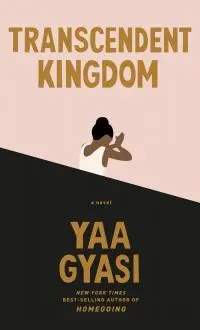
- Название:Transcendent Kingdom
- Автор:
- Издательство:Penguin UK
- Жанр:
- Год:2020
- ISBN:9780241988664
- Рейтинг книги:4 / 5. Голосов: 1
-
Избранное:Добавить в избранное
- Отзывы:
-
Ваша оценка:
Transcendent Kingdom: краткое содержание, описание и аннотация
Предлагаем к чтению аннотацию, описание, краткое содержание или предисловие (зависит от того, что написал сам автор книги «Transcendent Kingdom»). Если вы не нашли необходимую информацию о книге — напишите в комментариях, мы постараемся отыскать её.
As a child Gifty would ask her parents to tell the story of their journey from Ghana to Alabama, seeking escape in myths of heroism and romance. When her father and brother succumb to the hard reality of immigrant life in the American South, their family of four becomes two - and the life Gifty dreamed of slips away.
Years later, desperate to understand the opioid addiction that destroyed her brother's life, she turns to science for answers. But when her mother comes to stay, Gifty soon learns that the roots of their tangled traumas reach farther than she ever thought. Tracing her family's story through continents and generations will take her deep into the dark heart of modern America.
______________________________________________________
**'I would say that** Transcendent Kingdom **is a novel for our time (and it is) but it is so much more than that. It is a novel for all times. The splendor and heart and insight and brilliance contained in the pages holds up a light the rest of us can follow'** Ann Patchett
**'Absolutely transcendent. A gorgeously woven narrative . . . not a word or idea out of place. THE RANGE. I am quite angry this is so good** ' Roxane Gay
**'A stirringly gifted writer'** *New York Times*
Transcendent Kingdom — читать онлайн бесплатно полную книгу (весь текст) целиком
Ниже представлен текст книги, разбитый по страницам. Система сохранения места последней прочитанной страницы, позволяет с удобством читать онлайн бесплатно книгу «Transcendent Kingdom», без необходимости каждый раз заново искать на чём Вы остановились. Поставьте закладку, и сможете в любой момент перейти на страницу, на которой закончили чтение.
Интервал:
Закладка:
This was all so wrongheaded, so backward, but I didn’t know how to think any differently. The rule was never a rule, but I had mistaken it for one. It took me years of questioning and seeking to see more than my little piece, and even now I don’t always see it.
—
My mother went insane when Nana relapsed, and I went quiet. I burrowed inside my own mind, hiding there, feverishly writing in my journal, hoping for Rapture. These were in fact the end times, not of the world but of my belief. I just couldn’t see it yet.
I was quiet, and I was angry at just how easily and quickly everyone in our lives had turned on Nana. Even sports could no longer protect him. When Nana was king, Pastor John would sometimes call him up onto the stage on Sundays, and the congregation would stretch out our hands and pray for his upcoming week, for victory in all the games that he was about to play. Up there, with his head bowed, our hands outstretched in coronation, Nana received every blessing. And when game time came and his team won, all of us were gratified. “How great is our God?” we would sing during praise and worship, and we would believe it.
On the days, rare though they were, when Nana’s team lost, I would listen to that spark of rage rush through the crowd.
“C’mon.”
“Get your head in the game.”
This was basketball in Alabama, not football. People didn’t care as much, and yet still, this was the nature of their caring. Before Nana had made his team important in our state, the stands had been nearly empty at every game, but when his team got good, every spectator became an expert.
Nana played exactly two games during his addiction. He was a mess out there, sloppy and unfocused. He missed shot after shot; he dropped the ball and sent it careening toward the bleachers.
“Where’d this fucking coon learn how to play?” one angry fan shouted, and I couldn’t believe how fast the fall, how quick the turn.
When Nana was down, Pastor John stopped calling him up to the altar to receive our prayers, our outstretched hands. He played those two games as though he had just recently heard what basketball was. On the night of the last game he ever played, he was booed by everyone in the stands. Both sides, both sets of fans, joined their voices in chorus. Nana threw the ball as hard as he could against the wall when the referee made a call he didn’t like. The ref kicked him out of the game and everyone cheered as Nana looked around, raising his middle fingers at all of us and storming off the court. In the stands that night, booing, I saw Ryan Green. I saw Mrs. Cline. I saw my church, and I couldn’t unsee.
—
Love the Lord your God with all your heart and with all your soul and with all your mind and with all your strength…Love your neighbor as yourself. There is no commandment greater than these. I thought about that verse a lot in those days. Three pages of my childhood journals are filled with that verse, copied over and over again until my handwriting gets sloppy, lazy. I was trying to remind myself to love God, to love my neighbor.
But the instruction is not simply to love your neighbor. It is to do so in the same way as you love yourself, and herein was the challenge. I didn’t love myself, and even if I had, I couldn’t love my neighbor. I had begun to hate my church, hate my school, my town, my state.
Try though she might, my mother couldn’t convince Nana to come to church with us again after our Sunday in the last pew. I was relieved, but I didn’t share that with her. I didn’t want everybody staring at us, making their judgments. I didn’t want further proof of God’s failure to heal my brother, a failure that I saw as unbelievably cruel, despite a lifetime of hearing that God works in mysterious ways. I wasn’t interested in mystery. I wanted reason, and it was becoming increasingly clear to me that I would get none of it in that place where I had spent so much of my life. If I could have stopped going to the First Assemblies altogether, I would have. Every time I thought I might, I would picture my mother up there at the altar, twirling and falling, singing with praise, and I knew that if I didn’t go to our church with her she would simply go alone. That she would simply be alone, the last person on Earth who still believed that God might heal her son, and I couldn’t imagine anything lonelier than that.
37
Now I want to write about Nana’s addiction from inside it. That’s how I want to know it, as though it were my own. I took meticulous notes of his final years in my journal. I wrote like an anthropologist with Nana as my sole subject. I can tell you what his skin looked like (sallow), what his hair looked like (uncombed, uncut). I can tell you that he, always too skinny, had lost so much weight that his eyes started to bulge against the sunkeness of his orbital sockets. But all of this information is useless. The ethnography of my journal is painful to read and unhelpful besides, because I can never know the inside of my brother’s mind, what it felt like to move through the world in his body, in his final days. My journal entries were me trying to find a way into a place that has no entrances, no exits.
Nana started stealing from our mother. Small things at first, her wallet, her checkbook, but soon the car was gone and so was the dining room table. Soon Nana was gone too. For days and weeks at a time he went missing, and my mother went after him. It got to be so that she and I knew the names of every receptionist and every cleaning lady of every motel in Huntsville.
“You can give up if you want to,” my mother would sometimes hiss at the Chin Chin Man over the phone, “but I will never give up. I will never give up.”
The Chin Chin Man called regularly in those days. I’d talk to him on the phone for a few minutes, answering his boring questions and listening to the way time and guilt had changed his voice, and then I would hand the phone over to my mother and wait for the two of them to finish fighting.
“Where were you?” my mother once said to him over the phone. “Where have you been?” It was the same thing she said to Nana on the nights when he would slink in through the back door, coming down from a high, reeking to high Heaven, not expecting to find our mother holding vigil in the living room.
Those were the days of the broken things. Nana punched a hole through the wall. He smashed the television down onto the floor, and shattered every picture frame and lightbulb in the house. He called me a nosy cunt the night I caught him raving downstairs, and my mother ran up so that the two of us could hide from him.
We blocked the door to my bedroom with a chair, but soon he was pounding against it. “Fuck you both,” he said, and we could hear the sound of his shoulder smashing against the door, and we could see the way the door wanted to give from its hinges, wanted to let him in. And my mother answered, loud in prayer, “Lord, protect my son. Lord, protect my son.” I was afraid and I was angry. Who would protect us?
It was almost better when he was high. When he was high, he wasn’t sick; he wasn’t angry. He was subdued, quiet, gone. I saw him shoot up only once. On the couch, in the living room of our house, he plunged a needle into the crook of his elbow, and then he slipped away somewhere, oblivious to me and to everything else around him. I have never seen a needle since without thinking of him. I have preferred the flesh of mice to that of humans because I never want to put a needle into an elbow. I cannot see a median cubital vein and not see my brother nodding off and away on our couch.
How do I talk about the day he died? I don’t remember that morning, and my journal entry from the night before says only: Buzz looked tired but good! I’ve read that line so many times in the years since, and the exclamation point still mocks me. I must have gone to school that day. I must have come home, made myself a snack, and waited for my mother to get home. I didn’t expect to see Nana, but I had seen him the night before and I wasn’t worried.
Читать дальшеИнтервал:
Закладка:
Похожие книги на «Transcendent Kingdom»
Представляем Вашему вниманию похожие книги на «Transcendent Kingdom» списком для выбора. Мы отобрали схожую по названию и смыслу литературу в надежде предоставить читателям больше вариантов отыскать новые, интересные, ещё непрочитанные произведения.











Обсуждение, отзывы о книге «Transcendent Kingdom» и просто собственные мнения читателей. Оставьте ваши комментарии, напишите, что Вы думаете о произведении, его смысле или главных героях. Укажите что конкретно понравилось, а что нет, и почему Вы так считаете.