Yaa Gyasi - Transcendent Kingdom
Здесь есть возможность читать онлайн «Yaa Gyasi - Transcendent Kingdom» весь текст электронной книги совершенно бесплатно (целиком полную версию без сокращений). В некоторых случаях можно слушать аудио, скачать через торрент в формате fb2 и присутствует краткое содержание. Год выпуска: 2020, ISBN: 2020, Издательство: Penguin UK, Жанр: Современная проза, на английском языке. Описание произведения, (предисловие) а так же отзывы посетителей доступны на портале библиотеки ЛибКат.
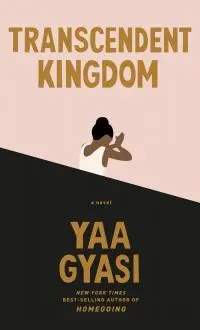
- Название:Transcendent Kingdom
- Автор:
- Издательство:Penguin UK
- Жанр:
- Год:2020
- ISBN:9780241988664
- Рейтинг книги:4 / 5. Голосов: 1
-
Избранное:Добавить в избранное
- Отзывы:
-
Ваша оценка:
Transcendent Kingdom: краткое содержание, описание и аннотация
Предлагаем к чтению аннотацию, описание, краткое содержание или предисловие (зависит от того, что написал сам автор книги «Transcendent Kingdom»). Если вы не нашли необходимую информацию о книге — напишите в комментариях, мы постараемся отыскать её.
As a child Gifty would ask her parents to tell the story of their journey from Ghana to Alabama, seeking escape in myths of heroism and romance. When her father and brother succumb to the hard reality of immigrant life in the American South, their family of four becomes two - and the life Gifty dreamed of slips away.
Years later, desperate to understand the opioid addiction that destroyed her brother's life, she turns to science for answers. But when her mother comes to stay, Gifty soon learns that the roots of their tangled traumas reach farther than she ever thought. Tracing her family's story through continents and generations will take her deep into the dark heart of modern America.
______________________________________________________
**'I would say that** Transcendent Kingdom **is a novel for our time (and it is) but it is so much more than that. It is a novel for all times. The splendor and heart and insight and brilliance contained in the pages holds up a light the rest of us can follow'** Ann Patchett
**'Absolutely transcendent. A gorgeously woven narrative . . . not a word or idea out of place. THE RANGE. I am quite angry this is so good** ' Roxane Gay
**'A stirringly gifted writer'** *New York Times*
Transcendent Kingdom — читать онлайн бесплатно полную книгу (весь текст) целиком
Ниже представлен текст книги, разбитый по страницам. Система сохранения места последней прочитанной страницы, позволяет с удобством читать онлайн бесплатно книгу «Transcendent Kingdom», без необходимости каждый раз заново искать на чём Вы остановились. Поставьте закладку, и сможете в любой момент перейти на страницу, на которой закончили чтение.
Интервал:
Закладка:
32
Dear God,
At church today, Bethany said her mom doesn’t want her coming over to our house after service anymore. I told Buzz, but he didn’t care .
I knew without asking that my mother expected us to keep Nana’s addiction close to the chest, and the secret ate away at me like moths in cloth. I wished for a priest, a confessional booth, but finally I just settled for my friend Bethany. The Sunday after I confessed, she told me she wasn’t allowed to play with me anymore, and suddenly, I knew: addiction was catching, shameful. I didn’t talk about Nana’s addiction again until college, when one of my lab mates asked me how I knew so much about the side effects of heroin. When I told her about Nana, she said, “This would make such a good TED Talk.” I laughed but she kept going. “Seriously, Gifty, you’re amazing. You’re like taking the pain from losing your brother and you’re turning it into this incredible research that might actually help people like him one day.” I laughed a little more, tried to shrug her off.
If only I were so noble. If only I even felt so noble. The truth is there were times when my mother and I had been driving all over Huntsville for hours searching for Nana, times when I saw him strung out in front of the carp-filled pond at Big Spring Park when I would think, God, I wish it was cancer, not for his sake but for mine. Not because the nature of his suffering would change significantly but because the nature of my suffering would. I would have a better story than the one I had. I would have a better answer to the questions “Where’s Nana? What happened to Nana?”
Nana is the reason I began this work, but not in a wholesome, made–for–TED Talk kind of way. Instead, this science was a way for me to challenge myself, to do something truly hard, and in so doing to work through all of my misunderstandings about his addiction and all of my shame. Because I still have so much shame. I’m full to the brim with it; I’m spilling over. I can look at my data again and again. I can look at scan after scan of drug-addicted brains shot through with holes, Swiss-cheesed, atrophied, irreparable. I can watch that blue light flash through the brain of a mouse and note the behavioral changes that take place because of it, and know how many years of difficult, arduous science went into those tiny changes, and still, still, think, Why didn’t Nana stop? Why didn’t he get better for us? For me?
—
He was on a bender the day we found him sprawled out in Big Spring Park. On the grass, spread out like that, he’d looked like an offering. To whom, for what, I couldn’t say. He’d been sober for maybe a couple of weeks, but then he didn’t come home one night, and we knew. One night turned into two, turned into three. My mother and I couldn’t sleep for waiting. As the two of us drove around looking for him, I thought about how tired Nana must have been, tired of our mother washing him in the bathtub like he’d reverted to his original state, tired of all the nothing in a bad way. I don’t know who he scored from after our doctor stopped writing him prescriptions, but it must have been easy enough that day in the park because he was gone, just gone.
My mother wanted me to help her get him in the car. She hoisted him up by the armpits and I grabbed his legs but I kept dropping them, and then I would start crying and she would yell at me.
The thing I will never forget is that people were watching us do all of this. It was the middle of a workday and there were people out in that park drinking coffee, taking their smoke breaks, and no one lifted a finger. They just watched us with some curiosity. We were three black people in distress. Nothing to see.
By the time we got Nana in the car, I was doing that snuffling non-cry cry of children who’ve been told to stop crying. I couldn’t stop crying. I was sitting in the back with Nana’s head in my lap and I was certain that he was dead, and I was too scared to tell my mother because I knew I would get in trouble for even hinting at his death, and so I just sat there, snuffling, with a dead man on my lap.
Nana wasn’t dead. We got him to the house and he woke up, but in that zombie-like way that people who got a little too high wake up. He didn’t know where he was. My mother pushed him and he stumbled backward.
“Why do you keep doing this?” she screamed. She started slapping him and he didn’t even lift his hands to his face. By that point he was twice her size. All he would have had to do was grab her arm, push her back. He did nothing.
“This has to stop,” she kept saying as she hit him. “This has to stop. This has to stop.” But she couldn’t stop hitting him and he couldn’t stop being hit. He couldn’t stop any of it.
My God, my God, how ashamed I still am.
33
Most of the time in my work, I begin with the answers, with an idea of the results. I suspect that something is true and then I work toward that suspicion, experimenting, tinkering, until I find what I am looking for. The ending, the answer, is never the hard part. The hard part is trying to figure out what the question is, trying to ask something interesting enough, different enough from what has already been asked, trying to make it all matter.
But how do you know when you are nearing a true end instead of a dead end? How do you finish the experiment? What do you do when, years into your life, you figure out that the yellow brick road you’ve been easing down leads you directly into the eye of the tornado?
—
My mother hit Nana, and Nana stood still. Finally, I stepped in between them, and when the first of my mother’s slaps landed on my face, she withdrew her hands, flattened them to her sides, looking all around the room in a crazed panic.
She didn’t believe in apologizing to children, but this, the flattened hands and look of horror, was the closest she had ever come.
“This ends here,” she said. “This ends today.” She stood there for a while longer, watching her two children. My face was stinging from the slap, but I didn’t dare lift my hand to soothe it. Behind me, Nana was dazed, still high, hurting. He hadn’t spoken.
Our mother left the room, and I eased Nana toward the couch. I pushed him a little and he fell onto it, crumpled into a ball at the armrest, his head nestled near the spot where the treacherous wooden piece had once been. I took off his shoes and looked at his foot, healed scar-less, leaving no trace of nail, of oil. I draped a blanket over him and sat down, and we stayed like that for the rest of the night. For the rest of the night, I watched him come down, nod off, whimper. This is it, I thought, because surely none of us could take another day like this.
By morning our mother had come up with a solution. She had been awake all night making calls, though I don’t know who she talked to, who she trusted with the addiction that we had been doing our best to keep secret. Nana, sober now, was all apologies, repeating the old mantra: I’m sorry. It will never happen again. I promise you, it will never happen again.
Our mother listened patiently to all of those words we had heard before and then she said something new. “There’s a place in Nashville that will take you. They’re coming to pick you up and they’ll be here in five minutes. I’ve already packed a bag for you.”
“What place, Ma?” Nana said, taking a step back.
“It’s a good, Christian place. They’ll know what to do. They can help you so you won’t be as sick as last time.”
“I don’t want to go to rehab, Ma. I’ll quit. I promise, I’m done. Really, I’m done.”
Outside, we heard a car pull up. Our mother went into the kitchen and started packing food into Tupperware. We could hear her prattling around, shuffling through all those lids she kept in perfect order, stacked by size and labeled.
Читать дальшеИнтервал:
Закладка:
Похожие книги на «Transcendent Kingdom»
Представляем Вашему вниманию похожие книги на «Transcendent Kingdom» списком для выбора. Мы отобрали схожую по названию и смыслу литературу в надежде предоставить читателям больше вариантов отыскать новые, интересные, ещё непрочитанные произведения.









Обсуждение, отзывы о книге «Transcendent Kingdom» и просто собственные мнения читателей. Оставьте ваши комментарии, напишите, что Вы думаете о произведении, его смысле или главных героях. Укажите что конкретно понравилось, а что нет, и почему Вы так считаете.