Yaa Gyasi - Transcendent Kingdom
Здесь есть возможность читать онлайн «Yaa Gyasi - Transcendent Kingdom» весь текст электронной книги совершенно бесплатно (целиком полную версию без сокращений). В некоторых случаях можно слушать аудио, скачать через торрент в формате fb2 и присутствует краткое содержание. Год выпуска: 2020, ISBN: 2020, Издательство: Penguin UK, Жанр: Современная проза, на английском языке. Описание произведения, (предисловие) а так же отзывы посетителей доступны на портале библиотеки ЛибКат.
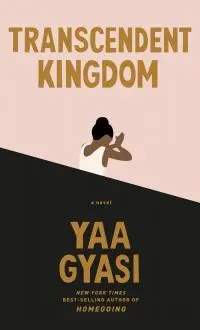
- Название:Transcendent Kingdom
- Автор:
- Издательство:Penguin UK
- Жанр:
- Год:2020
- ISBN:9780241988664
- Рейтинг книги:4 / 5. Голосов: 1
-
Избранное:Добавить в избранное
- Отзывы:
-
Ваша оценка:
Transcendent Kingdom: краткое содержание, описание и аннотация
Предлагаем к чтению аннотацию, описание, краткое содержание или предисловие (зависит от того, что написал сам автор книги «Transcendent Kingdom»). Если вы не нашли необходимую информацию о книге — напишите в комментариях, мы постараемся отыскать её.
As a child Gifty would ask her parents to tell the story of their journey from Ghana to Alabama, seeking escape in myths of heroism and romance. When her father and brother succumb to the hard reality of immigrant life in the American South, their family of four becomes two - and the life Gifty dreamed of slips away.
Years later, desperate to understand the opioid addiction that destroyed her brother's life, she turns to science for answers. But when her mother comes to stay, Gifty soon learns that the roots of their tangled traumas reach farther than she ever thought. Tracing her family's story through continents and generations will take her deep into the dark heart of modern America.
______________________________________________________
**'I would say that** Transcendent Kingdom **is a novel for our time (and it is) but it is so much more than that. It is a novel for all times. The splendor and heart and insight and brilliance contained in the pages holds up a light the rest of us can follow'** Ann Patchett
**'Absolutely transcendent. A gorgeously woven narrative . . . not a word or idea out of place. THE RANGE. I am quite angry this is so good** ' Roxane Gay
**'A stirringly gifted writer'** *New York Times*
Transcendent Kingdom — читать онлайн бесплатно полную книгу (весь текст) целиком
Ниже представлен текст книги, разбитый по страницам. Система сохранения места последней прочитанной страницы, позволяет с удобством читать онлайн бесплатно книгу «Transcendent Kingdom», без необходимости каждый раз заново искать на чём Вы остановились. Поставьте закладку, и сможете в любой момент перейти на страницу, на которой закончили чтение.
Интервал:
Закладка:
He started laughing, leaned against the desk. “Yes, Gifty?”
“Are you telling me that when I get a ‘like’ on my Facebook posts, dopamine is released?”
“Why yes, right you are,” he said.
“What about when I do something bad?” I asked.
Han shrugged. “Depends. What kind of thing? How bad are we talking?”
“Bad, bad,” I said, and he just laughed and laughed.
35
Dear God,
I wish Nana would just die already. Please, just let this be over.
36
All of the self-help literature I’ve read says that you have to talk about your pain to move through it, but the only person I ever felt like I wanted to talk to about Nana was my mother and I knew she couldn’t handle it. It felt unfair, to pile my pain on top of hers, and so I swallowed it instead. I wrote journal entries that grew increasingly frantic, increasingly desperate, until I reached that one, heinous line.
“God will read what you write, and he will answer your writing like prayers,” my mother once said. The night I wished for my brother’s death I thought, Good, so be it, but by the light of morning, when I realized that I had written a sentence for which I would never forgive myself, I ripped it out of my notebook, tore it to shreds, then flushed it down the toilet, hoping God would forget. What had I done? When Nana relapsed, I burrowed in my shame. I went quiet.
I went quiet and my mother went insane. She became a kind of one-woman child hunter, driving up and down the streets of Huntsville searching for my brother. At church she would move up to the altar during praise and worship and dance around like a woman possessed. If the song made any mention of “falling on one’s knees” she would take it literally, thudding down immediately in a way that seemed painful.
Church gossip is as old as the church itself, and oh how my church loved to gossip. Years later, Mary, the pastor’s daughter, would become the worship leader. Her toddler would run around the sanctuary every morning before she took him to the nursery, and everyone would smile sweetly at him, all the while remembering the circumstances under which he came to be. That gossip was as juicy as a peach. My congregation got fat on it, but when Mary got married we starved. Before that there was Nana and my mother’s ridiculous dances at the altar. If Mary’s pregnancy was a peach, then Nana had been a feast.
Everyone knew that Nana had gotten hurt in a game, but it took them a while to catch up to his addiction. Every Sunday, when Pastor John asked for prayer requests, my mother and I would put Nana’s name in the basket. Pray for his healing, we said, and, at first, it was easy for everyone to assume we meant his ankle. But how long does it take God to heal a sprained ankle?
—
“I heard he’s on drugs,” Mrs. Cline said. She was a deacon at the First Assemblies. Fifty-five years old, unmarried, straight as a broom with lips so thin they looked like a slit across her face.
“No,” Mrs. Morton gasped.
“Oh yes, honey. Why do you think he doesn’t come around here anymore? He’s not playing this season, so we know he’s not too busy.”
“That’s sad. That’s sad he’s on drugs.”
“It is sad, but—and I really do hate to say this—their kind does seem to have a taste for drugs. I mean, they are always on drugs. That’s why there’s so much crime.”
“You’re right. I have noticed that.”
I had been studying my Bible verses in the Sunday school room when I overheard that conversation in the hallway. If I’d heard it today, I know what I would have done. I would have marched outside and told them that there is no data to support the idea that black people are biologically more given to drugs or crime than any other race. I would have marched out of that church and never looked back.
But I was ten years old and I was ashamed. I sat stock still in my chair and hoped that they couldn’t hear me on the other side of the door. I gripped the open flaps of my Bible so tightly that I left marks pressed into the pages. When they left, I let out the breath I was holding, and pinched the skin between my thumb and index finger, a trick I’d picked up to help keep me from crying. In that moment, and for the first time in my life really, I hated Nana so completely. I hated him, and I hated myself.
—
I am not a psychologist or a historian or a social scientist. I can examine the brain of a depressed animal, but I am not given to thinking about what circumstances, if any, led up to that depression. Like everyone else, I get a part of the story, a single line to study and recite, to memorize.
When I was a child, no one ever said the words “institutionalized racism.” We hardly even said the word “racism.” I don’t think I took a single class in college that talked about the physiological effects of years of personally mediated racism and internalized racism. This was before studies came out that showed that black women were four times more likely to die from childbirth, before people were talking about epigenetics and whether or not trauma was heritable. If those studies were out there, I never read them. If those classes were offered, I never took them. There was little interest in these ideas back then because there was, there is, little interest in the lives of black people.
What I’m saying is I didn’t grow up with a language for, a way to explain, to parse out, my self-loathing. I grew up only with my part, my little throbbing stone of self-hate that I carried around with me to church, to school, to all those places in my life that worked, it seemed to me then, to affirm the idea that I was irreparably, fatally, wrong. I was a child who liked to be right.
We were the only black people at the First Assemblies of God Church; my mother didn’t know any better. She thought the God of America must be the same as the God of Ghana, that the Jehovah of the white church could not possibly be different from the one of the black church. That day when she saw the marquee outside asking, “Do you feel lost?,” that day when she first walked into the sanctuary, she began to lose her children, who would learn well before she did that not all churches in America are created equal, not in practice and not in politics. And, for me, the damage of going to a church where people whispered disparaging words about “my kind” was itself a spiritual wound—so deep and so hidden that it has taken me years to find and address it. I didn’t know what to make of the world that I was in back then. I didn’t know how to reconcile it. When my mother and I made prayer requests for Nana, did the congregation really pray? Did they really care? When I heard the gossip of those two women, I saw the veil lift and the shadow world of my religion came into view. Where was God in all of this? Where was God if he was not in the hushed quiet of a Sunday school room? Where was God if he was not in me? If my blackness was a kind of indictment, if Nana would never be healed and if my congregation could never truly believe in the possibility of his healing, then where was God?
My journal entry from the night I heard Mrs. Morton and Mrs. Cline talking:
Dear God,
Please hurry up and make Buzz better. I want the whole church to see.
I knew, even as I was writing that entry, that God didn’t work that way, but then I wondered, how exactly did he work? I doubted him, and I hated myself for doubting him. I thought that Nana was proving everyone right about us, and I wanted him to get better, be better, because I thought that being good was what it would take to prove everyone wrong. I walked around those places, pious child that I was, thinking that my goodness was proof negative. “Look at me!” I wanted to shout. I wanted to be a living theorem, a Logos. Science and math had already taught me that if there were many exceptions to a rule, then the rule was not a rule. Look at me.
Читать дальшеИнтервал:
Закладка:
Похожие книги на «Transcendent Kingdom»
Представляем Вашему вниманию похожие книги на «Transcendent Kingdom» списком для выбора. Мы отобрали схожую по названию и смыслу литературу в надежде предоставить читателям больше вариантов отыскать новые, интересные, ещё непрочитанные произведения.









Обсуждение, отзывы о книге «Transcendent Kingdom» и просто собственные мнения читателей. Оставьте ваши комментарии, напишите, что Вы думаете о произведении, его смысле или главных героях. Укажите что конкретно понравилось, а что нет, и почему Вы так считаете.