Joanna Rakoff - My Salinger Year
Здесь есть возможность читать онлайн «Joanna Rakoff - My Salinger Year» весь текст электронной книги совершенно бесплатно (целиком полную версию без сокращений). В некоторых случаях можно слушать аудио, скачать через торрент в формате fb2 и присутствует краткое содержание. Город: New York, Год выпуска: 2014, ISBN: 2014, Издательство: Alfred A. Knopf, Жанр: Современная проза, Биографии и Мемуары, на английском языке. Описание произведения, (предисловие) а так же отзывы посетителей доступны на портале библиотеки ЛибКат.
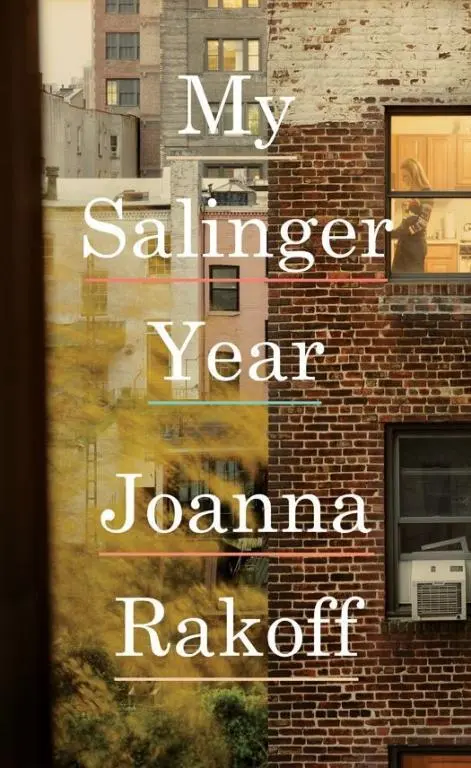
- Название:My Salinger Year
- Автор:
- Издательство:Alfred A. Knopf
- Жанр:
- Год:2014
- Город:New York
- ISBN:978-0-307-95800-6
- Рейтинг книги:4 / 5. Голосов: 1
-
Избранное:Добавить в избранное
- Отзывы:
-
Ваша оценка:
My Salinger Year: краткое содержание, описание и аннотация
Предлагаем к чтению аннотацию, описание, краткое содержание или предисловие (зависит от того, что написал сам автор книги «My Salinger Year»). Если вы не нашли необходимую информацию о книге — напишите в комментариях, мы постараемся отыскать её.
At twenty-three, after leaving graduate school to pursue her dreams of becoming a poet, Joanna Rakoff moves to New York City and takes a job as assistant to the storied literary agent for J. D. Salinger. She spends her days in a plush, wood-paneled office, where Dictaphones and typewriters still reign and old-time agents doze at their desks after martini lunches. At night she goes home to the tiny, threadbare Williamsburg apartment she shares with her socialist boyfriend. Precariously balanced between glamour and poverty, surrounded by titanic personalities, and struggling to trust her own artistic instinct, Rakoff is tasked with answering Salinger’s voluminous fan mail. But as she reads the candid, heart-wrenching letters from his readers around the world, she finds herself unable to type out the agency’s decades-old form response. Instead, drawn inexorably into the emotional world of Salinger’s devotees, she abandons the template and begins writing back. Over the course of the year, she finds her own voice by acting as Salinger’s, on her own dangerous and liberating terms.
Rakoff paints a vibrant portrait of a bright, hungry young woman navigating a heady and longed-for world, trying to square romantic aspirations with burgeoning self-awareness, the idea of a life with life itself. Charming and deeply moving, filled with electrifying glimpses of an American literary icon, My Salinger Year is the coming-of-age story of a talented writer. Above all, it is a testament to the universal power of books to shape our lives and awaken our true selves.
My Salinger Year — читать онлайн бесплатно полную книгу (весь текст) целиком
Ниже представлен текст книги, разбитый по страницам. Система сохранения места последней прочитанной страницы, позволяет с удобством читать онлайн бесплатно книгу «My Salinger Year», без необходимости каждый раз заново искать на чём Вы остановились. Поставьте закладку, и сможете в любой момент перейти на страницу, на которой закончили чтение.
Интервал:
Закладка:
That Saturday, I was due home for my grandmother’s birthday. My whole family would gather the following morning for breakfast: bagels and bialys, lox and sable. My grandmother was turning approximately ninety-six. No one knew her real age, not even my grandmother herself. She was born in the old country and had no birth certificate, no records. All she knew was that she arrived in the United States in 1906. Approximately.
“I have a present for you,” said Don as I stashed some clothes in a bag. I looked at him quizzically. Don did not believe in presents, a principle he ascribed to communism, but which I suspected had more to do with poverty and stinginess. At Christmas, the previous year, he’d declined to bring gifts for his parents or his many brothers and sisters. My own birthday had come and gone two months earlier—I was now twenty-four—and he had likewise declined to celebrate with me. “It’ll be more fun for your friends to take you out,” he insisted. Indeed, my friends had been happy to take me out, and though I didn’t necessarily miss Don, the strangeness of celebrating one’s birthday without one’s ostensible boyfriend clouded the night. When I got home, I explained this to Don, who explained, in turn, that birthdays were silly and, of course, bourgeois. “Hallmark invented birthdays,” he said. “It’s just another way of conning the masses into spending money, into thinking materialism is the answer.”
Don had refused to come home with me for my grandmother’s birthday, citing his opposition to the tradition, but—here again—I suspected that this alleged ideological stance might be simply a smoke screen for either poverty or cheapness, that he didn’t want to spend the money on a bus ticket, not to mention a gift for my grandmother. In truth, I was pleased to be going home alone, if a bit stunned by my last visit: What might my parents spring on me this time? A preschool bill? Back pay for my childhood nanny?
Still, I was—perhaps foolishly—looking forward to the comforts of my parents’ cool, spacious house: the puffs of central air wafting through the vents in my old room; my soft childhood bed with its pink-sprigged sheets; our green lawn and the enormous, sprawling trees that shaded it. Running out for bagels with my dad on Sunday morning. I was looking forward to being taken care of, if only a little.
“A present?” I asked Don warily.
“Something to take with you,” he said, smiling. “Give me your bag.” I held it open for him and he slipped a large, less-than-crisp manila envelope inside. “Don’t open it until you get home.”
I opened it on the bus. Inside, I found his novel, “Fellow Traveler.” He’d told me the title on our first date. “It’s a reference to the larger themes of the book,” he explained, swirling the wine in his glass. I nodded. “You know the term, right? Fellow traveler.” I didn’t. “Your grandmother was a socialist,” he cried. “And you don’t know what a fellow traveler is?”
“My grandmother stopped talking about politics in the ’50s,” I explained. “For obvious reasons.”
“Still!” Don shook his head, incredulous. “A fellow traveler is a friend of the party who isn’t a card-carrying member.”
“Is the novel about communism?” I asked. “Is it about the party? The present-day party?” This sounded strange and great to me.
“No, no. That would be deeply boring.” He smiled at me, the sort of wide, joyous smile that makes one feel anything is possible. “But it is about class. And it’s about how you can be part of something but also outside it. My hero—I mean, he’s sort of an antihero, but anyway—participates in mainstream society, but he’s not really part of it. And his girlfriend—his ex -girlfriend—is from this very, very wealthy background. She tried to kind of incorporate him into her world but it just didn’t work.” A little laugh escaped him, though his smile was gone. “Because he’s working-class.” That fictional girlfriend was based on his college love, who had grown up in Beverly Hills or suchlike, in what Don described as baronial splendor, but which sounded to me like simply upper-middle-class L.A. She’d broken up with him after college and he’d never quite forgiven her.
By the time the bus rolled into my hometown, I’d made it halfway through. The novel concerned a dark-haired young man from a working-class background who attended a fancy liberal arts college just outside New York City but for reasons never specified now works as a security guard at an office building, where he spends most of his time watching hot secretaries move around their offices. The first forty or so pages involve the protagonist watching one of these women masturbate on a desk. That night, while flipping channels, he pauses for a moment on a porno and realizes that the woman in the film is his college girlfriend, a wealthy, wholesome Los Angelen, with whom he’d parted ways because they simply could not bridge the class divide. In this pre-Google age, he sets off to figure out what happened to her.
Or that was what I gathered. Again, the prose was so dense—so purposefully opaque—that at times I couldn’t even understand what was happening. This was not the opacity of, say, David Foster Wallace, whose stories I was reading just then. A few weeks earlier, I’d accompanied Max to Wallace’s reading at KGB, which was so crowded I’d had to stand in a hallway—Wallace, sweaty and bandanna clad, had brushed past me when he arrived—and been transfixed by the force and energy of his language. The next day, when Max went to lunch, I filched his galley of Infinite Jest and read it at my desk, my pulse speeding up so that I barely remembered to fork bites of salad into my mouth. I’d returned it before Max got back and that night, on my way home, had picked up a used copy of Girl with Curious Hair at the Strand for a few dollars, hiding it from Don, who was scornful of all purchases—why couldn’t I take books out of the library?—but also scornful of any writer who received too much attention. “How good could he be if his book’s a best seller?” he’d said of Wallace. Very good, I saw now. Revolutionary, life-changingly good. Wallace’s sentences thrummed with a strange kind of life, propelling the story forward and pushing the reader further and further into his characters’ psyches, revealing and revealing, peeling back layers to get to the bone. They jumped off the page. Don’s sentences seemed to bore further into the page. They obscured rather than revealed.
But there was intelligence underpinning the novel, certainly, and the bones of a cracking story. He needed to open that story up, to let it breathe, let it stand for itself.
As the passengers began to disembark, I was already making edits: trim the front section to get to the real story more quickly; streamline a good percentage of the sentences; more exposition, less description, so the actual story was more clear, so the reader wasn’t distracted by confusion about what was actually, literally happening and could get lost in the story, the rhythm of the language. More scenes in the present, fewer flashbacks.
“Jo!” my father called from the curb, smiling. He wore a faded blue Lacoste golf shirt and navy pants that fell off his hips, in unconscious parody of gangster style. His white hair fluffed out from his forehead in the way my mother hated. Whatever anger I’d been harboring for him disappeared in a breath. “You look terrific,” he said. “Very glamorous.”
Seeing as I’d just spent two hours on a bus, this seemed unlikely. “Dad,” I said and hugged him, breathing in his wonderful scent, of Old Spice and Ivory soap, with undertones of Pepto-Bismol and the medical-grade hand cleanser he used at his office. And then I burst into tears.
Читать дальшеИнтервал:
Закладка:
Похожие книги на «My Salinger Year»
Представляем Вашему вниманию похожие книги на «My Salinger Year» списком для выбора. Мы отобрали схожую по названию и смыслу литературу в надежде предоставить читателям больше вариантов отыскать новые, интересные, ещё непрочитанные произведения.











Обсуждение, отзывы о книге «My Salinger Year» и просто собственные мнения читателей. Оставьте ваши комментарии, напишите, что Вы думаете о произведении, его смысле или главных героях. Укажите что конкретно понравилось, а что нет, и почему Вы так считаете.