Joanna Rakoff - My Salinger Year
Здесь есть возможность читать онлайн «Joanna Rakoff - My Salinger Year» весь текст электронной книги совершенно бесплатно (целиком полную версию без сокращений). В некоторых случаях можно слушать аудио, скачать через торрент в формате fb2 и присутствует краткое содержание. Город: New York, Год выпуска: 2014, ISBN: 2014, Издательство: Alfred A. Knopf, Жанр: Современная проза, Биографии и Мемуары, на английском языке. Описание произведения, (предисловие) а так же отзывы посетителей доступны на портале библиотеки ЛибКат.
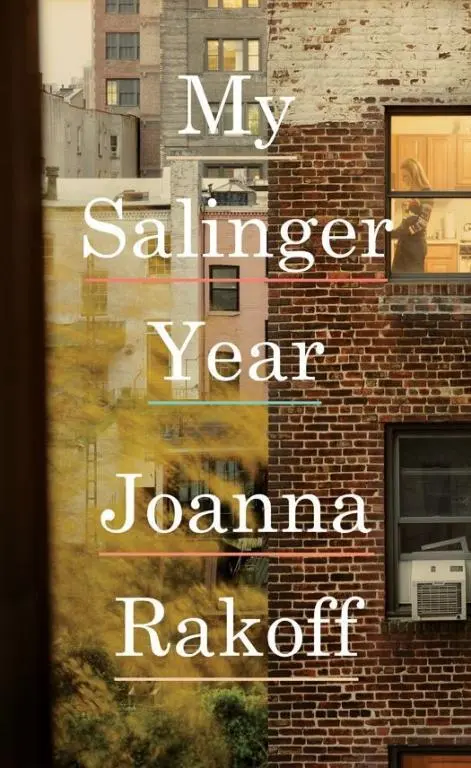
- Название:My Salinger Year
- Автор:
- Издательство:Alfred A. Knopf
- Жанр:
- Год:2014
- Город:New York
- ISBN:978-0-307-95800-6
- Рейтинг книги:4 / 5. Голосов: 1
-
Избранное:Добавить в избранное
- Отзывы:
-
Ваша оценка:
My Salinger Year: краткое содержание, описание и аннотация
Предлагаем к чтению аннотацию, описание, краткое содержание или предисловие (зависит от того, что написал сам автор книги «My Salinger Year»). Если вы не нашли необходимую информацию о книге — напишите в комментариях, мы постараемся отыскать её.
At twenty-three, after leaving graduate school to pursue her dreams of becoming a poet, Joanna Rakoff moves to New York City and takes a job as assistant to the storied literary agent for J. D. Salinger. She spends her days in a plush, wood-paneled office, where Dictaphones and typewriters still reign and old-time agents doze at their desks after martini lunches. At night she goes home to the tiny, threadbare Williamsburg apartment she shares with her socialist boyfriend. Precariously balanced between glamour and poverty, surrounded by titanic personalities, and struggling to trust her own artistic instinct, Rakoff is tasked with answering Salinger’s voluminous fan mail. But as she reads the candid, heart-wrenching letters from his readers around the world, she finds herself unable to type out the agency’s decades-old form response. Instead, drawn inexorably into the emotional world of Salinger’s devotees, she abandons the template and begins writing back. Over the course of the year, she finds her own voice by acting as Salinger’s, on her own dangerous and liberating terms.
Rakoff paints a vibrant portrait of a bright, hungry young woman navigating a heady and longed-for world, trying to square romantic aspirations with burgeoning self-awareness, the idea of a life with life itself. Charming and deeply moving, filled with electrifying glimpses of an American literary icon, My Salinger Year is the coming-of-age story of a talented writer. Above all, it is a testament to the universal power of books to shape our lives and awaken our true selves.
My Salinger Year — читать онлайн бесплатно полную книгу (весь текст) целиком
Ниже представлен текст книги, разбитый по страницам. Система сохранения места последней прочитанной страницы, позволяет с удобством читать онлайн бесплатно книгу «My Salinger Year», без необходимости каждый раз заново искать на чём Вы остановились. Поставьте закладку, и сможете в любой момент перейти на страницу, на которой закончили чтение.
Интервал:
Закладка:
“He insisted on paying for lunch,” reported Roger, who seemed baffled by the fact that he, Roger Lathbury of Alexandria, Virginia—the kid who read Nine Stories in his suburban bedroom—had somehow ended up eating sandwiches with J. D. Salinger. He had, of course, called first thing Thursday morning to give me a postmortem. “The pub date will be January 1,” he told me. “Jerry’s birthday.”
“January 1 of next year?” I asked. Producing and publishing a book usually took longer than six months. Could Roger really get this book in stores by the New Year?
“Yes, yes, of course. No need to wait,” he confirmed. “There’s not that much to do. Jerry chose the design I thought he would. And we decided against running the title at the top of each page. Because it’s an epistolary story. You know. It’s a letter. So it takes you out of the moment to have the title running across the top of the page. Jerry agrees.”
The two men agreed on everything, it seemed, except for one. Salinger did not want the typos corrected. In fact, he’d bristled at Roger’s correcting them without consulting him first.
“I don’t understand it,” said Roger. “He actually seemed put out that I’d fixed them”—he paused, unsure if he should even speak of the potential catastrophe—“I thought for a moment he was going to say, ‘Let’s just forget this whole thing.’ Because I corrected some small mistakes. But okay. I’ll put the typos back in.”
“Did he say why?” I asked. I’d had a feeling—based on nothing—that Salinger would respond in this way. My suspicion was that with Jerry it was all about control: Had Roger asked him about correcting the typos in advance, he might have said, “Sure, correct them.” But the fact that Roger had gone ahead and done so, without consulting him, just annoyed him.
“Sort of.” Roger’s voice was fading, the adrenaline rush of the lunch dissolving as he recounted its downside. “Not really. He just said he wanted it printed exactly as it had originally run in The New Yorker . It was almost as if he were saying the typos were intentional. Though he didn’t exactly say that. But it made me realize…” He drifted off and I wondered, for a moment, if he’d hung up or the connection had been lost. Then he cleared his throat.
“Are you okay?” I asked. I liked him. I did. I wanted him to be okay. I wanted him to not mess this up. To not correct any more typos.
One night in early July, at a rooftop party, I spent hours talking to two young New Yorker editors. They were a few years my senior—and a few Don’s junior—and dressed like caricatures of prep school types, like characters from a Whit Stillman movie. They were, in other words, exactly as I’d pictured New Yorker editors, if I’d actually had the wherewithal to even imagine the people behind the magazine that had so profoundly shaped my life, which I did not, nor did I ever imagine that I might really and truly find myself in the same room with such people, much less at the center of their orbit, as I did that night. I’d read The New Yorker religiously growing up, emulating my father’s complicated, well-hewn reading system, which involved starting with the movie reviews, then turning to theater, then Talk of the Town, then features. But I’d not, somehow, understood the magazine’s larger cultural significance until college. I’d thought it was a magazine for people who lived in New York, or were from New York, like my father. New Yorkers. I thought, too, that the magazine was a secret, something consumed only by my father and me. No one else read it in our small, conservative town, just as no one else read the Times .
The New Yorker editors knew the Agency, of course—the two entities having been founded around the same time, their histories intertwined—and so we talked about Fitzgerald and I answered the usual Salinger questions—no, I’d not met him; yes, reporters still called for him; no, I didn’t know if he was working on a new novel—and recounted some of the more arcane Agency procedures and policies—the cards! the typewriters! the tumblers of “water” on Carolyn’s desk—which made them laugh. Even The New Yorker , I learned—with its patina of old-timey fustiness—was fully computerized and Dictaphone-free. But they’d heard tales of the Agency’s weirdness—as had many in certain publishing circles—and were hungry for more. And so I told them about the Salinger letters, of course, about the girl from Japan with her Hello Kitty stationery and the endless veterans and the woman whose daughter had died. And I told them about the crazy people who sent letters on dirty scraps of paper written with what seemed to be stubs of pencil, the lead smudged and smeared across the page. I told them, too, about the kids who wrote in the voice of Holden. “Dear Jerry, you old bastard,” I cried, in imitation of these fans. “I’d sure get one helluva kick out of it if you’d find a goddam minute to write me back.”
“No,” said one editor. “Really?”
“Oh yes,” I said.
“That’s amazing,” said the other, wiping a tear of laughter with one muscular thumb. “I didn’t realize Salinger was still so popular. But I guess every teenager goes through a Salinger phase, right?”
“Definitely,” I found myself saying, “but, you know, those stories really hold up.” Where was this coming from? I’d not read Salinger as a teen, nor had I read him now. Stop , I told myself. “A lot of the letters we get are from Salinger’s peers, who read Catcher , or the stories, when they first came out and are rereading them now—and seeing things they never saw the first time around. Like the war. All the stories, ultimately, are about the war.”
“I should reread them,” said one editor. “I loved Nine Stories in high school.”
“Me too,” said the other. “I loved Catcher , too. Though, I guess, who didn’t?”
Finally, as the air grew cool, and the crowd thinned, I asked the question I’d wanted—and been afraid—to ask. “What’s it like, working at The New Yorker ?” My voice had fallen to almost a whisper and the wind picked up, whipping my hair and skirt around. I’d been to roof parties with Don, atop tenements in the East Village, five-story buildings from which one could catch a glimpse of our neighborhood across the river—the Domino sugar factory, the abandoned industrial buildings of the South Side—one’s shoes sticking to the tar paper, if ever so slightly. But this was a roof garden atop a tall new office building, with pretty patio chairs and sleek gray tiles embedded in the floor, willowy plants emerging from square planters bent in the wind. A waiter stopped by, offering us fresh sloshes of icy white wine. We sipped deeply, the young editors contemplating my question. One was short and dark, with shiny hair that flopped into his eyes and an impish smile. The other was tall, with auburn hair and freckles and an extraordinarily direct gaze. They were both, it suddenly occurred to me, handsome. As if on cue, they turned to me and shrugged, smiling. There was, I saw, no answer to my question.
Don skittered at the edge of this scene. It was perhaps the first situation in which he’d struck me as ill at ease. Usually, at parties, he walked in and took stock of the room, then immediately engaged in his particular version of male territorial marking. We had been dating long enough that I could predict his behavior upon arrival at any gathering of more than, say, five people: First, he greeted every man he knew with half hugs and high fives and the intense and potent utilization of the sort of slang—“What’s up, bro?”—he generally scorned. Next, he obtained a drink involving some sort of brown alcohol, ideally in a short tumbler, with ice cubes that could be rattled during lulls in conversation. Drink in hand, he staked out a spot that allowed him to survey the room so that—I now knew—he might both monitor the arrival of attractive women and further assess the attractiveness of the women already in attendance.
Читать дальшеИнтервал:
Закладка:
Похожие книги на «My Salinger Year»
Представляем Вашему вниманию похожие книги на «My Salinger Year» списком для выбора. Мы отобрали схожую по названию и смыслу литературу в надежде предоставить читателям больше вариантов отыскать новые, интересные, ещё непрочитанные произведения.











Обсуждение, отзывы о книге «My Salinger Year» и просто собственные мнения читателей. Оставьте ваши комментарии, напишите, что Вы думаете о произведении, его смысле или главных героях. Укажите что конкретно понравилось, а что нет, и почему Вы так считаете.