Joanna Rakoff - My Salinger Year
Здесь есть возможность читать онлайн «Joanna Rakoff - My Salinger Year» весь текст электронной книги совершенно бесплатно (целиком полную версию без сокращений). В некоторых случаях можно слушать аудио, скачать через торрент в формате fb2 и присутствует краткое содержание. Город: New York, Год выпуска: 2014, ISBN: 2014, Издательство: Alfred A. Knopf, Жанр: Современная проза, Биографии и Мемуары, на английском языке. Описание произведения, (предисловие) а так же отзывы посетителей доступны на портале библиотеки ЛибКат.
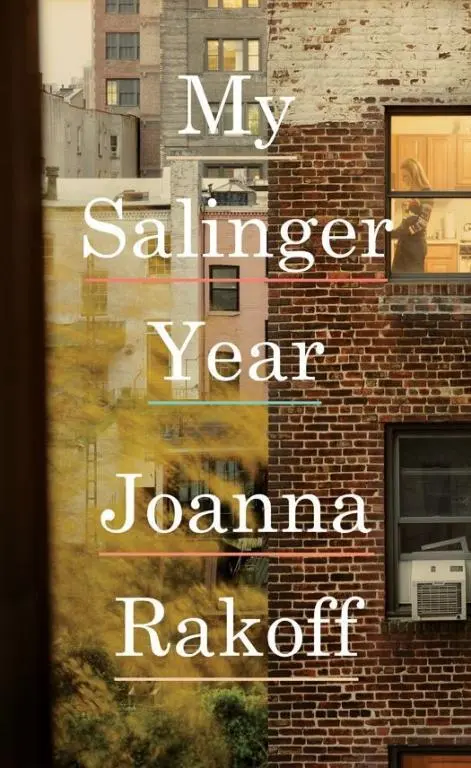
- Название:My Salinger Year
- Автор:
- Издательство:Alfred A. Knopf
- Жанр:
- Год:2014
- Город:New York
- ISBN:978-0-307-95800-6
- Рейтинг книги:4 / 5. Голосов: 1
-
Избранное:Добавить в избранное
- Отзывы:
-
Ваша оценка:
My Salinger Year: краткое содержание, описание и аннотация
Предлагаем к чтению аннотацию, описание, краткое содержание или предисловие (зависит от того, что написал сам автор книги «My Salinger Year»). Если вы не нашли необходимую информацию о книге — напишите в комментариях, мы постараемся отыскать её.
At twenty-three, after leaving graduate school to pursue her dreams of becoming a poet, Joanna Rakoff moves to New York City and takes a job as assistant to the storied literary agent for J. D. Salinger. She spends her days in a plush, wood-paneled office, where Dictaphones and typewriters still reign and old-time agents doze at their desks after martini lunches. At night she goes home to the tiny, threadbare Williamsburg apartment she shares with her socialist boyfriend. Precariously balanced between glamour and poverty, surrounded by titanic personalities, and struggling to trust her own artistic instinct, Rakoff is tasked with answering Salinger’s voluminous fan mail. But as she reads the candid, heart-wrenching letters from his readers around the world, she finds herself unable to type out the agency’s decades-old form response. Instead, drawn inexorably into the emotional world of Salinger’s devotees, she abandons the template and begins writing back. Over the course of the year, she finds her own voice by acting as Salinger’s, on her own dangerous and liberating terms.
Rakoff paints a vibrant portrait of a bright, hungry young woman navigating a heady and longed-for world, trying to square romantic aspirations with burgeoning self-awareness, the idea of a life with life itself. Charming and deeply moving, filled with electrifying glimpses of an American literary icon, My Salinger Year is the coming-of-age story of a talented writer. Above all, it is a testament to the universal power of books to shape our lives and awaken our true selves.
My Salinger Year — читать онлайн бесплатно полную книгу (весь текст) целиком
Ниже представлен текст книги, разбитый по страницам. Система сохранения места последней прочитанной страницы, позволяет с удобством читать онлайн бесплатно книгу «My Salinger Year», без необходимости каждый раз заново искать на чём Вы остановились. Поставьте закладку, и сможете в любой момент перейти на страницу, на которой закончили чтение.
Интервал:
Закладка:
Regardless, tonight he’d been unaccountably subdued. Marc’s wedding was approaching and he was, increasingly, brooding about it, retreating into himself. Usually, he took pains with his ablutions before any and every party—shower, shave, insertion of contact lenses. But tonight his dark stubble was in evidence and he wore his glasses—round, wire-rimmed—which made him look younger, and his white shirt was less than pristine. Don included The New Yorker in his list of bourgeois frippery, though he read it, of course, sometimes poring over issues in a way I rarely did. “The nonfiction is amazing,” he said, when I’d mentioned this contradiction, some weeks back. “But the fiction is a joke. It’s just atrocious. And that whole twee Talk of the Town thing, the flaneur in the top hat with the monocle. Blech. Doesn’t it just make you want to throw up?” Cackling, he drew me to him in a hug, the way one might pull a child onto one’s lap as a response to her blinding cuteness. “Of course it doesn’t make you want to throw up. You love that shit. That”—here he adopted a high, warbling voice—“ Oh, we’re all gathering for drinks at the Algonquin. I do wish you would join us bullshit.” I’d heard him air these opinions—and loudly—at all those parties on the roofs of East Village tenements and at the various dive bars he found “authentic” and romantic—the Holiday Cocktail Lounge and the International and Tile Bar and the Irish bar on Driggs—expounding on the corrupt, watered-down nature of contemporary fiction.
But tonight he stayed, literally, in my shadow, standing a step or two back from me in the dark double that stemmed from my feet, sipping a drink, his eyes wide. That night, as we left the party—“Come by the office,” the taller editor said to me, pressing a card into my hand, “I’ll show you around”—and walked to Fifty-Third and Lex, to catch the 6 down to Union Square, the air cool on my bare arms, I recalled something one of Max’s clients had said to me, in passing, at a book party. “I judge a woman by her friends.” At the time, this had seemed strange and harsh to me. But now I understood what he meant: that a person is only as good as those with whom he surrounds himself. All of Don’s friends were, it was true, strange or damaged in some way or another: Allison and Marc and Leigh tragically hampered by their privileged upbringings, paralyzed by fear of failure. His friends in Hartford, stunted and angry.
Why didn’t Don consort with writers? Successful writers, published writers, or even simply ambitious, interesting writers, published or no? Why hadn’t he argued and bantered with the New Yorker editors? Why hadn’t he made them his friends? Forged alliances? Told them about his novel? Why hadn’t he talked about Gramsci or Proust with them? The answer sent a shiver through me: Don didn’t want friends who worked at The New Yorker . He didn’t want friends who dressed in creamy Brooks Brothers oxfords and college ties, friends who had health insurance and degrees from Harvard, friends who’d just published their first Talk of the Town pieces. He surrounded himself with fools—the broken, the failed or failing, the sad and confused—so that he might be their king. Which, obviously, made him nothing but the king of fools.
But what did that make me?
The next morning, I turned to the letters straightaway. There were the usual proclamations of love for Holden, the usual war stories, the usual stories of despair and redemption, the many, many letters from Japan and Denmark and the Netherlands. The Japanese loved Holden. I tapped out a few form responses and modified form responses, filed away a few Tragic Letters for another day, then slit open an envelope addressed in bubbly, girlish script. The letter was almost a novella unto itself, this girl’s story unfolding over three pages of wrinkly, pencil-smudged notebook paper. She was a freshman in high school, she explained, and she hated school, particularly English class, which she was failing. Her English teacher was maybe an all right person, but she didn’t understand what it meant to be young, and she assigned the class these stupid books that had nothing to do with their lives. The only book the girl had liked, over the course of the year, was The Catcher in the Rye . As things stood, she was going to have to go to summer school or repeat freshman English, which would be so embarrassing she wasn’t sure if she could stand it, and her mother would kill her. The year was almost over, but she’d asked her teacher if she could do anything at all to bring her grade up, just enough so that she’d pass. “There is something you can do,” the teacher told her. “Write a letter to J. D. Salinger and make it good enough that he’ll write back. If he writes back, I’ll give you an A.”
Hmm , I thought, putting the letter down and staring, for the millionth time, at the wall of Salinger books. It was lunch-time and I had a neat stack of letters ready to be mailed. I ran them through the postal meter, threw on my coat, and slipped the girl’s letter in my bag. On line to buy my salad, I read it again. Despite various misspellings and sloppy penmanship, this girl wasn’t a terrible writer. She conveyed her story vividly and honestly, with passion and detail. And then there was the pure audacity—the ballsiness, the brattiness—of writing to J. D. Salinger and saying, “Please respond so I can get a free A.” I kind of liked her. Salinger had been a terrible student himself. Perhaps he would like her, too. Perhaps he would—as the boy from Winston-Salem said—get a kick out of her letter. “I really need this A,” I read, holding my plastic container of watery lettuce. “It will bring my entire GPA up to passing. My mother is mad at me all the time now. I know you understand.”
And yet there was something that rankled me. What would Salinger say to her? I pondered this as I walked back to the office, across Forty-Ninth Street and down Madison, the sun warming my bare arms. He had failed out of schools himself. I knew this from Hugh and Roger and also the letters, many of which referred to incidents in Salinger’s life. They could be informative, the letters. Holden, I knew, had also failed out of a few schools. Would either of them have attempted to maintain his place through this kind of trick? I hadn’t read Catcher , so I wasn’t sure about Holden, but I knew— I knew —that Salinger would not. He would have taken his failure as deserved.
Back at my desk, I ate my olive, then turned toward the Selectric and banged out a response to the girl, suggesting that it was decidedly not in the spirit of Holden—or Salinger—to be worrying about grades or her mother’s anger. If she wanted to be like Holden—or Salinger—she should accept her failing grade, a grade she, by her own admission, deserved. Trying to trick herself into a grade she hadn’t earned was a coward’s way out, a phony’s way out. “If you desire an A or at least a passing grade, there’s only one way to earn it: you must study and do the work assigned to you. This might mean making up papers or tests. This might mean begging your teacher to give you another chance. This might mean apologizing or otherwise humbling yourself. But it is the only way. An A earned by trickery means absolutely nothing.”
As I signed the letter with my name, my heart raced happily. I had done the right thing. I was mastering the art of What Would Salinger Say? But I had also crossed a line. The barely visible seam between bemused interest or compassionate engagement or plain sympathy and utter over-involvement. Why could I not leave these letters alone? I asked myself as I walked over to the mail meter. Why could I not just send on form letters to every single fan? The answer was plain: I loved them. They were exciting. When I read them, sitting at my desk alone on, say, a Friday morning, I felt a strange charge, a mixture of anger and affection, disdain and empathy, admiration and disgust. These people were writing to me—or, well, no, to Salinger, care of me—about their marital frustrations, their dead children, their boredom and desperation; they wrote about their favorite songs and poems, about the trips they’d taken to the Grand Canyon and Hawaii, about their favorite dolls. They told me —Salinger —things I knew, for sure, they’d never told anyone else. Could I, over and over, respond to them in the most formal, impersonal manner possible? Could I just abandon them? Could I let them think that no one cared, no one was listening?
Читать дальшеИнтервал:
Закладка:
Похожие книги на «My Salinger Year»
Представляем Вашему вниманию похожие книги на «My Salinger Year» списком для выбора. Мы отобрали схожую по названию и смыслу литературу в надежде предоставить читателям больше вариантов отыскать новые, интересные, ещё непрочитанные произведения.








Обсуждение, отзывы о книге «My Salinger Year» и просто собственные мнения читателей. Оставьте ваши комментарии, напишите, что Вы думаете о произведении, его смысле или главных героях. Укажите что конкретно понравилось, а что нет, и почему Вы так считаете.