Sarah Waters - The Night Watch
Здесь есть возможность читать онлайн «Sarah Waters - The Night Watch» весь текст электронной книги совершенно бесплатно (целиком полную версию без сокращений). В некоторых случаях можно слушать аудио, скачать через торрент в формате fb2 и присутствует краткое содержание. Жанр: Современная проза, на английском языке. Описание произведения, (предисловие) а так же отзывы посетителей доступны на портале библиотеки ЛибКат.
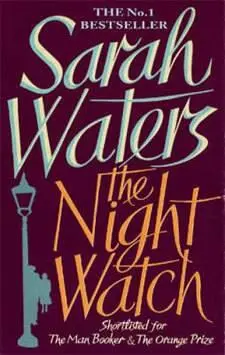
- Название:The Night Watch
- Автор:
- Жанр:
- Год:неизвестен
- ISBN:нет данных
- Рейтинг книги:4 / 5. Голосов: 1
-
Избранное:Добавить в избранное
- Отзывы:
-
Ваша оценка:
The Night Watch: краткое содержание, описание и аннотация
Предлагаем к чтению аннотацию, описание, краткое содержание или предисловие (зависит от того, что написал сам автор книги «The Night Watch»). Если вы не нашли необходимую информацию о книге — напишите в комментариях, мы постараемся отыскать её.
The structure of The Night Watch is worth remarking upon as it begins at the end in 1947. The second section takes us back to 1944, and the third and final section is set in 1941. The decision to use this type of structure is brave, even foolhardy, because of the problems in pulling it off convincingly, but Waters’ subtlety and restraint in pulling back the layers reveals the extent of her authorial control.
This novel is essentially concerned with five main characters (Kay, Viv, Helen, Julia and Viv’s brother, Duncan) and their separate private lives. The connections between these people are also elemental to the narrative. Coincidence plays a significant role in the unfolding of past events as their lives are shown to overlap. This use of coincidence has been a feature of Waters’ previous novels, but this time she uses it casually, and as an extra element, rather than for the purposes of manipulating the plot out of hand as was deemed necessary in a melodrama such as Fingersmith.
The love stories of Kay, Viv and Helen are central and, as the narrative traces back to 1941, we learn how their present views of relationships have been shaped by these past events. As with her previous novels, Waters continues to use lesbian relationships as a main focus of the narrative, but shifts away to examine the affair between Viv and Reggie, and the horrific illegal abortion she undergoes to spare her father from further shame.
Repression becomes a touchstone as many of the characters keep a secret or carry a weight of shame. The converse of this theme of fear of discovery is the examination of bravery. This is most notable in the second and third sections which are, necessarily, concerned with the bombing of London. A re-evaluation of the definition of courage is undertaken and is perhaps most poignant in the prison scene, where Duncan ’s cell mate, conscientious objector Fraser, asks himself if he is ‘simply a – a bloody coward’ when he is overwhelmed by the fear of death. The deconstruction of received morality, of what is to be brave or selfish in this time of heightened emotions, is also examined when Helen considers the effect the war has had on her ethics: ‘In the first blitz, she’d tried to help everyone; she’d given money to people, sometimes, from her own purse. But the war made you careless. You started off, she thought sadly, imagining you’d be a kind of heroine. You end up thinking only of yourself.’
The reason for Duncan ’s imprisonment is one of the well-kept secrets of the novel and is only (partially) explained in the third section. This use of the hidden truth and the hints at the unspoken strengthen the evocation of the period, where loose lips could potentially sink ships, and walls had ears. When revelations are made, they are, more often than not, as subdued as the repressed tone permits and this allows the novel to maintain the same pace throughout.
Despite this steady pace, Waters still enables the readers to see how the war also had a liberating effect on women such as Kay. Her gallantry and masculine demeanour was of use during the bombings whilst she worked as an ambulance driver, but in the beginning of the novel, in 1947, it is clear that with the return to peace time her short hair and male clothing are once more worthy of ridicule.
As with all of Waters’ novels, The Night Watch has been praised by critics for the attention to detail and meticulous research. This work stretches beyond the limits of the previous three, though, and is certainly her most impressive to date. Her control in depicting the central characters gradually is in itself an indicator of skilful writing. As this is also combined with a believable and interested evocation of period and place, this novel must be recommended highly.
The Night Watch — читать онлайн бесплатно полную книгу (весь текст) целиком
Ниже представлен текст книги, разбитый по страницам. Система сохранения места последней прочитанной страницы, позволяет с удобством читать онлайн бесплатно книгу «The Night Watch», без необходимости каждый раз заново искать на чём Вы остановились. Поставьте закладку, и сможете в любой момент перейти на страницу, на которой закончили чтение.
Интервал:
Закладка:
'Yes, in between bangs. It keeps my mind off them, I think. I'm just reading this-' she showed the book-'as a way of checking out the competition… But tell me, how's Kay?'
She asked it, perfectly easily; but Helen felt herself blush. She nodded. 'Kay's all right.'
'Still at the Station? At Dolphin Square?'
'Yes. Still there.'
'With Mickey? And Binkie? They're quite a pair, aren't they?'
Helen laughed, agreeing that they were… The sun grew brighter, and Julia lifted the book to her brow, to make a shade. But she kept her gaze on Helen's face as she did it, as if turning something over in her mind.
Then, 'Look,' she said. She tugged at her wristwatch, which had worked its way around her arm. 'My father will be ten minutes yet. I was just about to go and get myself a cup of tea. There's a canteen thing up by the station. Care to join me? Or do you have to get back to work?'
'Well,' said Helen, surprised. 'I ought to be back at my desk, as it happens.'
'Ought you? But, look at it this way. The tea will make you work harder.'
'Well, perhaps,' said Helen.
She was still aware of having blushed; and she didn't want Julia to suppose that she couldn't stand in a street and talk about Kay, as if the whole thing weren't perfectly natural, perfectly fine… And Kay herself would be pleased to hear they'd met up; she thought of it like that. So she glanced at her own watch, then smiled and said, 'All right, so long as we're quick. I'll brave the wrath of Miss Chisholm, just this once.'
'Miss Chisholm?'
'A colleague of mine, and frightfully proper. Her pursed lips are something awful… She scares the life out of me, to be honest.'
Julia laughed. They started to walk. They went very quickly up the street and joined a short line of people waiting to be served at the window of a mobile canteen.
The day, though sunny and almost breezeless, was cold. The winter so far had been a very bitter one. But that made the blueness of today's sky, Helen thought, more lovely. Everyone looked cheerful, as if reminded of happier times. A soldier in khaki had leaned his kitbag and rifle against the canteen van and was lazily rolling a cigarette. The girl in front of Helen and Julia was wearing sunglasses. The elderly man in front of her had on a cream Panama hat. But he and the girl had gas-mask boxes hung over their shoulders, too: people had dug them out, Helen had noticed, and started carrying them again. And fifty yards further along the Marylebone Road an office building had been freshly bombed: an emergency water tank had been set up; there were scraps of wet, charred paper clinging to the pavements, a coating of ash on walls and trees, and muddy tracks leading in and out of the wreckage where hoses had been dragged across the street.
The queue moved forward. Julia asked for teas from the girl behind the counter. Helen took out her purse, and there was the usual women's quarrel over who should pay. In the end, Julia did; she said it was her idea in the first place. The tea looked ghastly, anyway: greyish, probably made from chlorinated water, and the milk was powdered and formed lumps. Julia picked up the cups and led Helen a little way off, to a heap of sandbags underneath a boarded window. The bags had had the sun on them; they smelt, not unpleasantly, of drying jute. Some had split, and showed pale earth, the limp remains of flowers and grass.
Julia pulled on a broken stalk. '“Nature triumphant over war”,' she said, in a wireless voice; for it was the sort of thing that people were always writing about to the radio-the new variety of wildflower they had spotted on the bomb-sites, the new species of bird, all of that-it had got terribly boring. She sipped her tea, then made a face: 'God, this is awful.' She got out a packet of cigarettes and a lighter. 'You won't mind my smoking in the street?'
'Of course not.'
'Want one?'
'I've got my own here somewhere-'
'Don't be silly. Here.'
'Well, thanks.'
They shared the flame, their heads coming rather close together, the smoke rising up and into their eyes. Without thinking, Helen touched her fingers, very lightly, to Julia's hand.
'Your knuckles are grazed,' she said.
Julia looked. 'So they are. That must be from broken glass.' She lifted the knuckles to her mouth and sucked them. 'I had to lower myself through the fan-light of a house this morning.'
'Goodness!' said Helen. 'Like Oliver Twist!'
'Yes, just like that.'
'Isn't that illegal?'
'So you might think. But we have a sort of special dispensation, my father and I. If a house is empty and we can't get hold of the keys, we're allowed to get in however we can. It's a filthy business, not at all as exciting as it sounds: the rooms all smashed, the carpets wrecked, the mirrors in splinters. The water-pipes might have had it: the water runs and turns the soot to sludge. I went into places last month and found things frozen: sofas and tablecloths and things like that. Or, things get burned. An incendiary will land on a roof: it might burn right through, quite neatly, from one floor to the next; you can stand in the basement and look at the sky… I find damage like that more miserable, somehow, than if a house has been blasted to bits: it's like a life with a cancer in it.'
'Is it frightening?' asked Helen, very taken with Julia's description. 'I think it would frighten me.'
'It spooks me a bit. Then there's always the chance, of course, of discovering someone-a looter, who's got in the same way you did. Boys who've gone in for a lark. You see rotten drawings on the walls, sometimes; you pity the family that must come back. Then again, sometimes the house hasn't been abandoned at all. My father got into one, a few months ago: he went into every room to look at the damage, and in the last room of all was a very old woman, in a yellow night-dress and with silver hair, asleep in a four-poster bed with tattered curtains.'
Helen saw the scene, quite clearly. She said, fascinated, 'What did your father do?'
'He left her to it-went silently back downstairs; then told the local warden. The warden said the old woman had a girl who came and cooked her dinners for her, and lit her fires; that she was ninety-three, and could never be got to come out when a raid was on. That she remembered seeing Prince Albert with Queen Victoria once in a carriage in Hyde Park…'
The sun, all the time that Julia was speaking, was moving in and out of cloud. When it grew bright she put her hand to her eyes or, as she had before, lifted her book; now, its growing brighter than ever, she stopped talking, shut her eyes completely for a moment and put back her head.
How lovely she is! thought Helen suddenly, jolted out of the story about the old woman; for the sun lit Julia as a spot-light might, and the blue of the dungarees and the jacket set off the tan of her face, the dark of her lashes and neat, straight brows; and because her hair was swept up by the turban you saw more clearly the graceful lines of her jaw and her throat. She had parted her lips. Her mouth was full, slightly crowded, the teeth not quite even. But even that was lovely, somehow: one of those flaws of feature which mysteriously render a handsome face more handsome than genuine flawlessness could.
No wonder , Helen thought, with a queer mix of feelings-envy, and admiration, and a slight sinking of heart- No wonder Kay was in love with you .
For that was all the connection she and Julia had. They could not be said, even, to be friends. Julia was Kay's friend, as Mickey was-or rather, not at all as Mickey was, for she did not, as Mickey did, spend time with Kay and Helen, at their flat, in pubs, at parties. She wasn't open and easy and kind. She had a queer sort of mystery to her-a sort of glamour, Helen thought it.
Читать дальшеИнтервал:
Закладка:
Похожие книги на «The Night Watch»
Представляем Вашему вниманию похожие книги на «The Night Watch» списком для выбора. Мы отобрали схожую по названию и смыслу литературу в надежде предоставить читателям больше вариантов отыскать новые, интересные, ещё непрочитанные произведения.







Обсуждение, отзывы о книге «The Night Watch» и просто собственные мнения читателей. Оставьте ваши комментарии, напишите, что Вы думаете о произведении, его смысле или главных героях. Укажите что конкретно понравилось, а что нет, и почему Вы так считаете.