Sarah Waters - The Night Watch
Здесь есть возможность читать онлайн «Sarah Waters - The Night Watch» весь текст электронной книги совершенно бесплатно (целиком полную версию без сокращений). В некоторых случаях можно слушать аудио, скачать через торрент в формате fb2 и присутствует краткое содержание. Жанр: Современная проза, на английском языке. Описание произведения, (предисловие) а так же отзывы посетителей доступны на портале библиотеки ЛибКат.
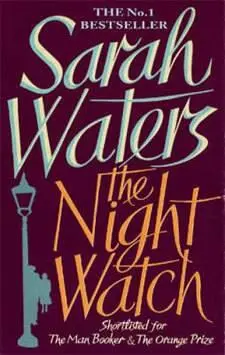
- Название:The Night Watch
- Автор:
- Жанр:
- Год:неизвестен
- ISBN:нет данных
- Рейтинг книги:4 / 5. Голосов: 1
-
Избранное:Добавить в избранное
- Отзывы:
-
Ваша оценка:
The Night Watch: краткое содержание, описание и аннотация
Предлагаем к чтению аннотацию, описание, краткое содержание или предисловие (зависит от того, что написал сам автор книги «The Night Watch»). Если вы не нашли необходимую информацию о книге — напишите в комментариях, мы постараемся отыскать её.
The structure of The Night Watch is worth remarking upon as it begins at the end in 1947. The second section takes us back to 1944, and the third and final section is set in 1941. The decision to use this type of structure is brave, even foolhardy, because of the problems in pulling it off convincingly, but Waters’ subtlety and restraint in pulling back the layers reveals the extent of her authorial control.
This novel is essentially concerned with five main characters (Kay, Viv, Helen, Julia and Viv’s brother, Duncan) and their separate private lives. The connections between these people are also elemental to the narrative. Coincidence plays a significant role in the unfolding of past events as their lives are shown to overlap. This use of coincidence has been a feature of Waters’ previous novels, but this time she uses it casually, and as an extra element, rather than for the purposes of manipulating the plot out of hand as was deemed necessary in a melodrama such as Fingersmith.
The love stories of Kay, Viv and Helen are central and, as the narrative traces back to 1941, we learn how their present views of relationships have been shaped by these past events. As with her previous novels, Waters continues to use lesbian relationships as a main focus of the narrative, but shifts away to examine the affair between Viv and Reggie, and the horrific illegal abortion she undergoes to spare her father from further shame.
Repression becomes a touchstone as many of the characters keep a secret or carry a weight of shame. The converse of this theme of fear of discovery is the examination of bravery. This is most notable in the second and third sections which are, necessarily, concerned with the bombing of London. A re-evaluation of the definition of courage is undertaken and is perhaps most poignant in the prison scene, where Duncan ’s cell mate, conscientious objector Fraser, asks himself if he is ‘simply a – a bloody coward’ when he is overwhelmed by the fear of death. The deconstruction of received morality, of what is to be brave or selfish in this time of heightened emotions, is also examined when Helen considers the effect the war has had on her ethics: ‘In the first blitz, she’d tried to help everyone; she’d given money to people, sometimes, from her own purse. But the war made you careless. You started off, she thought sadly, imagining you’d be a kind of heroine. You end up thinking only of yourself.’
The reason for Duncan ’s imprisonment is one of the well-kept secrets of the novel and is only (partially) explained in the third section. This use of the hidden truth and the hints at the unspoken strengthen the evocation of the period, where loose lips could potentially sink ships, and walls had ears. When revelations are made, they are, more often than not, as subdued as the repressed tone permits and this allows the novel to maintain the same pace throughout.
Despite this steady pace, Waters still enables the readers to see how the war also had a liberating effect on women such as Kay. Her gallantry and masculine demeanour was of use during the bombings whilst she worked as an ambulance driver, but in the beginning of the novel, in 1947, it is clear that with the return to peace time her short hair and male clothing are once more worthy of ridicule.
As with all of Waters’ novels, The Night Watch has been praised by critics for the attention to detail and meticulous research. This work stretches beyond the limits of the previous three, though, and is certainly her most impressive to date. Her control in depicting the central characters gradually is in itself an indicator of skilful writing. As this is also combined with a believable and interested evocation of period and place, this novel must be recommended highly.
The Night Watch — читать онлайн бесплатно полную книгу (весь текст) целиком
Ниже представлен текст книги, разбитый по страницам. Система сохранения места последней прочитанной страницы, позволяет с удобством читать онлайн бесплатно книгу «The Night Watch», без необходимости каждый раз заново искать на чём Вы остановились. Поставьте закладку, и сможете в любой момент перейти на страницу, на которой закончили чтение.
Интервал:
Закладка:
By quarter-past two-almost the end of their shift at the station-Kay and Mickey had been out five times. They drew into Dolphin Square, more or less exhausted. Kay switched off the engine as she turned in from the street, and let the vehicle coast down the slope into the garage under its own speed. When she tugged on the brake, she and Mickey put back their heads and closed their eyes.
'What can you see?' she asked.
'Bandages,' answered Mickey. 'You?'
'The road, still moving.'
Their van was now filthier than ever: they spent another quarter of an hour filling bucket after bucket with freezing water, rinsing it out and washing it down. Then they had to clean themselves off. There was an unheated room, its door marked DECONTAMINATION: FEMALE, where they were expected to do that. The room had a sort of trough in it, and more cold water… The combination of dust and blood was terribly hard to remove from clothes and skin. Mickey's fingers, at least, were bare. Kay wore a ring of plain gold on her smallest finger, that she never liked to take off; she had to ease it up to her knuckle to get the dirt from underneath.
When they'd done the best they could with their hands, they took off their hats. Where the straps had gripped, across their brows and under their chins, there was clean pink flesh, but the skin between was reddish-black from brick-dust and smoke, only showing lighter where they'd wiped sweat away, or in channels where water had run from their eyes. Their lashes had grit in them: they paid attention to that, because sometimes the grit contained little pieces of glass. They took it in turns to examine each other in the light: 'Look up… Look down… Lovely!'
Kay went through to the common-room. Most of the drivers were already home. Hughes was having his hand bandaged by O'Neil, the new girl.
'Not so tight, ducks.'
'Sorry, Hughes.'
'What's up?' asked Kay, sitting down beside them.
'This?' said Hughes. 'Oh, nothing. O'Neil's just practising.'
Kay yawned. It was always a mistake to sit, before the All Clear had sounded: she felt exhausted, suddenly. 'What kind of a shift have you two had?' she asked, in an effort to stay awake.
Hughes shrugged, his gaze on the winding bandage. 'Not too bad. Ruptured stomach, and a lost eye.'
'And you, O'Neil?'
'Four broken bones in Warwick Square.'
Kay frowned. 'That's a music-hall song, surely?'
'Howard and Larkin,' O'Neil went on, 'got a man who fell down a flight of steps, on Bloomfield Terrace. It wasn't even blast; he was whizzed, that's all.'
'Whizzed!' said Kay, liking the word, beginning to laugh. The laugh became another yawn. 'Well, good luck to him. Anyone who can put their hands, these days, on enough booze to get whizzed by, deserves a medal.'
Out in the kitchen, Mickey was making tea. Kay listened to the clink of china for a moment, then hauled herself up and went to help. They added fresh leaves to the filthy-looking black mixture that was kept, almost permanently, in the bottom of the pot; but then had to wait for the water to boil on a shrunken flame, because the gas pressure was low. The All Clear sounded just as they were pouring out, and the last of the drivers appeared. Binkie went from room to room, counting heads.
The mood of the place began to grow jolly. It was a sort of exhilaration, at having survived, got through, taken on another raid and beaten it. Everyone was streaked with blood and dust, impossibly weary from wading through rubble, from stooping and lifting, from driving through the dark; but they turned the ghastly things they'd seen and done into jokes. Kay took in the mugs, and was greeted with cheers. Partridge picked up a teaspoon and used it to fire paper pellets around the room. O'Neil had finished bandaging Hughes's hand and started on his head. She put his spectacles back on him, on top of the crêpe.
When the telephone rang, no-one grew quiet and tried to listen: they supposed it was Control, calling with confirmation of the All Clear. But then Binkie came in again. She raised her hands, and had to shout to make herself heard.
'There's a single ambulance needed,' she said, 'up at the north end of Sutherland Street. Who's been back longest?'
'Drat,' said O'Neil, taking a safety-pin from her mouth. 'That's Cole and me. Cole?'
Cole yawned and got to her feet. There were more cheers.
'Good for you, girls,' said Kay, settling back.
'Yes, cheerio girls!' said Hughes, pushing up the bandage from one of his eyes. 'Splint one for me!'
'Just a minute,' said Binkie. 'O'Neil, Cole,'-she lowered her voice-'I'm afraid it's a mortuary run. No survivors at all. One body for certain, and they think two more. A mother and children. The parts are to be carried to storage… Think you can take it?'
The room fell silent. 'Christ,' said Hughes, letting the bandage fall back down, and drawing up his collar.
O'Neil looked sick. She was only seventeen. 'Well-' she said.
There was a moment's stillness. Then, 'I'll do it,' said Kay. She got to her feet. 'I'll partner Cole instead. Cole, you won't mind?'
'I won't mind at all.'
'Look here,' said O'Neil. She had grown white before, but was now blushing. 'It's all right. I don't want you nannying me, Langrish.'
'No-one's doing that,' said Kay. 'But you'll see enough awful things in this job, that's all, without being made to see them when you don't have to… Mickey, you'll be OK with O'Neil, if another call comes through?'
'Sure,' said Mickey. She nodded to O'Neil. 'Kay's right, O'Neil. Forget it.'
'Yes, think yourself lucky,' said Hughes. 'Do the same when it's my turn, Langrish!'
O'Neil was still blushing. 'Well,' she said, 'thanks, Langrish.'
Kay followed Cole out to the garage. Cole started up her van, and moved off slowly. 'No point in rushing, I suppose… Do you want a smoke? There are some in there.'
She gestured to a pocket in the dashboard. Kay fished about inside it and brought out a flat gun-metal case marked, in nail-varnish, E . M . Cole , Hands Off! She lit two cigarettes and handed one over.
'Thanks,' said Cole, taking a puff. 'God, that's better… That was nice, by the way, what you did for O'Neil.'
Kay rubbed her eyes. 'O'Neil's just a kid.'
'Still.-Hell, this engine pinks like crazy! I think the choke's buggered.'
They rode the rest of the way in silence, concentrating on the route. The site they wanted was back up towards Hugh Street. 'Is this really the place?' asked Kay, as Cole put the brake on; for the house looked fine. The damage, they found when they got out, was all in the back garden-a direct hit on a shelter. People who must recently have emerged from shelters of their own were gathered at the garden wall, trying to see. Policemen had set up a tarpaulin. A man led Kay and Cole around it, to show them what had been recovered: a woman's body, clothed and slippered but minus its head; and the naked, sexless torso of an oldish child, still tied round with its dressing-gown cord. These lay under a blanket. Wrapped in an oilcloth sheet beside them were various body-parts: little arms, little legs; a jaw; and a chubby jointed limb that might have been a knee or an elbow.
'We thought at first: a woman, a daughter and a son,' said the policeman quietly. 'But there are, frankly-' He wiped his mouth. 'Well, there are more limbs than we can account for. We think now that there must have been three children, perhaps four. We're talking to the neighbours… Do you think you can manage?'
Kay nodded. She turned, and went back to the van. It was better to be moving, doing something, after sights like that… She and Cole got stretchers: they lifted on the woman's body and the torso and fixed labels to them with string. The limbs they wanted to keep in their oil-cloth sheet, but the policeman said he couldn't spare it. So they brought a crate, and lined it with newspaper, and put the arms and legs in that. The worst thing to handle was the jaw, with its little milk-teeth. Cole picked it up, then almost threw it into the box-overcome, in the end, not with sadness, but simply with the horror of the thing.
Читать дальшеИнтервал:
Закладка:
Похожие книги на «The Night Watch»
Представляем Вашему вниманию похожие книги на «The Night Watch» списком для выбора. Мы отобрали схожую по названию и смыслу литературу в надежде предоставить читателям больше вариантов отыскать новые, интересные, ещё непрочитанные произведения.








Обсуждение, отзывы о книге «The Night Watch» и просто собственные мнения читателей. Оставьте ваши комментарии, напишите, что Вы думаете о произведении, его смысле или главных героях. Укажите что конкретно понравилось, а что нет, и почему Вы так считаете.