Barbara Kingsolver - The Poisonwood Bible
Здесь есть возможность читать онлайн «Barbara Kingsolver - The Poisonwood Bible» весь текст электронной книги совершенно бесплатно (целиком полную версию без сокращений). В некоторых случаях можно слушать аудио, скачать через торрент в формате fb2 и присутствует краткое содержание. Жанр: Современная проза, на английском языке. Описание произведения, (предисловие) а так же отзывы посетителей доступны на портале библиотеки ЛибКат.

- Название:The Poisonwood Bible
- Автор:
- Жанр:
- Год:неизвестен
- ISBN:нет данных
- Рейтинг книги:4 / 5. Голосов: 1
-
Избранное:Добавить в избранное
- Отзывы:
-
Ваша оценка:
The Poisonwood Bible: краткое содержание, описание и аннотация
Предлагаем к чтению аннотацию, описание, краткое содержание или предисловие (зависит от того, что написал сам автор книги «The Poisonwood Bible»). Если вы не нашли необходимую информацию о книге — напишите в комментариях, мы постараемся отыскать её.
Oprah Book Club® Selection, June 2000: As any reader of The Mosquito Coast knows, men who drag their families to far-off climes in pursuit of an Idea seldom come to any good, while those familiar with At Play in the Fields of the Lord or Kalimantaan understand that the minute a missionary sets foot on the fictional stage, all hell is about to break loose. So when Barbara Kingsolver sends missionary Nathan Price along with his wife and four daughters off to Africa in The Poisonwood Bible, you can be sure that salvation is the one thing they're not likely to find. The year is 1959 and the place is the Belgian Congo. Nathan, a Baptist preacher, has come to spread the Word in a remote village reachable only by airplane. To say that he and his family are woefully unprepared would be an understatement: "We came from Bethlehem, Georgia, bearing Betty Crocker cake mixes into the jungle," says Leah, one of Nathan's daughters. But of course it isn't long before they discover that the tremendous humidity has rendered the mixes unusable, their clothes are unsuitable, and they've arrived in the middle of political upheaval as the Congolese seek to wrest independence from Belgium. In addition to poisonous snakes, dangerous animals, and the hostility of the villagers to Nathan's fiery take-no-prisoners brand of Christianity, there are also rebels in the jungle and the threat of war in the air. Could things get any worse?
In fact they can and they do. The first part of The Poisonwood Bible revolves around Nathan's intransigent, bullying personality and his effect on both his family and the village they have come to. As political instability grows in the Congo, so does the local witch doctor's animus toward the Prices, and both seem to converge with tragic consequences about halfway through the novel. From that point on, the family is dispersed and the novel follows each member's fortune across a span of more than 30 years.
The Poisonwood Bible is arguably Barbara Kingsolver's most ambitious work, and it reveals both her great strengths and her weaknesses. As Nathan Price's wife and daughters tell their stories in alternating chapters, Kingsolver does a good job of differentiating the voices. But at times they can grate-teenage Rachel's tendency towards precious malapropisms is particularly annoying (students practice their "French congregations"; Nathan's refusal to take his family home is a "tapestry of justice"). More problematic is Kingsolver's tendency to wear her politics on her sleeve; this is particularly evident in the second half of the novel, in which she uses her characters as mouthpieces to explicate the complicated and tragic history of the Belgian Congo.
Despite these weaknesses, Kingsolver's fully realized, three-dimensional characters make The Poisonwood Bible compelling, especially in the first half, when Nathan Price is still at the center of the action. And in her treatment of Africa and the Africans she is at her best, exhibiting the acute perception, moral engagement, and lyrical prose that have made her previous novels so successful. -Alix Wilber
From Publishers Weekly
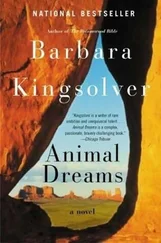
In this risky but resoundingly successful novel, Kingsolver leaves the Southwest, the setting of most of her work (The Bean Trees; Animal Dreams) and follows an evangelical Baptist minister's family to the Congo in the late 1950s, entwining their fate with that of the country during three turbulent decades. Nathan Price's determination to convert the natives of the Congo to Christianity is, we gradually discover, both foolhardy and dangerous, unsanctioned by the church administration and doomed from the start by Nathan's self-righteousness. Fanatic and sanctimonious, Nathan is a domestic monster, too, a physically and emotionally abusive, misogynistic husband and father. He refuses to understand how his obsession with river baptism affronts the traditions of the villagers of Kalinga, and his stubborn concept of religious rectitude brings misery and destruction to all. Cleverly, Kingsolver never brings us inside Nathan's head but instead unfolds the tragic story of the Price family through the alternating points of view of Orleanna Price and her four daughters. Cast with her young children into primitive conditions but trained to be obedient to her husband, Orleanna is powerless to mitigate their situation. Meanwhile, each of the four Price daughters reveals herself through first-person narration, and their rich and clearly differentiated self-portraits are small triumphs. Rachel, the eldest, is a self-absorbed teenager who will never outgrow her selfish view of the world or her tendency to commit hilarious malapropisms. Twins Leah and Adah are gifted intellectually but are physically and emotionally separated by Adah's birth injury, which has rendered her hemiplagic. Leah adores her father; Adah, who does not speak, is a shrewd observer of his monumental ego. The musings of five- year-old Ruth May reflect a child's humorous misunderstanding of the exotic world to which she has been transported. By revealing the story through the female victims of Reverend Price's hubris, Kingsolver also charts their maturation as they confront or evade moral and existential issues and, at great cost, accrue wisdom in the crucible of an alien land. It is through their eyes that we come to experience the life of the villagers in an isolated community and the particular ways in which American and African cultures collide. As the girls become acquainted with the villagers, especially the young teacher Anatole, they begin to understand the political situation in the Congo: the brutality of Belgian rule, the nascent nationalism briefly fulfilled in the election of the short-lived Patrice Lumumba government, and the secret involvement of the Eisenhower administration in Lumumba's assassination and the installation of the villainous dictator Mobutu. In the end, Kingsolver delivers a compelling family saga, a sobering picture of the horrors of fanatic fundamentalism and an insightful view of an exploited country crushed by the heel of colonialism and then ruthlessly manipulated by a bastion of democracy. The book is also a marvelous mix of trenchant character portrayal, unflagging narrative thrust and authoritative background detail. The disastrous outcome of the forceful imposition of Christian theology on indigenous natural faith gives the novel its pervasive irony; but humor is pervasive, too, artfully integrated into the children's misapprehensions of their world; and suspense rises inexorably as the Price family's peril and that of the newly independent country of Zaire intersect. Kingsolver moves into new moral terrain in this powerful, convincing and emotionally resonant novel.
The Poisonwood Bible — читать онлайн бесплатно полную книгу (весь текст) целиком
Ниже представлен текст книги, разбитый по страницам. Система сохранения места последней прочитанной страницы, позволяет с удобством читать онлайн бесплатно книгу «The Poisonwood Bible», без необходимости каждый раз заново искать на чём Вы остановились. Поставьте закладку, и сможете в любой момент перейти на страницу, на которой закончили чтение.
Интервал:
Закладка:
We were presumed insane. Mother took the diagnosis well. She moved our things out of storage into a plywood cabin on the piney outskirts of town, which she rented on the strength of a tiny legacy from Grandfather Wharton. She did not hook up the telephone. She took up a hoe instead, and began to put every square inch of her sandy two-acre rented lot under cultivation: peanuts, sweet potatoes, and four dozen kinds of flowers. She seemed determined to grow tragedy out of herself like a bad haircut. A neighbor down the road had a mean goose and hogs, whose manure Mother toted home daily like a good African in two balanced bushel pails. It would not have surprised me to see her put a third bucket on her head. By midsummer we could not see out the windows for the foxglove and the bachelor’s buttons. Mother said she aimed to set up a plank shack by the road and sell bouquets for three-fifty apiece. I wondered what Bethlehem would say about that. The minister’s wife gone barefoot to roadside commerce.
As earnestly as Mother had taken up seed catalogs, I took up the catalog of Emory University and studied my possibilities. Then I rode the Greyhound to Atlanta and limped into the admissions office. I was allowed to have an interview with a gentleman named Dr. Holden Remile, whose job I think was to discourage people such as myself from asking for interviews with people such as himself. His desk was immense.
I opened my mouth and waited for the sentence I hoped would arrive. “I need to go to your college here, sir. And when I am done with it, I will need to go to your medical school.”
Dr. Remile was quite shocked, whether by my deformity or my audacity I can’t say, but probably less shocked than I was by the sound of my own voice. He asked whether I had funds, whether I had high school transcripts, whether I had at least taken high school chemistry or advanced algebra. The only answer I had was “No, sir.” But I did mention I had read quite a few books.
“Do you know what calculus is, young lady?” he asked, in the manner of a person who is hiding something frightening in one of his hands. Having grown up around the hands of Reverend Price, I am fairly immune to such fright.
“Yes, sir,” I said. “It is the mathematics of change.”
His telephone rang. While I waited for him to have his conversation, I worked out in my head both the sum and the product of the numbers on the large numbered set of files on his bookshelf, which were all out of order, and made up an equation for righting them, which I wrote down for him on paper. I had to use algebra, though, not calculus. I also observed that his name, backward, was the French verb for wearing one’s clothes threadbare, so I told him that as well, with no offense intended as his clothes were fine.
Dr. Remile suddenly ascertained that I was due some government benefits, being the child of a veteran. He set me up for taking the entrance examinations, for which I returned to Atlanta one month later. I didn’t miss any of the questions in mathematics. On the verbal portion I missed four questions, all having to do with choosing a word in a series that doesn’t belong. I have always had trouble with that line of questioning. Given my own circumstances, I find that anything can turn out to belong nearly anywhere.
I had told the truth: I needed to go to his college. I needed to get out of Bethlehem, out of my skin, my skull, and the ghost of my family. It is not because I was ashamed of Mother-how could I, the village idiot, be ashamed of her? I somewhat enjoyed the company of her madness, and certainly I understood it. But Mother wanted to consume me like food. I needed my own room. I needed books, and for the first time in my life I needed schoolmasters who would tell me each day what to think about.
In organic chemistry, invertebrate zoology, and the inspired symmetry of Mendelian genetics, I have found a religion that serves. I recite the Periodic Table of Elements like a prayer; I take my examinations as Holy Communion, and the pass of the first semester was a sacrament. My mind is crowded with a forest of facts. Between the trees lie wide-open plains of despair. I skirt around them. I stick to the woods.
Since I can’t call her, I take the bus back on weekends. We drink tea and she shows me her flowers. The odd thing is when Father was around she never gardened at all. That was his domain, and he directed us all in the planting of useful foods, all to the Glory of God and so forth. We never had one flower in our yard the whole of my childhood. Not so much as a dandelion. Now Mother’s shack is the mere peak of a roof surrounded by a blaze of pinks, blues, oranges. You have to bend under a wild arch of cosmos when you come up the walk, and use your whole right arm to push the hollyhocks aside to get in the front door. It turns out Mother has an extraordinary talent for flowers. She was an entire botanical garden waiting to happen.
When I visit her we never talk much, and are both relieved by the silence, I think. There are only the two of us now, and I owe her my very life. She owes me nothing at all.Yet I have left her, and now she is sad. I’m not used to this. I have always been the one who sacrificed life and limb and half a brain to save the other half. My habit is to drag myself imperiously through a world that owes me unpayable debts. I have long relied on the comforts of martyrdom.
Now I owe a debt I cannot repay. She took hold of me with a fierce grip and pulled me through. Mother was going to drag me out of Africa if it was her last living act, and it very nearly was. This is how it happened: the commerfant whose truck showed up like a rusted-out angel in Bulungu promised us a ride to Leopoldville with his bananas, but he soon changed his mind and dumped us for more bananas. After a conference with some soldiers along the road, he became convinced that fruit was now bringing a higher price than white women in the city. So out we went.
We walked for two days without food. At night we crouched at the edge of the woods and covered ourselves with palm leaves so the soldiers wouldn’t spot us. Late on the second evening an army truck pulled up beside us, and a man threw us suddenly into the back, where we landed across laps helmets rifles. No doubt the soldiers planned to do us harm; I was numb with that expectation. But Mother’s milk-glass eyes frightened them. Plainly she was possessed of some fierce evil that would enter these men if they touched her, or me. Especially me. So they kept their distance from both of us. We bumped along silently in the back of the truck, passing through dozens of military roadblocks, and were turned over to the BelgianEmbassy, which took us in until someone could sort out what ought to be done with us.We spent nineteen days in the infirmary, swallowing a variety of specialized poisons, since we had intestinal parasites, fungus growing on our feet and forearms, and more than the usual degree of malaria.
Then, on a hospital plane full of UN workers and sick white people, we were transported through a long thrumming darkness, in which we slept the sleep of the dead. When the droning stopped we all sat up and blinked like disturbed corpses. There was light at the round windows. The belly of the plane groaned open and we were delivered abruptly into the benign spring air of Fort Benning, Georgia.
It is impossible to describe the shock of return. I recall that I stood for the longest time staring at a neatly painted yellow line on a neatly formed cement curb. Yellow yellow line line. I pondered the human industry, the paint, the cement truck and concrete forms, all the resources that had gone into that one curb. For what? I could not quite think of the answer. So that no car would park there? Are there so many cars that America must be divided into places with and places without them? Was it always so, or did they multiply vastly, along with telephones and new shoes and transistor radios and cellophane-wrapped tomatoes, in our absence?
Читать дальшеИнтервал:
Закладка:
Похожие книги на «The Poisonwood Bible»
Представляем Вашему вниманию похожие книги на «The Poisonwood Bible» списком для выбора. Мы отобрали схожую по названию и смыслу литературу в надежде предоставить читателям больше вариантов отыскать новые, интересные, ещё непрочитанные произведения.









Обсуждение, отзывы о книге «The Poisonwood Bible» и просто собственные мнения читателей. Оставьте ваши комментарии, напишите, что Вы думаете о произведении, его смысле или главных героях. Укажите что конкретно понравилось, а что нет, и почему Вы так считаете.