Larry McMurtry - Lonesome Dove
Здесь есть возможность читать онлайн «Larry McMurtry - Lonesome Dove» весь текст электронной книги совершенно бесплатно (целиком полную версию без сокращений). В некоторых случаях можно слушать аудио, скачать через торрент в формате fb2 и присутствует краткое содержание. Жанр: Современная проза, на английском языке. Описание произведения, (предисловие) а так же отзывы посетителей доступны на портале библиотеки ЛибКат.
- Название:Lonesome Dove
- Автор:
- Жанр:
- Год:неизвестен
- ISBN:нет данных
- Рейтинг книги:5 / 5. Голосов: 1
-
Избранное:Добавить в избранное
- Отзывы:
-
Ваша оценка:
Lonesome Dove: краткое содержание, описание и аннотация
Предлагаем к чтению аннотацию, описание, краткое содержание или предисловие (зависит от того, что написал сам автор книги «Lonesome Dove»). Если вы не нашли необходимую информацию о книге — напишите в комментариях, мы постараемся отыскать её.
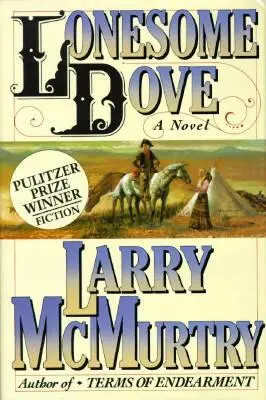
A love story, an adventure, an American epic, Lonesome Dove embraces all the West – legend and fact, heroes and outlaws, whoeres and ladies, Indians and settlers – in a novel that recreates the central American experience, the most enduring of our national myths.
Set in the late nineteenth century, Lonesome Dove is the story of a cattle drive from Texas to Montana – and much more. It is a drive that represents for everybody involved not only a daring, even a foolhardy, adventure, but a part of the American Dream – the attempt to carve out of the last remaining wilderness a new life.
Agustus McCrae and W.F. Call are former Texas Rangers, partners and friends who have shared hardship and danger together without ever quite understanding (or wanting to understand) each other's deepest emotions. Gus is the romantic, a reluctant rancher who has a way with women and the sense to leave well enough alone. Call is a driven, demanding man, a natural authority figure with no patience for weaknesses, and not many of his own. He is obsessed with the dream of creating his own empire, and with the need to conceal a secret sorrow of his own. The two men could hardly be more different, but both are tough, redoubtable fighters who have learned to count on each other, if nothing else.
Call's dream not only drags Gus along in its wake, but draws in a vast cast of characters:
– Lorena, the whore with the proverbial heart of gold, whom Gus (and almost everyone else) loves, and who survives one of the most terrifying experiences any woman could have…
– Elmira, the restless, reluctant wife of a small-time Arkansas sheriff, who runs away from the security of marriage to become part of the great Western adventure…
– Blue Duck, the sinister Indian renegade, one of the most frightening villains in American fiction, whose steely capacity for cruelty affects the lives of everyone in the book…
– Newt, the young cowboy for whom the long and dangerous journey from Texas to Montana is in fact a search for his own identity…
– Jake, the dashing, womanizing ex-Ranger, a comrade-in-arms of Gus and Call, whose weakness leads him to an unexpected fate…
– July Johnson, husband of Elmira, whose love for her draws him out of his secure life into the wilderness, and turns him into a kind of hero…
Lonesome Dove sweeps from the Rio Grande (where Gus and Call acquire the cattle for their long drive by raiding the Mexicans) to the Montana highlands (where they find themselves besieged by the last, defiant remnants of an older West).
It is an epic of love, heroism, loyalty, honor, and betrayal – faultlessly written, unfailingly dramatic. Lonesome Dove is the novel about the West that American literature – and the American reader – has long been waiting for.
Lonesome Dove — читать онлайн бесплатно полную книгу (весь текст) целиком
Ниже представлен текст книги, разбитый по страницам. Система сохранения места последней прочитанной страницы, позволяет с удобством читать онлайн бесплатно книгу «Lonesome Dove», без необходимости каждый раз заново искать на чём Вы остановились. Поставьте закладку, и сможете в любой момент перейти на страницу, на которой закончили чтение.
Интервал:
Закладка:
The next morning he got a promise from Maude that her two oldest boys would get themselves to Lonesome Dove by the end of the week. The boys themselves-Jimmy and Ben Rainey-scarcely said a word. Call rode off feeling satisfied, believing he had enough of a crew to start gathering cattle. Word would get out, and a few more men would probably trickle in.
They had to get the cattle and get them branded. At least they had the luxury of surplus horses, or did if Gus and Jake hadn't contrived to fiddle around and lose them.
He worried about that possibility most of the way home. Not that Gus wasn't competent-so far as sheer ability went, Gus was as competent as any man he'd ever known. There had been plenty of times when he'd wondered if he himself could match Gus, if Gus really tried. It was a question that never got tested, because Gus seldom tried. As a team, the two of them were perfectly balanced; he did more than he needed to, while Gus did less.
Gus himself often joked about it. "If you got killed I might work harden," he said. "I might get in a righteous frame of mind if I had that stimulation. But you ain't kilt, so what's the point?"
Call wasted no time getting back, wishing all the way that he had the mare. She had spoiled him-made him too aware of the limitations of his other mounts. The fact that she was dangerous made him like her the more. She made him extra watchful, which was good.
When he got within fifteen miles of Lonesome Dove he cut west, thinking they would be holding the herd in that direction. He rode around the southern edge of the bad brush country and struck the trail of the horses. They had been going back south, over their own tracks, which was curious. Gus had taken them back to town. Probably he had a reason, but it was not one Call could guess, so he loped on home.
When he approached the town he saw the horses, grazing up river a little ways, with Deets and Newt and the Irishmen holding them. They looked to be all there, so evidently nothing had happened.
One thing about Gus McCrae, he was easily found. By three in the afternoon, any afternoon, he would be sitting on the porch, drawing occasionally from his jug. When Call rode up, he was sitting there taking a nap. There was no sign of Jake.
"You're a fine guard," he said, dismounting.
Augustus had his hat over his eyes, but he removed it and looked at Call.
"How's Maude Rainey?" he asked.
"She's in good health," Call said. "She fed me twice."
"Good thing it was just twice," Augustus said. "If you'd stayed a week you'd have had to rent an ox to get home on."
"She's anxious to sell you some more pigs," Call said, taking the jug and rinsing his mouth with whiskey.
"If Joe was to get kilt I might court her again," Augustus speculated.
"I hope you will," Call said. "Them twelve young ones ought to have a good father. What are the horses doing back here so soon?"
"Why, grazing, most likely," Augustus said.
"Didn't Pedro make a try?"
"No, he didn't, and for a very good reason," Augustus said.
"What reason would that be?"
"Because he died," Augustus said.
"Well, I swear," Call said, stunned. "Is that the truth?"
"I ain't seen the corpse," Augustus said, "but I imagine it's true. Jasper Fant rode in looking for work and had the news, though the scamp didn't give it to me until I had wasted most of the night."
"I wonder what killed him," Call said. Pedro Flores had been a factor in their lives off and on for thirty years, though probably they had not actually seen him more than six or seven times. It was surprising, hearing he was gone, and though it should have been a relief, it wasn't, exactly. It was too much of a surprise.
"Jasper wasn't up on the details," Augustus said. "He just heard it from a vaquero . But I allow it's true, because it explains why you could lope in with a boy and an idiot and saunter off with his remuda."
"Well, I swear," Call said again. "I never expected that."
"Oh, well," Augustus said, "I never either, but then I don't know why not. Mexicans don't have no special dispensation. They die like the nest of us. I expect Bol will die one of these days, and then we won't have nobody to whack the dinner bell with the crowbar."
"Pedro was tough, though," Call said.
After all, the man had more or less held nearly a hundred-mile stretch of the border, and for nearly thirty years. Call had known many men who died, but somehow had not expected it of Pedro, though he himself had fined several bullets at him.
"I'd like to know what took him," Call said.
"He might have choked on a pepper," Augustus said. "Them that can't be killed by knives or bullets usually break their necks falling off the porch or something. Remember Johnny Norvel, dying of that bee sting? I guess Johnny had been shot twenty times, but a dern bee killed him."
It was true. The man had rangered with them, and yet the bee sting had given him a seizure of some kind, and no one could bring him out of it.
"Well, it will about finish the Flones operation," Augustus said. "He just had three boys, and we hung the only one of 'em with any get-upand-go."
To Augustus's surprise, Call sat down on the porch and took a big swallow from the jug. He felt curious-not sick but suddenly empty-it was the way a kick in the stomach could make you feel. It was an odd thing, but true, that the death of an enemy could affect you as much almost as much as the death of a friend. He had experienced it before, when news reached them that Kicking Wolf was dead. Some young soldier on his second patrol had made a lucky shot and killed him, on the Clear Fork of the Brazos-and Kicking Wolf had kept two companies of Rangers busy for twenty years. Killed by a private. Call had been shoeing a horse when Pea brought him that piece of news, and he felt so empty for a spell that he had to put off finishing the job.
That had been ten years ago, and he and Gus soon quit nangening. So far as Call was concerned, the death of Kicking Wolf meant the end of the Comanches, and thus the end of their real job. There were other chiefs, true, and the final fights were yet to be fought, but he had never had the vengeful nature of some Rangers and had no interest in spending a decade mopping up renegades and stragglers.
Pedro Flores was a far cry from being the fighter Kicking Wolf had been. Pedro seldom rode without twenty on thirty vaqueros to back him up, whereas Kicking Wolf, a small man no bigger than the boy, would raid San Antonio with five on six braves and manage to carry off three women and scare all the whites out of seven or eight counties just by traveling through them. But Pedro was of the same time, and had occupied them just as long.
"I didn't know you liked that old bandit so much," Augustus said.
"I didn't like him," Call said. "I just didn't expect him to die."
"He probably never expected it neither," Augustus said. "He was a rough old cob."
After a few minutes the empty feeling passed, but Call didn't get to his feet. The sense that he needed to hurry, which had been with him most of his life, had disappeared for a space.
"We might as well go on to Montana," he said. "The fun's over around here."
Augustus snorted, amused by the way his friend's mind worked.
"Call, there never was no fun around here," he said. "And besides, you never had no fun in your life. You wasn't made for fun. That's my department."
"I used the wrong word, I guess," Call said.
"Yes, but why did you?" Augustus said. "That's the interesting part."
Call didn't feel like getting drawn into an argument, so he kept quiet.
"First you run out of Indians, now you've run out of bandits, that's the point," Augustus said. "You've got to have somebody to outwit, don't you?"
"I don't know why I'd need anybody when I've got you," Call said.
Читать дальшеИнтервал:
Закладка:
Похожие книги на «Lonesome Dove»
Представляем Вашему вниманию похожие книги на «Lonesome Dove» списком для выбора. Мы отобрали схожую по названию и смыслу литературу в надежде предоставить читателям больше вариантов отыскать новые, интересные, ещё непрочитанные произведения.









Обсуждение, отзывы о книге «Lonesome Dove» и просто собственные мнения читателей. Оставьте ваши комментарии, напишите, что Вы думаете о произведении, его смысле или главных героях. Укажите что конкретно понравилось, а что нет, и почему Вы так считаете.