Ha Jin - A Free Life
Здесь есть возможность читать онлайн «Ha Jin - A Free Life» весь текст электронной книги совершенно бесплатно (целиком полную версию без сокращений). В некоторых случаях можно слушать аудио, скачать через торрент в формате fb2 и присутствует краткое содержание. Жанр: Современная проза, на английском языке. Описание произведения, (предисловие) а так же отзывы посетителей доступны на портале библиотеки ЛибКат.
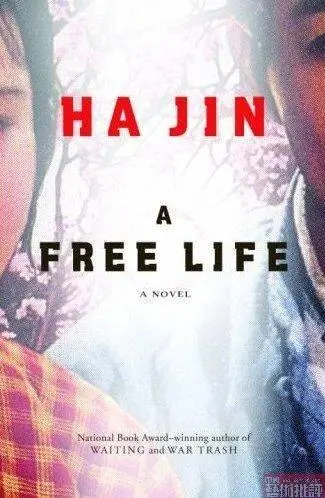
- Название:A Free Life
- Автор:
- Жанр:
- Год:неизвестен
- ISBN:нет данных
- Рейтинг книги:3 / 5. Голосов: 1
-
Избранное:Добавить в избранное
- Отзывы:
-
Ваша оценка:
A Free Life: краткое содержание, описание и аннотация
Предлагаем к чтению аннотацию, описание, краткое содержание или предисловие (зависит от того, что написал сам автор книги «A Free Life»). Если вы не нашли необходимую информацию о книге — напишите в комментариях, мы постараемся отыскать её.
Ha Jin, who emigrated from China in the aftermath of Tiananmen Square, had only been writing in English for 12 years when he won the National Book Award for Waiting in 1999. His latest novel sheds light on an émigré writer's woodshedding period. It follows the fortunes of Nan Wu, who drops out of a U.S. grad school after the repression of the democracy movement in China, hoping to find his voice as a poet while supporting his wife, Pingping, and son, Taotao. After several years of spartan living, Nan and Pingping save enough to buy a Chinese restaurant in suburban Atlanta, setting up double tensions: between Nan's literary hopes and his career, and between Nan and Pingping, who, at the novel's opening, are staying together for the sake of their young boy. While Pingping grows more independent, Nan -amid the dulling minutiae of running a restaurant and worries about mortgage payments, insurance and schooling-slowly snuffs the torch he carries for his first love. That Nan at one point reads Dr. Zhivago isn't coincidental: while Ha Jin's novel lacks Zhivago's epic grandeur, his biggest feat may be making the reader wonder whether the trivialities of American life are not, in some ways, as strange and barbaric as the upheavals of revolution.
***
From the award-winning author of Waiting, a new novel about a family's struggle for the American Dream.
Meet the Wu family-father Nan, mother Pingping, and son Taotao. They are arranging to fully sever ties with China in the aftermath of the 1989 massacre at Tiananmen Square, and to begin a new, free life in the United States. At first, their future seems well-assured. But after the fallout from Tiananmen, Nan 's disillusionment turns him toward his first love, poetry. Leaving his studies, he takes on a variety of menial jobs as Pingping works for a wealthy widow as a cook and housekeeper. As Pingping and Taotao slowly adjust to American life, Nan still feels a strange attachment to his homeland, though he violently disagrees with Communist policy. But severing all ties-including his love for a woman who rejected him in his youth-proves to be more difficult than he could have ever imagined.
A Free Life — читать онлайн бесплатно полную книгу (весь текст) целиком
Ниже представлен текст книги, разбитый по страницам. Система сохранения места последней прочитанной страницы, позволяет с удобством читать онлайн бесплатно книгу «A Free Life», без необходимости каждый раз заново искать на чём Вы остановились. Поставьте закладку, и сможете в любой момент перейти на страницу, на которой закончили чтение.
Интервал:
Закладка:
That cracked everybody up.
Late that afternoon Nan read an article in a week-old Overseas Daily, reporting that Mr. Manping Liu had gone back to Beijing to get cancer treatment. The old exile had suddenly collapsed one day as he was patching the muffler of his jalopy with duct tape, and had been rushed to a local clinic for poor people. The diagnosis was liver cancer, and the doctor said his days would be numbered if the treatment wasn't effective. It was rumored that the old dissident had written to a member of the Political Bureau, begging for permission to go back to China. "Please let me die in our motherland," he wrote. Out of pity or political expediency, they let him return and even assigned him a hospital bed in Beijing, provided he'd remain silent about sensitive issues and would inform the police beforehand if he was to meet with any foreigner. He could resume receiving the same salary as before he had fled China. Mr. Liu accepted the provisos and went back quietly, together with his wife.
His case evoked mixed feelings in Nan, and for days he'd been thinking about the implications of Mr. Liu's return. Why did the old man stoop to the authorities so easily? True, he was nostalgic and might get better medical treatment and live longer in Beijing. But wouldn't his return compromise his principles and impair his integrity? Nan couldn't answer definitively. His mind couldn't help but turn to Mr. Liu even when he was busy cooking.
Gradually he figured out the essential difference between himself and the old scholar. Mr. Liu was an exile, whose life had been shaped by the past and who could exist only with reference to the central power that had banished him from China. Here lay Mr. Liu's tragedy-he couldn't possibly separate himself from the state's apparatus that could always control and torment him. Without the frame of reference already formed in his homeland, his life would have lost its meaning and bearings. That must be why so many exiles, wrecked with nostalgia, would eulogize suffering and patriotism. Physically they were here, but because of the yoke of their significant past, they couldn't adapt to the life in the new land. In contrast, Nan was an immigrant without a noteworthy and burdensome past. To the authorities, he was nobody, nonexistent. He didn't even have a Chinese official to beg. Who would listen to a man like him, a mere immigrant or refugee? People of his kind, "the weed people," survived or perished like insects and grass and wouldn't matter at all to those living in their native land. To the people in China, they were already counted as a loss. Small wonder that a senior official had recently declared to a group of overseas Chinese, "You must be qualified to become a real patriot," implying that China needed only those who could make substantial contributions to its economic and technological development. The more Nan thought about these issues, the more upset he became. On the other hand, he was willing to accept the immigrant life as the condition of his existence so as to become a self-sufficient man. He felt grateful to the American land that had taken in his family and given them an opportunity for a new beginning.
7
A THUNDERSTORM warning was broadcast the following day, and many people went to supermarkets to buy nonperishable foods, bottled water, and other supplies. No customers showed up at the Gold Wok after four o'clock, so the Wus closed early and went home to prepare for the severe storm due to hit the area in the evening. They were worried about the massive oak near the east end of their house. If it fell, it might crush the roofs of their carport and living room. The tree belonged to both the Wus and Gerald, the property line going right through its trunk. Several times Nan and Pingping had talked to Gerald about bringing the oak down, since it could fall on his roof as well, but he wouldn't share the cost of six hundred dollars, saying he had no money. However, Alan had told Nan that oaks had deep roots and wouldn't fall easily. It was pines that were more likely to cause damage; that was why Alan had taken down nineteen of his pine trees two years ago and had kept the oaks in his yard. Now all the Wus could do was cross their fingers and watch the television showing destroyed houses and overturned vehicles in the wake of the storm. A newsman said, "Besides the thunderstorm, it's reported that some places in the northern suburbs got hammered by a tornado. We'll bring you more on that once we have the details."
The Wus moved a couch into the dining room, where they could stay to avoid being crushed by the oak if it fell. Around nine o'clock, after a series of thunderclaps, the night suddenly turned whitish- all the trees and lights beyond the lake vanished at once. Then came the ghostly rustle that sounded like a harvester cutting crops, though at a much faster speed. Taotao wanted to look out the window, whose panes kept up a steady rattling, but Nan stopped him for fear that the storm might crash into the room. In no time the power went out. The Wus realized this was a tornado, and wordlessly they cowered on the couch, set in a corner. Try as he might, Nan couldn't hear the earth-shaking booms made by trees hitting the ground, and somehow all the noises were muffled, though their roof creaked and echoed with objects pelting it. He wondered if it was hailing as well.
Three minutes later the tornado passed, but the night was darker than before as all the lights were gone. The Wus looked out the broad window of the dining room and saw some boughs and branches on the grass. To their relief, all the trees were still standing in the backyard. In the north a fire engine or ambulance was howling. Because electricity might not come back on soon, they went to bed early.
After Taotao left for school the next morning, Nan took a walk in the neighborhood to see the havoc. Several houses had been damaged by fallen pines, and on the streets electric wires were mangled here and there. Fortunately the tornado hadn't touched Beaver Hill Plaza, and there was still electricity at the Gold Wok. Nan was pleased to find his freezer and refrigerators all droning as before. He realized there might be a lot of business today since many households in the area had no power. Hurriedly he went back and told Pingping to stop cleaning the front yard. Together they set out for work.
Indeed, for a whole day people came in nonstop. The Wus and Niyan had a hectic time, though all were happy about the business. Owing to the power outage, Taotao stayed at the restaurant after school, doing his homework. Toward dark, electricity finally came back to the neighborhood, where the smell of barbecued meat and fried chicken from cookouts still hovered.
Shortly after the Wus returned home that night, Gerald knocked on their door. Nan answered it. Gerald had been ill lately and out of work. He looked gaunt and aged, in jean overalls smudged with grease; the stubble on his chin was grizzled, and his eyes shone with a stiff light like a crazed man's. He had lost his dog, Goby, a week earlier. It was Taotao who had found the dog dead the other morning- a pair of crows were standing on Goby's belly, shrieking like mad, so the boy called to his parents, who went out but couldn't rouse the animal. Goby had died of heartworm. According to Gerald, the collie had carried the disease since it was a puppy. In a way, the Wus were pleased by Goby's disappearance, because now no dog would bark in the dead of night and wake them up.
"Kin-kin I borra some juice from ya?" Gerald asked Nan, apparently embarrassed.
"Orange juice?"
"No. I mean 'lectricity."
"Oh, what happened to your house? Your power isn't back yet?"
"No. I called 'em. They said they gonna come work on it tomorra."
"How can you borrow electricity?" Nan was puzzled, though he knew Georgia Power must have cut off Gerald's supply because of unpaid bills.
Читать дальшеИнтервал:
Закладка:
Похожие книги на «A Free Life»
Представляем Вашему вниманию похожие книги на «A Free Life» списком для выбора. Мы отобрали схожую по названию и смыслу литературу в надежде предоставить читателям больше вариантов отыскать новые, интересные, ещё непрочитанные произведения.










Обсуждение, отзывы о книге «A Free Life» и просто собственные мнения читателей. Оставьте ваши комментарии, напишите, что Вы думаете о произведении, его смысле или главных героях. Укажите что конкретно понравилось, а что нет, и почему Вы так считаете.