Ha Jin - A Free Life
Здесь есть возможность читать онлайн «Ha Jin - A Free Life» весь текст электронной книги совершенно бесплатно (целиком полную версию без сокращений). В некоторых случаях можно слушать аудио, скачать через торрент в формате fb2 и присутствует краткое содержание. Жанр: Современная проза, на английском языке. Описание произведения, (предисловие) а так же отзывы посетителей доступны на портале библиотеки ЛибКат.
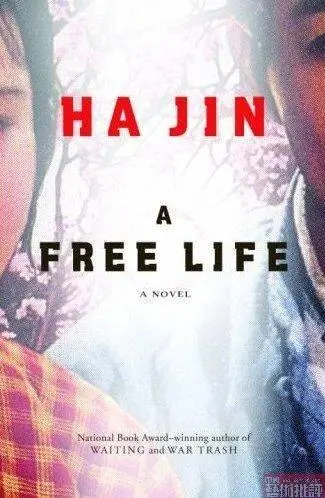
- Название:A Free Life
- Автор:
- Жанр:
- Год:неизвестен
- ISBN:нет данных
- Рейтинг книги:3 / 5. Голосов: 1
-
Избранное:Добавить в избранное
- Отзывы:
-
Ваша оценка:
A Free Life: краткое содержание, описание и аннотация
Предлагаем к чтению аннотацию, описание, краткое содержание или предисловие (зависит от того, что написал сам автор книги «A Free Life»). Если вы не нашли необходимую информацию о книге — напишите в комментариях, мы постараемся отыскать её.
Ha Jin, who emigrated from China in the aftermath of Tiananmen Square, had only been writing in English for 12 years when he won the National Book Award for Waiting in 1999. His latest novel sheds light on an émigré writer's woodshedding period. It follows the fortunes of Nan Wu, who drops out of a U.S. grad school after the repression of the democracy movement in China, hoping to find his voice as a poet while supporting his wife, Pingping, and son, Taotao. After several years of spartan living, Nan and Pingping save enough to buy a Chinese restaurant in suburban Atlanta, setting up double tensions: between Nan's literary hopes and his career, and between Nan and Pingping, who, at the novel's opening, are staying together for the sake of their young boy. While Pingping grows more independent, Nan -amid the dulling minutiae of running a restaurant and worries about mortgage payments, insurance and schooling-slowly snuffs the torch he carries for his first love. That Nan at one point reads Dr. Zhivago isn't coincidental: while Ha Jin's novel lacks Zhivago's epic grandeur, his biggest feat may be making the reader wonder whether the trivialities of American life are not, in some ways, as strange and barbaric as the upheavals of revolution.
***
From the award-winning author of Waiting, a new novel about a family's struggle for the American Dream.
Meet the Wu family-father Nan, mother Pingping, and son Taotao. They are arranging to fully sever ties with China in the aftermath of the 1989 massacre at Tiananmen Square, and to begin a new, free life in the United States. At first, their future seems well-assured. But after the fallout from Tiananmen, Nan 's disillusionment turns him toward his first love, poetry. Leaving his studies, he takes on a variety of menial jobs as Pingping works for a wealthy widow as a cook and housekeeper. As Pingping and Taotao slowly adjust to American life, Nan still feels a strange attachment to his homeland, though he violently disagrees with Communist policy. But severing all ties-including his love for a woman who rejected him in his youth-proves to be more difficult than he could have ever imagined.
A Free Life — читать онлайн бесплатно полную книгу (весь текст) целиком
Ниже представлен текст книги, разбитый по страницам. Система сохранения места последней прочитанной страницы, позволяет с удобством читать онлайн бесплатно книгу «A Free Life», без необходимости каждый раз заново искать на чём Вы остановились. Поставьте закладку, и сможете в любой момент перейти на страницу, на которой закончили чтение.
Интервал:
Закладка:
2
THREE DAYS LATER Nan set out for the South. He followed I-95 all the way to Virginia and switched to I-85 after Richmond. He drove for fourteen hours until he was too exhausted to continue and had to stop for the night. He slept in his car in the parking lot of a rest area near Ridgeway, North Carolina. Before sunrise, when tree leaves were drenched with heavy dew and a thin fog was lifting, he resumed his trip. Entering Durham, North Carolina, he caught sight of a burgundy motorcycle, which reminded him of the Yamaha scooter the wild Beina used to ride. He floored the gas pedal, but his car couldn't go fast enough. In no time the motorcyclist's white helmet, jiggling and dodging, disappeared in the traffic ahead. Nan sighed and shook his head vigorously to force the image of his ex-girlfriend out of his mind.
Because of the construction along the road, it took him almost a whole day to cross the Carolinas, and not until evening did he arrive at Chamblee, Georgia, a suburban town northeast of Atlanta. He checked in at Double Happiness Inn on Buford Highway, managed by a Korean man who spoke Mandarin fluently but with a harsh accent. Tired out, Nan showered and went to bed without dinner, although Pingping had packed a tote bag of food for him-instant noodles, a challah, two cans of wieners, fish jerky, macadamia cookies, dehydrated duck, pistachios, clementines, as if none of these things were available in Georgia. She had also wedged in a coffeepot, with which he could boil water for oatmeal and tea.
The next morning, Nan went to see Mr. Wang. The Gold Wok was in Lilburn, a town fifteen miles northeast of Atlanta. It was at the western end of a half-deserted shopping center called Beaver Hill Plaza, where several businesses and a small supermarket clustered together. Among them were a fabric store, a Laundromat, a photo studio, a pawnshop, and a fitness center. A few suites were marked by for rent signs, which gave Nan mixed feelings. The vacancies implied that it would be easy enough for the restaurant to renew its lease, but it might also mean there wasn't a lot of business.
Mr. Wang, tall with withered limbs and a scanty beard, turned out to be much older than Nan had expected. His back was so hunched that he seemed afflicted with kyphosis, and his neck and arms were dappled with liver spots. As he spoke to Nan, he kept massaging his right knee as if he suffered from painful arthritis. He made an effort to straighten up but remained bent. He grimaced, saying that his chronic back pain had grown more unbearable each year. Somehow Nan couldn't help but wonder whether he had a prolapsed anus as well, since both afflictions, he'd learned, were common among people in the restaurant business. The old man and his wife were glad to see Nan and eager to show him the place. Nan went into the kitchen and checked the cooking range, the ovens, the storage room, the freezers, the dishwasher, the toilets, the light fixtures. He was pleased that all the equipment was in working order, though the dining room looked rather shabby. In it there were six tables and eight booths covered in brown Naugahyde, and the walls were almost entirely occupied by murals of horses, some galloping, some grazing, some rearing, and some frolicking with their tails tossed up. From a corner in the back floated up a Mongolian melody, which was supposed to match the theme of the horses on the walls. The Wangs had hired only one waitress, a dark-complexioned young woman from Malaysia named Tammie, who spoke both Cantonese and English but no Mandarin. Nan opened the menu, which offered more than two dozen items, mostly for takeout, none of which cost more than five dollars. Although it was unlikely to generate $100,000 worth of business a year as the ad claimed, the restaurant was in good trim.
As Nan was coming out from the kitchen, a young man wearing aviator glasses and a gray jersey strolled in, clamping a toothpick between his lips. Nan stepped aside to let him pass. Without a word the man went straight in. Presently Nan heard the brisk ring of a spatula scraping a pan.
" Like I told you, this place is perfect for a family like yours," Mr. Wang said to Nan.
"Does your wife speak English?" asked Mrs. Wang, a waistless and short-limbed woman wearing a seersucker shirt.
"Yes, she can do anything. By the way, I haven't seen lots of customers. There aren't many, are there?"
" Tuesday is slow," she replied.
"Can you cook?" Mr. Wang asked Nan.
"I'm a chef."
"Excellent. That will make all the difference. I can guarantee you that you'll get rich soon." "Well, I'm not so sure."
" Look, I pay the chef, the fellow in the kitchen, eight dollars an hour. I used to cook myself, but I'm too old to do that anymore. If you and your wife both work here, all the profits will go into your own pocket."
" You use a chef?" Nan was amazed, not having imagined this place could make enough to pay that kind of wages. He had taken the man wearing glasses for a family member or relative of the Wangs.
"Yes. You can go ask him how much I pay him. That's why we can't keep this place any longer-most profits end up in his wallet. It's like I'm just his job provider."
This was encouraging. If they could afford to hire a cook, the restaurant must be doing quite well.
The old couple invited him to stay for lunch, saying this was the minimum they should do for a guest from far away. Nan accepted the offer and, together with Mr. Wang, sat down at a table. He poured hot tea for his host and then for himself, and they went on talking about life in this place. The old man assured him that Gwinnett County had excellent public schools. A girl in his neighborhood had gone to Berkmar High and was at Duke now, a premed. Nan was impressed. Mr. Wang also told him that compared with the other counties in the Atlanta area, Gwinnett had a much lower realty tax. That was why many recent immigrants from Asia and Latin America preferred to live here.
Ten minutes later, Mrs. Wang stepped over gingerly and put before them a lacquered tray containing a bowl of pot-stickers, a plate of sauteed scallops and shrimp mixed with snow peas and bamboo shoots, a jar of plain rice, two pairs of connected chopsticks, and two empty bowls. "You can have a bite if you want," she told her husband.
"Sure, I'm sort of hungry." But the old man just picked up a pot-sticker, saying to Nan that he didn't eat lunch nowadays.
Nan broke his chopsticks and began eating. He wasn't impressed by the quality of the food. The pot-stickers had the stale taste of overused frying oil.
Then he asked Mr. Wang about the lease, the various taxes, the cost of utilities, and the service of the local distributor that delivered vegetables, meats, seafood, condiments. Meanwhile, three customers showed up. One ordered a takeout, and the other two, a middle-aged couple, were led by Tammie to a corner booth. The wide-eyed waitress kept glancing at Nan as if she wanted to speak to him but withheld her words.
After lunch, Nan took leave of the Wangs, saying he would come again the next morning. He tootled through several residential areas in Lilburn and Norcross, mainly along Lawrenceville and Buford highways and Jimmy Carter Boulevard, and he saw numerous homes for sale. Most of them were new and had four bedrooms and a brick front, priced between $120,000 and $130,000, but outside those subdivisions developed recently or still under construction were older houses, some priced even below $80,000. He hadn't expected that a brick ranch would sell for under $100,000. In the Boston area, a three-bedroom house of this kind would cost at least three times as much.
Nan 's car had no air-conditioning, and time and again he drank Pepsi from a bottle lying on the passenger seat. It was hot and humid, waves of heat lapping his face whenever he stepped out of the car. It was so muggy that his breathing became a little labored. For the first time in his life he physically understood the word humid. Back in Boston, when people said "It's so humid," he hadn't been able to feel it. Now at last his body could tell the difference between dry heat and damp heat. Yet the sultry weather shouldn't be a problem if his family lived here, because there was air-conditioning indoors everywhere. Back in China, he had once stayed in Jinan City for a month in midsummer; whenever he walked the streets, his shirt and pants would be soaked with sweat, and it had been hot indoors as well as outdoors. There you simply couldn't avoid sweltering in the dog days' scorching heat, but this Georgian humidity and heat shouldn't be a big deal. More heartening was that there were indeed many Asian immigrants living in the northeastern suburbs of Atlanta. Within four or five miles, Nan saw one Chinese and two Korean churches. Without question this was a good, safe place.
Читать дальшеИнтервал:
Закладка:
Похожие книги на «A Free Life»
Представляем Вашему вниманию похожие книги на «A Free Life» списком для выбора. Мы отобрали схожую по названию и смыслу литературу в надежде предоставить читателям больше вариантов отыскать новые, интересные, ещё непрочитанные произведения.












Обсуждение, отзывы о книге «A Free Life» и просто собственные мнения читателей. Оставьте ваши комментарии, напишите, что Вы думаете о произведении, его смысле или главных героях. Укажите что конкретно понравилось, а что нет, и почему Вы так считаете.