Ha Jin - A Free Life
Здесь есть возможность читать онлайн «Ha Jin - A Free Life» весь текст электронной книги совершенно бесплатно (целиком полную версию без сокращений). В некоторых случаях можно слушать аудио, скачать через торрент в формате fb2 и присутствует краткое содержание. Жанр: Современная проза, на английском языке. Описание произведения, (предисловие) а так же отзывы посетителей доступны на портале библиотеки ЛибКат.
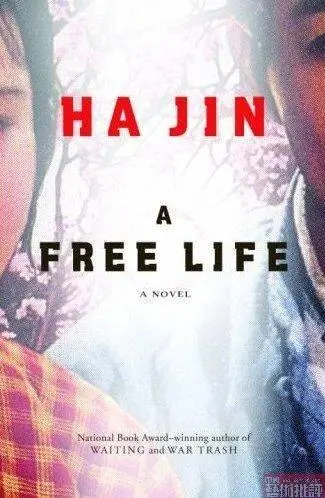
- Название:A Free Life
- Автор:
- Жанр:
- Год:неизвестен
- ISBN:нет данных
- Рейтинг книги:3 / 5. Голосов: 1
-
Избранное:Добавить в избранное
- Отзывы:
-
Ваша оценка:
A Free Life: краткое содержание, описание и аннотация
Предлагаем к чтению аннотацию, описание, краткое содержание или предисловие (зависит от того, что написал сам автор книги «A Free Life»). Если вы не нашли необходимую информацию о книге — напишите в комментариях, мы постараемся отыскать её.
Ha Jin, who emigrated from China in the aftermath of Tiananmen Square, had only been writing in English for 12 years when he won the National Book Award for Waiting in 1999. His latest novel sheds light on an émigré writer's woodshedding period. It follows the fortunes of Nan Wu, who drops out of a U.S. grad school after the repression of the democracy movement in China, hoping to find his voice as a poet while supporting his wife, Pingping, and son, Taotao. After several years of spartan living, Nan and Pingping save enough to buy a Chinese restaurant in suburban Atlanta, setting up double tensions: between Nan's literary hopes and his career, and between Nan and Pingping, who, at the novel's opening, are staying together for the sake of their young boy. While Pingping grows more independent, Nan -amid the dulling minutiae of running a restaurant and worries about mortgage payments, insurance and schooling-slowly snuffs the torch he carries for his first love. That Nan at one point reads Dr. Zhivago isn't coincidental: while Ha Jin's novel lacks Zhivago's epic grandeur, his biggest feat may be making the reader wonder whether the trivialities of American life are not, in some ways, as strange and barbaric as the upheavals of revolution.
***
From the award-winning author of Waiting, a new novel about a family's struggle for the American Dream.
Meet the Wu family-father Nan, mother Pingping, and son Taotao. They are arranging to fully sever ties with China in the aftermath of the 1989 massacre at Tiananmen Square, and to begin a new, free life in the United States. At first, their future seems well-assured. But after the fallout from Tiananmen, Nan 's disillusionment turns him toward his first love, poetry. Leaving his studies, he takes on a variety of menial jobs as Pingping works for a wealthy widow as a cook and housekeeper. As Pingping and Taotao slowly adjust to American life, Nan still feels a strange attachment to his homeland, though he violently disagrees with Communist policy. But severing all ties-including his love for a woman who rejected him in his youth-proves to be more difficult than he could have ever imagined.
A Free Life — читать онлайн бесплатно полную книгу (весь текст) целиком
Ниже представлен текст книги, разбитый по страницам. Система сохранения места последней прочитанной страницы, позволяет с удобством читать онлайн бесплатно книгу «A Free Life», без необходимости каждый раз заново искать на чём Вы остановились. Поставьте закладку, и сможете в любой момент перейти на страницу, на которой закончили чтение.
Интервал:
Закладка:
Livia dropped her eyes, misting up. She said to Pingping, "My mom's friends all say you and Nan split up. My mom is afraid you'll stay with us forever. To be honest, I won't mind." That was true. Livia was fond of Pingping, who was the only one who had contradicted Dr. Hornburger's prognosis that the girl wouldn't grow taller than five feet. Even her mother believed that Kraut.
"They just gossip," Pingping said. " Nan won't walk out from Tao-tao and me. He's good man."
Despite saying that, Pingping got more agitated than ever. She could see the logic behind the rumor. What if Nan hit it off with some woman in New York who could win his heart? Wouldn't he start an affair and then abandon Taotao and her? If this happened back in China she might not be devastated, because she was a complete person there and could do anything by herself. But here she depended on him for many things, and Taotao needed him as his dad. Indeed, before they had decided to immigrate, she had even planned to divorce Nan after they returned to China, where she would raise their child by herself. That was why for years she had been determined to make money. But in this place she couldn't live separately from Nan, and at all costs she must hold the family together, to give Taotao a safe, loving home. What's more, recently she somehow could no longer bear the thought that Nan might go and live with another woman. She knew she'd get jealous like crazy if that happened. So now she must have him back. The longer he stayed in New York, the more trouble might start.
17
NAN came back and talked with Pingping, who agreed they shouldn't rush to move out. To their amazement, Heidi had made up her mind to dismiss them, although she would let them stay another half year. She said, "I'll need someone for house-sitting this summer anyway. But after August I won't be able to use your help anymore. Are we clear about that?" Her face was wooden. The Wus thanked her for offering them the extended period.
Nan wondered if he should return to New York, but decided not to, now that he could cook like a professional. He called Howard to apprise him of his decision. His boss said he understood and would send him his last week's pay. That moved Nan, who had never thought he could get the wages.
That night he and Pingping went to bed together, but he found all his condoms punctured or cut by scissors. "That must be our son's doing," she said, tittering.
Nan didn't reproach Taotao, realizing that the boy must have resented his absence from home. He smiled and said to his wife, "How could he understand sex? I knew nothing about it until I was thirteen."
"Here children reach puberty earlier. He has read some small books on biology and knows a lot about how babies are made."
"Still, it's too early for him to be so interested."
"It doesn't matter, as long as we love him and raise him well."
He said no more and went on making love to Pingping, who soon began to come. But she dared not scream for fear of waking up their son. She murmured tearfully while licking Nan 's chest, saying she couldn't live without him. If only she could keep him home forever!
The next day Nan began to look through job ads in the Boston Globe and World Journal. This time he wanted to be a cook. Two Chinese restaurants interviewed him, and the Jade Cafe in Natick hired him as a sous-chef. He was to start the following Monday.
PART THREE
1
ONE DAY in the early summer of 1991, Nan came across an advertisement in World Journal for the sale of a restaurant in Georgia. The asking price was $25,000; the owner claimed that its annual business surpassed $100,000, more than enough to make a decent profit. "Perfect for your family," the ad declared. Nan brought back the page of the newspaper and showed it to Pingping. They talked about it late into the night.
For months they had been thinking about where to go. Should they stay in the Boston area? Or should they migrate to another place where the cost of living was lower?
By now they had saved more money, having worked nonstop without spending a penny on rent for the past three years. They had two CDs in the bank, $50,000 altogether. Yet even with this much cash, they still couldn't possibly buy a home or business in Massachusetts, where everything was expensive. Nan earned ten dollars an hour at the Jade Cafe; wages like that wouldn't qualify him for a loan from the bank. He'd heard that some Chinese restaurants in Georgia, Florida, Mississippi, and Alabama were quite affordable. Nan had been following newspaper ads, which seemed to confirm that. After working at the Jade Cafe for four months, he was already an experienced cook.
But what about Taotao's schooling? They decided this wouldn't be an obstacle if they left the Boston area, because Pingping could teach him math while Nan could help him with his English. Despite the mistakes he made when he spoke the language, Nan knew English grammar like the back of his hand. The crux of the problem was whether they'd be willing to go to the Deep South, where they had heard that racial prejudice was still rampant, and where the Ku Klux Klan was active and even dared to march in the glare of daylight. On the other hand, they had also read articles, written by Chinese immigrants living in the South, that bragged about the quality of life there. One woman in Louisiana boasted that her family had sixty-four oaks and maples in their backyard, something they could never have dreamed of when they had lived in northern California. Others even praised the climate in the South, which was similar to that in their home provinces back in China, not dry in the summer and with no snow, to say nothing of blizzards, in the winter.
That night, the Wus decided to contact the owner of the Georgia restaurant. When Nan called the next morning, a feeble male voice answered the phone. On hearing of Nan 's interest, the man turned animated and identified himself as Mr. Wang, the owner. "I can guarantee you that you'll make good money here," he told Nan.
"Then why are you selling the business?"
"My wife and I are getting old and can't run it anymore. Too much work. Sometimes we go back to Taiwan to visit friends and family, and it's hard to find someone to take care of this place when we're away."
"How long have you owned it?"
"More than twenty years. Truth be told, it's an ideal family business, very stable. If we could manage it, we'd never sell it."
" But the economy is in recession now, and lots of restaurants have folded in Massachusetts."
" I know. Some people here have lost their businesses too. We have fewer customers these days, but we're doing okay. Believe me, the economy will come around. Like I said, this place is very stable."
Nan asked him about the living environment of the Atlanta suburbs, which Mr. Wang assured him was absolutely congenial and safe for raising children. He had only heard of the Klansmen but never seen them in the flesh. Besides, there were thousands upon thousands of Asian immigrants living in the Atlanta area, which, he claimed, was almost like virgin land just open for settlement. In fact, Gwinnett County, where Mr. Wang was living, was one of the fastest growing counties in the whole country, and every two years a new elementary or middle school had to be added. Still, all classrooms were bursting at the seams, and on every campus some students had to attend class in trailers. All these nuggets of information were encouraging. Nan wanted to go down to Georgia and take a look at the restaurant. He told Mr. Wang he would come as soon as he got permission from his boss at the Jade Cafe.
Pingping grew excited after Nan described to her his conversation with Mr. Wang. If this deal worked out, it would mean they'd have their own business and eventually their own home. She urged Nan to set out for Georgia that very week. He should pay a deposit if he believed that the restaurant was in good condition and the area adequate for living. He should also look around some to see how much an average house cost in the vicinity. As long as there were Asian immigrants living there, the place should be safe.
Читать дальшеИнтервал:
Закладка:
Похожие книги на «A Free Life»
Представляем Вашему вниманию похожие книги на «A Free Life» списком для выбора. Мы отобрали схожую по названию и смыслу литературу в надежде предоставить читателям больше вариантов отыскать новые, интересные, ещё непрочитанные произведения.












Обсуждение, отзывы о книге «A Free Life» и просто собственные мнения читателей. Оставьте ваши комментарии, напишите, что Вы думаете о произведении, его смысле или главных героях. Укажите что конкретно понравилось, а что нет, и почему Вы так считаете.