Dennis Lehane - Gone, Baby, Gone
Здесь есть возможность читать онлайн «Dennis Lehane - Gone, Baby, Gone» — ознакомительный отрывок электронной книги совершенно бесплатно, а после прочтения отрывка купить полную версию. В некоторых случаях можно слушать аудио, скачать через торрент в формате fb2 и присутствует краткое содержание. Жанр: Современная проза, на английском языке. Описание произведения, (предисловие) а так же отзывы посетителей доступны на портале библиотеки ЛибКат.
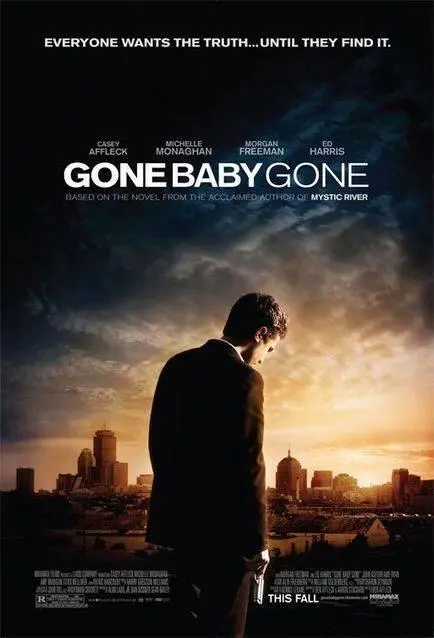
- Название:Gone, Baby, Gone
- Автор:
- Жанр:
- Год:неизвестен
- ISBN:нет данных
- Рейтинг книги:4 / 5. Голосов: 1
-
Избранное:Добавить в избранное
- Отзывы:
-
Ваша оценка:
Gone, Baby, Gone: краткое содержание, описание и аннотация
Предлагаем к чтению аннотацию, описание, краткое содержание или предисловие (зависит от того, что написал сам автор книги «Gone, Baby, Gone»). Если вы не нашли необходимую информацию о книге — напишите в комментариях, мы постараемся отыскать её.
Gone, Baby, Gone — читать онлайн ознакомительный отрывок
Ниже представлен текст книги, разбитый по страницам. Система сохранения места последней прочитанной страницы, позволяет с удобством читать онлайн бесплатно книгу «Gone, Baby, Gone», без необходимости каждый раз заново искать на чём Вы остановились. Поставьте закладку, и сможете в любой момент перейти на страницу, на которой закончили чтение.
Интервал:
Закладка:
The fury of white was disrupted by a long, dark object as it arced from the tree line on the other side, somersaulted in the air, end over end, and then dropped over the cliff and toward the water. I followed its descent enough to identify it as a rifle before it disappeared from view, but still more gunfire burst from the tree line across the water from us.
And then it stopped. I searched the white light and just glimpsed the butt end of another rifle as it dropped through the night toward the water.
One helicopter banked above the tree line on Broussard’s side and I heard the chatter of automatic fire, heard Broussard scream over the walkie-talkie, “Hold your fire! Hold your fire, you fucking lunatic!”
The green treetops were shredding themselves in the white light, popping and snapping into the air, and then the chatter of the weapon fired from the helicopter stopped as the second helicopter banked and pointed its light directly in my face. The wind from its rotor blades found my body and knocked me off my feet, and Angie grabbed the walkie-talkie and said, “Back off. We’re fine. You are in the line of fire.”
The white light disappeared for a moment, and when my vision cleared and the wind lessened, I saw that the helicopter had drifted up about forty feet, hovered over the quarry, and dipped its light toward the water.
All gunfire had stopped. The fury of mechanical noise, though, had been replaced by the whine of copter turbines and the chop of rotors.
I looked into the pool of white and saw the green water churn, the chunk of log and license plate bounce off Amanda’s doll. I turned back toward Angie in time to see her kick her right shoe off her foot and pull her sweatshirt over her head at the same time. She wore only a black bra and blue jeans as she shivered in the crisp air and blew color into her cheeks.
“You’re not going down there,” I said.
“You’re right.” She nodded and bent toward her sweatshirt, and then she burst past me and by the time I spun toward her, she was airborne, kicking her legs and throwing her chest out in front of her. The helicopter canted to its right and Angie’s body twisted in the light and then straightened.
She dropped like a missile.
In the white light, her body was dark. With her hands clamped tight to her thighs, she looked like a slim statue as she plummeted.
She hit the water like a butcher knife, sliced in clean, and disappeared.
“We’ve got one in the water,” someone said over the walkie-talkie. “We’ve got one in the water.”
As if certain I’d follow her lead, the helicopter swung back in toward the cliff, turned to its right, and hovered there, jerking slightly from side to side but forming an immediate wall in front of me.
The trick to jumping off quarry cliffs has always been one of speed and lunging. You have to jump out as far as possible so that the air and gravity’s whims don’t push you back into the walls and outcroppings as you fall. With the helicopter in front of me, even if I could manage to dive below its legs, the downdraft would swat me into the cliff, leave me plastered there like a stain.
I lay on my stomach and watched for Angie. The way she’d hit the water, even if she’d begun kicking as soon as her head went under, she’d still dropped deep. And with these quarries, anything could have been lying in wait as soon as she hit the water: logs, an old refrigerator perched on a submerged shelf.
She surfaced fifteen yards from the doll, looked around wildly, and dove under again.
On the south side of the quarry, Broussard appeared on the top of a ragged outcropping of rocks. He waved his arms and the helicopter on that side swung in toward him. Broussard reached up and a scream of turbine-like the wail of a dentist’s drill-pierced the night as the helicopter lowered its legs toward Broussard. He reached out for the leg but a breeze pushed the entire carriage away from him in a lurch.
The same gust of wind buffeted the helicopter in front of me, and it almost drifted into the side of the cliff. It pulled back and banked to its right, turned in the center of the quarry, and started coming back as I kicked off my shoes and removed my jacket.
Below, Angie surfaced again and swam over to the doll. She turned her head, looked up at the helicopters, and went under.
Across the quarry, the other helicopter swung in toward Broussard. He stepped back on the craggy outcropping, seemed to lose his footing, but then he got his arms up and wrapped around the leg as the helicopter swayed back from the cliff and turned its nose out over the water. Broussard’s legs kicked at the air, and his body dipped and rose, dipped and rose, and then he was pulled up into the cabin.
The helicopter on my side came straight at me, and I realized almost too late that it was trying to land. I scooped up shoes and jacket and stumbled back from the ledge and then to my left as the front of the legs dipped toward rock, then jerked back and swung its tail rotor to the left.
When it came back at a slightly higher elevation, the blast from the rotors was strong enough to knock me down, and the whine of the turbine dug against my eardrums like a metal pick.
As I scrambled to my feet, the helicopter bounced once, then twice off the smooth stone. I could see the pilot’s face tighten in the cockpit as he fought for purchase, and the nose dipped and the tail rose and for a second I thought the rotors would scrape the crop of rocks that separated the cliff top from the tree line.
A cop in a dark blue jumpsuit and black helmet jumped from the cabin and kept his head low and his knees bent as he ran across the rock toward me.
“Kenzie?” he shouted.
I nodded.
“Come on.” He grabbed my arm and pushed my head down as the other helicopter shot away from the water and off toward the slope where we’d left Poole. There was no way they’d land over there, I knew. It was too tight, no clearing to speak of. Their only hope of getting him out of there was to drop a man and a basket over the side and pull Poole up and out.
The cop shoved me into the cabin as the rotors continued to whip overhead, and as soon as I was inside, the machine lurched off the rock and dropped over the side.
I could see Angie below us as we swooped down toward her. She held Amanda’s doll in one hand and dropped below the surface. As the helicopter slid over the surface, the water began to churn and swirl.
“Go back up!” I screamed.
The co-pilot looked back at me.
I jerked my thumb toward the ceiling. “You’ll drown her! Go back up!”
The co-pilot nudged the pilot and the pilot pulled back on the throttle and my stomach slid into my intestines as the helicopter banked to the right and a graffiti-strewn cliff loomed through the cockpit window and then broke away from us as we rose and turned in a full circle and hovered from a height of about thirty feet over the last place we’d seen Angie.
She came up and flailed at the eddies engulfing her, spit water from her mouth, and turned onto her back.
“What’s she doing?” the cop beside me said.
“Going to shore,” I said, as Angie backstroked toward the rocks, the doll arcing with the windmill motion of her left arm.
The cop nodded, his rifle aimed at the tree line.
Angie’s high school had no swim team, so she competed for the Girls Clubs of America, won a silver medal when she was sixteen in a regional competition. Even with the years of smoking, she still had the stroke. Her body cut cleanly through the water, barely disturbing it, leaving so little in her wake that she could have been an eel as she slid toward shore.
“She’s going to have to walk back,” the co-pilot shouted. “We can’t land down there.”
Angie sensed a small outcropping of jagged rocks just before she would have crashed into them. She turned her body and floated the rest of the way to the rocks, placed the doll gingerly in a crevice between them, then pulled herself up on top.
Читать дальшеИнтервал:
Закладка:
Похожие книги на «Gone, Baby, Gone»
Представляем Вашему вниманию похожие книги на «Gone, Baby, Gone» списком для выбора. Мы отобрали схожую по названию и смыслу литературу в надежде предоставить читателям больше вариантов отыскать новые, интересные, ещё непрочитанные произведения.










Обсуждение, отзывы о книге «Gone, Baby, Gone» и просто собственные мнения читателей. Оставьте ваши комментарии, напишите, что Вы думаете о произведении, его смысле или главных героях. Укажите что конкретно понравилось, а что нет, и почему Вы так считаете.