Dennis Lehane - Gone, Baby, Gone
Здесь есть возможность читать онлайн «Dennis Lehane - Gone, Baby, Gone» — ознакомительный отрывок электронной книги совершенно бесплатно, а после прочтения отрывка купить полную версию. В некоторых случаях можно слушать аудио, скачать через торрент в формате fb2 и присутствует краткое содержание. Жанр: Современная проза, на английском языке. Описание произведения, (предисловие) а так же отзывы посетителей доступны на портале библиотеки ЛибКат.
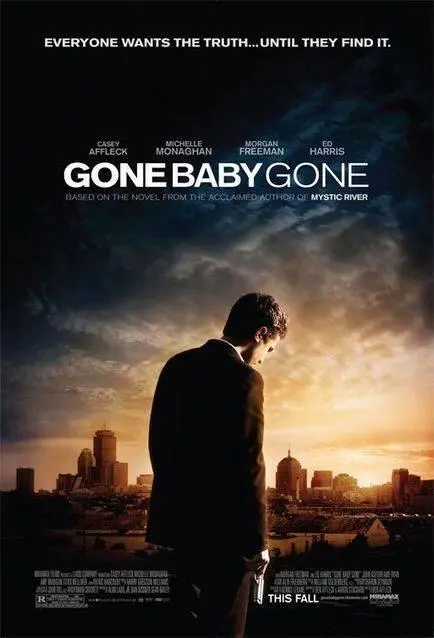
- Название:Gone, Baby, Gone
- Автор:
- Жанр:
- Год:неизвестен
- ISBN:нет данных
- Рейтинг книги:4 / 5. Голосов: 1
-
Избранное:Добавить в избранное
- Отзывы:
-
Ваша оценка:
Gone, Baby, Gone: краткое содержание, описание и аннотация
Предлагаем к чтению аннотацию, описание, краткое содержание или предисловие (зависит от того, что написал сам автор книги «Gone, Baby, Gone»). Если вы не нашли необходимую информацию о книге — напишите в комментариях, мы постараемся отыскать её.
Gone, Baby, Gone — читать онлайн ознакомительный отрывок
Ниже представлен текст книги, разбитый по страницам. Система сохранения места последней прочитанной страницы, позволяет с удобством читать онлайн бесплатно книгу «Gone, Baby, Gone», без необходимости каждый раз заново искать на чём Вы остановились. Поставьте закладку, и сможете в любой момент перейти на страницу, на которой закончили чтение.
Интервал:
Закладка:
“What’s the first thing I taught you?” Poole said.
Broussard cleared his throat, spit into the woods.
“Huh?”
“Close the case,” Broussard said, and his voice sounded as if Poole ’s hand had left his wrist and found his throat.
“Always,” Poole said. He rolled his eyes in the direction of the ridge behind him. “So, go close it.”
“I-”
“Don’t you dare pity me, kid. Don’t you dare. Take the bag.”
Broussard lowered his chin to his chest. He reached under Poole and pulled the bag out, slapped the dirt off the bottom.
“Go,” Poole said. “Now.”
Broussard pulled his wrist from Poole ’s fingers and stood up. He looked off into the dark woods like a kid who’s just been told what alone means.
Poole glanced at me and Angie and smiled. “I’ll survive. Save the girl, call for evac.”
I looked away. Poole, to the best of my knowledge, had just suffered either a small heart attack or a stroke. And the blood that had shot from his lungs didn’t exactly give cause for optimism. I was looking down at a man who, unless he got immediate help, would die.
Angie said, “I’ll stay.”
We looked at her. She’d remained on her knees by Poole since he’d sat down, and she ran a palm over his white forehead, ran it back through the bristles of his hair.
“The hell you will,” Poole said, and swatted at her hand. He tilted his head, looked up into her face. “That child is going to die tonight, Miss Gennaro.”
“Angie.”
“That child is going to die tonight, Angie.” He gritted his teeth for a moment and grimaced at something shooting up his sternum, swallowed hard to force it back down. “Unless we do something. We need every person we have to get her out of here in one piece. Now”-he struggled with the vine, pulled himself up a bit-“you’re going up to those quarries. And so are you, Patrick.” He turned his head to Broussard. “And you most definitely fucking are. So go. Go now.”
None of us wanted to. That was obvious. But then Poole held out his arm and tilted the wrist up toward us until we could all read the illuminated hands of his watch: 8:03.
We were late.
“Go!” he hissed.
I looked at the top of the hill, then off into the dark woods behind Poole, then down at the man himself. Splayed there, legs spread and one foot lolling off to the side, he looked like a scarecrow tossed from his perch.
“Go!”
We left him there.
We scrambled up the hill, Broussard taking the lead as the path was narrowed by thickets of weeds and brambles. Except for the sounds of our progress, the night was so still it would have been easy to believe we were the only creatures out in it.
Ten feet from the top, we met a chain-link fence twelve feet high, but it didn’t prove much of an obstacle. A section of it as wide and tall as a garage door had been cut out, and we walked through the hole without pausing.
At the top of the hill, Broussard stopped long enough to engage his walkie-talkie and whisper into it. “Have reached the quarry. Sergeant Raftopoulos is ill. On my signal-repeat, on my signal-send evac to the railroad slope fifteen yards from the top. Wait for my signal. Copy.”
“Affirmative.”
“Out.” Broussard placed the walkie-talkie back in his raincoat.
“What now?” Angie said.
We stood on a cliff about forty feet above the water. In the dark, I could see the silhouettes of other cliffs and crags, bent trees, and jutting rock shelves. A line of cut, strewn, and disrupted granite rose off to our immediate left, a few jagged peaks another ten to fifteen feet higher than the one on which we stood. To our right, the land rolled flat for about sixty yards, then curved and became jagged and erratic again, erupting into the dark. Below, the water waited, a wide circle of light gray against the black cliff walls.
“The woman who called Lionel said wait for instructions,” Broussard said. “You see any instructions?”
Angie shone her flashlight at our feet, bounced it off the granite walls, arced it off the trees and bushes. The dancing light was like a lazy eye that gave us fractured glimpses into a dense, alien world that could alter itself dramatically within inches-go from stone to moss to battered white bark to mint-green vegetation. And flowing through the tree line like reams of dental floss were silver stripes of chain link.
“I don’t see any instructions,” Angie said.
Bubba, I knew, was out there somewhere. He could probably see us right now. Maybe he could see Mullen and Gutierrez and whoever was working with them. Maybe he could see Amanda McCready. He’d approached from the Milton side and cut through Cunningham Park and up along a path he’d found years before, when he’d gone there to dump hot weapons, or a car, or a body-whatever it was guys like Bubba dumped in the quarries.
He’d have a target scope on his rifle equipped with a light amplification device, and through the scope we’d all look like we stood in a misty seaweed world, moved within a photograph that was still developing before his eyes.
The walkie-talkie on Broussard’s hip went off, and the squawk was like a scream in the midst of all that quiet. He fumbled with it and brought it up to his mouth.
“Broussard.”
“This is Doyle. Sixteenth Precinct just received a call from a woman with a message for you. We think it’s the same woman who called Lionel McCready.”
“Copy. What’s the message?”
“You’re to walk to your right, Detective Broussard, up onto the southern cliffs. Kenzie and Gennaro are to walk to their left.”
“That’s it?”
“That’s it. Doyle out.”
Broussard clipped the walkie-talkie back on his hip, looked off at the line of cliffs on the far side of the water. “Divide and conquer.”
He looked at us, and his eyes were small and empty. He looked much younger than usual, nerves and fear stripping ten years from his face.
“Be careful,” Angie said.
“You too,” he said.
We stood there for another few seconds, as if by not moving we could stave off the inevitable, the moment when we’d discover whether Amanda McCready was alive or dead, the moment when all this hoping and planning would be out of our hands and whoever was hurt or lost or killed wouldn’t be up to us any longer.
“Well,” Broussard said. “Shit.” He shrugged and then walked off along the flat path, the flashlight beam bouncing in front of him through the dust.
Angie and I moved back from the edge about ten feet and followed the stone until a gap appeared and another granite slab rose six inches on the other side. I gripped her hand and we stepped over the gap and up onto the next slab, followed that stone another thirty feet until we met a wall.
It rose a good ten feet above us, and its creamy beige color was mixed with swirls of chocolate. It reminded me of a marble cake. A six-ton marble cake, but still.
We shone our flashlights to the left of it and found nothing but sheer mass back about thirty feet and into the trees. I brought the light back to the section in front of me, found cuts in the rock, as if layers had been chipped away in places like shale. A small lip about a foot wide opened like a smile two and a half feet up the face, and four feet above that I saw another, wider smile.
“Done much rock climbing lately?” I asked Angie.
“You’re not thinking…?” Her light beam danced across the rock face.
“Don’t see any alternative.” I handed her my flashlight and raised the toe of my shoe until it found the first small lip. I looked back over my shoulder at Angie. “I wouldn’t stand directly behind me, if I were you. I might be coming back down real quick.”
She shook her head and stepped to my left, kept both flashlights shining on the rock as I flexed the toe of my shoe against the lip and pushed up and down a couple of times to see if the smile crumbled. When it didn’t, I took a deep breath and pushed up off it, grabbed for the higher shelf. I got my fingers in there, and they slid on dust and rock salt and then popped back out again, and I bounced back off the rock face and fell on my ass.
Читать дальшеИнтервал:
Закладка:
Похожие книги на «Gone, Baby, Gone»
Представляем Вашему вниманию похожие книги на «Gone, Baby, Gone» списком для выбора. Мы отобрали схожую по названию и смыслу литературу в надежде предоставить читателям больше вариантов отыскать новые, интересные, ещё непрочитанные произведения.


Обсуждение, отзывы о книге «Gone, Baby, Gone» и просто собственные мнения читателей. Оставьте ваши комментарии, напишите, что Вы думаете о произведении, его смысле или главных героях. Укажите что конкретно понравилось, а что нет, и почему Вы так считаете.