Dennis Lehane - Gone, Baby, Gone
Здесь есть возможность читать онлайн «Dennis Lehane - Gone, Baby, Gone» — ознакомительный отрывок электронной книги совершенно бесплатно, а после прочтения отрывка купить полную версию. В некоторых случаях можно слушать аудио, скачать через торрент в формате fb2 и присутствует краткое содержание. Жанр: Современная проза, на английском языке. Описание произведения, (предисловие) а так же отзывы посетителей доступны на портале библиотеки ЛибКат.
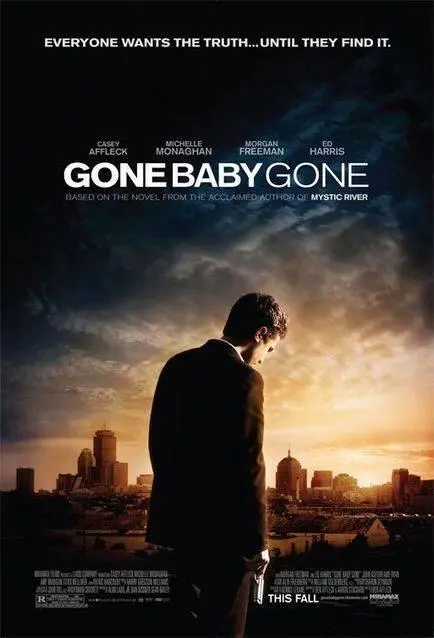
- Название:Gone, Baby, Gone
- Автор:
- Жанр:
- Год:неизвестен
- ISBN:нет данных
- Рейтинг книги:4 / 5. Голосов: 1
-
Избранное:Добавить в избранное
- Отзывы:
-
Ваша оценка:
Gone, Baby, Gone: краткое содержание, описание и аннотация
Предлагаем к чтению аннотацию, описание, краткое содержание или предисловие (зависит от того, что написал сам автор книги «Gone, Baby, Gone»). Если вы не нашли необходимую информацию о книге — напишите в комментариях, мы постараемся отыскать её.
Gone, Baby, Gone — читать онлайн ознакомительный отрывок
Ниже представлен текст книги, разбитый по страницам. Система сохранения места последней прочитанной страницы, позволяет с удобством читать онлайн бесплатно книгу «Gone, Baby, Gone», без необходимости каждый раз заново искать на чём Вы остановились. Поставьте закладку, и сможете в любой момент перейти на страницу, на которой закончили чтение.
Интервал:
Закладка:
“You did lose the money,” Dempsey said. “We let you play it your way, and this is how it turned out.” He raised his eyebrows at the Lexus as two coroner’s assistants pulled Gutierrez’s body from the driver’s seat and laid it in the black bag they’d spread on the road. “Your Lieutenant Doyle? He’s been on the phone since eight-thirty with the Police Commissioner himself, trying to explain. Last time I saw him, he was trying to stick up for you and your partner. I told him it was a waste of time.”
“What exactly,” Angie said, “was he supposed to do when they opened up on him like that? Have the presence of mind to grab the bag and dive off the cliff with it?”
Dempsey shrugged. “That would have been one alternative, sure.”
“I don’t fucking believe this,” Angie said. Her teeth stopped chattering. “He risked his life for-”
“Miss Gennaro.” Broussard stopped her with a hand on her knee. “Major Dempsey is not saying anything Lieutenant Doyle isn’t going to say.”
“Listen to Detective Broussard, Miss Gennaro,” Dempsey said.
“Someone’s got to take the fall for this cluster fuck,” Broussard said, “and I’m elected.”
Dempsey chuckled. “You’re the only one running for the office.”
He left us there and walked over to a group of troopers, speaking into his walkie-talkie as he looked back up at the quarry hills.
“This isn’t right,” Angie said.
“Yes,” Broussard said, “it is.” He flicked his cigarette, smoked down to the filter, into the street. “I fucked up.”
“We fucked up,” Angie said.
He shook his head. “If we still had the money, they could live with Amanda being still missing or dead. But without the money? We look like clowns. And that’s my fault.” He spit into the street, shook his head, and kicked the tire at his feet with the back of his heel.
Angie watched a Forensics tech slide Amanda’s doll into a plastic bag, seal it, and write on the bag with black marker.
“She’s in there, isn’t she?” Angie looked up at the dark hills.
“She’s in there,” Broussard said.
20
When dawn arrived, we were still there as the tow truck pulled the Lexus down Pritchett Street and turned into the rotary toward the expressway.
Troopers moved in and out of the hills, returning with bags filled with shell casings and several shards of bullets recovered from rock face and dug out from tree trunks. One of them had also recovered Angie’s sweatshirt and shoes, but no one seemed to know who that trooper was or what he’d done with them. Over the course of our vigil, a Quincy cop had placed a blanket over Angie’s shoulders, but still she shivered and her lips often looked blue in the combination of streetlights, headlamps, and lights set up to illuminate the crime scene.
Lieutenant Doyle came down from the hills around one and beckoned Broussard with a crooked finger. They walked up the road to the yellow crime scene tape strung around the mill building, and once they’d stopped and squared their shoulders toward each other, Doyle exploded. You couldn’t hear the words, but you could hear volume, and you could see as he jabbed his index finger in Broussard’s face that a “Shucks, we tried” attitude wasn’t informing his mood. Broussard kept his head down through most of it, but it went on a while, a good twenty minutes at least, and Doyle seemed only to get more agitated. When he was spent, Broussard looked up, and Doyle shook his head at him in such a way that even from a distance of fifty yards you could feel the cold finality in it. He left Broussard standing there and walked into the mill building.
“Bad news, I take it,” Angie said, as Broussard bummed another of her cigarettes from the pack sitting on the hood of the car.
“I’m to be suspended sometime tomorrow pending an IAD hearing.” Broussard lit the cigarette and shrugged. “My last official duty will be to inform Helene McCready that we failed to recover her daughter.”
“And your lieutenant,” I said. “The one who approved this operation. What’s his culpability?”
“None.” Broussard leaned against the bumper, sucked back on the cigarette, exhaled a thin stream of blue smoke.
“None?” Angie said.
“None.” Broussard flicked ash into the street. “I take the fall and all the responsibility, admit to covering up pertinent information so I could get all the glory for the collar, and I won’t lose my badge.” He shrugged again. “Welcome to department politics.”
Angie said, “But-”
“Oh, yeah,” Broussard said, and turned to look at her. “The lieutenant made it very clear that if you speak to anyone about this entire affair, he’ll-let me see if I got this-’bury you up to your eyelids in the Marion Socia murder.’”
I looked off at the mill building door where I’d last seen Doyle. “He’s got shit.”
Broussard shook his head. “He never bluffs. If he says he can get you for it, he can.”
I thought about it. Four years ago, Angie and I had killed a pimp and crack dealer named Marion Socia in cold blood under the southeast expressway. We’d used unregistered guns and wiped them clean of prints.
But we’d left a witness, a gangbanger-to-be named Eugene. I never knew his last name, and I’d been pretty sure at the time that if I didn’t kill Socia he’d kill Eugene. Not then, but soon. Eugene, I decided, must have taken a few pinches over the years-a career with Shearson Lehman hadn’t seemed in the kid’s future-and during one of those pinches he must have offered us up in return for a lighter sentence. Given the utter lack of evidence tying us to Socia’s death in any other regard, I’m sure the DA had decided not to follow up, but someone had tucked the information away and passed it along to Doyle.
“He’s got us by the balls, is what you’re saying.”
Broussard glanced at me, then at Angie, and smiled. “Euphemistically speaking, of course. But, yeah. He owns you.”
“Comforting thought,” Angie said.
“This week’s been full of comforting thoughts.” Broussard tossed his cigarette. “I’m going to go find a phone, call my wife, tell her the good news.”
He walked off in the direction of the cops and vans circled around Gutierrez’s Lexus, his shoulders hunched, hands dug in his pockets, his steps just a bit uncertain, as if the ground felt different underfoot than it had half an hour ago.
Angie shuddered against the chill and I shuddered with her.
The divers went back to the quarry as morning rose in gradations of bruised purple and deep pink over the hills, and yellow tape and sawhorses were used to block off Pritchett and Quarry streets as the cops prepared for morning rush hour. A contingent of troopers formed a human barrier to the hills themselves. At 5 A.M., troopers were left stationed at the access points of all major roads, but traffic was allowed to flow through checkpoints, and the highway on and off ramps were opened. Pretty soon, as if they’d been waiting just around the bend, TV news vans and print reporters camped out on the expressway, clogged the breakdown lane, and shone their lights down on us and across at the hills. Several times a reporter called down to Angie to ask why she wasn’t wearing shoes. Several times Angie answered with her head down and her middle finger rising up from where her hands lay on her lap.
At first the reporters had shown up because word had leaked that someone had unloaded a few hundred rounds from an automatic weapon in the Quincy quarries and two corpses had been found on Pritchett Street in what looked like a professional execution. Then, somehow, Amanda McCready’s name slid down off the hills with the dawn breeze, and the circus began.
Читать дальшеИнтервал:
Закладка:
Похожие книги на «Gone, Baby, Gone»
Представляем Вашему вниманию похожие книги на «Gone, Baby, Gone» списком для выбора. Мы отобрали схожую по названию и смыслу литературу в надежде предоставить читателям больше вариантов отыскать новые, интересные, ещё непрочитанные произведения.





Обсуждение, отзывы о книге «Gone, Baby, Gone» и просто собственные мнения читателей. Оставьте ваши комментарии, напишите, что Вы думаете о произведении, его смысле или главных героях. Укажите что конкретно понравилось, а что нет, и почему Вы так считаете.