Michelle Kretser - The Lost Dog
Здесь есть возможность читать онлайн «Michelle Kretser - The Lost Dog» весь текст электронной книги совершенно бесплатно (целиком полную версию без сокращений). В некоторых случаях можно слушать аудио, скачать через торрент в формате fb2 и присутствует краткое содержание. Жанр: Современная проза, на английском языке. Описание произведения, (предисловие) а так же отзывы посетителей доступны на портале библиотеки ЛибКат.
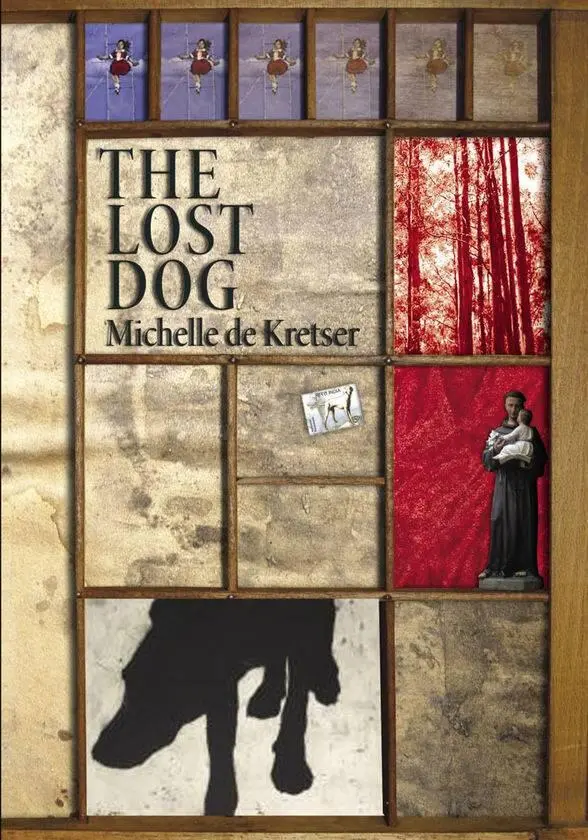
- Название:The Lost Dog
- Автор:
- Жанр:
- Год:неизвестен
- ISBN:нет данных
- Рейтинг книги:5 / 5. Голосов: 1
-
Избранное:Добавить в избранное
- Отзывы:
-
Ваша оценка:
The Lost Dog: краткое содержание, описание и аннотация
Предлагаем к чтению аннотацию, описание, краткое содержание или предисловие (зависит от того, что написал сам автор книги «The Lost Dog»). Если вы не нашли необходимую информацию о книге — напишите в комментариях, мы постараемся отыскать её.
***
‘A captivating read… I could read this book 10 times and get a phew perspective each time. It’s simply riveting.’ Caroline Davison, Glasgow Evening Times
‘… remarkably rich and complex… De Kretser has a wicked, exacting, mocking eye…While very funny in places, The Lost Dog is also a subtle and understated work, gently eloquent and thought-provoking… a tender and thoughtful book, a meditation on loss and fi nding, on words and wordlessness, and on memory, identity, history and modernity.’ The Dominion Post
‘Michelle de Kretser is the fastest rising star in Australia ’s literary firmament… stunningly beautiful.’ Metro
‘… a wonderful tale of obsession, art, death, loss, human failure and past and present loves. One of Australia ’s best contemporary writers.’
Harper’s Bazaar
‘In many ways this book is wonderfully mysterious. The whole concept of modernity juxtaposed with animality is a puzzle that kept this reader on edge for the entire reading. The Lost Dog is an intelligent and insightful book that will guarantee de Kretser a loyal following.’ Mary Philip, Courier-Mail
‘Engrossing… De Kretser confidently marshals her reader back and forth through the book’s complex flashback structure, keeping us in suspense even as we read simply for the pleasure of her prose… De Kretser knows when to explain and when to leave us deliciously wondering.’ Seattle Times
‘De Kretser continues to build a reputation as a stellar storyteller whose prose is inventive, assured, gloriously colourful and deeply thoughtful. The Lost Dog is a love story and a mystery and, at its best, possesses an accessible and seemingly effortless sophistication… a compelling book, simultaneously playful and utterly serious.’ Patrick Allington, Adelaide Advertiser ‘A nuanced portrait of a man in his time. The novel, like Tom, is multicultural, intelligent, challenging and, ultimately, rewarding.’
Library Journal
‘This book is so engaging and thought-provoking and its subject matter so substantial that the reader notices only in passing how funny it is.’ Kerryn Goldsworthy, Sydney Morning Herald
‘… rich, beautiful, shocking, affecting’ Clare Press, Vogue
‘… a cerebral, enigmatic reflection on cultures and identity… Ruminative and roving in form… intense, immaculate.’ Kirkus Reviews
‘De Kretser is as piercing in her observations of a city as Don DeLillo is at his best… this novel is a love song to a city… a delight to read, revealing itself in small, gem-like scenes.’ NZ Listener
‘… de Kretser’s trademark densely textured language, rich visual imagery and depth of description make The Lost Dog a delight to savour as well as a tale to ponder.’ Australian Bookseller and Publisher
‘A remarkably good novel, a story about human lives and the infi nite mystery of them.’ Next
‘Confident, meticulous plotting, her strong imagination and her precise, evocative prose. Like The Hamilton Case, The Lost Dog opens up rich vistas with its central idea and introduces the reader to a world beyond its fictional frontiers.’ Lindsay Duguid, Sunday Times
“[a] clever, engrossing novel… De Kretser’s beautifully shaded book moves between modern day Australia and post-colonial India. Mysteries and love affairs are unfolded but never fully resolved, and as Tom searches for his dog, it becomes apparent that its whereabouts is only one of the puzzles in his life.” Tina Jackson, Metro
‘A richly layered literary text.’ Emmanuelle Smith, Big Issue
The Lost Dog — читать онлайн бесплатно полную книгу (весь текст) целиком
Ниже представлен текст книги, разбитый по страницам. Система сохранения места последней прочитанной страницы, позволяет с удобством читать онлайн бесплатно книгу «The Lost Dog», без необходимости каждый раз заново искать на чём Вы остановились. Поставьте закладку, и сможете в любой момент перейти на страницу, на которой закончили чтение.
Интервал:
Закладка:
Every Sunday she had lunch at Tommy’s, where the toilet seat was lower than her own.Audrey dismissed this as nonsense. ‘There’s a standard measure for everything.’ Iris’s knees knew better.
Upright at last, she looked down at her hands: two plucked birds welded to her walker. Her rings were buried in fl esh. But the cabochon ruby Arthur had bought for a knockdown price from a fellow who once managed a mine in Burma glowed on her fi nger.
Her father had taken one look: ‘Glass.’
Lowering herself onto her bed, Iris sighed. She wriggled her buttocks into position. Swivelled from the waist-slowly, like a tank on manoeuvres-and brought her right leg up, then the left. She reached for the jar beside her bed and began rubbing a herbal cream into the swollen hinges on which verticality depended.
Her bathroom cabinet contained a mess of half-used tubes and jars. Each had marked a station on a path that shimmered before Iris, promising to lead her from pain.
Sometimes Iris would listen to late-night talkback when she returned to her bed; sometimes she reached under her pillow for her rosary. Tonight she lay with her eyes closed and listened to the wind, which was breathing among leaves with the sound of the sea. She thought of miracles, of waking to find her knees strong and supple; of hunger satisfi ed with loaves and little fi shes.
The rain started up its brisk conversation. Standing under a banyan tree, a child looked into an amber mask in the fork of the trunk. A monsoon was crashing in the compound and, ‘Come on,’ shouted Matthew Ho, over the din. ‘Climb up the rain.’
Iris sucked the end of a ringlet; balanced on her right foot, her left. Then she tucked her drenched skirt into her knickers, hoisted herself skywards and began swarming up the ladder of rain.
Friday
Tiny feet fled when Tom entered Nelly’s house. In the kitchen, there was a morse code of mouse shit on the sill, the sink, the table.
He unpacked the car, then sat on the back step with coffee from his thermos. It was shortly after eight; he had risen at four. His mind brimmed with metal and oncoming lights, with images slippery as speed. He concentrated on the stream of his breathing, trying to absorb the saturated calm of the place. Cattle raised their heavy heads to look at him, then lowered them once more to their table. Magpies drove their beaks into the damp earth.
The dish of oats he had left by the steps, partly covered with a piece of masonite, was soggy but undisturbed.
He noticed that his ritual magic had taken a variant turn. His latest revisioning of the scene with the wallaby began by Nelly’s water tank, where, instead of fastening a length of orange polypropylene baling twine to the dog’s collar, he merely clipped on his lead. The wallaby crossed in front of them. The dog bounded into the bush. He reappeared shortly afterwards, shamefaced but unrepentant; his lead, too short to tangle with the undergrowth, dragging through the mud.
The replay was relentless. Tom was learning that disaster is repetitive: animated, yet inert. Offering neither the release of change nor the serenity of detachment, it was merely always there; always terrible.
His purchases the previous day had included builders’ tape and a pocket knife. Short lengths of bright yellow plastic now flagged his passage through the bush.
There were fugitive smells: humus, rotting wood, the pungent green tang he had already remarked.
Tom would call the dog, then listen, straining to hear a whimper, a rustle. But if he was silent and still for too long, he had the impression that something was listening to him. Very quickly, the feeling grew oppressive. It was necessary to keep moving, keep shouting.
Then he saw it: close to the ground, a patch of white. Tom tore and pushed his way through recalcitrant vegetation; came to a standstill at a sack that had once contained superphosphate.
The rain held off all morning, then fell in sheets.
The road from the hills coiled tightly down through forest to the highway. For four or five clenched minutes Tom was tailgated by a truck, until the road widened sufficiently for him to pull over. The monster ground its way past, horn blasting. The air shook. Tom crouched in his car, rain and his heart drumming, and saw the cargo of dead trees rock as the truck took the bend. To his left, the abyss inches from his wheels held the towering calm of mountain ash.
The logging traffic had pocked the road into potholes. A second truck with its consignment of giant pencils passed Tom further down the hill. Water swooshed over his windscreen. Friday afternoon: drivers racing to meet their quotas at the sawmill.
The road broadened and improved when it reached the coastal plain. Paddocks came into view; a windbreak of dark pines. The noteless staves of fences, hymning possession. When a driveway appeared, Tom pulled over; dashed out and dropped a flyer into a letterbox. The sodden fields had the pulled-down look of a bitch who has whelped too often.
Here and there, stringy eucalypts had been allowed to live. They ran counter to Tom’s idea of a tree, which was wide as centuries and differently green. These had failed an audition. They loitered, dusty tree-ghosts; bungled sketches signed God or whatever.
He thought of his progress that morning, the hillocks and gullies he had traversed. There was something humbling about uneven, wooded ground. He realised, peering past his laborious wipers, that it came from the absence of vistas. Here, he was a surveyor of horizons: mastery was in his gaze. There, in the hills, vision came up against the palpable folds and pockets of the earth; was obliged to follow the lie of the land.
Forward motion: it was the engine of settler nations, where there was no past and a limitless future, and pioneers were depicted gazing out across distant expanses. The man in the car remembered, The pleasure of believing what we see / Is boundless, as we wish our souls to be.
He was a citizen of a country that had entered the modern age with a practical demonstration of the superiority of gunpowder over stone. To be impractical on these shores- tender, visionary-was to question the core of that enterprise. Yet the place itself was hardwired for marvels. What was a platypus if not the product of a cosmic abracadabra? So much that was native to Australia seemed to be the invention of a child or a genius. Minds receptive to its example had grown sumptuous with dreaming.
It was true that local characters and scenes slotted effortlessly into a global script. Muscled teenagers in big shorts crowded the nation’s shopping malls. On neat estates where every house replicated its neighbour, young women pushed strollers containing babies of such plush perfection it was difficult to believe they would grow up to eat McDonald’s and pay to have their flesh tanned orange. There was comfort to be derived from this sense that the nation was keeping up with the great elsewhere. What claim does a new world have on our imagination if it falls out of date?
But a stand of eucalypts in a park or the graffiti on an overpass might call up a vision of what malls and rotary mowers had displaced. Australia was LA, it was London; and then it was not. Here there was the sense that everything modern might be provisional: that teenagers, news crews, French fries might vanish overnight like a soap opera with poor ratings. The country shimmered with this unsettling magic, which raised and erased it in a single motion.
The past was not always past enough here. It was like living in a house acquired for its clean angles and gleaming appliances; and discovering a bricked-up door at which, faint but insistent, the sound of knocking could be heard.
Nelly having asked to borrow a copy of The Turn of the Screw , Tom lent her an edition that included a selection of critical commentaries. When she returned it, she said, ‘Do you think we create mysteries because we crave explanations?’
Читать дальшеИнтервал:
Закладка:
Похожие книги на «The Lost Dog»
Представляем Вашему вниманию похожие книги на «The Lost Dog» списком для выбора. Мы отобрали схожую по названию и смыслу литературу в надежде предоставить читателям больше вариантов отыскать новые, интересные, ещё непрочитанные произведения.





Обсуждение, отзывы о книге «The Lost Dog» и просто собственные мнения читателей. Оставьте ваши комментарии, напишите, что Вы думаете о произведении, его смысле или главных героях. Укажите что конкретно понравилось, а что нет, и почему Вы так считаете.