Ben Okri - The Famished Road
Здесь есть возможность читать онлайн «Ben Okri - The Famished Road» весь текст электронной книги совершенно бесплатно (целиком полную версию без сокращений). В некоторых случаях можно слушать аудио, скачать через торрент в формате fb2 и присутствует краткое содержание. Жанр: Современная проза, на английском языке. Описание произведения, (предисловие) а так же отзывы посетителей доступны на портале библиотеки ЛибКат.
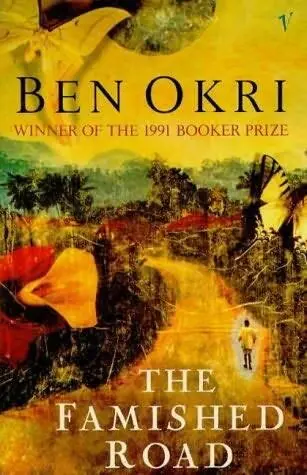
- Название:The Famished Road
- Автор:
- Жанр:
- Год:неизвестен
- ISBN:нет данных
- Рейтинг книги:5 / 5. Голосов: 1
-
Избранное:Добавить в избранное
- Отзывы:
-
Ваша оценка:
The Famished Road: краткое содержание, описание и аннотация
Предлагаем к чтению аннотацию, описание, краткое содержание или предисловие (зависит от того, что написал сам автор книги «The Famished Road»). Если вы не нашли необходимую информацию о книге — напишите в комментариях, мы постараемся отыскать её.
The Famished Road — читать онлайн бесплатно полную книгу (весь текст) целиком
Ниже представлен текст книги, разбитый по страницам. Система сохранения места последней прочитанной страницы, позволяет с удобством читать онлайн бесплатно книгу «The Famished Road», без необходимости каждый раз заново искать на чём Вы остановились. Поставьте закладку, и сможете в любой момент перейти на страницу, на которой закончили чтение.
Интервал:
Закладка:
‘Thismanhasgotastronghead,’theherbalistsaid.‘My medicineusually puts people to sleep before I count to three. Help me carry him to the bed.’
We carried him. Dad snored. After a while the three women got up. Mum talked to them about money. A small argument ensued. Mum loosened the end of her wrapper, counted out some money, and paid the herbalist and the third woman. Madame Koto said to
Mum:
‘We must continue that conversation of ours.’
‘My husband says no,’ Mum said.
‘Ask him again.’
The three women left. It was the first time in three nights that we got any sleep.
THIRTEEN
WHEN DAD WOKE up the next morning he bustled with energy as if nothing had happened to him. His face was still swollen, his eyes almost invisible, his mouth puffed out, but he swore that he felt twenty years younger. He talked of grand schemes. He talked of buying enough corrugated zinc to roof the whole ghetto. He talked of buying enough cement to build houses for all the large families who lived in oneroom. Hespokeof tarringalltheroads andclearingaway alltherubbishthathad accumulated in theconsciousness ofourpeople.Hedreamtofopeningmassivestores that would sell food cheaply to all the poor people. He got us worried when he began to dream of becoming a professional musician. And we started to think that Green Leopard had dislodged something in his brain when he talked of becoming a politician and bringing freedom and prosperity to the world and free education to the poor. And it was when he began to talk loudly about becoming the Head of State, seizing power from the white people that ruled us, and of all the good things he would do for thesufferingpeopleof theworld, that westopped payingtoo much attentionto him.
Then onemorninghewentfromroomtoroom,knockingondoors,wakingpeopleup, and asking them if they would vote for him. Most of them slammed their doors in his face. It was unfortunate that, to humour him, one or two people said that they would. It gave him greater encouragement. He went from compound to compound. He spoke to stall-owners and provision-sellers. He queried the ground-nut hawkers and the urban shepherds and the amulet traders. He had long arguments with palm-wine tappers. He was seen in bars, at night, talking to drunkards, outlininghis policies for government. A new idealism had eaten into his brain with the freshness of his recuperation. He made enquiries about the cost of zinc. He wondered aloud about how long and how wide the ghetto was. He made extensive, illiterate calculations about how much it would cost to build a house, to build schools, about the population of the poor, and how much money he would need to win an election.
He astonished us with the crankiness of his thinking. He conjured an image of a country in which he was invisible ruler and in which everyone would have the highest education, in which everyone must learn music and mathematics and at least five world languages, and in which every citizen must be completely aware of what is going on in the world, be versed in tribal, national, continental, and international events, history, poetry, and science; in which wizards, witches, herbalists and priests of secret religions would be professors at universities; in which bus drivers, cart-pullers, and market women would be lecturers, while still retaining their normal jobs; in which children would be teachers and adults pupils; in which delegations from all the poor people would have regular meetings with the Head of State; and in which there would be elections when there were more than five spontaneous riots in any given year.
Dad began to spend a lot of the money he had won in buying books. He couldn’t read but he bought them. I had to read them to him. He bought books on philosophy, politics, anatomy, science, astrology, Chinese medicine. He bought the Greek and Roman classics. He became fascinated by the Bible. Books on the cabbala intrigued him. He fell in love with the stories of the Arabian Nights. He listened with eyes shut to the strange words of classical Spanish love poetry and retellings of the lives of Shaka the Zulu and Sundiata the Great. He insisted that I read something to him all the time. He forced me to have a double education. In the evenings he would sit on his chair, feet on the table, cigarette in his mouth, eyes misty, paper and pencil beside him, and he would make me read out loud. Occasionally he would interrupt me for an explanation. Most of what I read made no sense to me. So he bought a large dictionary which must have cost him at least ten mighty punches from the fists of the Green Leopard. Dad’s bloated eye twitched when he opened it out on our table, releasing into the air of our room the aroma of words and freshwood. Like a battered but optimistic salesman, he said:
‘This book explains books.’
His passion began to drive us slightly mad. The room became cluttered with books of all sizes, ugly books with pictureless covers and tiny letters as if intended only for the ants to read, large books that broke your back to carry them, books with such sloped lettering that they strained the neck, books which smelt like cobwebs and barks of medicinal trees and old sawdust after rain. Mum complained and sometimes made piles of the books and balanced her basins and cookingpots on them. Dad got furious at her disrespect and they argued bitterly. Then Dad began to contemplate the notion ofcompulsory military serviceforwomen.Then,lookingatme,heincludedchildren. He saw himself both as invisible Head of State and as fitness master. In the mornings he took to drilling us. Whenever we annoyed him in any way he would wake us up very early and take us through exercise routines. Mum obliged at first, even when she was cooking. That was the first time I saw Mum burn an entire pot of soup. We went hungry that day. Mum became exempt from all drilling. Maybe that was when the future notion of joining the army first entered Dad’s head.
He didn’t go to work for days. He went around, driven by the new lights that Green Leopard had knocked into his head. He spoke to the prostitutes at length. He persisted even when they abused him, even when people began to speculate loudly about his strangealliances. Then hetalkedofgettingadelegationofMadameKoto’sprostitutes to go and protest to the Colonial Administration. For three days Mum refused to cook. And Dad, forced to eat beans cooked by hawkers, and brought down by a bout of stomach trouble, gave up the notion of the Council of Prostitutes. But he created a special place for them in his imagined country.
It didn’t take Dad long to realise that he didn’t know what he was talking about. When he tried to organise the men of the area to start clearing up the rubbish along the streets, he was surprised at the ferocity of their insults.
‘Doyouthinkwehavenothingbettertodo?’they said.
Dad, never to be daunted, took to clearing the rubbish himself.
‘We have to clear garbage from our street before we clear it from our minds,’ he said, echoing something he had heard in one of the books.
But when he had cleared a bit of rubbish, and dumped it in the swamp, people would litter the section he had cleaned up. In one week his efforts seemed to have resulted in there being more rubbish around. The street got worse. People began to think it more natural to dump their garbage on the street. Dad quarrelled with them. Those that might have voted for him, few as they were, publicly withdrew their support. After a while they began to see the possibilities of the swamp. Dad had shown them the way. When the street became too cluttered, they emptied their garbage into the swamp. When the rains fell, the swamp grew and covered half the street.
But it was when people took to bringing their problems to him, when they asked him for money, for advice on everything from how to get their children admitted to hospital to how to get books for their youngsters, that Dad realised he couldn’t be a visible or an invisible Head of State just by himself.
Читать дальшеИнтервал:
Закладка:
Похожие книги на «The Famished Road»
Представляем Вашему вниманию похожие книги на «The Famished Road» списком для выбора. Мы отобрали схожую по названию и смыслу литературу в надежде предоставить читателям больше вариантов отыскать новые, интересные, ещё непрочитанные произведения.




Обсуждение, отзывы о книге «The Famished Road» и просто собственные мнения читателей. Оставьте ваши комментарии, напишите, что Вы думаете о произведении, его смысле или главных героях. Укажите что конкретно понравилось, а что нет, и почему Вы так считаете.