Ben Okri - The Famished Road
Здесь есть возможность читать онлайн «Ben Okri - The Famished Road» весь текст электронной книги совершенно бесплатно (целиком полную версию без сокращений). В некоторых случаях можно слушать аудио, скачать через торрент в формате fb2 и присутствует краткое содержание. Жанр: Современная проза, на английском языке. Описание произведения, (предисловие) а так же отзывы посетителей доступны на портале библиотеки ЛибКат.
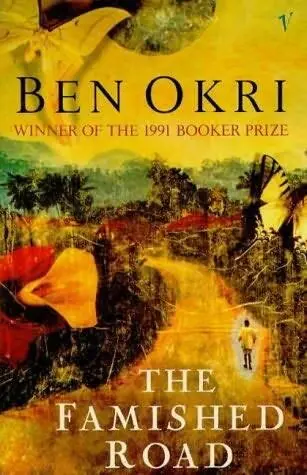
- Название:The Famished Road
- Автор:
- Жанр:
- Год:неизвестен
- ISBN:нет данных
- Рейтинг книги:5 / 5. Голосов: 1
-
Избранное:Добавить в избранное
- Отзывы:
-
Ваша оценка:
The Famished Road: краткое содержание, описание и аннотация
Предлагаем к чтению аннотацию, описание, краткое содержание или предисловие (зависит от того, что написал сам автор книги «The Famished Road»). Если вы не нашли необходимую информацию о книге — напишите в комментариях, мы постараемся отыскать её.
The Famished Road — читать онлайн бесплатно полную книгу (весь текст) целиком
Ниже представлен текст книги, разбитый по страницам. Система сохранения места последней прочитанной страницы, позволяет с удобством читать онлайн бесплатно книгу «The Famished Road», без необходимости каждый раз заново искать на чём Вы остановились. Поставьте закладку, и сможете в любой момент перейти на страницу, на которой закончили чтение.
Интервал:
Закладка:
‘A politician needs friends!’ he announced one morning.
And he began to contemplate a new alliance with Madame Koto. He thought seriously of the importance of information and knowledge. First he dreamt of making me a spy. He wanted me to begin to revisit Madame Koto, to listen to the conversations in the bar, and to find out how to become a politician. We were amazed by Dad’s volte-face. Mum, at first, rebuked him, called him a hypocrite and a coward. But, when she had got rid of some of her vengeance, she openly supported the plan. Sheclearly hadinmindthepossibilitiesofmakingmoney cookingforthegreatrally.
Dad’s next idea was that shortly after I had re-entered Madame Koto’s bar, he would begin his reappearance. His intention was to speak to her customers, to her party supporters and colleagues, learn something about how politics worked, and maybe even win some of them over to his philosophy.
‘You used to hate politics,’ Mum said. ‘What has happened, eh?’
‘I’ve been thinking.’
‘So it took Green Leopard to start you thinking, eh?’
‘Where there’s politics, there’s money,’ Dad said. Mum was silent.
‘We can’t remain poor for ever.’
‘Yes, we can,’ I said.
Dad gave me a vicious stare.
‘In this world,’ he said after a while, ‘this is what happens to you every day if you have nothing.’ He pointed to his swollen face, his puffed-out eyes, his bruised lips.
He paused.
‘But while we are doing these things, spying on Madame Koto, finding out everything, I will continue as I was.’
We didn’t understand him. The subtlety of his campaign eluded us. He didn’t explain. And then, slowly, we realised that Dad’s manner had changed. When he pointed at something he did so with authority, as if distinguishing objects in space for the first time. His eyes were still obscured, so we couldn’t see what new lights dazzled in them. But he was no longer like a demented boxer, spoiling for a challenge to prove himself. He was slowly taking on the manner of a soldier, a commander. Me and Mum and anyone that listened to him were his team. It was a small army; and because we were a captive audience, Dad had his secret stage from which to spring. He filled our lives with a strange excitement. At the time we didn’t know it.
‘You,’ he said, pointing at me, so that I felt myself distinguished from everything else in the universe, ‘you can do what you like, but you also do what I tell you. From today listen carefully to what I say, watch carefully what I do. This life is a joke that is not really a joke. Even mosquitoes know they have to survive.’
FOURTEEN
GRADUALLY WE SAW the subtlety of his campaign. We thought he had changed. He had. But to our chagrin instead of saving the money he had made from the fight, as Mum had suggested, he immediately let it be known that he was throwing a party. He invited the compound people, Madame Koto, the blind old man, Ade’s father, and the herbalist who had treated him. The word went round that the man who had conquered GreenLeopardwashavingaparty tocelebratehisvictory.Dadinvited only a few people, but the whole world came.
It was meant to be an intimate party. Dad ordered some drinks and got Mum to fry three chickens. While Mum fried the chicken, coughing from all the smoke, Dad kept appearing and walking off with his favourite pieces. A fourth chicken had to be ordered, which I fried, because Mum said she’d had enough of the smoke. Dad confined himself to a steady consumption of beer.
‘You used to drink ogogoro,’ Mum said.
‘Lifegets better,’ replied Dad, openinganother bottle.
When I had finished with the frying and the burning of the chicken, I was sent to go and hire some chairs. When I came back with the chair-hire man, as we called him, Dad was outside, at the housefront, sweating. He had been training again. We piled the folding chairs in front of our room and Mum, grumbling, paid the chair-hire man, who asked if he too could attend the party.
‘It’s a small event,’ Mum said.
‘Good, so I can come with my wife.’
Mum had no choice but to give her consent. At the housefront Dad had begun to stride up and down the street, bare-chested, his battered gloves on, calling himself the champion of the world, and inviting all challengers. He was quite drunk and he boasted with a fury I never knew he had. He said he could beat five Green Leopards. He said he could kill three lions with his bare hands. He announced that he could knockouttentreesanddestroy abuildingwithasinglepunch.
‘Isn’t that the man who humbled the Green Leopard?’ asked Mr. Chair-Hire.
‘Yes.’
‘Excellent.Iwillcomeandenjoy hisparty.Iwillbringallmy friends.’
And he hurried off to attend to his business. Dad went on raving. He boasted with such ferocity, lashing out with such energy, and sweating so profusely, that his drunkenness soon left him and he had to keep going into the room to replenish his intoxication with bottles of beer. When he returned and resumed his furious boasting Madame Koto’s car drove past. The driver slowed down to listen to him.
‘As I was saying, I can destroy a house with only one punch! I can lift a car with one finger. If the car is coming at me I can put out one hand and the car will stop. I can build a road in one day!’
The driver laughed.
‘I can punch a man so hard’, Dad shouted, ‘that all he will be able to do is laugh for the rest of his life.’
The driver took the hint and moved on. When Dad had spent himself with training and shouting, and no one took up his challenge for a battle, he went in, had a bath, and prepared for the party.
The evening came slowly. On the road I watched as the forest darkened. Flocks of white birds settled on the topmost branches of the trees. Madame Koto and her driver went past severaltimes,carryingcartonsofbeer,boxesofpaperplatesandnapkins.I watched also as the women of her bar helped with pilingup hired chairs. Preparations for the great rally were underway. There was now a general fever of anticipation about the event. Those who swore they wouldn’t attend it had changed their minds. Its promise of spectacle, the numbers of popular musicians appearing, the hints that money would be distributed to the crowd, the talk even of witnessing free films, made the staunchest opponents waver.
Ade’s father, his two wives, and Ade himself, were the first to turn up for Dad’s modest celebrations. We opened a few folding chairs for them and poured them drinks. Dad talked to Ade’s father about politics. Mum talked to the wives about opening shops and trading in the market. I talked with Ade about Dad wantingto be Head of State.
Then the blind old man turned up with his accordion and his helper. After them came Madame Koto, her stomach massive, her face sad. And after her were the herbalist and her silent, distrustful acolytes. Behind them came the compound people, with their children. We ran out of chairs. The room was already crowded. People carried on turning up. We didn’t recognise many of them. Traders, lorry-drivers, clerks, stall-owners, hawkers, bicycle-repairers, the carpenter and his colleagues. The party spilled out of the room and into the passage. By this time the room was excruciatingly stuffy and hot. Flies buzzed over the drinks and settled on our sweating brows. Someone tried to open the window, applied too much force, and practically destroyed it. The carpenter promised to fix it for free. The blind old man supplied music from his vile accordion.
Meanwhile, outside, the problem of those who turned up, uninvited, to the party grewworse.They clamouredandraisedaterribledinalongthepassage.WhenIfeltI was going to suffocate inside, from the sweat and the old man’s music, I struggled to get out. I was shocked at the size of the crowd. Dad’s modest party had been overrun by trampswhosehairwasthebreedinggroundofliceandsproutingrubbish,andwho stank; by the wretched and the hungry and the homeless, all of whom had such defiant and intense eyes that I felt they would pounce on anyone who dared ask them to leave; by the deformed, whose legs looked like the letter K, whose mouths always seemed to be dribbling, whose rickety feet were turned somewhat backwards; by weary ghetto-dwellers, people I had seen sitting outside mechanics’ workshops dreaming about sea-journeys, people I had seen in the streets or at the markets, faces worn, eyes yellowish.Therewerehandsomeyoungmenwhobroughttheirgirlfriends, women of unknown histories, old men and women who looked like all the old people I had ever seen. There were people in black habits, with wizened faces, eyes bright like royal jaguars, chests and arms covered with spells and amulets. There were also people long rumoured to be witches and wizards. I could recognise them instantly by their anti-smells and by the way they didn’t want anyone to touch them. They always stayed on their own. I stared at one of the wizards intently. He stared back at me. Then he began coming towards me. When I turned to run, I heard a dog barking. When I looked again thewizard had goneand adogstoodinhisplace.Itwasawhite dogwith green eyes.
Читать дальшеИнтервал:
Закладка:
Похожие книги на «The Famished Road»
Представляем Вашему вниманию похожие книги на «The Famished Road» списком для выбора. Мы отобрали схожую по названию и смыслу литературу в надежде предоставить читателям больше вариантов отыскать новые, интересные, ещё непрочитанные произведения.




Обсуждение, отзывы о книге «The Famished Road» и просто собственные мнения читателей. Оставьте ваши комментарии, напишите, что Вы думаете о произведении, его смысле или главных героях. Укажите что конкретно понравилось, а что нет, и почему Вы так считаете.