Iain Banks - The Crow Road
Здесь есть возможность читать онлайн «Iain Banks - The Crow Road» весь текст электронной книги совершенно бесплатно (целиком полную версию без сокращений). В некоторых случаях можно слушать аудио, скачать через торрент в формате fb2 и присутствует краткое содержание. Год выпуска: 1992, Жанр: Современная проза, на английском языке. Описание произведения, (предисловие) а так же отзывы посетителей доступны на портале библиотеки ЛибКат.
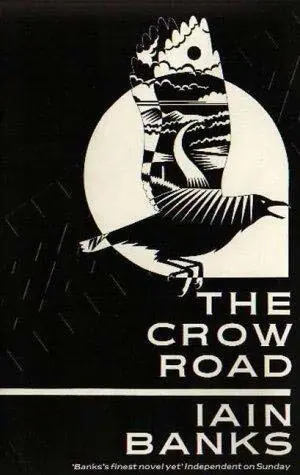
- Название:The Crow Road
- Автор:
- Жанр:
- Год:1992
- ISBN:нет данных
- Рейтинг книги:5 / 5. Голосов: 1
-
Избранное:Добавить в избранное
- Отзывы:
-
Ваша оценка:
The Crow Road: краткое содержание, описание и аннотация
Предлагаем к чтению аннотацию, описание, краткое содержание или предисловие (зависит от того, что написал сам автор книги «The Crow Road»). Если вы не нашли необходимую информацию о книге — напишите в комментариях, мы постараемся отыскать её.
The Crow Road — читать онлайн бесплатно полную книгу (весь текст) целиком
Ниже представлен текст книги, разбитый по страницам. Система сохранения места последней прочитанной страницы, позволяет с удобством читать онлайн бесплатно книгу «The Crow Road», без необходимости каждый раз заново искать на чём Вы остановились. Поставьте закладку, и сможете в любой момент перейти на страницу, на которой закончили чтение.
Интервал:
Закладка:
Music played behind Rory. He balanced the empty whisky glass on the window-sill and gave his nose a last wipe, pocketing his hanky. He supposed he'd better go back into the ballroom. Ballroom; he hated the word. He hated the music they were playing — Highland stuff, mostly — he hated being here in this dull, wet town, with these dull people listening to their dull music at their dull wedding. They should be playing the Beatles or the Rolling Stones, and they shouldn't be getting married in the first place — modern people didn't.
"Heeee-yooch!" a voice shouted, startlingly nearby, making Rory jump. The curtains bowed in a few yards away, almost touching the window-sill, the movement like a wave. Rory could hear the stamping, slapping feet move in time to the fiddles and accordions as they played a jig. People were clapping, shouting out. God, it was all so provincial.
Rory straightened his tie, and with his whisky still burning in his throat, and now his stomach too, he moved along to the gap in the curtains and slid through, back into the ballroom, where people sat drinking at long wooden tables and groups of dancers went whirling round in complicated, ever-changing patterns, all flowing dresses and clasping hands and big red sweaty faces and white shirts and ties and narrow trousers or — even worse — kilts.
Rory moved near the stage, behind the tables where Kenneth and Mary sat, talking to mum. Boring Hamish and the horse-resembling Antonia were on the floor, him in a kilt, her still in her white bridal gown, both dancing badly and out of time, but seemingly thoroughly enjoying themselves.
"Well," he heard his mum saying, "you two had better get a move on, or Hamish and Antonia will beat you to it." She laughed and drank from her glass. She wore a hat. Rory hated his mother in a hat. He thought she sounded drunk. Kenneth and Mary smiled uncertainly at each other.
"Well, mum," Kenneth said, sitting back, filling his pipe. "We have been practising."
"Kenneth!" his wife said quietly.
Mum shook her head. "Ah, don't mind me; plenty of time yet, I dare say." She looked into her empty glass. "I wouldn't be missing grandchildren so much, but… " She shrugged. There was an awkward silence between the three people then, while the music played and the dancers whooped and shouted and clapped and stamped. Rory saw his mother's shoulders move once, and she put her head down for a second, sniffed. She reached down for her handbag on the floor. Kenneth handed her his hanky. He put his arm round his mum's shoulders. Mary moved her seat closer, reached out and took one of the older woman's hands in hers.
"God, I miss that old devil," mum said, and blew her nose. Eyes bright with tears, she looked at Mary, and then saw Rory standing behind and to one side of them. "Rory," she said, trying to sound all right. We wondered where you were. Are you enjoying yourself, darling?"
Yes," he lied. He hated her calling him "darling'. He stayed where he was because he didn't want to get close enough for them to smell his breath. His mother smiled.
"Good lad. See if you can find your cousin Sheila; you said you'd ask her to dance, remember?"
"Yeah, all right," he said, turning away.
He didn't like boring cousin Sheila, either. She was about the only girl here who was his own age. It was horrible being this age when nobody else was; they were all either adults or children. He blamed his parents. Mostly he blamed his dad. If he'd looked after himself, not had a heart attack, he'd still be around. That was how thoughtless he'd been. Rory supposed it was the same thoughtlessness that had made dad and mum have him so much later than the rest of their children. People just didn't think, that was the trouble.
He didn't go looking for Sheila. He decided to go wandering. He would slip away. He had always liked slipping away from things. At parties he would just quietly leave when nobody was watching him, so that only much later would anybody wonder where he was. When he was out with a group of other kids, playing kick-the-can or soldiers, he would often sneak away, so that they would never find him, or think he had fallen down a hole or into a burn or a loch. It was a wonderful feeling, to disappear like that; it made him feel different and special. He gloried in the cunningness of it, the feeling of having outwitted the others, of knowing what they did not; that he was out and away and they were back there where he'd left them, ignorantly worrying where he was, searching; wondering.
He slunk out through the doors while they were clapping the band after finishing one of their noisy, interminable Highland dances.
It was cooler in the lobby. He drew himself upright and walked confidently through the bit of the lobby that gave onto the Cocktail Lounge, where ruddy-faced men stood panting and laughing, sleeves rolled up, ties loose, queuing for drinks or holding trays of them, laughing loudly in deep voices.
He went through another set of doors, down some steps, round a corner, and found the hotel's single small lift. He pulled both sets of gates open with an effort, entered, then closed them again. The lift was a little bigger than a phone box. He pressed the brass button for the top floor. The lift jerked into motion and set off, humming. The white-washed walls of the lift shaft moved smoothly downwards as the lift ascended. Stencilled letters painted inside the shaft said 1st Floor… 2nd Floor… God, he thought, Americans must think they're in the Stone Age when they come to stay in a place like this.
He felt ashamed.
The top floor was boring. He went from one end to the other of the U-shaped hotel, up and down steps that marked the boundaries of the three separate buildings that made up the Steam Packet Hotel. There were no windows; only skylights, each spattered with rain drops and lined with little rivulets of running water. He'd been hoping for windows, and a view over the bay or the town.
He trod the corridors again, looking for an unlocked door. Maybe the maids would have left some of the rooms open, if there was nobody staying in them just now. He tried a few handles. The only open door led to a broom cupboard.
Then at the next door he heard giggling. He looked at the number. It was room 48. 48 was a good number; not as good as 32 or 64, but better than, say, 49, and much better than 47 (though that was interesting too because it was a prime). The very best numbers were numbers like 20, 23, 30, 40, 57, 75, 105 and 155. Calibre numbers; gun numbers. Those were luckiest. But 48 was all right.
More giggling. He looked back down the corridor, then crouched and looked through the key-hole. It was a bit cliched, but what did people expect in a boring hotel like this in a boring town like this in a boring country like this? It was all you could do.
There was no key in the lock, so he could see in through the big old-fashioned key-hole. He saw a large dressing table sitting in a broad bay window. The dressing-table held a big, tippable mirror, and most of the rest of the room was visible in it. In the mirror Rory saw his sister Fiona, and then Fergus Urvill. They were making the big double bed.
Fiona still wore her peach-coloured bridesmaid's dress, very long and smooth-looking. There were flowers in her hair, which made her look quite good. Rory suspected she looked so good because she didn't live here any more; she lived in London, and Aunt Ilsa had got her a job working for a television company. Fiona sold time to people. That was how she put it. She sold advertising space. She sold time. Rory thought that sounded pretty interesting.
Fergus Urvill was on the other side of the bed, dressed in a kilt, shirt and waistcoat. Rory knew Fergus was aged with Kenneth, but somehow he always seemed older. Maybe it was because he had gone to a private high school. Rory didn't really know Fergus Urvill very well; although he did sometimes visit Lochgair, he spoke differently — posher — and seemed to spend a lot of his time shooting at birds and animals with other rich people.
Читать дальшеИнтервал:
Закладка:
Похожие книги на «The Crow Road»
Представляем Вашему вниманию похожие книги на «The Crow Road» списком для выбора. Мы отобрали схожую по названию и смыслу литературу в надежде предоставить читателям больше вариантов отыскать новые, интересные, ещё непрочитанные произведения.







Обсуждение, отзывы о книге «The Crow Road» и просто собственные мнения читателей. Оставьте ваши комментарии, напишите, что Вы думаете о произведении, его смысле или главных героях. Укажите что конкретно понравилось, а что нет, и почему Вы так считаете.