Margaret Atwood - The Robber Bride
Здесь есть возможность читать онлайн «Margaret Atwood - The Robber Bride» весь текст электронной книги совершенно бесплатно (целиком полную версию без сокращений). В некоторых случаях можно слушать аудио, скачать через торрент в формате fb2 и присутствует краткое содержание. Год выпуска: 1993, Жанр: Современная проза, на английском языке. Описание произведения, (предисловие) а так же отзывы посетителей доступны на портале библиотеки ЛибКат.
- Название:The Robber Bride
- Автор:
- Жанр:
- Год:1993
- ISBN:нет данных
- Рейтинг книги:5 / 5. Голосов: 1
-
Избранное:Добавить в избранное
- Отзывы:
-
Ваша оценка:
The Robber Bride: краткое содержание, описание и аннотация
Предлагаем к чтению аннотацию, описание, краткое содержание или предисловие (зависит от того, что написал сам автор книги «The Robber Bride»). Если вы не нашли необходимую информацию о книге — напишите в комментариях, мы постараемся отыскать её.
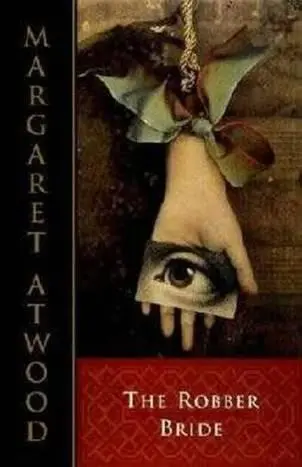
Even Zenia’s name is enough to provoke the old sense of outrage, of humiliation and confused pain. The truth is that at certain times—early mornings, the middle of the night—she finds it hard to believe that Zenia is really dead.’ Zenia is beautiful, smart and greedy; by turns manipulative and vulnerable, needy and ruthless; a man’s dream and a woman’s nightmare. She is also dead. Just to make absolutely sure Tony, Roz and Charis are there for the funeral. But five years on, as the three women share a sisterly lunch, the impossible happens: ‘with waves of ill will flowing out of her like cosmic radiation’, Zenia is back ...
This is the wise, unsettling, drastic story of three women whose lives share a common wound: Zenia, a woman they first met as university students in the sixties. Zenia is smart and beautiful, by turns manipulative, vulnerable—and irresistible. She has entered into their separate lives to ensnare their sympathy, betray their trust, and exploit their weaknesses. Now Zenia, thought dead, has suddenly reappeared. In this richly layered narrative, Atwood skilfully evokes the decades of the past as she retraces three women’s lives, until we are back in the present—where it’s yet to be discovered whether Zenia’s ‘pure, free-wheeling malevolence’ can still wreak havoc.
reports from the farthest reaches of the sex wars and is one of Margaret Atwood’s most intricate and subversive novels yet.
Exploring the paradox of female villainy, this tale of three fascinating women is another peerless display of literary virtuosity by the supremely gifted author of
and
. Roz, Charis and Tony all share a wound, and her name is Zenia. Beautiful, smart and hungry, by turns manipulative and vulnerable, needy and ruthless, Zenia is the turbulent center of her own neverending saga. She entered their lives in the sixties, when they were in college. Over the three decades since, she has damaged each of them badly, ensnaring their sympathy, betraying their trust, and treating their men as loot. Then Zenia dies, or at any rate the three women—with much relief -- attend her funeral. But as
begins, Roz, Charis and Tony have come together at a trendy restaraunt for their monthly lunch when in walks the seemingly resurrected Zenia...
In this consistently entertaining and profound new novel, Margaret Atwood reports from the farthest reaches of the war between the sexes with her characteristic well-crafted prose, rich and devious humor, and compassion.
The Robber Bride — читать онлайн бесплатно полную книгу (весь текст) целиком
Ниже представлен текст книги, разбитый по страницам. Система сохранения места последней прочитанной страницы, позволяет с удобством читать онлайн бесплатно книгу «The Robber Bride», без необходимости каждый раз заново искать на чём Вы остановились. Поставьте закладку, и сможете в любой момент перейти на страницу, на которой закончили чтение.
Интервал:
Закладка:
Roz can see that she will never be prettier, daintier, thinner, sexier, or harder to impress than these girls are. She decides instead to be smarter, funnier, and richer, and once she has managed that they can all kiss her fanny. She takes to making faces; she resorts to the old rudeness of Huron Street, to get attention. Soon she has bulldozed a place for herself in the group: she is the joker. At the same time, she imitates. She picks up their accents, their intonations, their vocabulary; she adds layers of language to herself, sticking them on like posters on a fence, one glued over the top of the next, covering up the bare boards. As for the clothes, as for the accessories, those can be studied.
Roz made it through high school, which was not exactly an abode of bliss, understatement of the year. Much later she’d discovered—at a class reunion she couldn’t resist, because she had a great outfit for it and wanted to show off—that most of the other girls there had been as miserable as she was. Nor could they credit her own distress. “You were always so cheerful,” they said.
After high school Roz went to university. She took Art and Archaeology, which her father didn’t consider practical but which came in handy later in the renovation business; you never knew which little doodads from the past could be recycled. She arranged to live in residence, even though, as her mother pointed out, she had a perfectly good home to live in. But she wanted out, she wanted out from under, and she got her father to spring for it by threatening to run away to Europe or to some other university a million miles away unless he did. She picked McClung Hall because it was non-denominational. By that time she had dumped her excess Jewishness overboard, along with her excess Catholicism. Or so she thought. She wanted to travel light, and was happiest in a mixed bag.
The day Roz got her degree her father took her out for a treat, along with her mother and her increasingly seedy uncles. They went to a fancy restaurant where the menu was in French, with the English in small print underneath. For dessert there was ice cream, in various French flavours: cassis, fraise, citron, pistache.
“French was not one of my passports,” said Uncle Joe. “I’ll have the pastiche.”
That was me, thinks Roz. I was the pastiche.
A long time later, after Roz was a married woman, after her mother had died—slowly and disapprovingly, since death was immodest, male doctors prying into your body being next door to sin—and after her father had followed, in jerky, painful stages, like a train shunting—after all this had happened and Roz was an orphan, she found out about the money. Not the later money, she knew about that; the first money. The root, the seedling, the stash.
She’d gone to visit Uncle George in the hospital, because he too was dying. He didn’t have a room of his own, or even a semi-private; he was in a ward. Neither of the uncles had done well at all. Both had ended up in rooming houses. After blowing their own money, they’d blown some of Roz’s father’s as well. They’d gambled, they’d borrowed; or they’d called it borrowing, though everyone must have known they would never pay it back. But her father never said no, to any request of theirs.
“It’s the Prostrate:’ Uncle Joe told her, over the phone.
“Better you shouldn’t mention it:” So Roz didn’t, because the uncles too had their areas of modesty. She took flowers, and a vase to put them in because hospitals never had vases; she put on a bright smile and a bustling, efficient manner, but she dropped both immediately when she saw how terrible Uncle George looked. He was shrivelled away, he was wasted. Already his head was a skull. Roz sat beside him, inwardly mourning. The man in the bed next to him was asleep and snoring.
“That one, he’s not going anyplace,” said Uncle George, as if he himself had plans.
“You want a private room?” said Roz. She could arrange it for him, easy.
“Nah,” said Uncle George. “I like the company. I like to have people. You know? Anyway, it costs a bundle. I never had the talent:”
“The talent for what?” said Roz.
“Not like your father,” said Uncle George. “He could start in the morning with a dollar, end of the day he’d have five. Me, I’d always just take that dollar and put it on a horse. I was more for the good times.”
“Where did he get it?” said Roz.
Uncle George looked at her out of his wizened yellow eyes. “Get what?” he said innocently, craftily.
“The first dollar,” said Roz. “What did the three of you really do, in the war?”
“You don’t need to know that,” said Uncle George.
“I do,” said Roz. “It’s okay, he’s dead now. You can tell me, you’re not going to hurt my feelings.”
Uncle George sighed. “Yeah, well,” he said. “It’s a long time ago.
„
“It’s me who’s asking,” said Roz, having heard the uncles use this expression on each other, always with effect.
“Your father was a fixer,” said Uncle George. “He fixed things. He was a fixer before the war, he was a fixer in the war, and after the war he was also—a fixer.”
“What did he fix?” said Roz. She took it he didn’t mean broken refrigerators.
“To tell you the truth,” says Uncle George slowly, “your father was a crook. Don’t get me wrong, he was a hero, too. But if he hadn’t of been a crook, he couldn’t of been a hero. That’s how it was.”
“A crook?” said Roz.
“We was all crooks,” said Uncle George patiently. “Everybody was a crook. They was stealing, all kinds of things, you wouldn’t believe—paintings, gold, stuff you could hide and sell later. They could see how it was going, at the end they was grabbing anything. Every time there’s a war, people steal. They steal whatever they can. That’s what a war is—a war is stealing. Why should we be any different? Joe was the inside man, I was the driver, your father, he did the planning. When we would move, who to trust. Without him, nothing.
“So, we’d get it out for them—not legal, with laws like they had I don’t need to tell you—but we’d bribe the guards, everyone was on the take. Hide it somewhere safe, till after the war. But how did they know what was what, how did they know where we were putting it? So we kept some things back, for ourselves. Took it to different places. Picked it up afterwards. Some of them was dead, too, so we got theirs.”
“That’s what he did?” said Roz. “He helped the Nazis?”
“It was dangerous,” said Uncle George reproachfully, as if danger was the main justification. “Sometimes we took out stuff we weren’t supposed to take. We took out Jews. We had to be careful, go through our regulars. They let us do it because if. we was caught, it was their neck too. Your father never pushed it too hard though. He knew when it was too dangerous. He knew when to stop:”
“Thank you for telling me,” Roz said.
“Don’t thank me,” Uncle George said. “Like I told you, he was a hero. Only, some wouldn’t understand:” He was tired; he closed his eyes. His eyelids were delicate and crinkled, like wet crepe paper. He raised two thin desiccated fingers, dismissing her.
Roz made her way out through the white tiled maze of the hospital, heading for home and a stiff drink. What was she to conclude froin all this, her new, dubious knowledge? That her money is dirty money, or that all money is? It’s not her fault, she didn’t do it, she was just a child. She didn’t make the world. But she still has a sense of hands, bony hands, reaching up from under the earth, tugging at her ankles, wanting back what’s theirs. And how old are those hands? Twenry, thirty years, or a thousand, two thousand? Who knows where money has been? Wash your hands when you touch it, her mother used to say. It’s riddled with germs.
Читать дальшеИнтервал:
Закладка:
Похожие книги на «The Robber Bride»
Представляем Вашему вниманию похожие книги на «The Robber Bride» списком для выбора. Мы отобрали схожую по названию и смыслу литературу в надежде предоставить читателям больше вариантов отыскать новые, интересные, ещё непрочитанные произведения.

Обсуждение, отзывы о книге «The Robber Bride» и просто собственные мнения читателей. Оставьте ваши комментарии, напишите, что Вы думаете о произведении, его смысле или главных героях. Укажите что конкретно понравилось, а что нет, и почему Вы так считаете.