Margaret Atwood - The Robber Bride
Здесь есть возможность читать онлайн «Margaret Atwood - The Robber Bride» весь текст электронной книги совершенно бесплатно (целиком полную версию без сокращений). В некоторых случаях можно слушать аудио, скачать через торрент в формате fb2 и присутствует краткое содержание. Год выпуска: 1993, Жанр: Современная проза, на английском языке. Описание произведения, (предисловие) а так же отзывы посетителей доступны на портале библиотеки ЛибКат.
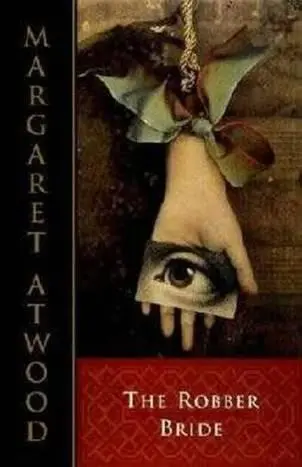
- Название:The Robber Bride
- Автор:
- Жанр:
- Год:1993
- ISBN:нет данных
- Рейтинг книги:5 / 5. Голосов: 1
-
Избранное:Добавить в избранное
- Отзывы:
-
Ваша оценка:
The Robber Bride: краткое содержание, описание и аннотация
Предлагаем к чтению аннотацию, описание, краткое содержание или предисловие (зависит от того, что написал сам автор книги «The Robber Bride»). Если вы не нашли необходимую информацию о книге — напишите в комментариях, мы постараемся отыскать её.
Even Zenia’s name is enough to provoke the old sense of outrage, of humiliation and confused pain. The truth is that at certain times—early mornings, the middle of the night—she finds it hard to believe that Zenia is really dead.’ Zenia is beautiful, smart and greedy; by turns manipulative and vulnerable, needy and ruthless; a man’s dream and a woman’s nightmare. She is also dead. Just to make absolutely sure Tony, Roz and Charis are there for the funeral. But five years on, as the three women share a sisterly lunch, the impossible happens: ‘with waves of ill will flowing out of her like cosmic radiation’, Zenia is back ...
This is the wise, unsettling, drastic story of three women whose lives share a common wound: Zenia, a woman they first met as university students in the sixties. Zenia is smart and beautiful, by turns manipulative, vulnerable—and irresistible. She has entered into their separate lives to ensnare their sympathy, betray their trust, and exploit their weaknesses. Now Zenia, thought dead, has suddenly reappeared. In this richly layered narrative, Atwood skilfully evokes the decades of the past as she retraces three women’s lives, until we are back in the present—where it’s yet to be discovered whether Zenia’s ‘pure, free-wheeling malevolence’ can still wreak havoc.
reports from the farthest reaches of the sex wars and is one of Margaret Atwood’s most intricate and subversive novels yet.
Exploring the paradox of female villainy, this tale of three fascinating women is another peerless display of literary virtuosity by the supremely gifted author of
and
. Roz, Charis and Tony all share a wound, and her name is Zenia. Beautiful, smart and hungry, by turns manipulative and vulnerable, needy and ruthless, Zenia is the turbulent center of her own neverending saga. She entered their lives in the sixties, when they were in college. Over the three decades since, she has damaged each of them badly, ensnaring their sympathy, betraying their trust, and treating their men as loot. Then Zenia dies, or at any rate the three women—with much relief -- attend her funeral. But as
begins, Roz, Charis and Tony have come together at a trendy restaraunt for their monthly lunch when in walks the seemingly resurrected Zenia...
In this consistently entertaining and profound new novel, Margaret Atwood reports from the farthest reaches of the war between the sexes with her characteristic well-crafted prose, rich and devious humor, and compassion.
The Robber Bride — читать онлайн бесплатно полную книгу (весь текст) целиком
Ниже представлен текст книги, разбитый по страницам. Система сохранения места последней прочитанной страницы, позволяет с удобством читать онлайн бесплатно книгу «The Robber Bride», без необходимости каждый раз заново искать на чём Вы остановились. Поставьте закладку, и сможете в любой момент перейти на страницу, на которой закончили чтение.
Интервал:
Закладка:
If Miss Hines wasn’t in her room Roz would have a look inside her clothes closet, but Miss Hines didn’t have very many clothes and the ones she did have were navy blue and brown and grey. Miss Hines was a Catholic, but she had only one holy picture: the Virgin Mary, with the Baby Jesus in her lap, and John the Baptist, wearing fur because he would later live in the desert. The Virgin Mary always looked sad in pictures, except when Jesus was a baby. Babies were the one thing that cheered her up. Jesus, like Roz, was an only child; a sister would have been nice for him. Roz intended to have both kinds when she grew up. ‘
On the ground floor there was one bedroom that used to be the dining room. Mr. Carruthers lived in there. He was an old man with a pension; he’d been in the war, but it was a different one. He’d been wounded in the leg so he walked with a cane, and he still had some of the bullets inside him. “See this leg?” he’d say to Roz. “Full of shrapnel. When they run out of iron they can mine this leg:” It was the one joke he ever made. He read the newspapers a lot. When he went out, he went to the Legion to visit with his pals. He sometimes came back three sheets to the wind, said Roz’s mother. She couldn’t stop that, but she could stop him from drinking in his room.
The roomers were not allowed to eat in their rooms or drink either, except water. They couldn’t have hotplates because they might burn down the house. The other thing they couldn’t do was smoke. Mr. Carruthers did, though. He opened the window and blew the smoke out of it, and then flushed the butts down the toilet. Roz knew this, but she didn’t tell on him. She was a little afraid of him, of his bulgy face and grey bristling moustache and clumping shoes and beery breath, but also she didn’t want to tell, because telling on people was ratting, and the girls who did it at school were despised.
Was Mr. Carruthers a Protestant or a Catholic? Roz didn’t know. According to Roz’s mother, religion didn’t matter so much in a man. Unless he was a priest, of course. Then it mattered.
Miss Hines and Mr. Carruthers had been there as long as Roz; could remember, but the third roomer, Mrs. Morley, was more recent. She lived in the other second-floor bedroom, down the hall from the one where Roz’s mother slept. Mrs. Morley said she was thirty. She had low-slung breasts and a face tanned with pancake makeup, and black eyelashes and red hair. She worked in Eaton’s cosmetics, selling Elizabeth Arden, and she wore nail polish, and was divorced. Divorce was a sin, according to the nuns.
Roz was fascinated by Mrs. Morley. She let herself be lured into Mrs. Morley’s room, where Mrs. Morley gave her samples of cologne and Blue Grass hand lotion and showed her how to put her hair up in pincurls, and told her what a skunk Mr. Morley had been. “Honey, he cheated on me,” she said, “like there was no tomorrow.” She called Roz “honey” and “sweetie,” which Roz’s mother never did. “I wish I’d of had a little girl,” she’d say, “Just like you,” and Roz would grin with pleasure.
Mrs. Morley had a silver hand mirror with roses on it and her initials engraved on the back: G.M. Her first name was Giadys. Mr. Morley had given her that mirror for their first anniversary. “Not that he meant a word of it,” Mrs. Morley would say as she plucked out her eyebrows. She did this with tweezers, gripping each eyebrow stub and yanking hard. It made her sneeze. She plucked out almost all of them, leaving a thin line in the perfect curved shape of the new moon. It made her look surprised, or else incredulous. Roz would study her own eyebrows in the mirror. They were too dark and bushy, she decided, but she was too young yet to begin pulling them out.
Mrs. Morley still wore her wedding ring and her engagement ring as well, though occasionally she would take them off and put them into her jewel box. “I should just sell them,” she would say; “but I don’t know. Sometimes I still feel married to him, in spite of everything, you know what I mean? You want something to hang onto.” On some weekends she went out on dates, with men who rang the front doorbell and were let inside, grudgingly, by Roz’s mother, and who then had to stand in the vestibule and wait for Mrs. Morley because there was nowhere else for them to go.
Certainly Roz’s mother would not ask them back to sit in the kitchen. She did not approve of them, or of Mrs. Morley in general; though she sometimes let Roz go to the movies with her. Mrs. Morley preferred films in which women renounced things for the sake of other people, or in which they were loved and then abandoned. She followed these plots with relish, eating popcorn and dabbing at her eyes. “I’m a sucker for a good weepie,” she said to Roz. Roz didn’t understand why the things in the movies happened the ways they did, and would have preferred to have seen Robin Hood or else Abbott and Costello, but her mother felt an adult should he present. Things could happen in the flickering, sweet-smelling dark of movie theatres; men could take advantage. This was one subject on which Mrs. Morley and Roz’s mother were in agreement: the advantage men could take.
Roz went through Mrs. Morley’s jewel box when she wasn’t there, although she was careful not to move anything out of its place. It gave her a feeling of pleasure, not just because the things were pretty—they weren’t real jewels, most of them, they were costume jewellery, rhinestones and glass—but because there was something exciting about doing this. Although the brooches and earrings were exactly the same when Mrs. Morley wasn’t there as when she was, they seemed different in her absence—more alluring, secretive. Roz looked w into the closet as well: Mrs. Morley had many brightly coloured dresses, and the high-heeled shoes that went with them. When she was feeling more than normally daring Roz would slip on the shoes and hobble around in front of the mirror on Mrs. Morley’s closet door. The pair she liked best had sparkling clips on the toes that looked as if they were made of diamonds. Roz thought they were the height of glamour.
Sometimes there would be a little pile of dirty underwear in the corner of the closet, just thrown in there, not even put into a laundry bag: brassieres, stockings, satin slips. These were the things Mrs. Morley washed out by hand in the bathroom sink and draped over the radiator in her room to dry. But she should have picked them up off the floor first, as Roz had to do. Of course Mrs. Morley was a Protestant, so what could you expect? Roz’s mother would have liked to have had nobody in her rooming house except Catholics, nice clean well-behaved Catholic ladies like Miss Hines, but beggars couldn’t be choosers and in such times you had to take what you could get.
Roz had a round face and dark straight hair and bangs, and she was big for her age. She went to Redemption and Holy Spirit, which used to be two schools but now just had two names, and the nuns in their black-and-white habits taught her to read and write and sing and pray, with white chalk on a black blackboard and a ruler across the knuckles if you got out of line.
Catholics were the best thing because you would go to Heaven when you died. Her mother was a Catholic too, but she didn’t go to church. She would take Roz there and push her towards the door, but she wouldn’t go in. From the set of her face Roz knew better than to ask why.
Some of the other kids on the street were Protestants, or else Jews; whatever you were, the others chased you on your way home from school, though sometimes the boys might play baseball together. Boys would chase you if you were a girl: the religion didn’t matter then. There were a few Chinese kids as well, and there were also DPs.
The DP kids had the worst time of all. There was a DP girl at Roz’s school: she could hardly speak English, and the other girls whispered about her where she could see them, and said mean things to her, and she would say “What?” Then they would laugh.
Читать дальшеИнтервал:
Закладка:
Похожие книги на «The Robber Bride»
Представляем Вашему вниманию похожие книги на «The Robber Bride» списком для выбора. Мы отобрали схожую по названию и смыслу литературу в надежде предоставить читателям больше вариантов отыскать новые, интересные, ещё непрочитанные произведения.





Обсуждение, отзывы о книге «The Robber Bride» и просто собственные мнения читателей. Оставьте ваши комментарии, напишите, что Вы думаете о произведении, его смысле или главных героях. Укажите что конкретно понравилось, а что нет, и почему Вы так считаете.