Margaret Atwood - The Robber Bride
Здесь есть возможность читать онлайн «Margaret Atwood - The Robber Bride» весь текст электронной книги совершенно бесплатно (целиком полную версию без сокращений). В некоторых случаях можно слушать аудио, скачать через торрент в формате fb2 и присутствует краткое содержание. Год выпуска: 1993, Жанр: Современная проза, на английском языке. Описание произведения, (предисловие) а так же отзывы посетителей доступны на портале библиотеки ЛибКат.
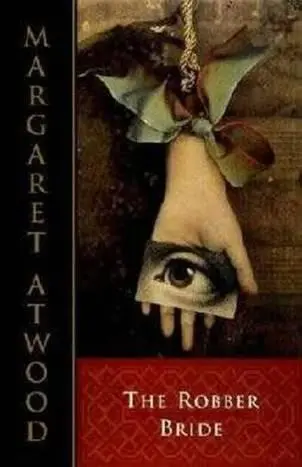
- Название:The Robber Bride
- Автор:
- Жанр:
- Год:1993
- ISBN:нет данных
- Рейтинг книги:5 / 5. Голосов: 1
-
Избранное:Добавить в избранное
- Отзывы:
-
Ваша оценка:
The Robber Bride: краткое содержание, описание и аннотация
Предлагаем к чтению аннотацию, описание, краткое содержание или предисловие (зависит от того, что написал сам автор книги «The Robber Bride»). Если вы не нашли необходимую информацию о книге — напишите в комментариях, мы постараемся отыскать её.
Even Zenia’s name is enough to provoke the old sense of outrage, of humiliation and confused pain. The truth is that at certain times—early mornings, the middle of the night—she finds it hard to believe that Zenia is really dead.’ Zenia is beautiful, smart and greedy; by turns manipulative and vulnerable, needy and ruthless; a man’s dream and a woman’s nightmare. She is also dead. Just to make absolutely sure Tony, Roz and Charis are there for the funeral. But five years on, as the three women share a sisterly lunch, the impossible happens: ‘with waves of ill will flowing out of her like cosmic radiation’, Zenia is back ...
This is the wise, unsettling, drastic story of three women whose lives share a common wound: Zenia, a woman they first met as university students in the sixties. Zenia is smart and beautiful, by turns manipulative, vulnerable—and irresistible. She has entered into their separate lives to ensnare their sympathy, betray their trust, and exploit their weaknesses. Now Zenia, thought dead, has suddenly reappeared. In this richly layered narrative, Atwood skilfully evokes the decades of the past as she retraces three women’s lives, until we are back in the present—where it’s yet to be discovered whether Zenia’s ‘pure, free-wheeling malevolence’ can still wreak havoc.
reports from the farthest reaches of the sex wars and is one of Margaret Atwood’s most intricate and subversive novels yet.
Exploring the paradox of female villainy, this tale of three fascinating women is another peerless display of literary virtuosity by the supremely gifted author of
and
. Roz, Charis and Tony all share a wound, and her name is Zenia. Beautiful, smart and hungry, by turns manipulative and vulnerable, needy and ruthless, Zenia is the turbulent center of her own neverending saga. She entered their lives in the sixties, when they were in college. Over the three decades since, she has damaged each of them badly, ensnaring their sympathy, betraying their trust, and treating their men as loot. Then Zenia dies, or at any rate the three women—with much relief -- attend her funeral. But as
begins, Roz, Charis and Tony have come together at a trendy restaraunt for their monthly lunch when in walks the seemingly resurrected Zenia...
In this consistently entertaining and profound new novel, Margaret Atwood reports from the farthest reaches of the war between the sexes with her characteristic well-crafted prose, rich and devious humor, and compassion.
The Robber Bride — читать онлайн бесплатно полную книгу (весь текст) целиком
Ниже представлен текст книги, разбитый по страницам. Система сохранения места последней прочитанной страницы, позволяет с удобством читать онлайн бесплатно книгу «The Robber Bride», без необходимости каждый раз заново искать на чём Вы остановились. Поставьте закладку, и сможете в любой момент перейти на страницу, на которой закончили чтение.
Интервал:
Закладка:
“I was the only one saved, the others were all taken. I had an older brother, and an older sister too. I was much younger, I was a late baby. I have their picture; it’s something my aunt brought with her. See—” Zenia opens her purse, then her wallet, and slides out a snapshot. It’s a square picture with—a wide white border, the figures tiny and fading: a family group, father, mother, two young children, and another older woman, off to one side. The aunt, Roz assumes. Both of the children are ‘blond.
What amazes Roz is how contemporary they look: the knee-high skirts on the women, from the late twenties? the early thirties?—the smart hats, the makeup, it could be the retro look, in some fashion magazine, right now. Only the clothes of the children are archaic; that, and their haircuts. A suit and tie and short back and sides for the boy, and a fussy dress and ringlets for the girl. The smiles are a little tight, but smiles were, in those days. They are dress-up smiles. It must have been a special occasion: a vacation, a religious holiday, somebody’s birthday.
“That was before the war,” says Zenia. “It was before things got really bad. I was never part of that world. I was born right after the war started; I was a war baby. Anyway, that’s all I have, this picture. It’s all that’s left of them. My aunt searched, after the war. There was nothing left:” She slides the photo carefully back into her wallet.
“What about the aunt?” says Roz. “Why didn’t they take her, too?”
“She wasn’t Jewish,” says Zenia. “She was my father’s sister. My father wasn’t Jewish either, but after the Nuremberg laws were passed he was treated as one, because he was married to one. Hell, even my mother wasn’t Jewish! Not by religion. She was Catholic, as a matter of fact. But two of her four grandparents were Jewish, so she was classified as a mischling, first degree. A mixture. Did you know they had degrees?”
“Yes,” says Roz. So Zenia is a mixture, like herself?
“Some of those mischlings survived longer than the real Jews,” says Zenia. “My parents, for instance. I guess they thought it wouldn’t happen to them. They thought of themselves as good Germans. They weren’t in touch with the Jewish community,’—so they didn’t even hear the rumours; or if they did, they didn’t believe them. It’s astonishing what people will refuse to believe.”
“How about your aunt?” says Roz. “Why did she get out? If she wasn’t Jewish at all, wasn’t she safe?” Though come to think of it, safe is a silly word to use in such a context.
“Because of me,” says Zenia. “They would have figured out sooner or later that my parents had three children, not two. Or some neighbour of my aunt’s would have seen or heard me, and turned us in. A baby, in the home of an unmarried woman who just a little while before had no baby at all. People get a huge bang out of denunciation, you know. It makes them feel morally superior. God, how I hate that smug self-righteousness! People patting themselves on the back for murder.
“So my aunt started looking for a way to get me out, and then she found herself in a whole other world—the underground world, the black market world. She’d always lived above ground, but she had to go into that other world in order to protect me. There isn’t a place on earth where that world doesn’t exist; all you have to do is take a few steps off to the side, a few steps down, and there it is, side by side with the world people like to think of as normal. Remember the fifties, remember trying to get an abortion? It only took three phone calls. Provided you could pay, of course. You’d get handed along the line, to somebody who knew someone. It was the same in Germany at that time, for things like passports, only you had to be careful who you asked.
“What my aunt needed was some fake papers saying I was her daughter, by a husband killed in France, and she got some; but they wouldn’t have stood up to much serutiny. I mean, look at me! I’m hardly Aryan. My brother and my sister were both blond, and my father had light hair; my mother too. I must be some kind of throwback. So she knew she had to get me away, she had to get me right out. If they caught her she’d be up for treachery, because she was helping me. Some treachery! Christ, I was only six months old!”
Roz doesn’t—know what to say. “Poor you,” which is what she murmurs to the stories of workplace crises or personal mishap or romantic catastrophe, as told to her by her friends, hardly seems to cover it. “How awful,” she says,
“Don’t feel sorry for me,” says Zenia. “I was hardly conscious. I didn’t know what was going on, so it was no strain on me; though I must have registered that things had changed and my mother wasn’t there any more. Anyway my aunt got in touch with your father, or I should say your father’s friends. It was through the man who arranged the papers for her—that man knew someone who knew someone else, and after they’d checked her out and skimmed some money off her they passed her on. All black markets work that way. Try buying drugs, it’s the same thing: they check you out, they pass you on. Luckily my aunt had some money, and her desperation must have been convincing. As I said, she’d never married, so I became her cause; she risked her life for me. It was for her brother, too. She didn’t know then he’d been killed, she thought he might come back. Then, if he did and if she’d failed, what could she say?
“So your father and his friends got her out, through Denmark and then through Sweden. They told her it was relatively easy. She didn’t have an accent or anything, and she looked as German as they come.
“My aunt was a kind of mother to me. She brought me up, she did her best, but she wasn’t a happy woman. She’d been ruined, destroyed really, by the war. The loss of her brother and his family, and then the guilt also—that she hadn’t been able to stop any of it, that she had somehow participated. She talked about your father a lot—what a hero he was. It gave her back a little bit of faith. So I used to pretend that your father was my father, and that some day he would come to get me, and I’d move into his house. I wasn’t even sure where he lived.”
Roz is practically in tears. She remembers her father, the old rascal; she’s glad to know that his dubious talents were of service, because he’s still her favourite parent and. she welcomes the chance to think well of him. The two martinis aren’t helping, in the get-a-grip department. How lucky she herself has been, with her three children and her husband, her money, her work, her house. How unfair life is! Where was God when all of this was happening, in sordid Europe—the injustice, the merciless brutality, the suffering? In a meeting, is where. Not answering the phone. Guilt wells up out of her eyes. She would like to give Zenia something, just a little something, to make up to her for God’s neglect, but what could possibly be adequate?
Then she hears a small voice, a small voice clear as ice-water, right at the back of her head. It’s the voice of experience. It’s the voice of Tony. Zenia lies, it says.
“Do you remember Tony?” Roz blurts out, before she can stop herself. “Tony Fremont from McClung Hall?” How can she be such a jerk, such a shit, as to question Zenia’s story, even in her head? No one would he about such a thing. It would be too mean, it would be too cynical, it would be virtually sacrilegious!
“Oh yes,” Zenia laughs. “That was a million years ago! Tony and her funny war collection! I see she’s written a couple of books. She was always a bright little thing.”
Bright little thing causes Roz to feel, by comparison, large and dim. But she trudges forward. “Tony told me you were a White Russian,” she says. “A child prostitute, in Paris. And Charis says your mother was a gypsy, and was stoned to death by Roumanian peasants:”
Читать дальшеИнтервал:
Закладка:
Похожие книги на «The Robber Bride»
Представляем Вашему вниманию похожие книги на «The Robber Bride» списком для выбора. Мы отобрали схожую по названию и смыслу литературу в надежде предоставить читателям больше вариантов отыскать новые, интересные, ещё непрочитанные произведения.




Обсуждение, отзывы о книге «The Robber Bride» и просто собственные мнения читателей. Оставьте ваши комментарии, напишите, что Вы думаете о произведении, его смысле или главных героях. Укажите что конкретно понравилось, а что нет, и почему Вы так считаете.