Xhenet Aliu - Brass
Здесь есть возможность читать онлайн «Xhenet Aliu - Brass» весь текст электронной книги совершенно бесплатно (целиком полную версию без сокращений). В некоторых случаях можно слушать аудио, скачать через торрент в формате fb2 и присутствует краткое содержание. Город: NYC, Год выпуска: 2018, ISBN: 2018, Издательство: Random House Publishing Group, Жанр: Современная проза, на английском языке. Описание произведения, (предисловие) а так же отзывы посетителей доступны на портале библиотеки ЛибКат.
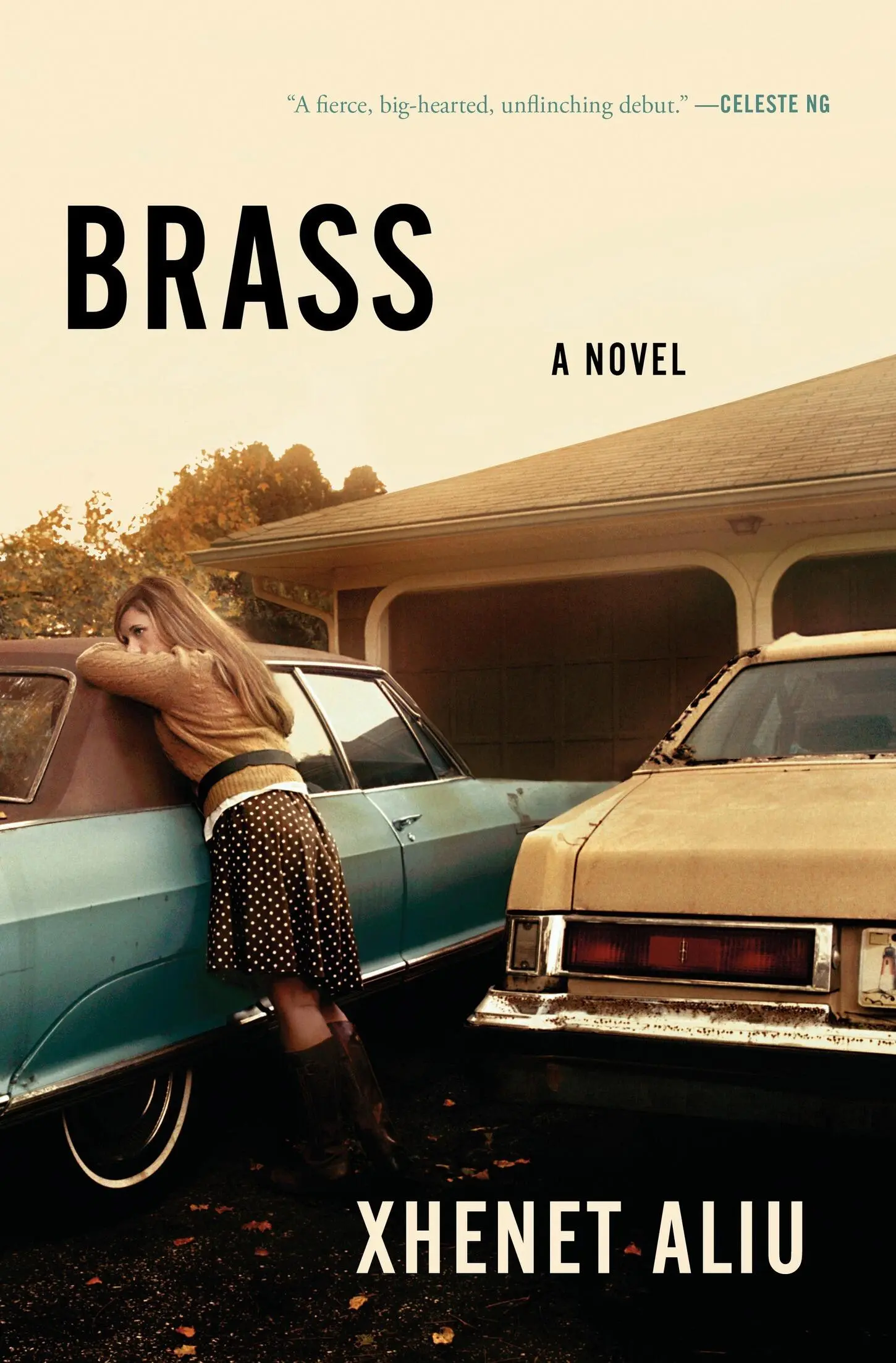
- Название:Brass
- Автор:
- Издательство:Random House Publishing Group
- Жанр:
- Год:2018
- Город:NYC
- ISBN:9780399590252
- Рейтинг книги:3 / 5. Голосов: 1
-
Избранное:Добавить в избранное
- Отзывы:
-
Ваша оценка:
Brass: краткое содержание, описание и аннотация
Предлагаем к чтению аннотацию, описание, краткое содержание или предисловие (зависит от того, что написал сам автор книги «Brass»). Если вы не нашли необходимую информацию о книге — напишите в комментариях, мы постараемся отыскать её.
A waitress at the Betsy Ross Diner, Elsie hopes her nickel-and-dime tips will add up to a new life. Then she meets Bashkim, who is at once both worldly and naïve, a married man who left Albania to chase his dreams—and wound up working as a line cook in Waterbury, Connecticut. Back when the brass mills were still open, this bustling factory town drew one wave of immigrants after another. Now it’s the place they can’t seem to leave. Elsie, herself the granddaughter of Lithuanian immigrants, falls in love quickly, but when she learns that she’s pregnant, Elsie can’t help wondering where Bashkim’s heart really lies, and what he’ll do about the wife he left behind.
Seventeen years later, headstrong and independent Luljeta receives a rejection letter from NYU and her first-ever suspension from school on the same day. Instead of striking out on her own in Manhattan, she’s stuck in Connecticut with her mother, Elsie—a fate she refuses to accept. Wondering if the key to her future is unlocking the secrets of the past, Lulu decides to find out what exactly her mother has been hiding about the father she never knew. As she soon discovers, the truth is closer than she ever imagined.
Told in equally gripping parallel narratives with biting wit and grace, Brass announces a fearless new voice with a timely, tender, and quintessentially American story.
Brass — читать онлайн бесплатно полную книгу (весь текст) целиком
Ниже представлен текст книги, разбитый по страницам. Система сохранения места последней прочитанной страницы, позволяет с удобством читать онлайн бесплатно книгу «Brass», без необходимости каждый раз заново искать на чём Вы остановились. Поставьте закладку, и сможете в любой момент перейти на страницу, на которой закончили чтение.
Интервал:
Закладка:
But she cried so hard. I knew that kind of cry, that she’d take the chance of being pulverized if I’d just keep her warm. I grabbed the towel that my head had rested on and brought it to her. I wiped her down and began to wrap her but I couldn’t. She was still tied to the placenta, the cord still held us together. Sometimes the doctors asked the daddies if they wanted to cut it, but there were no doctors or daddies around. I scanned the sink. Nothing, just my toothbrush with its splayed bristles and a thin mound of pale green soap melted onto the enamel. I remembered a straight blade in the medicine cabinet that Bashkim kept for close shaves. I tried to stand but I wouldn’t be able to get to my feet without dragging and hanging the baby, so I picked her up. Just like that, one arm bracing her back and head while the other hand pushed our bodies upright. I held the wall, then the sink for support. I saw a brief reflection of the two of us in the mirror and it calmed me a little. We looked okay together, both wet red messes, but okay.
I reached in and grabbed the blade and laid us back down over the towels, me upright with my legs spread wide and her placed in between them. She shivered when I put her down and began crying. I told her I’d hold her again but we needed to do this other thing first, this thing that was important for I don’t know what reason. I pulled the cord taut and laid it across my palm, a thick veiny root that looked alive on its own, and sliced into it with the blade. I didn’t feel anything. I wondered if the baby did, if this was a thing that belonged to her or to me, but she didn’t flail as I cut, either. I sliced until the cord slipped away from my hand in two pieces, the longer one still on my side, six inches of it dangling from the baby’s belly.
“Okay now. Shh, shh,” I told her. I wrapped the thin towel around her a few times, a sloppy cocoon that swallowed her entire body and strapped her limbs to her own core. She cried for another minute, her eyes closed. I tucked her into my chest and we shivered together, her cries dying down as my own breathing slowed.
We lay still for what I guess was an hour, the two of us, on that bathroom floor. I passed the placenta after a while, and it hurt like a second delivery, only this time all it brought was a purple, veiny, deflated balloon left behind after the party ended. It looked like its own living thing, or at least its own once-living thing, something I should have buried and held a service for. I rolled it up in the towel I’d been lying on and threw it in the trash bin.
I wanted to lie still forever but I couldn’t. The baby moaned once in a while and I was afraid she’d cry again, this time not for warmth but for something I didn’t have for her, food or comfort. I knew I had food in me somewhere but I didn’t know how to get it out. Something had already leaked from my nipples but it didn’t look like milk, more like the cloudy white pools that formed off the banks of the Naugatuck River, something that could never sustain life, something that might even kill it off. I had to move eventually. I had to move now, get to Yllka and to the hospital. The baby looked healthy but how the hell was I supposed to know? To me babies looked like a different species altogether, not tiny versions of our own. Nurses would know what to do. They could show me, those clean pink women dressed in white like angels, their hair smelling like shampoo always. I was a girl whose hair smelled of nothing ever. I was a girl who turned something fine into something scratched and broken, even when I swore I didn’t do anything wrong. Every CD I ever owned had scratches pitted in the grooves as soon as I’d released them from their cases. It was a birthright, a reverse Midas touch.
But look at me, even without the nurses—I held not just a baby but an advertisement for babies. Who wouldn’t want one of these? Those Punnett squares from biology class, the baby was living proof of the bottom right-hand box, all recessive and perfect. Even under the waxy coat and dried blood, she looked nothing like me, nothing like any human I’d seen before. Every step I’d taken so far was a stumble, and yet look what I produced, a genetic fluke, something so better than any of its sources that it was a miracle as grand as the Virgin’s, or else evolution taking place before my very eyes.
“Ready?” I asked her, but she didn’t answer. I guess somewhere along the journey she’d lost the words.
CHAPTER SIXTEEN: Luljeta
You were so close. You almost made it. That’s what you think once you make it inside Houston city limits, five hours and fifty-seven minutes after you parted with Ahmet at a rest stop west of Jackson, Mississippi.
Noreen—that’s the camper lady’s name, Noreen, and her husband is Jeb, actually Jeb, which you didn’t think was possible, because nobody’s name is actually Jeb, that’s just what people like you call people like Jeb when you think they’re not listening—Noreen put you in the sleeper of their Winnebago and mostly left you alone, just looking over now and again to make sure you weren’t shooting up or dead.
Later, though, Noreen started asking more questions. First your name, then your age, then if you were running away. You told her Samantha, eighteen, and that it isn’t running away if you’re a grown-up. She asked where from and where to, and you told her Massachusetts and California, respectively, after a stop in Houston to visit a second cousin who up until then you’d only ever known as a Facebook friend. Your cousin was a music producer for some local R & B artists. You didn’t seem to have much in common except blood, but blood was thicker than water, as the saying went.
“And tar is thicker than blood. What’s that got to do with anything?” Noreen asked.
“It’s just an expression,” you answered.
“It’s a dumb one. What were you doing with that kid? He your boyfriend?” she asked.
You told her you met him online, and you were just sharing a ride to save gas money.
“That’s dangerous. Meeting up with somebody you met online is dangerous,” she said. “In fact, anybody you don’t know, consider ’em dangerous.”
“My cousin’s riding with me out to California,” you said.
“Good,” she said. “We’re not stepping foot inside that hellhole.”
You had no reason to lie to Noreen, other than taking her advice about treating everyone as a potential threat. But Noreen and Jeb are harmless, disproving their own point. They’re helpful, even. They bring you all the way to the address you had memorized—your second cousin’s, right—which is generous of them. On the way, they fed you half of an Italian grinder, which they called a sub, they let you recharge your phone, they put some crappy straight-to-DVD rom-com on the television, and they did it all without even once acting like they were doing something nice or being particularly kind in demeanor. They just did it, as if that was the thing you did with people you picked up in a rest stop on the side of the road. You think of all the trashy names you would’ve had for them had you passed their camper on the highway, what you would’ve said about their bumper sticker, which managed to be pro-gun, anti-abortion, and anti-Obama in less than six words total, and it doesn’t reconcile with the people you’re looking at, who are not actually total shitheads. You aren’t sure whether the bumper stickers are false advertising, then, or not advertising at all. That complicates things, suddenly, within the four walls of that moving house and especially outside of it. Just how the hell are you supposed to know these things about people if not by the signs they carry?
Before you part, Noreen asks, “You got money?” You nod, and she says, “That’s good, ’cuz I don’t.” You smile at her joke but she doesn’t, and you realize she isn’t joking.
Читать дальшеИнтервал:
Закладка:
Похожие книги на «Brass»
Представляем Вашему вниманию похожие книги на «Brass» списком для выбора. Мы отобрали схожую по названию и смыслу литературу в надежде предоставить читателям больше вариантов отыскать новые, интересные, ещё непрочитанные произведения.



Обсуждение, отзывы о книге «Brass» и просто собственные мнения читателей. Оставьте ваши комментарии, напишите, что Вы думаете о произведении, его смысле или главных героях. Укажите что конкретно понравилось, а что нет, и почему Вы так считаете.