Xhenet Aliu - Brass
Здесь есть возможность читать онлайн «Xhenet Aliu - Brass» весь текст электронной книги совершенно бесплатно (целиком полную версию без сокращений). В некоторых случаях можно слушать аудио, скачать через торрент в формате fb2 и присутствует краткое содержание. Город: NYC, Год выпуска: 2018, ISBN: 2018, Издательство: Random House Publishing Group, Жанр: Современная проза, на английском языке. Описание произведения, (предисловие) а так же отзывы посетителей доступны на портале библиотеки ЛибКат.
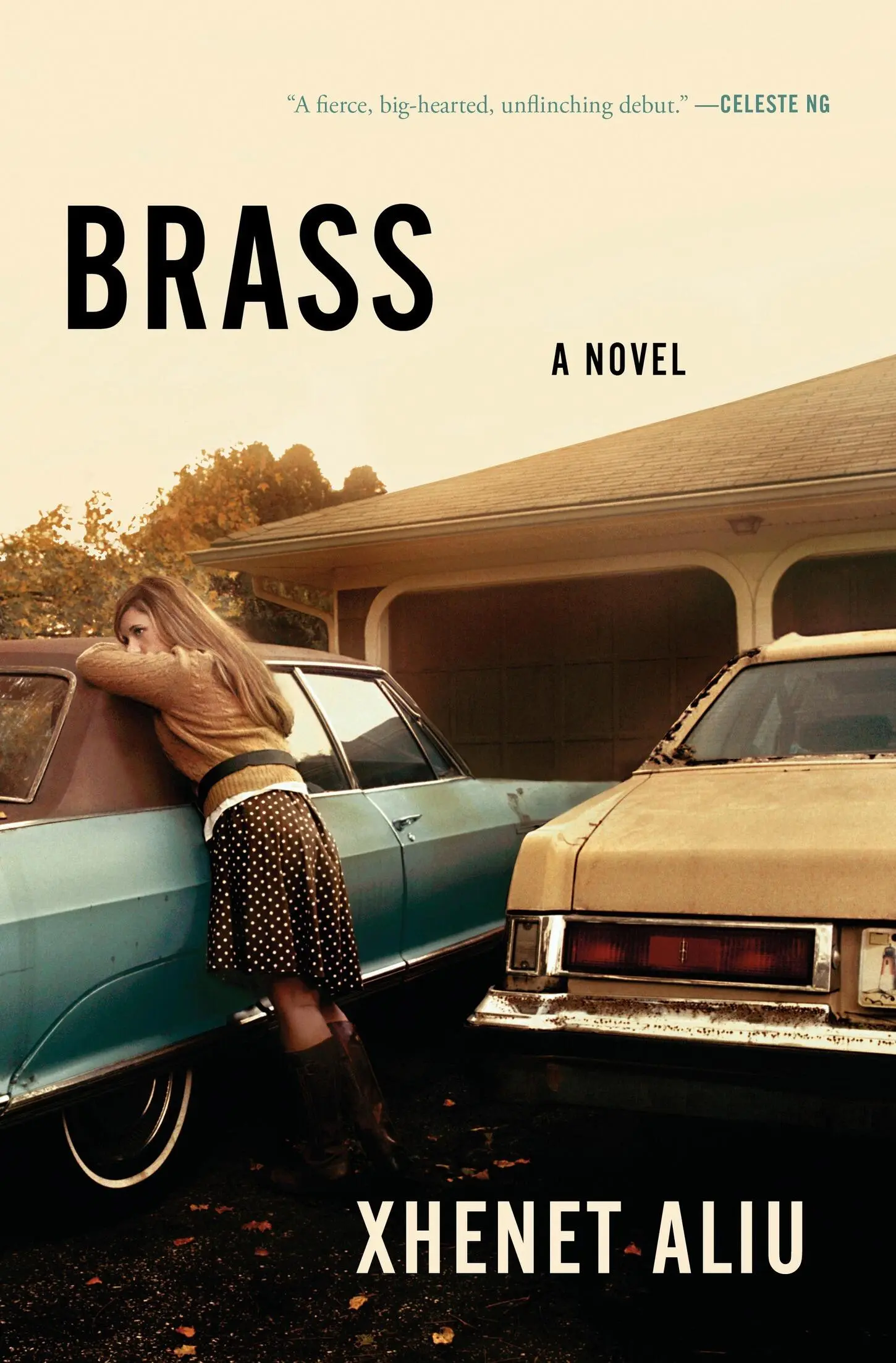
- Название:Brass
- Автор:
- Издательство:Random House Publishing Group
- Жанр:
- Год:2018
- Город:NYC
- ISBN:9780399590252
- Рейтинг книги:3 / 5. Голосов: 1
-
Избранное:Добавить в избранное
- Отзывы:
-
Ваша оценка:
Brass: краткое содержание, описание и аннотация
Предлагаем к чтению аннотацию, описание, краткое содержание или предисловие (зависит от того, что написал сам автор книги «Brass»). Если вы не нашли необходимую информацию о книге — напишите в комментариях, мы постараемся отыскать её.
A waitress at the Betsy Ross Diner, Elsie hopes her nickel-and-dime tips will add up to a new life. Then she meets Bashkim, who is at once both worldly and naïve, a married man who left Albania to chase his dreams—and wound up working as a line cook in Waterbury, Connecticut. Back when the brass mills were still open, this bustling factory town drew one wave of immigrants after another. Now it’s the place they can’t seem to leave. Elsie, herself the granddaughter of Lithuanian immigrants, falls in love quickly, but when she learns that she’s pregnant, Elsie can’t help wondering where Bashkim’s heart really lies, and what he’ll do about the wife he left behind.
Seventeen years later, headstrong and independent Luljeta receives a rejection letter from NYU and her first-ever suspension from school on the same day. Instead of striking out on her own in Manhattan, she’s stuck in Connecticut with her mother, Elsie—a fate she refuses to accept. Wondering if the key to her future is unlocking the secrets of the past, Lulu decides to find out what exactly her mother has been hiding about the father she never knew. As she soon discovers, the truth is closer than she ever imagined.
Told in equally gripping parallel narratives with biting wit and grace, Brass announces a fearless new voice with a timely, tender, and quintessentially American story.
Brass — читать онлайн бесплатно полную книгу (весь текст) целиком
Ниже представлен текст книги, разбитый по страницам. Система сохранения места последней прочитанной страницы, позволяет с удобством читать онлайн бесплатно книгу «Brass», без необходимости каждый раз заново искать на чём Вы остановились. Поставьте закладку, и сможете в любой момент перейти на страницу, на которой закончили чтение.
Интервал:
Закладка:
The doctor sent me off with vitamins and the name of a book, What to Expect When You’re Expecting, which she said would answer most of my questions and teach me how to eat actual food and do actual yoga like a California hippie and continue to enjoy sex with my partner without harming the baby. I guess it was the book she recommended to all of her literate patients, because all three copies were checked out of the Silas Bronson Library by the time I got there. But no worries, because there were shelves of instruction manuals to get me through this. Pregnancy for Dummies, even, a book written just for me. I guess I was feeling smarter by then, after the doctor’s visit, so I chose a serious hardcover published right around the year of my birth, something with footnotes and illustrations instead of photos, tables and charts instead of stupid jokes and cartoon lightbulbs with bright ideas for pregnant dummy readers. I checked out a VHS copy of The Miracle of Life and popped it in as soon as I got home, and I fell asleep for most of it but woke up for the most important part, the delivery, when a woman with the feathered stoner hair of all early eighties women breathed deep a couple of times, scrunched her face up, and pushed a squirmy purple extraterrestrial out of her vagina. The whole thing was wetter than I thought, and the baby bigger than I could have imagined, but it all took less than two minutes, and everyone was smiling and relaxed and possibly even high. And the mother didn’t look so extraspecial, and except for the mustache and the forearm tattoo, the father didn’t look so different from Bashkim. The video was telling us that anyone could do this. And the book, too, said in many, many words—so many goddamned words, I barely skimmed a quarter of them—that it was no big deal. Some British doctor had figured out early in the century that it isn’t childbirth that hurts, it’s fear. We scare ourselves into feeling contraction pain. The doctor had a penis and never felt so much as a menstrual cramp in his life, but he lived in a world alongside women, so I guess that meant he could know what they felt, right? He was the one who’d gone to medical school in England and I graduated middle of the class from a public high school in one of the crappiest cities in America, so who was I to question him?
I was excited to see Bashkim and tell him that we’d done it. The baby was beautiful, the doctor said it herself. We were actually doing okay for ourselves.
Yllka was outside of the Ross smoking a cigarette when I got to work. I tried to pretend I didn’t see her, to save both of us the trouble, but it was hard to hide my ballooning body.
“Elsie,” she said. She looked surprised at the sight of me, as if it was impossible that I could show up to my shift on time. She stubbed out her cigarette and straightened her skirt, which wasn’t wrinkled in the first place.
“Hi,” I said.
“What? Oh, hi, Elsie.”
She looked back at the employee entrance. It seemed like she was waiting for somebody but nobody went in or came out.
“Chilly outside, huh?” I said.
“It’s cold, yes. Did you get to your doctor’s appointment?”
“Yes,” I said. “Everything’s fine. It’s good, actually. Really good.”
“That’s good, it’s good,” she said. She started to head for the door, and I was disappointed that she didn’t seem to want to know more, even though it was her and the Albanian wives who’d shamed me into seeing the doctor in the first place. Why didn’t she want to know that she was right, and that I was stupid for having been afraid? That her precious little grandniece was beautiful, as verified by a bona fide blond doctor?
Yllka took a few steps and leaned against a car that didn’t belong to her or, as far as I could tell, anyone she knew. She lit up another cigarette just seconds after stubbing out the first.
“You okay?” I asked.
She exhaled. She wasn’t wearing a coat, but her shivering didn’t seem like it came from the cold.
“I’m fine,” she said.
“Okay, then. Just checking,” I said and turned and headed for the door.
“I’m fine, Gjonni’s fine. Twenty-five years in this country and we’re fine. We started in this country with nothing—with less than nothing—and now look at this.” She waved her hand toward the neon lights and fake rock facade, and it was hard to tell if she was being sarcastic or for real.
I looked, but I didn’t risk saying anything back, in case my answer was the wrong one.
“We went hungry for a long time so we could have this place. I mean, what did it matter, we were used to hunger. Big deal. It takes a lot of hunger to die from it. We knew that. You Americans don’t know that. You think five minutes without a cheeseburger will kill you, the way some of these customers complain.”
“I know, I’m usually the one they’re complaining to,” I said.
“Me? I would rather be a little hungry for a week and then buy a steak. Anyway.” She ashed her cigarette. “I don’t expect you Americans to know how to go without for five minutes, but these people.” She shook her head. “We try to help them, you know? We try to set an example, but a week after they’re here they want their cars and their swimming pools and their hearts’ desires.”
“Umm-hmm,” I said.
“Fatmir in there, he was going to bring his wife over this month. They have a little baby, a little boy. And where’s the money for the passage now? In some gypsy’s pocket, that’s where. Not even blown on a car. At least that he could sell back. Silly. Just so silly.”
“I don’t, like, really know,” I said.
“ Oh, the money’s coming, it’s coming, they say. From where? I want to know. You fall for that gypsy magic, you’re even worse than the gypsies.”
“What gypsies?”
“Not even gypsies, that’s the worst part. Our own people. Our own people would do this to each other.”
“Do what? I don’t understand.”
“Yes, exactly, you don’t.” She looked at me pityingly. “Aggie wrote to me. Bashkim had her sell their apartment. For what, to bring her over here, or at least to Greece with her parents? No, no, of course not. For more money for him to put into those stupid investments. Just like Fatmir, except Bashkim is in there feeling bad for Fatmir like everybody else, shaking his head, not realizing that when it’s time for him to cash out, he’ll be in the same position as Fatmir. ‘No, no, no, Fatmir just made the wrong investments,’ he says. My god, the skulls on these men.”
It had been hours since I’d eaten, and Yllka was right, my American blood couldn’t handle it. I was beginning to feel woozy.
“Where would Albanians have learned how to run a bank?” she said. “Albanians think they can put money into a bank and then the next month they have twice as much money, like it’s magicians who run banks instead of regular people. This is how they think capitalism works. You put a little in, you get more and more out.”
She was rambling on, and even lighting another cigarette didn’t slow her down.
“So I say to Bashkim, ‘Where do you think this money is coming from?’ But he doesn’t care, because the number in his account is going up, up, up. He sends Aggie all this money from his job here to put in the account, to invest, he says. But I say, ‘What are you investing in? What is being built with this money? What is going to be built and sold so that you get your money back?’ And he says, ‘The government.’ The government, he says! Albania’s government! You believe the government now because it’s a democracy, supposedly? Where did all of these democratic politicians come from, huh? They weren’t shipped in from America. They were the same people in power before, now with a different name.”
Читать дальшеИнтервал:
Закладка:
Похожие книги на «Brass»
Представляем Вашему вниманию похожие книги на «Brass» списком для выбора. Мы отобрали схожую по названию и смыслу литературу в надежде предоставить читателям больше вариантов отыскать новые, интересные, ещё непрочитанные произведения.



Обсуждение, отзывы о книге «Brass» и просто собственные мнения читателей. Оставьте ваши комментарии, напишите, что Вы думаете о произведении, его смысле или главных героях. Укажите что конкретно понравилось, а что нет, и почему Вы так считаете.