Xhenet Aliu - Brass
Здесь есть возможность читать онлайн «Xhenet Aliu - Brass» весь текст электронной книги совершенно бесплатно (целиком полную версию без сокращений). В некоторых случаях можно слушать аудио, скачать через торрент в формате fb2 и присутствует краткое содержание. Город: NYC, Год выпуска: 2018, ISBN: 2018, Издательство: Random House Publishing Group, Жанр: Современная проза, на английском языке. Описание произведения, (предисловие) а так же отзывы посетителей доступны на портале библиотеки ЛибКат.
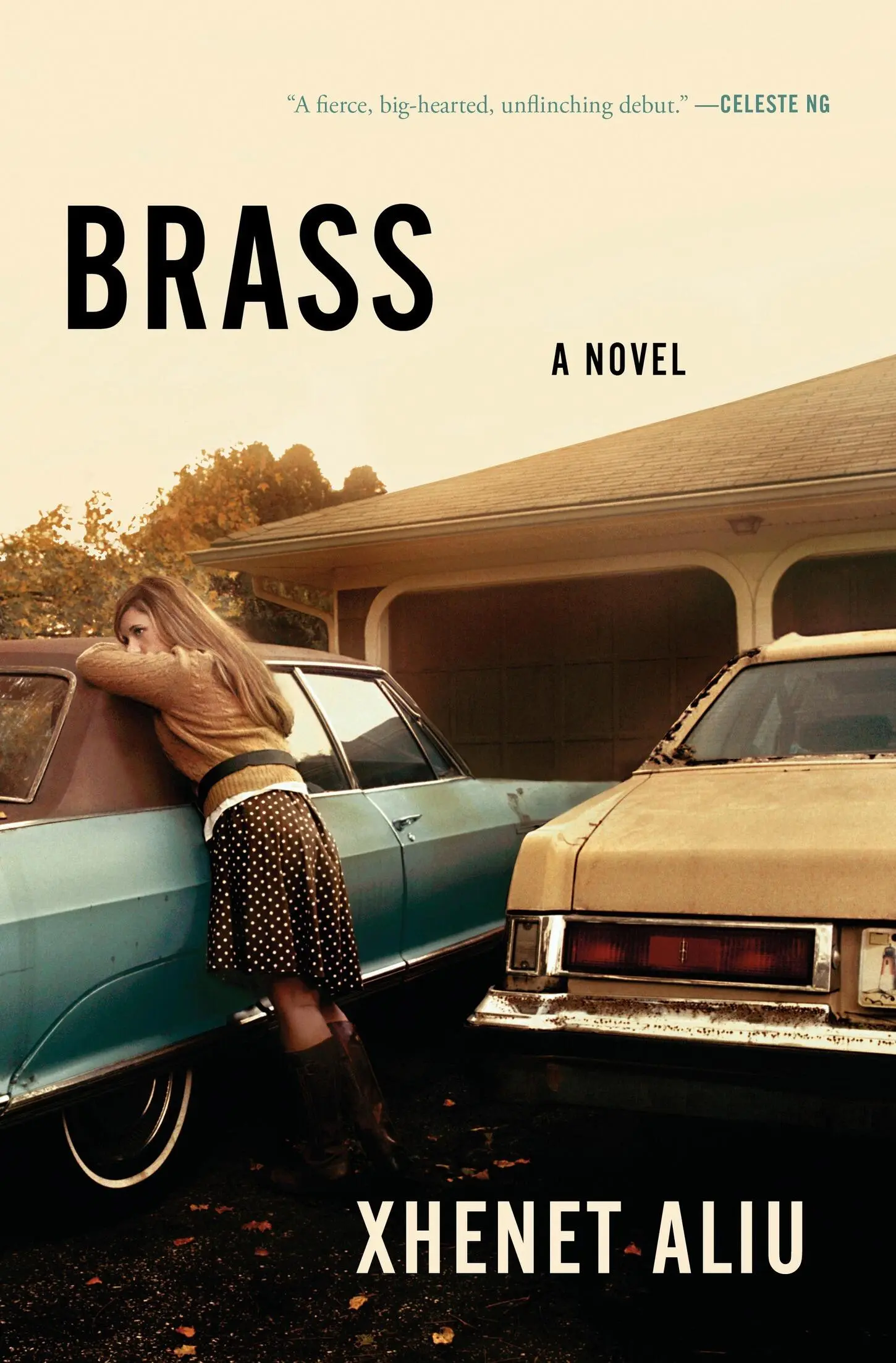
- Название:Brass
- Автор:
- Издательство:Random House Publishing Group
- Жанр:
- Год:2018
- Город:NYC
- ISBN:9780399590252
- Рейтинг книги:3 / 5. Голосов: 1
-
Избранное:Добавить в избранное
- Отзывы:
-
Ваша оценка:
Brass: краткое содержание, описание и аннотация
Предлагаем к чтению аннотацию, описание, краткое содержание или предисловие (зависит от того, что написал сам автор книги «Brass»). Если вы не нашли необходимую информацию о книге — напишите в комментариях, мы постараемся отыскать её.
A waitress at the Betsy Ross Diner, Elsie hopes her nickel-and-dime tips will add up to a new life. Then she meets Bashkim, who is at once both worldly and naïve, a married man who left Albania to chase his dreams—and wound up working as a line cook in Waterbury, Connecticut. Back when the brass mills were still open, this bustling factory town drew one wave of immigrants after another. Now it’s the place they can’t seem to leave. Elsie, herself the granddaughter of Lithuanian immigrants, falls in love quickly, but when she learns that she’s pregnant, Elsie can’t help wondering where Bashkim’s heart really lies, and what he’ll do about the wife he left behind.
Seventeen years later, headstrong and independent Luljeta receives a rejection letter from NYU and her first-ever suspension from school on the same day. Instead of striking out on her own in Manhattan, she’s stuck in Connecticut with her mother, Elsie—a fate she refuses to accept. Wondering if the key to her future is unlocking the secrets of the past, Lulu decides to find out what exactly her mother has been hiding about the father she never knew. As she soon discovers, the truth is closer than she ever imagined.
Told in equally gripping parallel narratives with biting wit and grace, Brass announces a fearless new voice with a timely, tender, and quintessentially American story.
Brass — читать онлайн бесплатно полную книгу (весь текст) целиком
Ниже представлен текст книги, разбитый по страницам. Система сохранения места последней прочитанной страницы, позволяет с удобством читать онлайн бесплатно книгу «Brass», без необходимости каждый раз заново искать на чём Вы остановились. Поставьте закладку, и сможете в любой момент перейти на страницу, на которой закончили чтение.
Интервал:
Закладка:
“Yes, we should make sure everything is okay,” he said, as if the whole thing were his idea.
He stood there for a second, waiting for me to thank him, but I couldn’t get any words of gratitude to form. He eventually walked out, and I collapsed back onto the mattress, wondering how much longer it was going to be like that, me having to convince Bashkim that there was going to be a return on his investment in me.
The cheapest doctors, the clinics that advertised on billboards on the sides of buildings that were one lead brick away from being condemned, were mostly downtown, in walking distance from the most busted-up, hope-defying neighborhoods in the city. The gas tank in the car I’d borrowed from Mamie was riding E, so I shifted into neutral and coasted down the hills into the valley, rolling down East Main, past what used to be Scovill Brass Works, except it hadn’t worked in years, and was being demolished to make way for a mall that I was guessing wouldn’t work any better. I rolled past the half dozen Puerto Rican shops hawking shrink-wrapped white pleather couches on the sidewalk, rolled past open windows that piped spirituals and salsa out of speakers that’d been bought off the backs of white box vans tagged with graffiti from the Bronx.
By the time I had to shift back into gear, I’d managed to roll almost all the way to the town green and into a spot that could make you believe, for two or three minutes anyway, that Waterbury was still somewhere you might actually want to be. For three or four square blocks municipal buildings and bank headquarters made this place look like an actual city, the kind that casts heavy shadows over one-way streets. It could have been a set from Hill Street Blues, the kind of cop show set in some generic northeastern city where crimes are committed and solved in time for happy hour. All that marble, all those men in suits as gray as the steps of the courthouse, lawyers stuffing thick wedges of salami on Portuguese rolls into their mouths, not even pausing from their conversations to do it. A block away, inscribed into the marble above the entrance to City Hall, it said Quid Aere Perennius? What is more lasting than brass?
That’s what my sixth-grade teacher had told us it meant, but she hadn’t told us the answer. Nobody had. It was a trick question, see, because once your eyes stopped being dazzled by all the slate and those Revolutionary War memorials, it turned out almost everything in the city was more lasting than brass. The toxic mud the mall was being built on was more lasting than brass. The hunger of the wailing baby in the stroller outside the social services office was more lasting than brass. The rubber on my sneakers, secondhand New Balances with still a good inch left to the soles, I bet even they would be more lasting than brass. Everybody here was more lasting than brass, and that made us stronger, didn’t it, wasn’t that what we learned in biology? All of us who came from ancestors who survived the bubonic plague, famines, those constantly finding new means of survival, moving from farms to villages, villages to cities, cities to different cities in new countries half a world away. We were a hearty brand of people and we had reached the end of the line, right? What was even left for the next generations?
In the waiting room at the clinic I was surrounded by women who didn’t look like they wanted to think a day ahead into the future, never mind a generation. There were girls younger than me in there, with scabs on their knees as if they’d come straight from the jungle gym, and some women who, if not for the bulges beneath their muumuus, could’ve been young grandmas. There was a lady in a baggy puff-painted sweatshirt and thick eyeglasses who looked like she’d been planning her baby since meeting her husband at a Christian mixer a year or two before, and another woman with an electronic monitoring bracelet around her ankle sitting next to a stern lady who was either her mother or her parole officer. We all picked up parenting magazines, traded them in for Highlights for Children magazines, traded those in for pamphlets about smoking and fetal alcohol syndrome and low birth weights. Nobody touched the adoption pamphlets, because none of us were prepared to give anything of potential value away.
I was trying to fill out the paperwork, on the question that asked whether I was using or had ever used intravenous drugs, when a little boy wobbled over and took the pen from my hand. He brought it to the woman who I guessed was his mother, who huffed and banged the pen down on the coffee table and closed her eyes again. He picked the pen back up and handed it to another woman, who slipped it into her purse. I stood up and asked the lady at the desk for another.
“I don’t know if we have any more,” she answered. I saw at least two other Bics within grabbing distance of her hand. “What happened to the other one?”
“I don’t know,” I answered, and as she slid over another pen she sighed like she regretted every moment of her life, up to and including that day.
Do you have other children? the form asked. I checked off no, and for good measure filled in a zero when the next question asked how many. The little boy reached for my pen again, but I held on tighter and looked at his mother. Her eyes were closed and her mouth open. Her purse was balanced on a stomach so enormous it must have housed more than just a fetus.
The boy was cute, in a feral kind of way. His hair made him at least three inches taller than the two and a half feet he actually was, and it was orange—not red like a redhead but orange like rust, like he’d been left out in the rain. When he walked he kicked his legs straight out instead of bending them at the knee. He sang something with words that meant nothing but followed pretty closely the tune of “Eye of the Tiger.”
I smiled at him a little when he looked at me, but he turned back to the stack of magazines he was streaming to the floor.
“Dwayne, sit down and quiet up,” the woman said. She didn’t open her eyes.
I went back to the questionnaire. Has your partner ever hit you, kicked you, or threatened to harm you?
No, I responded.
It asked all about my health history. I had never had diabetes, cancer, gallstones, hepatitis, anemia. I didn’t know if it was panic attacks or indigestion keeping me up at night, so I left the questions about those blank. Depression? What a stupid question to ask in a place like this, I thought, so again I left it blank.
“Dwayne, you hear me?” the woman said. Dwayne kept singing, picking up the magazines he’d pushed to the floor so he could do it again.
The questionnaire asked if my partner had had any of those conditions, or my parents. I left those blank, too.
Dwayne’s mother opened her eyes and lunged forward so fast that it seemed like she was waking from a nightmare, and she grabbed on to the boy’s arms as if bracing herself.
“You shut that mouth up or I will punch it. I will punch you in the fucking mouth,” she said. Her purse had fallen off of her belly when she leaned forward but she didn’t make a move to pick it up, and a Vicks inhaler and a quarter pack of powdered Hostess Donettes rolled out. The boy dropped to his butt and wasn’t singing anymore, but his lips still moved, opening and closing and making spit bubbles that popped just before they could float away.
Nobody else in the room looked up during the outburst or after it, and that made me want to run.
“Elsie?” a nurse called, and I was surprised to find that I was already on my feet, halfway to the door. I stopped in my tracks, caught in the middle of my jailbreak, and I had to remind myself that this wasn’t a jail, it was just a gyno’s office, one that didn’t seem to care whether you were insured or not. What was I so afraid of? Wasn’t this the easy part?
Читать дальшеИнтервал:
Закладка:
Похожие книги на «Brass»
Представляем Вашему вниманию похожие книги на «Brass» списком для выбора. Мы отобрали схожую по названию и смыслу литературу в надежде предоставить читателям больше вариантов отыскать новые, интересные, ещё непрочитанные произведения.





Обсуждение, отзывы о книге «Brass» и просто собственные мнения читателей. Оставьте ваши комментарии, напишите, что Вы думаете о произведении, его смысле или главных героях. Укажите что конкретно понравилось, а что нет, и почему Вы так считаете.