Anna Quinn - The Night Child
Здесь есть возможность читать онлайн «Anna Quinn - The Night Child» весь текст электронной книги совершенно бесплатно (целиком полную версию без сокращений). В некоторых случаях можно слушать аудио, скачать через торрент в формате fb2 и присутствует краткое содержание. Город: Ashland, OR, Год выпуска: 2017, ISBN: 2017, Издательство: Blackstone Publishing, Жанр: Современная проза, на английском языке. Описание произведения, (предисловие) а так же отзывы посетителей доступны на портале библиотеки ЛибКат.
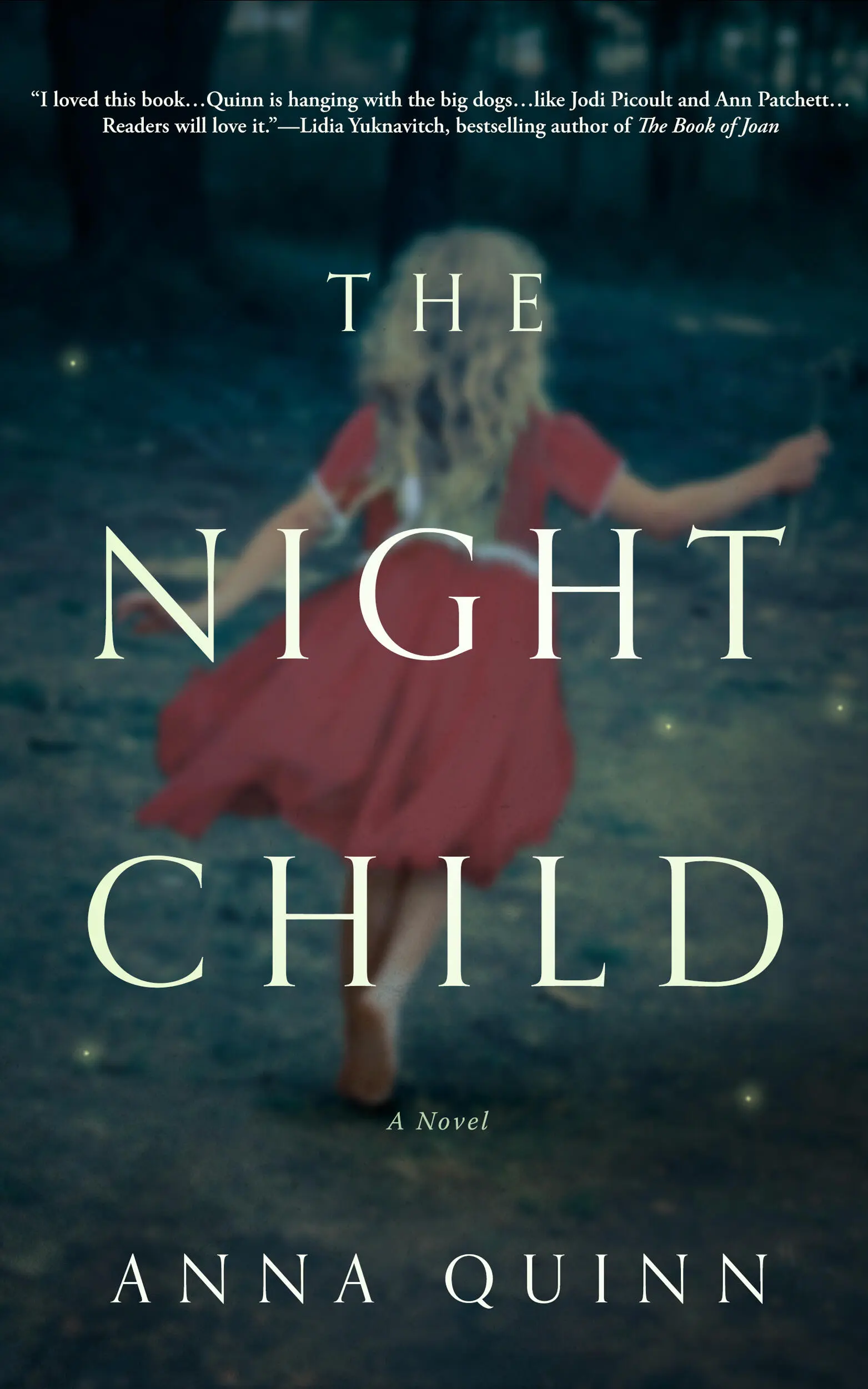
- Название:The Night Child
- Автор:
- Издательство:Blackstone Publishing
- Жанр:
- Год:2017
- Город:Ashland, OR
- ISBN:978-1-5384-3433-8
- Рейтинг книги:4 / 5. Голосов: 1
-
Избранное:Добавить в избранное
- Отзывы:
-
Ваша оценка:
The Night Child: краткое содержание, описание и аннотация
Предлагаем к чтению аннотацию, описание, краткое содержание или предисловие (зависит от того, что написал сам автор книги «The Night Child»). Если вы не нашли необходимую информацию о книге — напишите в комментариях, мы постараемся отыскать её.
Twenty-four hours later, while on Thanksgiving vacation, the face appears again. Shaken and unsteady, Nora meets with neurologists and eventually, a psychiatrist. As the story progresses, a terrible secret is discovered—a secret that pushes Nora toward an even deeper psychological breakdown.
This breathtaking debut novel examines the impact of traumatic childhood experiences and the fragile line between past and present. Exquisitely nuanced and profoundly intimate, The Night Child is a story of resilience, hope, and the capacity of the mind, body, and spirit to save itself despite all odds.
The Night Child — читать онлайн бесплатно полную книгу (весь текст) целиком
Ниже представлен текст книги, разбитый по страницам. Система сохранения места последней прочитанной страницы, позволяет с удобством читать онлайн бесплатно книгу «The Night Child», без необходимости каждый раз заново искать на чём Вы остановились. Поставьте закладку, и сможете в любой момент перейти на страницу, на которой закончили чтение.
Интервал:
Закладка:
“And what are your sins my child?” She is scared to tell him the bad things, but her mother says you have to tell everything if you don’t want to go to hell. She takes a big breath and says “I … I did a very, very, very, bad thing.”
“You are too little to do a very, very, very bad thing. So tell me. Tell me what you did wrong.”
“I … I … I … touched …” She can’t tell him. This is too scary.
“You touched what, my child? Something your mother asked you not to?”
“I touched … I touched …”
The priest leans his face close to the screen. “What did you touch? Tell me. Remember, whatever you tell me is a secret between you and me and God. No one else will ever know.”
“I … I … touched … daddy’s hard thing.”
“His … hard thing?”
“The … the … hard thing between his legs. He put my hand down there in his pants and I touched it and he moved my hand up and down and up and down and—”
“Stop!” the priest says. “Stop saying such things. Why would a nice little girl like you make up such bad things? Did your teacher not tell you to honor your father and mother? Why would you tell such lies?”
“Because. I told you. I am a very, very, very bad girl,” and she starts to cry.
“I want to know what you did exactly. Tell me.”
She whispers the words between her sobs. “Daddy … he … put my hand on his hard thing and he said you are my little princess, my little princess, my little princess, and he … he … put my face on his lap and he—” but she stops then because she can hear the priest breathing hard and she knows he must be getting angry about her being such a horrible little girl and he might break through the screen and slap her or tell her mother or—
“He what? Did you put his hard thing in your mouth?” the priest asks, so close to the screen now, his breathing faster, faster, faster. She can feel his breathing now and his voice is strange and suddenly he sounds like Daddy and she is scared so much and knows something is wrong. She stands up and spits at the screen and runs from the box.
“Margaret,” David says. “It’s okay. It’s okay. No one will hurt you. You are safe. I promise. No one will hurt you. It’s okay now. You are here. With me. David. You are safe.”
“He … he sounded like Daddy and I hated him and spit on him and he told our mother and she beat up Nora so hard because I was such a bad, bad, bad girl!”
“Oh, Margaret,” he says, “I am so sorry this happened to you. I’m so sorry. You are not a bad girl! You are not!”
“I AM a bad girl!” she screams and she bursts up from the tight ball into a frenzy and runs to the door and slams her head against it, SLAM, SLAM, SLAM! And then the monster’s hands are grabbing her shoulders and loud horrible sounds are coming from him and she twists around and there he is! She raises her fists and fights him, kicks out at him, pounds her fists into his head but the monster is too strong for her and grabs her wrists and she screams, “Let me go! Let me go!”
“Stop!” shouts David. “Stop! I am not him! I am not him! I am David. I am David!” And his grip on her wrists loosens, and she sees it is not the monster. It is David. Her mouth is frozen open, but she stops screaming and stares at him, her face wet with tears, and he drops her wrists and she crumbles to the floor into a ball and hides her face between her shaking knees and rocks and rocks, sobbing in quick, ragged breaths.
“I am not him,” David says again, kneeling in front of her.
Margaret looks up at him then, still whimpering, and here is his white hair and the safe room and the green chair and green couch and the pillow with the raven on it.
“Margaret. No one will hurt you now. No one. Ever again.” And he holds her hands together within his, like a prayer, and slowly, slowly, slowly she stops rocking and closes her eyes.
David calls for Nora. She opens her eyes and finds she is sitting on the floor, her back against the door in David’s office. He is kneeling down in front of her.
“Oh, my God!” she shouts, jumping up. “Oh, my God, what the hell?”
“Nora, please,” he says, standing. “It’s okay.”
“It’s okay? What the hell? Why was I on the floor?”
He looks uncertainly at her. “Margaret was here. Please, can you please just sit on the couch?”
She sits. Her heart thudding. She looks to her left and to her right as if to see if someone is there . She looks at her watch. It’s an hour later than when she looked a few moments ago. She looks at David. “Shit,” she whispers.
“It’s all right,” he says. “It’s all right.”
She puts her head in her hands. Her forehead hurts.
“Nora, did you hear anything?” he asks.
“No,” she says, her teeth chattering. “No, I didn’t hear anything.” She rocks back and forth, her head still in her hands. She is caught in a nightmare, but it is not a nightmare. It is a cutting reality, an aggressive invasion of her sanity.
And then David is saying things that don’t make sense. Things about stolen money and orange shoe boxes and boxes of confession, and she is trying to listen, trying to understand, but it’s all too much. Too much. Too many pieces careening through her mind, smashing reason and logic to smithereens.
David walks to the couch and sits by her.
She doesn’t move. “There’s something else isn’t there?” she asks in a barely audible voice.
He hesitates. She can feel him shifting his body to face her more directly. “Nora, I think this might be enough for today.”
“Tell me,” she says, staring straight ahead.
“Nora,” he says, his voice very even, very serious, “she said, ‘I am a bad girl.’ She said, ‘Daddy forced me to touch his penis.’”
His words: a punch in the face.
Nora keeps her eyes straight ahead, but the blow is dizzying, her eyes bleeding red.
“Nora …”
“No,” she says, standing up, holding her hand up like a stop sign. “My father would never do such a thing,” she says in a gasp before she flees.
She runs home. To the toilet. Lifts the lid. Vomits. Sits on the tub. Head between her knees. “No. No. No,” she whispers, teeth chattering. This can’t be true; surely, she’d remember, she’d remember, she’d remember the skin the wrinkled flesh the bad thing smell, she’d remember, don’t think of this don’t make Margaret’s memories yours, you are not her, you are not her, this is wrong wrong, wrong, wrong, wrong—
And now, Fiona is calling for her, Paul is shouting, “I got takeout Chinese!” and she stands then, scrubs her hands hard, and walks downstairs to eat dinner with her family.
CHAPTER SIXTEEN: January 30, 1997
Nora distributes copies of Shakespeare’s The Tempest to her students. She’s too tired to say much about it—only that it was his last play, written in 1610, during the Renaissance. It depresses her that on top of everything else, she has to teach this play—so schizophrenic, one minute serious, the next, foolish. She doesn’t need schizophrenic right now.
Her first year teaching Honors English, she’d fought to have The Tempest switched to A Midsummer Night’s Dream , but came up against tenured faculty member Dorothy Bowman. Gray hair clipped close to her scalp, Dorothy was an in-your-face activist and never missed an opportunity to show a student how they could fix the broken world. She thought Shakespeare was a significant historical figure implicated in the politics of his time. She believed The Tempest was concerned with European domination of New World natives, interpreting Caliban not as a monstrous villain but as a heroic rebel against Prospero’s oppression.
Читать дальшеИнтервал:
Закладка:
Похожие книги на «The Night Child»
Представляем Вашему вниманию похожие книги на «The Night Child» списком для выбора. Мы отобрали схожую по названию и смыслу литературу в надежде предоставить читателям больше вариантов отыскать новые, интересные, ещё непрочитанные произведения.







Обсуждение, отзывы о книге «The Night Child» и просто собственные мнения читателей. Оставьте ваши комментарии, напишите, что Вы думаете о произведении, его смысле или главных героях. Укажите что конкретно понравилось, а что нет, и почему Вы так считаете.