Anna Quinn - The Night Child
Здесь есть возможность читать онлайн «Anna Quinn - The Night Child» весь текст электронной книги совершенно бесплатно (целиком полную версию без сокращений). В некоторых случаях можно слушать аудио, скачать через торрент в формате fb2 и присутствует краткое содержание. Город: Ashland, OR, Год выпуска: 2017, ISBN: 2017, Издательство: Blackstone Publishing, Жанр: Современная проза, на английском языке. Описание произведения, (предисловие) а так же отзывы посетителей доступны на портале библиотеки ЛибКат.
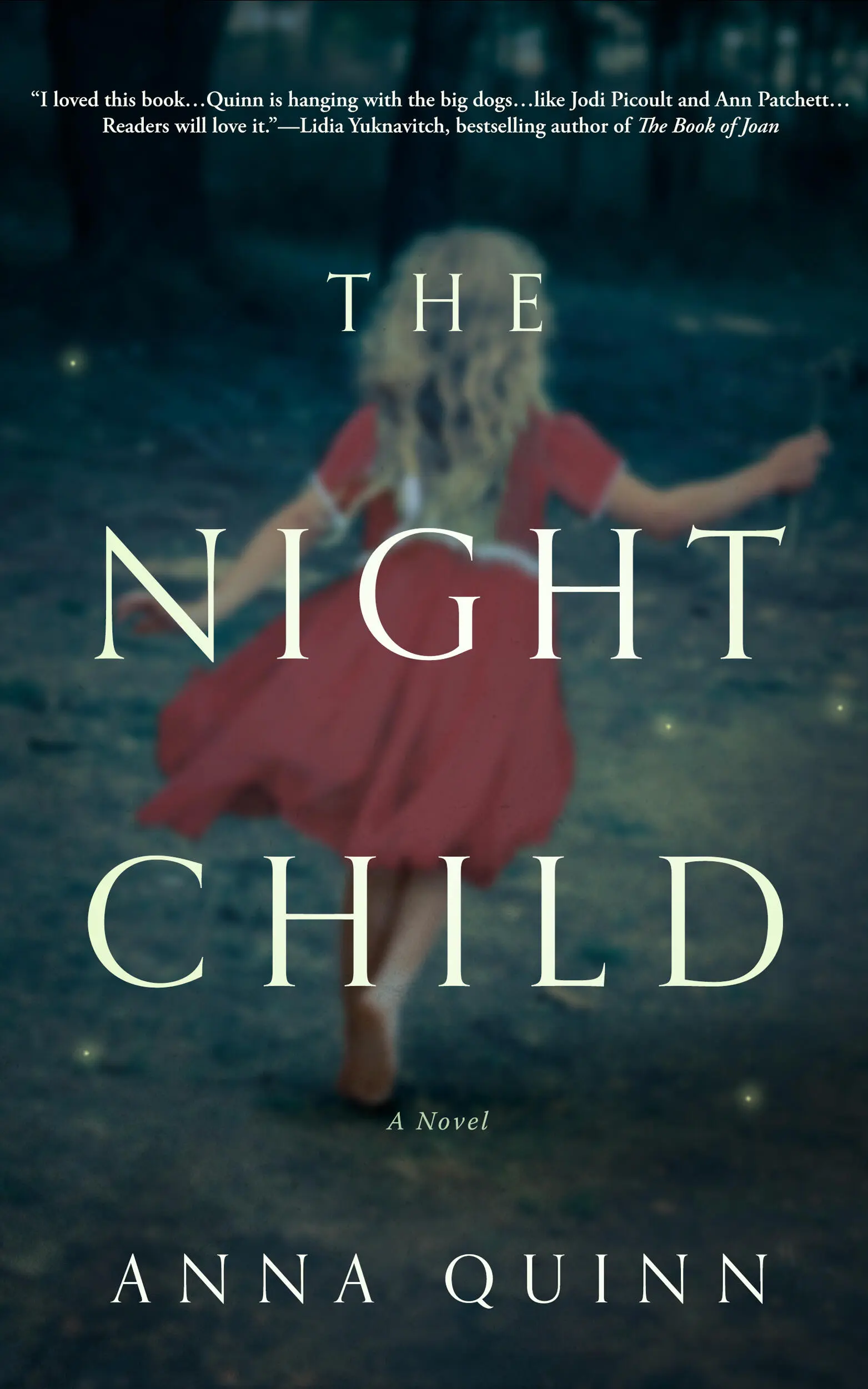
- Название:The Night Child
- Автор:
- Издательство:Blackstone Publishing
- Жанр:
- Год:2017
- Город:Ashland, OR
- ISBN:978-1-5384-3433-8
- Рейтинг книги:4 / 5. Голосов: 1
-
Избранное:Добавить в избранное
- Отзывы:
-
Ваша оценка:
The Night Child: краткое содержание, описание и аннотация
Предлагаем к чтению аннотацию, описание, краткое содержание или предисловие (зависит от того, что написал сам автор книги «The Night Child»). Если вы не нашли необходимую информацию о книге — напишите в комментариях, мы постараемся отыскать её.
Twenty-four hours later, while on Thanksgiving vacation, the face appears again. Shaken and unsteady, Nora meets with neurologists and eventually, a psychiatrist. As the story progresses, a terrible secret is discovered—a secret that pushes Nora toward an even deeper psychological breakdown.
This breathtaking debut novel examines the impact of traumatic childhood experiences and the fragile line between past and present. Exquisitely nuanced and profoundly intimate, The Night Child is a story of resilience, hope, and the capacity of the mind, body, and spirit to save itself despite all odds.
The Night Child — читать онлайн бесплатно полную книгу (весь текст) целиком
Ниже представлен текст книги, разбитый по страницам. Система сохранения места последней прочитанной страницы, позволяет с удобством читать онлайн бесплатно книгу «The Night Child», без необходимости каждый раз заново искать на чём Вы остановились. Поставьте закладку, и сможете в любой момент перейти на страницу, на которой закончили чтение.
Интервал:
Закладка:
“And,” he continues, “it is critical you work with someone you are comfortable with, so if you don’t feel comfortable with me, we should find you someone else.”
She looks at the certificate, the ceiling, the absoluteness of him. “I’ll work with you,” she says, finally, in a whisper.
He nods. “Good. And here’s another truth—ultimately, you are the one who will save you. Not me. You. You’ll have to work hard. Harder than you’ve ever worked on anything in your life. I can support you, advise you, but in the end, you are the one who will reconstruct the broken pieces, patch the cracks. You will make the choice to transcend this—whatever it is.”
She pushes her hair back from her face. Tears spring to her eyes.
His voice is softer now. “You have what it takes, Nora. Just the fact you are here shows incredible strength. Very few people take this step, you know.” He reaches for the tissue box near his chair and hands it to her.
She wipes the tears off her face. She wants to believe she has what it takes. She wants to believe she is not broken; she is fixable.
“Listen. I’ve had clients come to me who have had alternate personalities speak during sessions, but nowhere else. My concern would be much greater if Margaret took control of your life outside of this office—which leads to my next question.”
He leans forward in his chair, clasps his hands together, taps his thumbs together a couple of times and says, “Have you ever felt that you blanked out and found yourself somewhere unexpected? Like you left for school but ended up in a department store and didn’t know how you got there?”
She thinks for several moments, shakes her head no.
“Has anyone ever mentioned you were talking to yourself?”
She shakes her head again and says, “Well, maybe, but everyone talks to themselves a little, don’t they?”
“Yes, of course, and like most things, this is on a continuum. But have people commented to you about it—your talking aloud to no one in particular?”
“No. No, they haven’t.”
She is silent for a long time. Until the last few weeks, she has always felt in control of her life. Perhaps not completely in control (look at the way she binges and starves, binges and starves) but she has always felt present. So okay, maybe she can relax now, maybe this is a temporary thing. This voice, this Margaret, is merely a part of her consciousness, that’s all, a voice she’ll work with in therapy, in this office. But now, new thoughts flash through her mind. What if Margaret shows up outside this office now that the cat’s out of the bag? What if she shows up again at school?
Nora imagines herself standing in front of her class showing how adverbs can weaken a perfectly good sentence, when everything becomes blurry and her eyes close and Margaret appears and curls up on the floor and the students panic and call the administration. And here is John, running down the hall and bursting into the classroom door, seeing her, the Department Head of English, huddled up, skirt rolled around her waist, underwear on display, lips opening and closing, babbling things in a child’s voice. The students staring; they are shocked, fascinated, disturbed. Some look away and then back again.
Or what if Paul sees Margaret? Puts a hand on her and she freaks? What if Fiona is watching? Nora sees Fiona there, the face and body of her, frozen. Oh, God. Paul will take her away forever.
All this could happen. A few months ago she would have said no, this could not happen, but now she knows it could. She whispers, “Do you think she’ll speak outside of this office?”
“I don’t know, Nora. I don’t know. My sense is that she feels safe speaking here, with us, and if we help her it will stay that way.”
“Why hasn’t she spoken before? Why now?”
He shrugs. “Perhaps she was resting. You’ve said before how safe you felt with your grandparents, how lovely it was to live with them—my sense is she rested then. And perhaps this last fifteen years with Paul has been fairly uneventful, am I right? So perhaps something has happened lately—something has triggered her need to come out—or maybe she needed you to be at a place in your life where you could handle what she needs to say. Or maybe it’s because she’s the same age as Fiona. I’m not sure. I’m just not sure.” He looks at his watch. “Nora, our session is almost over, and I haven’t yet told you what Margaret said.”
“Shit.”
“If this feels like too much, I can tell you next time.”
“No. Tell me now.”
“She was very upset.”
“ She’s very upset?” Nora says, a bit angrily.
David watches her, hesitates.
“Tell me.”
“She said you prayed to St. Margaret and to use her words, she said you prayed to her a lot . And Nora,” he says gently, almost like he is apologizing, “she said you are a liar.”
“A liar? A liar? What the hell?” Nora feels haunted, deranged, violated, like a house that’s burglarized and then the robber turns out to be someone you know.
CHAPTER FOURTEEN: The evening of January 27, 1997
When Nora arrives home, Paul is coming down the stairs. He looks worried. “Fiona’s been sick to her stomach and vomiting for the last two hours. I took her temperature, and it’s normal—” but before he’s finished, Nora is up the stairs, fast, to Fiona’s bedside. Fiona looks miserable. Her face flushed pink, her bangs damp on her forehead.
“Mommy,” she cries. “I don’t feel so good.”
Nora brushes Fiona’s bangs to the side and bends down to kiss her cheek, breathing in the faint odors of sweat and vomit.
“It’s okay, sweetheart, I’m here now.” Nora lies down next to Fiona and gathers her close, pulls the blanket over the two of them, whispers, “Do you know how much I love you?”
Fiona presses hard into Nora, two pieces fitting together like small countries in a private continent. “Beyond the stars and back,” Fiona says softly.
“Yes, my love, beyond the stars and back,” she says, stroking Fiona’s hair until she is asleep.
When Paul comes to the doorway, she whispers, “I think she’s fine. Probably just something she ate at school.”
He slides a hand slow over his face, through his hair, says in a voice flat as a granite slab, “I’ll be downstairs if you need anything, okay?”
Once he’s gone, she thinks about him. The way he’s become more and more unstrung—the pressure of his relentless business deals—she’s heard him on the phone arguing and dictating terms with bankers and lawyers—the strain of doing more of the housework because she’s been too upset to care. Her not wanting to have sex. His obvious affair with Elisa. And she still hasn’t said anything to him about Margaret. She can’t bring up the right words. Paul, I might be a multiple personality . Paul, I might be schizophrenic . She can see his eyes flash alarm, his face stiffen into disbelief, images of his mother tearing through his mind.
No, she isn’t ready.
And now, Margaret has called her a liar. An imaginary entity within her, something she’s invented in her mind, has called her a liar . Fiona whimpers a little, and Nora pulls her closer. She will survive this. She will lean on her logical mind. Logically, something must have happened to hurt her so badly she was unable to face it, is still unable to face it. Has she missed something about her mother’s death? Her mother fell down the stairs because she was drunk, not because she, Nora, wouldn’t stop playing the piano. Still, she feels guilty, but logically, she knows guilt is a normal response. So, what is she not facing? Her father’s abandonment? Her rational mind knows her father had his own struggles. That he wasn’t capable of caring for two children on his own. Yes, it hurts like hell that he completely disappeared, but that couldn’t possibly be enough to trigger this—this craziness, this Margaret, this child. Why a child? And why had she prayed to St. Margaret? And why had Margaret called her a liar?
Читать дальшеИнтервал:
Закладка:
Похожие книги на «The Night Child»
Представляем Вашему вниманию похожие книги на «The Night Child» списком для выбора. Мы отобрали схожую по названию и смыслу литературу в надежде предоставить читателям больше вариантов отыскать новые, интересные, ещё непрочитанные произведения.












Обсуждение, отзывы о книге «The Night Child» и просто собственные мнения читателей. Оставьте ваши комментарии, напишите, что Вы думаете о произведении, его смысле или главных героях. Укажите что конкретно понравилось, а что нет, и почему Вы так считаете.