Doris Lessing - Doris Lessing
Здесь есть возможность читать онлайн «Doris Lessing - Doris Lessing» весь текст электронной книги совершенно бесплатно (целиком полную версию без сокращений). В некоторых случаях можно слушать аудио, скачать через торрент в формате fb2 и присутствует краткое содержание. Город: London, New York, Toronto and Sydney, Год выпуска: 2007, ISBN: 2007, Издательство: Harper Perennial, Жанр: Современная проза, на английском языке. Описание произведения, (предисловие) а так же отзывы посетителей доступны на портале библиотеки ЛибКат.
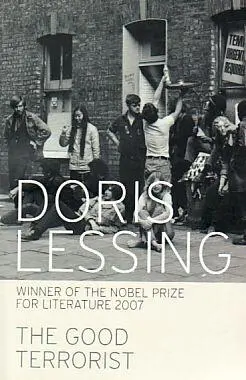
- Название:Doris Lessing
- Автор:
- Издательство:Harper Perennial
- Жанр:
- Год:2007
- Город:London, New York, Toronto and Sydney
- ISBN:978-0-00-724721-9
- Рейтинг книги:5 / 5. Голосов: 1
-
Избранное:Добавить в избранное
- Отзывы:
-
Ваша оценка:
Doris Lessing: краткое содержание, описание и аннотация
Предлагаем к чтению аннотацию, описание, краткое содержание или предисловие (зависит от того, что написал сам автор книги «Doris Lessing»). Если вы не нашли необходимую информацию о книге — напишите в комментариях, мы постараемся отыскать её.
Only Alice, motherly, practical and determined, seems capable of organising anything. She likes to be on the battlefront: picketing, being bound over and spray-painting slogans. But her enthusiasm is also easy to exploit and she soon becomes ideal fodder for the group's more dangerous and potent cause. When their naive radical. fantasies turn into a chaos of real destruction, they realise that their lives will never be the same again.
Doris Lessing — читать онлайн бесплатно полную книгу (весь текст) целиком
Ниже представлен текст книги, разбитый по страницам. Система сохранения места последней прочитанной страницы, позволяет с удобством читать онлайн бесплатно книгу «Doris Lessing», без необходимости каждый раз заново искать на чём Вы остановились. Поставьте закладку, и сможете в любой момент перейти на страницу, на которой закончили чтение.
Интервал:
Закладка:
He wanted her to sever herself from "all that lot there; you are made of much better stuff than they are"; and to embark on a career of - respectability. She was to apply for a job in a certain firm with national importance. She would get the job because he, Andrew, would see that she did, through contacts that were already established there. He referred several times to "our network." Alice was to work in computers - he, Andrew, would arrange for her to have a quick course of training, which would be a sufficient basis on which an intelligent woman like her could build. Meanwhile, she would live in a flat, not a squat, lead an ordinary life, and wait.
Alice listened modestly to all this, her lids kept down.
She was thinking: And who is he? For whom would I be working? She had a good idea - but did it matter? The main point was, did she or did she not think that the whole ghastly superstructure should be brought down and got rid of, root and branch, once and for all? A clean sweep, that was what was needed. And Alice saw a landscape that had been flattened, was bare and bleak, with perhaps a little wan ash blowing over it. Yes. Get rid of the rotten superstructure to make way for better. For the new. Did it matter all that much who did the cleansing, the pulling down? Russia, Cuba, China, Uncle Tom Cobbley and all, they were welcome as far as she was concerned.
But she said, after a while, in a pause that was there for her to fill, "I can't, Andrew." And suddenly, arising from her depths, "A bourgeois life? You want me to live a middle-class life?" And she sat there laughing at him - sneering, in fact - all alive with the energy of scorn, of contempt.
He sat facing her, no longer tired now, or stale with sleep, watching her closely. He smiled gently.
"Comrade Alice, there is nothing wrong with a comfortable life - it depends on what the aim is. You wouldn't be living like that because of comfort, because of security" - he seemed to be making an effort to despise these words as much as she did - "but because of your aim. Our aim."
They stared at each other. Across a gulf. Not of ideology, but of temperament, of experience. She knew, from how he had said, "there is nothing wrong with a comfortable life," that he felt none of the revulsion she did. On the contrary, he would like such a life. She knew this about him; how? She did not know how she knew what she did about people. She just did. This man would blow up a city without five seconds' compunction - and she did not criticise him for that - but he would insist on good whisky, eat in good restaurants, like to travel first-class. He was working-class by origin, she thought; it had come hard to him. That was why. It was not for her to criticise him.
She said, definitely, "It's no good, Comrade Andrew. I couldn't do it. I don't mean the waiting - for orders - no matter how long it was."
"I believe you," he said, nodding.
"I wouldn't mind how dangerous. But I couldn't live like that. I would go mad."
He nodded, sat silent a little. Then, sounding for the first time humorous, even whimsical, "But, Comrade Alice, I have been getting daily, sometimes hourly, reports of your transformation of that pigsty there." The dislike he put into that word was every bit as strong as her parents' could ever have been. Leaning forward, he took her hand, smiling humorously, and turned it so that it lay, the back upwards, in his strong square hand. Alice's hand shrank a little, but she made it lie steady. She did not like being touched, not ever! Yet it was not so bad, his touch. The firmness of it - that made it possible. Along her knuckles, a crust of white paint.
He gently replaced her hand on her knee and said, "You'll have the place like a palace in no time."
"But you don't understand. We aren't going to live in that house as they do. We aren't going to consume, and spend, and go soft and lie awake worrying about our pensions. We're not like them. They're disgusting." Her voice was almost choked with loathing. Her face twisted with hatred.
There was a long silence, during which he decided to leave this unpromising subject. (But, thought Alice, he would not be abandoning it for long!) He offered her some coffee. There was an electric kettle, and mugs and sugar and milk on a tray on the floor. He quickly, efficiently, made coffee.
Then he began to talk about all the people in Number 43. His assessment of them, Alice noted, was the same as hers. That pleased and flattered her, confirmed her in her belief in herself. He spoke nicely about Jim, about Philip; but did not linger on questions. Bert he seemed to dismiss. Pat he wanted to know more about, where she had worked, her training. Alice said that she did not know, had not asked. "But, Comrade Alice," he reproved her in the gentlest way, "it is important. Very important."
"Why is it? I haven't had a job since I left university. I've done all right."
This caused a check or hitch in the flow of their talk; he was suppressing a need to expostulate. There's a lot bourgeois about him, she was thinking, but only mildly critical because of her now established respect for him.
Jasper - but he simply would not talk about Jasper. Because, she thought, of her link with him. She didn't have to ask, though: Comrade Andrew did not have much time for Jasper. Well, he'd see!
Roberta and Faye. He asked many questions about them, but what interested him was their lesbianism. Not out of prurience, or anything Alice could dislike: there was a total noncomprehension there. He simply had no idea of it. No experience, ever, Alice guessed. He wanted to know what the women's commune was like that Roberta and Faye frequented. What the connection was between lesbians and the revolutionary formulations of the political women. Alice offered pamphlets and books, which she would procure for him. He nodded, but pressed on: how did women like Faye and Roberta see the relations between men and women after the revolution? Alice suppressed an impulse to say: Liquidate all men. She was remembering long and hot arguments with Molly and Helen in Liverpool, during which she, Alice, had said that their attitude amounted to a contempt for men so total that in effect they suppressed all serious thought about them.
What Alice said was, "There are many different formulations in the Women's Movement. I would say that Faye and Roberta represent an extreme."
Then there were Maty and Reggie; and, as she expected, Comrade Andrew refused to dismiss them as she wanted to. Precisely what she disliked most about them was what interested him: she knew that he wondered whether they could be persuaded to become sleeping partners in the revolution, a phrase that she used and he approved with a dry smile and a nod.
Alice didn't know. She doubted it. They were naturally con-servers. (Not that she had anything against Greenpeace. On the contrary.) They were, in short, bourgeois. In her view, Andrew should discuss it with them. She could not answer for them.
This, she knew, cut across the underlying premise of the conversation: that she was willingly acting as his aide in assessing possible recruits. For something or other. Not stated. Understood.
Did they plan - number 43 - to take in more members of their squat or commune?
"Why not? There's plenty of room."
"I agree, the more the better."
And so the talk went on, reaching back, for some rather tense minutes, to her childhood. Alice's mother did not really interest Comrade Andrew, but Cedric Mellings, that was a different matter. How big was his business? How many employees? What were they like?
Alice's brother: Alice decided not to say Humphrey worked in a top airline firm. "Oh, don't waste your time on him," she said.
More cups of coffee, and some rather satisfying talk about the state of Britain. Rotten as a bad apple, and ready for the bulldozers of history.
Читать дальшеИнтервал:
Закладка:
Похожие книги на «Doris Lessing»
Представляем Вашему вниманию похожие книги на «Doris Lessing» списком для выбора. Мы отобрали схожую по названию и смыслу литературу в надежде предоставить читателям больше вариантов отыскать новые, интересные, ещё непрочитанные произведения.





Обсуждение, отзывы о книге «Doris Lessing» и просто собственные мнения читателей. Оставьте ваши комментарии, напишите, что Вы думаете о произведении, его смысле или главных героях. Укажите что конкретно понравилось, а что нет, и почему Вы так считаете.