Julian Fellowes - Past Imperfect
Здесь есть возможность читать онлайн «Julian Fellowes - Past Imperfect» весь текст электронной книги совершенно бесплатно (целиком полную версию без сокращений). В некоторых случаях можно слушать аудио, скачать через торрент в формате fb2 и присутствует краткое содержание. Жанр: Современная проза, на английском языке. Описание произведения, (предисловие) а так же отзывы посетителей доступны на портале библиотеки ЛибКат.
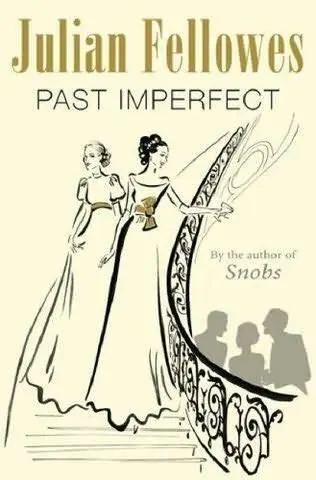
- Название:Past Imperfect
- Автор:
- Жанр:
- Год:неизвестен
- ISBN:нет данных
- Рейтинг книги:3 / 5. Голосов: 1
-
Избранное:Добавить в избранное
- Отзывы:
-
Ваша оценка:
Past Imperfect: краткое содержание, описание и аннотация
Предлагаем к чтению аннотацию, описание, краткое содержание или предисловие (зависит от того, что написал сам автор книги «Past Imperfect»). Если вы не нашли необходимую информацию о книге — напишите в комментариях, мы постараемся отыскать её.
Past Imperfect — читать онлайн бесплатно полную книгу (весь текст) целиком
Ниже представлен текст книги, разбитый по страницам. Система сохранения места последней прочитанной страницы, позволяет с удобством читать онлайн бесплатно книгу «Past Imperfect», без необходимости каждый раз заново искать на чём Вы остановились. Поставьте закладку, и сможете в любой момент перейти на страницу, на которой закончили чтение.
Интервал:
Закладка:
Our group was therefore in a jolly and convivial mood when we arrived at the famous entrance at about eleven that night. I suppose there must have been bouncers or someone similar to admit us, but, as I’ve already said, I have no solid memory of cards to be taken, or lists to be ticked off. The main party space had been arranged in what was then, and maybe is now, known as the Hall of Kings. The wax images of England’s Royalty had been moved back into a circle round the dance floor, cleared at the centre, but the figures were still sufficiently spaced apart for us to be able to stroll among them and photographs would later appear in the press – though not in the Tatler, which had originally been the plan – of debs and their escorts apparently standing next to Henry VIII or Queen Caroline of Anspach. I was myself snapped with a girl I knew from my Hampshire years after my father’s retirement from the diplomatic. It never, mercifully, appeared in print, but for some reason now forgotten I still have a copy of the picture. We look as if we’re talking to a startled and offended Princess Margaret.
As we know, every waxwork ever made appears to be either under sedation, or recently arrested for criminal assault and in this respect almost uniquely, the last four decades have seen little change. Except perhaps in their subject matter. We certainly all knew far more history then, that is the whole nation did, not just the privileged, the educational establishment having not yet broken the link between teaching and the imparting of knowledge; so figures like Wellington and Disraeli and Gordon of Khartoum still had a resonance that spread far beyond the elite, the only group today who might have heard of them. Nor, when it came to waxworks, was there the modern, pusillanimous terror of causing offence and I can bear witness that the Chamber of Horrors in those days was really horrible. That night it had been set aside for a discothèque, and when Lucy and I went downstairs to explore it was quite clear the authorities were a long way from worrying about whether or not someone might get hit by a falling basket of nasturtiums or a stray conker.
There were stone pillars dividing the space and at the top of each, on a little ledge, was a severed head, disfigured with some hideous atrocity. Eyes hung out of sockets, flaps of skin revealed whitened bone, one even had an iron bar thrust right through it, causing the face to look very surprised, as well it might. A long glass case held miniature examples of every torture known to man, some quite new to me, and we walked slowly down it, wondering at human cruelty. Then there were the serial killers, although I don’t believe that term was yet in use, but we certainly had them, if by some other title. George Smith, who drowned several unfortunate brides, presided over a bathtub which, we were told, was the actual one in which he had perpetrated his crimes, Dr Hawley Crippen was there and John Haig, who had met his chief victim in the Onslow Court Hotel, which I knew well since it was just down the street from where my grandmother used to live. Haig selected Mrs Durand-Deacon from among the diners in the restaurant and worked his way into her affections before he took her off to the country somewhere and plunged her into a vat of acid. Lucy and I stood, silenced by the sight of these drab and ordinary men who had caused such untold misery. Today these displays tend to have a comic, even camp, element to them which somehow protects one from the reality that what you are witnessing is true, that all these terrible things did happen, but then there was a counter-impetus, to make it as real as possible and the result was curiously haunting, even remembered now, after so long.
At last, in the very centre of the chamber we came upon a dingy curtain with an instruction not to pull it open without preparing well. I think it was forbidden to anyone under sixteen or something similarly enticing. It was the curtain that fascinated me. It was old, threadbare and dirty, like a curtain in a garden shed to hide the weedkillers from sight, and in a way this made it much more sinister than some self-advertising veil of scarlet satin. ‘Shall we?’ I said.
‘You do it. I don’t want to look.’ Lucy turned away but did not, of course, move. People say things like this, not because they intend not to look but because they do not wish to take any responsibility for the horrors that will be revealed. It is a way of enjoying base pleasures while retaining their superiority.
I pulled back the curtain. The shock was immediate and stark. Even if it was not prompted by the young woman who was hanging from an iron hook that had penetrated her vitals and on which she was apparently writhing in vivid, screaming agony. This, I could handle. What almost made me cry out in pain was the sight of Damian holding Serena in a fierce embrace and quite obviously plunging his tongue so far into her mouth that she must have had trouble breathing. Although I cannot pretend that she looked, even to me, as if she were resisting his advances. Far from it. She clawed at his back, she ran her fingers through his hair, she squeezed her body against his, until she seemed to be attempting somehow to crush the pair of them into one single being. ‘No wonder the curtain carried a warning,’ said Lucy and they froze, then looked across at us. I desperately searched for a phrase that would contain my rage at Damian, my disappointment in Serena and my contempt for the new morality all at once. It was too ambitious. I might have been able to make up a combination word in German, but English has its limitations.
‘You’re busy,’ I said. Which didn’t exactly hit the mark I was aiming at.
They had broken apart by now and Serena was straightening herself up. Her body language told so clearly that she was longing to ask both of us, Lucy and me, not to say anything, but of course she felt the request would be demeaning. ‘We won’t say anything,’ I said.
‘I don’t care if you do,’ she replied with immense relief.
Damian, meanwhile, was carrying on with his usual insouciance. ‘I’ll see you later on.’ He gave Serena a swift hug and wiped the lipstick off his mouth with a handkerchief, which he replaced in his pocket. Without a word to us he slipped through the curtain and was gone.
The sound of an O. C. Smith record, which was much in demand that summer, Hickory Holler’s Tramp, suddenly filled the space, making an odd cultural contrast with all those severed heads and murderers and the luckless victim swinging on her hook, but the three of us still stood there. Until there was a noise and the unwelcome face of Andrew Summersby poked round the curtain. ‘There you are,’ he said, ignoring us, ‘I’ve been looking everywhere.’ He took in our grotesque, waxen companion. ‘Ooh er.’ He laughed. ‘Someone’s going to wake up with indigestion.’ And he gave the figure a push, as if she were in a child’s swing. The hideous thing moved slowly back and forth at the end of its rope.
‘Let’s dance,’ said Lucy, and without another word to Serena we left her to the noble dullard, and made our way to a dark little dance floor in the shadow of a guillotine, on to which a French aristocrat in a jacket of cheap-looking wrinkled velveteen, was being strapped by two burly revolutionaries. From a draped alcove to one side the entire Royal Family of France looked on serenely.
‘Are you all right?’ To my bewilderment, Lucy appeared to be on the edge of tears. I couldn’t imagine why.
She was irritated by the enquiry. ‘Of course I am,’ she said sharply, bobbing fiercely in time to the music for a bit. Then she looked up at me apologetically. ‘Don’t mind me,’ she said. ‘I had some bad news just as I was leaving home and it suddenly came back.’ I looked suitably solicitous. ‘An aunt of mine, my mother’s sister. She’s got cancer.’ This was quite clever of her, I can see now. At the time I am writing of, the English had just about begun to move on from referring to cancer as ‘a long illness bravely borne,’ but there was still something dread in the word, still something, if not exactly shameful, at least to be avoided at all costs. In those days the diagnosis was generally considered a death sentence, and when one heard of people taking treatments one almost despised them for not being able to face the truth, although I suppose logic tells us some of them must have survived, mustn’t they? Anyway, the point is it wasn’t at all like today, when you really do have a reasonable shot, if not quite as reasonable in every case as non-medicos tend to assume. For Lucy to say the word at all was bound to distract me. Still, looking back, I admit I am slightly embarrassed that I completely believed her explanation.
Читать дальшеИнтервал:
Закладка:
Похожие книги на «Past Imperfect»
Представляем Вашему вниманию похожие книги на «Past Imperfect» списком для выбора. Мы отобрали схожую по названию и смыслу литературу в надежде предоставить читателям больше вариантов отыскать новые, интересные, ещё непрочитанные произведения.












Обсуждение, отзывы о книге «Past Imperfect» и просто собственные мнения читателей. Оставьте ваши комментарии, напишите, что Вы думаете о произведении, его смысле или главных героях. Укажите что конкретно понравилось, а что нет, и почему Вы так считаете.