Julian Fellowes - Past Imperfect
Здесь есть возможность читать онлайн «Julian Fellowes - Past Imperfect» весь текст электронной книги совершенно бесплатно (целиком полную версию без сокращений). В некоторых случаях можно слушать аудио, скачать через торрент в формате fb2 и присутствует краткое содержание. Жанр: Современная проза, на английском языке. Описание произведения, (предисловие) а так же отзывы посетителей доступны на портале библиотеки ЛибКат.
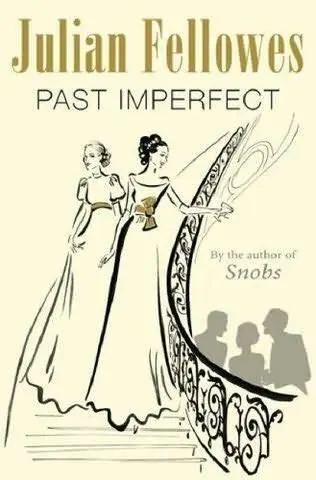
- Название:Past Imperfect
- Автор:
- Жанр:
- Год:неизвестен
- ISBN:нет данных
- Рейтинг книги:3 / 5. Голосов: 1
-
Избранное:Добавить в избранное
- Отзывы:
-
Ваша оценка:
Past Imperfect: краткое содержание, описание и аннотация
Предлагаем к чтению аннотацию, описание, краткое содержание или предисловие (зависит от того, что написал сам автор книги «Past Imperfect»). Если вы не нашли необходимую информацию о книге — напишите в комментариях, мы постараемся отыскать её.
Past Imperfect — читать онлайн бесплатно полную книгу (весь текст) целиком
Ниже представлен текст книги, разбитый по страницам. Система сохранения места последней прочитанной страницы, позволяет с удобством читать онлайн бесплатно книгу «Past Imperfect», без необходимости каждый раз заново искать на чём Вы остановились. Поставьте закладку, и сможете в любой момент перейти на страницу, на которой закончили чтение.
Интервал:
Закладка:
Then Damian, with one of those gestures that made me forgive him more, and for longer, than I should have done, took hold of the Grand Duchess’s hand, hanging limply by her side as she stood witness to the ruin of a party that had cost a large percentage of her annual income. ‘Please forgive me for making such a mess, Ma’am,’ he raised her unresisting hand to his lips, holding it there for a second, with exquisite elegance, ‘and thank you so much for what, until now, has been an enchanting evening.’ So saying he released her fingers, bowed crisply from the neck like a lifelong courtier, and strode out of the chamber.
I need hardly add that once the story had gone round London, and with the sole exception of the ball given by Lady Belton for Andrew’s sister, Annabella, before very long Damian had received invitations to every other major event of that Season. This was not because of any increased approval on the part of the mothers, all of whom were more terrified than ever that Damian Baxter would ensnare one of their sacred children.
It was at the absolute and unbending insistence of the girls themselves.
SIX
The Grand Duchess had been right to make her investment, even if things did not quite turn out as she had wished. In 1968 the family had just enough money and just enough status for Dagmar to have landed a big – or a biggish – fish. That she did not, I attributed at the time to her setting her sights too high and thereby missing whatever chance there might have been of something decent. As I would discover, I was not completely right in this analysis, but I suspect that even so, like many of rank or fortune, Dagmar had grown up with unrealistic expectations. To begin with she had no clear idea of how pallid she really was. She could always assemble (then, anyway) a crowd who would conceal her shyness from herself and she did not seem to appreciate that she would have to make more of the running if things were to go her way. All this the Grand Duchess knew and, in the nicest possible way, she tried to encourage her daughter to make what hay she could before the sun went in completely, but like most young women, Dagmar did not listen to her mother when her mother said things she did not want to hear.
Part of the problem lay in her curious inability to flirt. Faced by a man, she would alternate between nervous giggling or complete silence, her huge semi-tearful eyes wide open, fixed on her partner, while he would flounder in his desperate attempts to find some topic, any topic, that would elicit a vocal response. There wasn’t one. Eventually this helplessness provoked a protective instinct in me, and while I never exactly fancied Dagmar, I began to dislike anyone who made fun of her or, as I once heard, imitated her sad, little laugh. Once, I had to take her away from Annabel’s when her date excused himself to go to the loo, before apparently running up the steps back to street level and jumping into a taxi. She cried on the way home and of course I had to love her a little bit after that.
To correct a popular misconception, I must point out that by my time the London Season was no longer, as it had once been, much of a marriage market. The idea was more to launch your young into a suitable world where they would thenceforth live and in due course find friends, and after a few years a husband or wife. Few mothers wanted this achieved before their sons and daughters had reached their middle twenties at the earliest, but Dagmar’s case was different, as the Grand Duchess knew. They were selling a product in what promised to be a falling market and there was no time to be lost. We all thought at one point she had a reasonable chance of Robert Strickland, the grandson and eventual heir to a 1910 barony, awarded to a Royal gynaecologist after a tricky but successful birth. Robert didn’t have much money and there was neither land nor house, but there was something and he was a kind fellow, if hardly the life and soul of the party. He worked in a merchant bank and had the supreme merit, certainly where the Grand Duchess was concerned, of being slightly deaf. Unfortunately, just as he was coming to the boil Dagmar fluffed it, Robert interpreting her nervous giggle as a lack of interest in his hinted-at proposal, and it was not repeated. By the end of that summer he was happily engaged to the daughter of a Colonel in the Irish Guards. There would be no other opportunities at that level.
Even so, everyone was a little taken aback to read in the gossip columns in the late autumn of 1970 that she was engaged to William Holman, the only child of an aggressive parvenu from Virginia Water. When I knew him William was about to be ‘something in the City,’ an all-purpose phrase beloved of our mothers. He had been a hanger-on at some of the dances in our year, wearing and saying inappropriate, desperate things, according to our youthful, shallow, snobbish yard-sticks, and was not taken seriously by anyone. I suppose, looking back, he was quite clever and perhaps he did seem to be going somewhere. It just wasn’t evident to us that it was somewhere very nice. I missed the wedding. I think I had double booked it with a weekend in Toulouse. But apparently it was perfectly all right, if a bit rushed. They were married in an Orthodox church in Bayswater and the reception was held at the Hyde Park Hotel. The groom’s parents looked ecstatic and the bride’s were at least resigned. In the last analysis Princess Dagmar of Moravia was married, and to a man who could pay the bill for dinner and manage something more than a basement flat. As the Grand Duchess might have remarked, and probably did in the privacy of her bathroom, it was better than nothing. She was also presumably aware that there were other factors at work, rendering the ceremony welcome. Six months later the Princess was delivered of a son, a healthy boy and not noticeably premature.
For obvious reasons I didn’t see much of Dagmar after the Portuguese holiday, and once I’d missed her wedding we lost touch completely. I didn’t like William and he couldn’t see the point of me, so there was not much to build on. To be fair, he did do well, better than I had anticipated, eventually making chairman of some investment trust, and being rewarded with both millions and a knighthood from John Major. When I read about him in the papers, or glimpsed him across the room at some function, I was amused to note that he had become a convincing version of what he had hankered for all those years ago, with suits made by some award-worthy cutter behind the Burlington Arcade and all the loudly mouthed prejudices to match. Someone told me he hunted now and was even a good shot, which made me rather jealous. It never ceases to amaze me the way real money continues to ape the habits and pastimes of the old upper class, in a day when they could afford to call a different tune. This was not widely true during the Seventies, but once Mrs Thatcher was on the throne, secret longings for gentility resurfaced in many a breast. Before long, every City trader exchanged his red braces for a Barbour, and was shooting, fishing and stalking like a middle-European nobleman, while the clubs in St James’s, once desperate for new applicants, had pleasure in re-establishing their waiting lists and toughening again the criteria for membership.
One sign of all this that the sociologists seem to have missed was that from the Eighties onwards, the upper middle and upper classes resumed a different daily costume from those beneath them in the ancient pecking order, which was definitely a return to the way things used to be. A unique phenomenon of the 1960s was that we all dressed in the new, outlandish modes, quite irrespective of background, perhaps the only time in the last thousand years when most of the nation’s youth wore versions of the same costume, though it seems a pity we should choose as our badge of unity those terrible hipsters and kipper ties and velvet suits and bomber jackets and all the other horrors on display. Hideous as the fashions were, nobody was immune. The Queen’s skirts leaped above her knee and, at the Prince of Wales’s inauguration at Carnarvon Castle, Lord Snowdon appeared in what looked like the costume of a flightdeck steward on a Polish airline. But by the 1980s the toffs were tired of this unsuitable disguise. They wanted to look like themselves again, and gradually first Hackett’s and later Oliver Brown and all those others who recognised this secret longing and aspired to supply it, appeared in the high street. Suddenly posh suits were once more of a recognisably different cloth and cut, while country clothes, tweeds and cords and all the rest of that tested uniform, pulled themselves from the dusty wardrobes where they had lain unloved since the 1950s. The toffs were visually different again, a tribe to be known once more by their markings, and it made them happy to be so.
Читать дальшеИнтервал:
Закладка:
Похожие книги на «Past Imperfect»
Представляем Вашему вниманию похожие книги на «Past Imperfect» списком для выбора. Мы отобрали схожую по названию и смыслу литературу в надежде предоставить читателям больше вариантов отыскать новые, интересные, ещё непрочитанные произведения.











Обсуждение, отзывы о книге «Past Imperfect» и просто собственные мнения читателей. Оставьте ваши комментарии, напишите, что Вы думаете о произведении, его смысле или главных героях. Укажите что конкретно понравилось, а что нет, и почему Вы так считаете.